Shiva Raksha Stotram
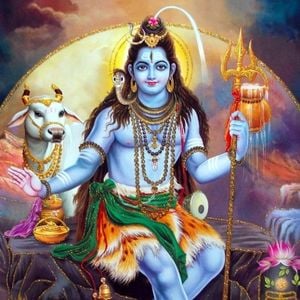
Lyrics:
ओम् अस्य श्रीशिवरक्षास्तोत्रमन्त्रस्य। याज्ञवल्क्य-ऋषिः। श्रीसदाशिवो देवता।
अनुष्टुप् छन्दः। श्रीसदाशिवप्रीत्यर्थे शिवरक्षास्तोत्रजपे विनियोगः।
चरितं देवदेवस्य महादेवस्य पावनम्।
अपारं परमोदारं चतुर्वर्गस्य साधनम्।
गौरीविनायकोपेतं पञ्चवक्त्रं त्रिनेत्रकम्।
शिवं ध्यात्वा दशभुजं शिवरक्षां पठेन्नरः।
गङ्गाधरः शिरः पातु भालमर्धेन्दुशेखरः।
नयने मदनध्वंसी कर्णौ सर्पविभूषणः।
घ्राणं पातु पुरारातिर्मुखं पातु जगत्पतिः।
जिह्वां वागीश्वरः पातु कन्धरां शितिकन्धरः।
श्रीकण्ठः पातु मे कण्ठं स्कन्धौ विश्वधुरन्धरः।
भुजौ भूभारसंहर्ता करौ पातु पिनाकधृक्।
हृदयं शङ्करः पातु जठरं गिरिजापतिः।
नाभिं मृत्युञ्जयः पातु कटी व्याघ्राजिनाम्बरः।
सक्थिनी पातु दीनार्त्त- शरणागतवत्सलः।
ऊरू महेश्वरः पातु जानुनी जगदीश्वरः।
जङ्घे पातु जगत्कर्ता गुल्फौ पातु गणाधिपः।
चरणौ करुणासिन्धुः सर्वाङ्गानि सदाशिवः।
एतां शिवबलोपेतां रक्षां यः सुकृती पठेत्।
स भुक्त्वा सकलान् कामान् शिवसायुज्यमाप्नुयात्।
ग्रहभूतपिशाचाद्यास्त्रैलोक्ये विचरन्ति ये।
दूरादाशु पलायन्ते शिवनामाभिरक्षणात्।
अभयङ्करनामेदं कवचं पार्वतीपतेः।
भक्त्या बिभर्ति यः कण्ठे तस्य वश्यं जगत्त्रयम्।
इमां नारायणः स्वप्ने शिवरक्षां यथाऽऽदिशत्।
प्रातरुत्थाय योगीन्द्रो याज्ञवल्क्यस्तथाऽलिखत्।
om asya shreeshivarakshaastotramantrasya. yaajnyavalkya-ri'shih'. shreesadaashivo devataa.
anusht'up chhandah'. shreesadaashivapreetyarthe shivarakshaastotrajape viniyogah'.
charitam devadevasya mahaadevasya paavanam.
apaaram paramodaaram chaturvargasya saadhanam.
gaureevinaayakopetam panchavaktram trinetrakam.
shivam dhyaatvaa dashabhujam shivarakshaam pat'hennarah'.
gangaadharah' shirah' paatu bhaalamardhendushekharah'.
nayane madanadhvamsee karnau sarpavibhooshanah'.
ghraanam paatu puraaraatirmukham paatu jagatpatih'.
jihvaam vaageeshvarah' paatu kandharaam shitikandharah'.
shreekant'hah' paatu me kant'ham skandhau vishvadhurandharah'.
bhujau bhoobhaarasamhartaa karau paatu pinaakadhri'k.
hri'dayam shankarah' paatu jat'haram girijaapatih'.
naabhim mri'tyunjayah' paatu kat'ee vyaaghraajinaambarah'.
sakthinee paatu deenaartta- sharanaagatavatsalah'.
ooroo maheshvarah' paatu jaanunee jagadeeshvarah'.
janghe paatu jagatkartaa gulphau paatu ganaadhipah'.
charanau karunaasindhuh' sarvaangaani sadaashivah'.
etaam shivabalopetaam rakshaam yah' sukri'tee pat'het.
sa bhuktvaa sakalaan kaamaan shivasaayujyamaapnuyaat.
grahabhootapishaachaadyaastrailokye vicharanti ye.
dooraadaashu palaayante shivanaamaabhirakshanaat.
abhayankaranaamedam kavacham paarvateepateh'.
bhaktyaa bibharti yah' kant'he tasya vashyam jagattrayam.
imaam naaraayanah' svapne shivarakshaam yathaa''dishat.
praatarutthaaya yogeendro yaajnyavalkyastathaa'likhat.
Meaning:
Verse 1
ओम् अस्य श्रीशिवरक्षास्तोत्रमन्त्रस्य। याज्ञवल्क्य-ऋषिः। श्रीसदाशिवो देवता।
अनुष्टुप् छन्दः। श्रीसदाशिवप्रीत्यर्थे शिवरक्षास्तोत्रजपे विनियोगः।
This opening declares the identity and purpose of the stotram. The sage Yajnavalkya is the seer who received this mantra. The presiding deity is Sadashiva, the eternal form of Bhagavan Shiva beyond time and change. The metre is Anushtup, the most common poetic form used in sacred verses, making it accessible and rhythmic for recitation.
The literal meaning establishes the framework. It says this hymn is to be recited for pleasing Sadashiva. Every mantra in the Vedic tradition begins with such a statement. It ensures clarity of intent. Nothing here is casual. Everything is deliberate.
Mythologically, Yajnavalkya is one of the greatest rishis, associated with deep knowledge of the Self. That such a sage gives this stotram elevates its authority. Sadashiva represents the highest reality, the unchanging consciousness that witnesses all creation.
Philosophically, this verse reminds us that protection does not come from mere words. It comes from alignment with higher consciousness. When intention, sound, and devotion align, the mantra becomes alive. The stotram is not just protection. It is a bridge between the individual and the infinite.
Verse 2
चरितं देवदेवस्य महादेवस्य पावनम्।
अपारं परमोदारं चतुर्वर्गस्य साधनम्।
This verse glorifies the divine story and nature of Mahadeva. It says that the life and actions of Shiva are sacred and purifying. They are limitless and supremely generous. They help in achieving the four goals of human life, which are dharma, artha, kama, and moksha.
The literal meaning highlights Shiva’s character as boundless and compassionate. His stories are not ordinary tales. They cleanse the mind. Listening to them transforms the inner state.
In mythology, Shiva’s actions often appear unconventional. He destroys, renounces, meditates, and blesses. Yet every act serves a higher balance. Whether it is drinking poison or granting boons, his actions uplift the cosmos.
Philosophically, this verse teaches that divine narratives are tools for inner growth. They are not just stories. They align the mind with higher truths. The four pursuits of life find balance only when guided by such wisdom. Shiva represents that guiding force which harmonizes material life with spiritual awakening.
Verse 3
गौरीविनायकोपेतं पञ्चवक्त्रं त्रिनेत्रकम्।
शिवं ध्यात्वा दशभुजं शिवरक्षां पठेन्नरः।
This verse instructs the devotee to meditate on Shiva before reciting the stotram. Shiva is described as accompanied by Gauri and Vinayaka. He has five faces, three eyes, and ten arms.
The literal meaning presents a vivid form. The five faces symbolize control over the five elements. The three eyes represent awareness of past, present, and future. The ten arms show immense power and capability.
Mythologically, Shiva with Gauri and Vinayaka represents completeness. It shows family, balance, and harmony. Shiva is not isolated. He exists within a divine order. Each feature of his form has symbolic meaning tied to cosmic functions.
Philosophically, this verse teaches visualization. Before seeking protection, the mind must become steady. Meditation on the divine form prepares the inner field. Protection is not mechanical. It flows when the mind becomes aligned with the divine presence.
Verse 4
गङ्गाधरः शिरः पातु भालमर्धेन्दुशेखरः।
नयने मदनध्वंसी कर्णौ सर्पविभूषणः।
This verse begins the kavacha, the protective invocation for different parts of the body. It asks Shiva in various forms to guard specific areas. Ganga-bearing Shiva protects the head. The one with the crescent moon protects the forehead. The destroyer of Kama protects the eyes. The one adorned with serpents protects the ears.
The literal meaning assigns protection through divine attributes. Each name of Shiva corresponds to a protective force.
In mythology, Shiva holding Ganga signifies control over powerful forces. The crescent moon represents calmness and time. The destruction of Kama shows mastery over desire. Serpents symbolize alertness and energy.
Philosophically, each body part represents a function. The head relates to thought. The eyes to perception. The ears to reception. Protection here means purification of these functions. Shiva’s presence ensures that perception, thought, and hearing remain aligned with truth.
Verse 5
घ्राणं पातु पुरारातिर्मुखं पातु जगत्पतिः।
जिह्वां वागीश्वरः पातु कन्धरां शितिकन्धरः।
This verse continues the protective mapping. The destroyer of the cities protects the nose. The lord of the universe protects the face. The lord of speech protects the tongue. The blue-throated one protects the neck.
The literal meaning connects divine qualities to bodily functions. Each epithet reflects a specific power of Shiva.
Mythologically, Shiva destroying the three cities represents the destruction of ego and illusion. His blue throat comes from holding poison to protect creation. This shows sacrifice and containment of negativity.
Philosophically, the nose represents instinct. The tongue represents speech. The neck connects thought and expression. Protection here means control over impulses and purity in speech. Shiva’s presence transforms speech into truth and restraint into strength.
Verse 6
श्रीकण्ठः पातु मे कण्ठं स्कन्धौ विश्वधुरन्धरः।
भुजौ भूभारसंहर्ता करौ पातु पिनाकधृक्।
This verse invokes Shiva to protect the shoulders, arms, and hands. The auspicious-throated one protects the throat. The bearer of the universe protects the shoulders. The remover of earth’s burden protects the arms. The wielder of the bow Pinaka protects the hands.
The literal meaning emphasizes strength and responsibility. Shoulders carry burdens. Arms perform actions. Hands execute intentions.
Mythologically, Shiva bearing the universe signifies ultimate support. His bow represents focused power. His role in removing burdens shows his involvement in restoring balance.
Philosophically, this verse teaches that actions must be aligned with dharma. Protection here means ensuring that actions are righteous. When Shiva’s qualities guide action, strength becomes purposeful and effort becomes meaningful.
Verse 7
हृदयं शङ्करः पातु जठरं गिरिजापतिः।
नाभिं मृत्युञ्जयः पातु कटी व्याघ्राजिनाम्बरः।
This verse seeks protection for the heart, stomach, navel, and waist. Shankara protects the heart. The consort of Girija protects the stomach. The conqueror of death protects the navel. The wearer of tiger skin protects the waist.
The literal meaning assigns divine guardianship to vital centers of the body.
Mythologically, Shiva as Mrityunjaya represents victory over death. His tiger skin symbolizes control over animal instincts. His union with Parvati reflects balance between energy and consciousness.
Philosophically, the heart represents emotions. The stomach represents digestion of experiences. The navel is the center of vitality. Protection here means emotional stability and inner strength. Shiva’s presence transforms fear into courage and restlessness into balance.
Verse 8
सक्थिनी पातु दीनार्त्त- शरणागतवत्सलः।
ऊरू महेश्वरः पातु जानुनी जगदीश्वरः।
This verse continues with protection of thighs and knees. The compassionate one who protects the distressed guards the thighs. Maheshvara protects the upper legs. The lord of the universe protects the knees.
The literal meaning emphasizes movement and support. These body parts enable stability and progress.
Mythologically, Shiva is known as the refuge of those who surrender. His compassion extends to all beings without distinction.
Philosophically, the thighs and knees symbolize movement in life. Protection here means steady progress without deviation. When guided by compassion and awareness, one’s journey becomes stable and purposeful.
Verse 9
जङ्घे पातु जगत्कर्ता गुल्फौ पातु गणाधिपः।
चरणौ करुणासिन्धुः सर्वाङ्गानि सदाशिवः।
This verse completes the bodily protection. The creator of the universe protects the calves. The lord of ganas protects the ankles. The ocean of compassion protects the feet. Sadashiva protects the entire body.
The literal meaning shows complete coverage. Every part is under divine care.
Mythologically, Shiva as the leader of ganas represents command over diverse forces. His compassion extends universally.
Philosophically, this verse signifies total surrender. Protection is not partial. It is complete when one aligns fully with the divine. The body becomes a vessel guided by higher awareness.
Verse 10
एतां शिवबलोपेतां रक्षां यः सुकृती पठेत्।
स भुक्त्वा सकलान् कामान् शिवसायुज्यमाप्नुयात्।
This verse declares the fruit of reciting the stotram. One who recites it with merit enjoys all desired things and ultimately attains union with Shiva.
The literal meaning promises both worldly and spiritual fulfillment.
Mythologically, Shiva grants both material and transcendental blessings. He is both Bhola and Mahayogi.
Philosophically, this verse shows balance. Fulfillment of desires is not rejected. It is integrated. Eventually, the highest goal is union with the divine.
Verse 11
ग्रहभूतपिशाचाद्यास्त्रैलोक्ये विचरन्ति ये।
दूरादाशु पलायन्ते शिवनामाभिरक्षणात्।
This verse states that negative forces flee from the protection of Shiva’s names.
The literal meaning speaks of protection from unseen disturbances.
Mythologically, Shiva controls all beings, including subtle entities.
Philosophically, negative forces also represent inner fears and disturbances. Chanting Shiva’s name stabilizes the mind. Protection arises from inner clarity.
Verse 12
अभयङ्करनामेदं कवचं पार्वतीपतेः।
भक्त्या बिभर्ति यः कण्ठे तस्य वश्यं जगत्त्रयम्।
This verse calls the stotram a fearless armor. One who wears it with devotion gains influence over the three worlds.
The literal meaning highlights power through devotion.
Mythologically, Shiva grants fearlessness to his devotees.
Philosophically, fearlessness comes from inner alignment. When the mind is steady, the world no longer dominates.
Verse 13
इमां नारायणः स्वप्ने शिवरक्षां यथाऽऽदिशत्।
प्रातरुत्थाय योगीन्द्रो याज्ञवल्क्यस्तथाऽलिखत्।
This final verse explains the origin. Narayana instructed this stotram in a dream. Yajnavalkya wrote it down upon waking.
The literal meaning shows divine transmission.
Mythologically, it reflects unity between Vishnu and Shiva.
Philosophically, truth transcends forms. The highest reality expresses through different names. This stotram stands as a direct channel of that truth.





Other stotras


