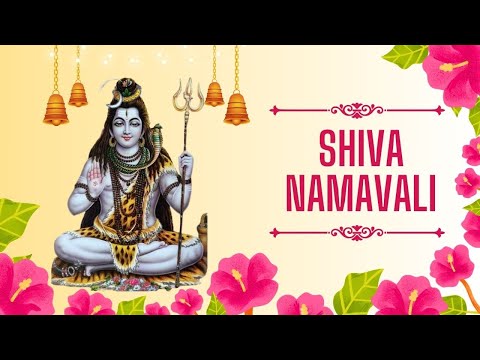
Shiva Namavali
ॐ श्रीकण्ठाय नमः।
Salutations to the one with a beautiful/auspicious neck.
This name refers to Neelakantha, the form Shiva took when he drank the lethal Halahala poison during the churning of the cosmic ocean (Samudra Manthan). The poison turned his neck blue, which is considered a mark of supreme compassion and divine beauty (Shri). It highlights Shiva's role as the selfless savior of the universe, willingly absorbing negativity and danger to protect creation from destruction.
ॐ अनन्ताय नमः।
Salutations to the endless and infinite one.
Shiva is Ananta, meaning he has no beginning and no end. He completely transcends the physical boundaries of time, space, and form. In Shaiva philosophy, this represents the Supreme Brahman—the eternal, unchanging reality that exists before the universe's creation and remains after its total dissolution. It reminds devotees of his boundless nature, which cannot be contained by human comprehension.
ॐ सूक्ष्माय नमः।
Salutations to the subtle one.
Sukshma refers to Shiva's existence in the most microscopic, unmanifested, and intangible form. He is the invisible, spiritual essence pervading all of creation, akin to the soul within the physical body or the unseen energy vibrating within an atom. He cannot be grasped by the gross physical senses; his presence can only be realized through deep meditation and inner spiritual awakening.
ॐ त्रिमूर्तये नमः।
Salutations to the one who embodies the three forms.
While Trimurti commonly refers to the separate deities Brahma, Vishnu, and Shiva, this name signifies that Shiva himself encompasses all three cosmic functions: creation, preservation, and destruction. Shaivism views Shiva as the ultimate Supreme Being whose different energetic states manifest as the divine triad. He is the undivided whole from which the three primary cosmic forces constantly emerge and return.
ॐ अमरेश्वराय नमः।
Salutations to the Lord of the immortals.
'Amara' means immortal (referring to the Devas or gods), and 'Ishvara' means Lord. Shiva is the supreme master of all celestial beings, including Indra and other gods. They constantly seek his guidance and protection during cosmic crises and wars against demons. This name is also famously associated with the Amarnath Lingam, where Shiva revealed the ultimate secret of immortality to Goddess Parvati.
ॐ अर्घीशाय नमः।
Salutations to the Lord of sacred offerings.
'Arghya' refers to the sacred offering of water, milk, or ritual ingredients made with deep devotion. Shiva as Arghisha is the supreme recipient of all sincere offerings. It emphasizes the beauty of ritualistic worship in Shaivism, where offering a simple bel leaf or pouring water (Jalabhisheka) with a pure heart is joyfully accepted by him, granting immense spiritual merit to the devotee.
ॐ भारभूतये नमः।
Salutations to the one who bears the cosmic weight / adorned with ash.
This name carries dual significance. 'Bhara' means weight, signifying Shiva bearing the immense burden of the universe, or the physical impact of the river Ganga falling onto his head. 'Bhuti' refers to sacred ash (Bhasma) or spiritual wealth. It depicts Shiva as the supreme ascetic covered in ash, representing the ultimate truth that all physical matter eventually burns down to nothingness.
ॐ अतिथये नमः।
Salutations to the divine guest.
An Atithi is a guest who arrives without prior notice. Shiva is often depicted wandering the universe, frequently testing his devotees by appearing in disguise as an unexpected guest, an eccentric ascetic, or a beggar. This name teaches the profound spiritual value of hospitality and humility, reminding us that the divine resides in all beings and can visit us at any moment in any form.
ॐ स्थाणवे नमः।
Salutations to the firm, immovable pillar.
Sthanu describes Shiva’s absolute stillness, stability, and unshakeable nature. Mythologically, it refers to his deep state of meditation where he remains as motionless as a tree trunk. Philosophically, it represents the axis mundi—the central pillar of the cosmos (represented by the Jyotirlinga) around which all of creation revolves, while he himself remains eternally constant, silent, and unaffected by the chaotic world.
ॐ हराय नमः।
Salutations to the destroyer and remover.
'Hara' comes from the Sanskrit root *Hri*, meaning to take away or destroy. Shiva is the ultimate remover of sorrows, spiritual ignorance, and human ego. On a cosmic scale, he is the force of dissolution, dismantling the universe at the end of a cycle. On a personal level, chanting 'Hara' invokes his grace to destroy our karmic bondages and the illusions keeping us from enlightenment.
ॐ झण्टीशाय नमः।
Salutations to the Lord of mystic sounds and bells.
This unique name connects Shiva to the primordial sound and rhythmic vibrations of the universe. 'Jhanti' refers to the ringing of bells used in sacred worship. Shiva is the master of Naada (divine sound). The ringing of a bell cuts through mundane mental chatter, and Jhantisha represents the awakening of the inner consciousness through sacred sound, mantras, and vibrations.
ॐ भौतिकाय नमः।
Salutations to the Lord of material elements and spirits.
Shiva is the master of the Pancha Bhutas (the five elements: earth, water, fire, air, and ether) that constitute the entire physical universe. 'Bhautika' also refers to spirits and subtle beings (Bhutas). As Bhuthanatha, he rules over both gross material manifestations and paranormal realms, signifying that the physical world and the unseen spiritual dimensions all operate under his supreme command.
ॐ सद्योजाताय नमः।
Salutations to the one who is instantly manifested.
Sadyojata is one of the five sacred faces (Panchabrahma) of Lord Shiva, looking toward the Western direction. It represents Shiva's spontaneous manifestation out of pure will to protect, guide, or bless his devotees. It embodies his creative aspect associated with the element of earth, signifying purity, child-like innocence, and the sudden dawn of spiritual awakening in a seeker's mind.
ॐ अनुग्रहेश्वराय नमः।
Salutations to the Lord of grace and liberation.
'Anugraha' is the fifth and final cosmic act of Shiva, representing divine grace, blessing, or liberation (Moksha). Anugraheshvara is the highly compassionate form of Shiva who reveals the ultimate truth to the soul, freeing it from the endless cycle of birth and death. It shows that ultimate spiritual liberation is impossible through self-effort alone; it depends entirely on his divine grace.
ॐ अक्रूराय नमः।
Salutations to the gentle, non-cruel one.
Despite his fearsome titles as the cosmic destroyer (Rudra), Shiva is inherently Akrura—pure, gentle, and completely devoid of malice. His acts of destruction are never born of cruelty, but of profound cosmic necessity and deep compassion, clearing out the old to make way for the new. It highlights his role as Ashutosha, the innocent, easily pleased, and benevolent protector of all.
ॐ महासेनाय नमः।
Salutations to the one with a great cosmic army.
Mahasena refers to Shiva as the supreme commander of vast cosmic forces, including the Ganas, Bhutas, and Yoginis. Interestingly, Mahasena is also a prominent name for his warrior son, Lord Kartikeya. Applying this title to Shiva implies that he is the ultimate source of that fierce martial energy, leading the forces of light and dharma against the armies of ignorance and demonic power.
ॐ क्रोधीशाय नमः।
Salutations to the Lord of righteous anger.
Krodhisha represents Shiva’s fierce, destructive anger (Krodha), which is directed solely at arrogance, adharma, and cosmic imbalance. His anger is not a human flaw but a divine tool for purification. Examples include his terrifying wrath against Daksha's ego or Kamadeva's untimely interruption of his meditation. His divine anger burns away illusions, purifying the universe and the individual soul of the devotee.
ॐ चण्डेशाय नमः।
Salutations to the fierce and passionate Lord.
Chanda means fierce, intense, or passionate. Chandisha is a highly potent, aggressive aspect of Shiva, often associated with his protective and retributive nature. In South Indian temple traditions, Chandeshvara is a primary attendant of Shiva who passionately records the deeds of devotees. Calling Shiva 'Chandisha' honors his intense, uncompromising drive to uphold cosmic law and obliterate spiritual impurities.
ॐ पञ्चान्तकाय नमः।
Salutations to the destroyer of the five / conqueror of death.
This esoteric name refers to Shiva as the conqueror of the five physical senses or the dissolver of the five elements during cosmic destruction. It is also linked to his victory over Kamadeva (who wields five floral arrows) and his role as the conqueror of Death (Antaka/Yama). Worshipping Panchantaka helps a devotee gain mastery over distracting worldly senses and the fear of mortality.
ॐ शिवोत्तमाय नमः।
Salutations to the most excellent and supreme Shiva.
'Shiva' means auspicious, and 'Uttama' means the highest or most excellent. Shivottama declares him as the absolute pinnacle of auspiciousness, the Supreme Godhead elevated above all other deities and concepts. In Shaiva Siddhanta philosophy, it asserts that there is no reality higher than Shiva. He is the ultimate perfection, representing the supreme state of peace, purity, and absolute transcendental consciousness.
ॐ एकरुद्राय नमः।
Salutations to the singular, absolute Rudra.
The ancient Vedas mention the existence of eleven Rudras (Ekadash Rudra) who rule over different aspects of nature, but Ekarudra signifies the one underlying Supreme Consciousness from which all these fierce forms emanate. At the time of the great dissolution (Mahapralaya), all forms merge back into this one singular Rudra. It emphasizes monism—the ultimate oneness of the divine despite diverse manifestations.
ॐ कूर्माय नमः।
Salutations to the tortoise-form / foundational Yogi.
While Kurma is famously known as an avatar of Lord Vishnu, in the Shaiva context, it refers to Shiva's foundational, supporting nature. The tortoise represents the withdrawal of the senses (Pratyahara) in Yogic practice. Shiva as Kurma is the supreme Yogi who has perfectly withdrawn his consciousness from worldly distractions into the self, serving as the stable foundation of the meditative universe.
ॐ एकनेत्राय नमः।
Salutations to the Lord with the singular vision.
'Ekanetra' symbolically refers to the third eye of Shiva—the eye of supreme wisdom and spiritual insight—overriding the two physical eyes of worldly duality. It represents a state of singular, undivided focus and absolute non-dual awareness. He sees the entire universe through the single, unifying lens of supreme truth, burning away the illusions of separation and ignorance with his gaze.
ॐ चतुराननाय नमः।
Salutations to the four-faced Lord.
While this title is usually applied to Brahma, Shiva is also worshipped in multi-faced forms (such as the Chaturmukha Linga). The four faces represent his absolute mastery over the four Vedas, the four cardinal directions, and four distinct cosmic aspects (Tatpurusha, Aghora, Vamadeva, and Sadyojata). It visually signifies his omnipresence and his all-encompassing, panoramic knowledge of the entire universe.
ॐ अजेशाय नमः।
Salutations to the Lord of the unborn.
'Aja' means unborn. Ajesha is the supreme Lord who governs even the unmanifested, unborn aspects of reality, including individual souls (Jivas) in their primordial state before taking physical bodies. It also positions Shiva as the superior Lord over Brahma (who is often called Aja). It highlights Shiva's unique status as the causeless cause, eternally existing before creation itself began.
ॐ शर्वाय नमः।
Salutations to the cosmic archer and protector.
Sharva is a highly revered ancient Vedic name for Shiva, strongly associated with the element of Earth (Prithvi). It comes from the Sanskrit root *Sharv*, meaning to injure or kill, referring to his ability to destroy darkness, disease, and evil with his divine arrows. He is the formidable protector of his devotees, effortlessly shooting down their sorrows and karmic obstacles.
ॐ सोमेश्वराय नमः।
Salutations to the Lord of the Moon.
Soma refers to the Moon, which Shiva wears affectionately on his matted locks (Chandrashekhara). According to myth, Shiva saved the Moon god (Chandra) from a curse of fading away, granting him sanctuary on his head. Someshvara (famously worshipped at the Somnath Jyotirlinga) represents Shiva's soothing, cooling, and deeply nurturing aspect, beautifully contrasting with his fiery and destructive nature.
ॐ लाङ्गलिने नमः।
Salutations to the wielder of the plough.
Langala translates to a plough. This is a rare, earthy attribute for Shiva, linking him to agricultural fertility and the ancient Pashupata ascetic traditions. Symbolically, it represents his role in 'ploughing' the barren field of the devotee’s mind. By uprooting the stubborn weeds of ego, karma, and ignorance, he prepares the mental soil for the seeds of spiritual wisdom and liberation.
ॐ दारुकाय नमः।
Salutations to the rending one / Lord of the Pine Forest.
This name heavily relates to the legend of the Darukavana (Pine Forest). Here, Shiva took the form of a handsome, naked, wandering ascetic to test arrogant sages who believed their mere rituals were superior to God. 'Daruka' also means one who tears apart or rends, symbolizing how Shiva shatters the false pride, attachments, and spiritual ego of mankind.
ॐ अर्धनारीश्वराय नमः।
Salutations to the Lord who is half-woman.
This profound name represents Shiva’s iconic and androgynous form, where his right half is male (Shiva) and the left half is female (Parvati/Shakti). It symbolizes the indivisible, perfect unity of opposite cosmic forces—Purusha (pure consciousness) and Prakriti (material energy). It teaches that masculine and feminine energies are entirely equal, complementary, and absolutely essential for the universe to function harmoniously.
ॐ उमाकान्ताय नमः।
Salutations to the beloved husband of Uma.
Uma is another sweet name for Goddess Parvati. Umakanta portrays Shiva in his aspect as the divine husband and lover. Despite being the ultimate ascetic, completely detached from worldly desires, he embraced marital life with Uma to set an example of balancing spiritual detachment with worldly duties (Dharma). It signifies his boundless love and the harmonious union of the soul and divine energy.
ॐ आषाढिणे नमः।
Salutations to the one holding the ascetic's staff.
Ashadha refers to a specific type of wooden ascetic staff (Danda), often made of Palasha wood, carried by wandering yogis and monks. This name specifically honors Shiva’s form as the supreme Yogi and wandering mendicant. It represents his absolute, uncompromising detachment from material wealth and his role as the eternal guru who walks the earth to guide true seekers toward enlightenment.
ॐ दण्डिने नमः।
Salutations to the bearer of the staff of justice.
The Danda (staff) is a universal symbol of authority, discipline, and asceticism. As Dandin, Shiva is the supreme enforcer of cosmic law (Dharma) and the punisher of the wicked. In yogic anatomy, the Danda profoundly represents the spinal column (Sushumna Nadi) through which the Kundalini energy rises to the crown. It shows Shiva as the master of self-discipline and cosmic order.
ॐ अत्रये नमः।
Salutations to the one who transcends the three / the sage Atri.
'A-tri' literally means 'not three,' indicating the divine one who is beyond the three Gunas (Sattva, Rajas, Tamas), the three states of consciousness (waking, dreaming, sleeping), and the trinity of time. It is also the name of a highly revered Vedic sage. Calling Shiva 'Atri' implies he is the ultimate transcendental reality, completely unaffected by the dualities of the material world.
ॐ मीनाय नमः।
Salutations to the cosmic fish / the ever-watchful one.
While the Fish avatar (Matsya) traditionally belongs to Vishnu, 'Meena' applied to Shiva carries deep symbolic weight. A fish never closes its eyes, symbolizing Shiva’s ever-awake, vigilant consciousness that continuously watches over the cosmos. It also connects to the Nath tradition (Matsyendranath), where Shiva is the supreme guru imparting esoteric Yogic wisdom from the depths of the cosmic ocean.
ॐ मेषाय नमः।
Salutations to the ram.
The ram (Mesha) is an ancient symbol of immense unyielding energy, courage, and the primary sacrificial victim in Vedic rituals. Shiva is deeply associated with Daksha's sacrifice, where Daksha’s severed head was ultimately replaced with that of a ram. This name signifies Shiva as both the ultimate recipient of the cosmic sacrifice and the fierce, charging force that crushes spiritual arrogance.
ॐ लोहिताय नमः।
Salutations to the red/copper-colored one.
Lohita beautifully describes Shiva's complexion in his fierce, primordial forms, often described in the Vedas as glowing copper-red. It represents the fiery, active energy of Agni (Fire) and the brilliant rising sun. It reflects his passionate, dynamic nature in destroying ignorance and initiating cosmic cycles. Red is the color of his immense power, ascetic intensity, and deep, consuming divine love.
ॐ शिखिने नमः।
Salutations to the one with the blazing tuft of hair / fire.
Shikhin translates to a peacock, a tuft of hair (Shikha), or fire. In Shaivism, it vividly refers to his blazing matted locks (Jata) that hold the mighty river Ganga and the crescent moon. It also connects him strongly to the element of fire and spiritual illumination, symbolizing the upward-rising flame of Kundalini energy reaching the crown chakra in deep meditation.
ॐ झगलण्टाय नमः।
Salutations to the sudden destroyer of world illusions.
This is an esoteric and rare Agamic name for Shiva. It evokes a highly fierce, swift, and overwhelming aspect of his nature. 'Jhaga' implies something bright, sudden, or a world-illusion, while 'anta' means the end. Thus, it portrays Shiva as the sudden, striking flash of divine reality that violently and instantly ends the dark illusions (Maya) of the material world.
ॐ द्विरण्डाय नमः।
Salutations to the dual-aspected one.
This is a highly specific, rare name associated with specific Pashupata or local esoteric manifestations of Shiva. Symbolically, 'Dvi' (two) represents his absolute mastery over the dualities of human existence—pain and pleasure, life and death, creation and destruction. It shows Shiva as the singular, unifying power that successfully navigates and harmonizes all the opposing forces of nature and existence.
ॐ महाकालाय नमः।
Salutations to the Great Lord of Time.
Kala means both time and death. Shiva as Mahakala is the ultimate, terrifying consumer of time. Everything in the physical universe is subject to the decay of time, but Shiva stands outside it, ultimately absorbing time itself at the end of the universe. Worshipped intensely in Ujjain, Mahakala grants devotees absolute freedom from the fear of death and the relentless march of time.
ॐ कपालिने नमः।
Salutations to the bearer of the skull.
Shiva carries a human skull (Kapala)—specifically the fifth head of Brahma, which he cut off to destroy the creator's arrogance—as his begging bowl. This terrifying imagery conveys a profound philosophical truth: the inevitability of death and the vital destruction of the ego. It teaches that worldly pride and beauty are useless, as everyone ultimately turns to ash and bone.
ॐ पिनाकिने नमः।
Salutations to the wielder of the Pinaka bow.
Pinaka is the name of Lord Shiva’s mighty, unstoppable divine bow. He used it to seamlessly destroy Tripura, the three flying cities of the demons. The bow represents the vast potential energy of the universe, and the arrow is the kinetic manifestation of his divine will. As Pinakin, Shiva is the supreme warrior defending cosmic order against insurmountable demonic forces.
ॐ खड्गीशाय नमः।
Salutations to the Lord of the sword.
Khadga means sword. Shiva holding a sword vividly symbolizes the severing of ignorance and the violent cutting of worldly attachments. The sword of Shiva represents Viveka (sharp spiritual discrimination) and Jnana (true knowledge). Worshipping Khadgisha helps a devotee sharply cut through the fog of Maya (illusion) and attain clear, unclouded perception of the ultimate spiritual truth.
ॐ बकाय नमः।
Salutations to the incredibly focused, crane-like one.
A crane (Baka) stands perfectly still in the water, completely focused and motionless, waiting to strike its prey. In ascetic traditions, this beautifully represents Shiva’s absolute, unwavering concentration (Dhyana) in deep meditation. He teaches the spiritual seeker to cultivate 'Baka Dhyanam'—single-pointed, incredibly patient concentration—ignoring all worldly distractions to successfully catch the ultimate prize of spiritual realization.
ॐ श्वेताय नमः।
Salutations to the pure, white one.
Shveta means white, universally symbolizing ultimate purity, peace, and the Sattvic (harmonious) aspect of divinity. Shiva is often described as Karpoora Gauram (white as camphor) or entirely covered in white ash. This name highlights his untainted, spotless consciousness. Despite living in cremation grounds and dealing with the impure, Shiva remains eternally pristine, untouched by worldly defilements and human sins.
ॐ भृगवे नमः।
Salutations to the sage-like one who roasts karma.
Bhrigu is the name of a prominent Prajapati and Vedic sage, but when applied to Shiva, it implies the intense fire of asceticism that 'roasts' or burns away the seeds of Karma. Just as a roasted seed can no longer sprout, Karma burnt by Shiva's grace cannot cause future rebirths. It also affirms that Shiva is the essence of all great enlightened sages.
ॐ नकुलीशाय नमः।
Salutations to the Lord of the Pashupata lineage (Lakulisha).
Nakulisha (or Lakulisha) is historically recognized as a profound incarnation of Lord Shiva who revived the ancient Pashupata Shaivism tradition. He is famously depicted holding a club (Lakula). This name honors Shiva as the supreme historical Guru who occasionally descends to earth to codify Yogic knowledge, teach strict ascetic discipline, and actively guide human souls toward union with God.
ॐ शिवाय नमः।
Salutations to the ultimately auspicious one.
The sacred name 'Shiva' translates directly to 'auspicious,' 'propitious,' or 'gracious.' It is the most fundamental, beloved, and universally chanted name of the deity. It signifies that beneath his fearsome exterior as a cosmic destroyer, his true nature is absolute bliss, goodness, and pure unconditional love. Chanting his name purifies the mind and brings both spiritual and material well-being to the devotee.
ॐ संवर्त्तकाय नमः।
Salutations to the cosmic annihilator / fire of dissolution.
Samvartaka refers to the devastating cosmic fire and apocalyptic storm clouds that appear at the very end of a Kalpa (cosmic cycle) to dissolve the universe. Shiva governs this terrifying, overwhelming force. It signifies that when creation becomes irreparably burdened with adharma (unrighteousness), Shiva brings about total annihilation, which is an act of mercy necessary to reset the cosmos and begin a fresh creation.
ॐ श्रीकण्ठाय नमः।
ॐ अनन्ताय नमः।
ॐ सूक्ष्माय नमः।
ॐ त्रिमू्र्तये नमः।
ॐ अमरेश्वराय नमः।
ॐ अर्घीशाय नमः।
ॐ भारभूतये नमः।
ॐ अतिथये नमः।
ॐ स्थाणवे नमः।
ॐ हराय नमः।
ॐ झण्टीशाय नमः।
ॐ भौतिकाय नमः।
ॐ सद्योजाताय नमः।
ॐ अनुग्रहेश्वराय नमः।
ॐ अक्रूराय नमः।
ॐ महासेनाय नमः।
ॐ क्रोधीशाय नमः।
ॐ चण्डेशाय नमः।
ॐ पञ्चान्तकाय नमः।
ॐ शिवोत्तमाय नमः।
ॐ एकरुद्राय नमः।
ॐ कूर्माय नमः।
ॐ एकनेत्राय नमः।
ॐ चतुराननाय नमः।
ॐ अजेशाय नमः।
ॐ शर्वाय नमः।
ॐ सोमेश्वराय नमः।
ॐ लाङ्गलिने नमः।
ॐ दारुकाय नमः।
ॐ अर्धनारीश्वराय नमः।
ॐ उमाकान्ताय नमः।
ॐ आषाढिणे नमः।
ॐ दण्डिने नमः।
ॐ अत्रये नमः।
ॐ मीनाय नमः।
ॐ मेषाय नमः।
ॐ लोहिताय नमः।
ॐ शिखिने नमः।
ॐ झगलण्टाय नमः।
ॐ द्विरण्डाय नमः।
ॐ महाकालाय नमः।
ॐ कपालिने नमः।
ॐ पिनाकिने नमः।
ॐ खड्गीशाय नमः।
ॐ बकाय नमः।
ॐ श्वेताय नमः।
ॐ भृगवे नमः।
ॐ नकुलीशाय नमः।
ॐ शिवाय नमः।
ॐ संवर्त्तकाय नमः।

om shreekant'haaya namah'.
om anantaaya namah'.
om sookshmaaya namah'.
om trimoortaye namah'.
om amareshvaraaya namah'.
om argheeshaaya namah'.
om bhaarabhootaye namah'.
om atithaye namah'.
om sthaanave namah'.
om haraaya namah'.
om jhant'eeshaaya namah'.
om bhautikaaya namah'.
om sadyojaataaya namah'.
om anugraheshvaraaya namah'.
om akrooraaya namah'.
om mahaasenaaya namah'.
om krodheeshaaya namah'.
om chand'eshaaya namah'.
om panchaantakaaya namah'.
om shivottamaaya namah'.
om ekarudraaya namah'.
om koormaaya namah'.
om ekanetraaya namah'.
om chaturaananaaya namah'.
om ajeshaaya namah'.
om sharvaaya namah'.
om someshvaraaya namah'.
om laangaline namah'.
om daarukaaya namah'.
om ardhanaareeshvaraaya namah'.
om umaakaantaaya namah'.
om aashaad'hine namah'.
om dand'ine namah'.
om atraye namah'.
om meenaaya namah'.
om meshaaya namah'.
om lohitaaya namah'.
om shikhine namah'.
om jhagalant'aaya namah'.
om dvirand'aaya namah'.
om mahaakaalaaya namah'.
om kapaaline namah'.
om pinaakine namah'.
om khad'geeshaaya namah'.
om bakaaya namah'.
om shvetaaya namah'.
om bhri'gave namah'.
om nakuleeshaaya namah'.
om shivaaya namah'.
om samvarttakaaya namah'.





Other stotras


