Shiva Panchakshara Stotra
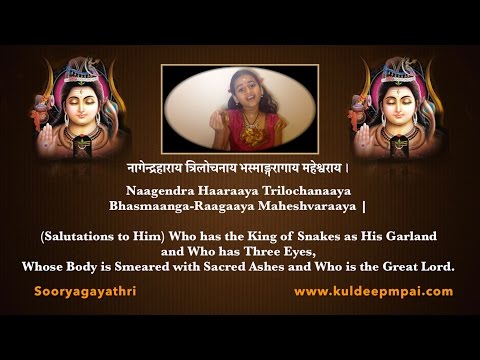
नागेन्द्रहाराय त्रिलोचनाय भस्माङ्गरागाय महेश्वराय।
नित्याय शुद्धाय दिगम्बराय तस्मै नकाराय नमः शिवाय|
मन्दाकिनीसलिलचन्दनचर्चिताय नन्दीश्वरप्रमथनाथमहेश्वराय।
मन्दारपुष्पबहुपुष्पसुपूजिताय तस्मै मकाराय नमः शिवाय|
शिवाय गौरीवदनाब्जवृन्द सूर्याय दक्षाध्वरनाशकाय।
श्रीनीलकण्ठाय वृषध्वजाय तस्मै शिकाराय नमः शिवाय|
वसिष्ठकुम्भोद्भवगौतमार्य मुनीन्द्रदेवार्चितशेखराय।
चन्द्रार्कवैश्वानरलोचनाय तस्मै वकाराय नमः शिवाय|
यज्ञस्वरूपाय जटाधराय पिनाकहस्ताय सनातनाय।
दिव्याय देवाय दिगम्बराय तस्मै यकाराय नमः शिवाय|
The Shiva Panchakshara Stotram is a profound masterpiece composed by Adi Shankaracharya. It celebrates the five sacred syllables—Na, Ma, Shi, Va, Ya—which together form the mantra Om Namah Shivaya. Each verse below is a bridge between the human soul and the Supreme Divine, designed to evoke a sense of deep wonder, unconditional love, and total surrender.
Verse 1: The Syllable ‘NA’ (न)
नागेन्द्रहाराय त्रिलोचनाय
भस्माङ्गरागाय महेश्वराय।
नित्याय शुद्धाय दिगम्बराय
तस्मै नकाराय नमः शिवाय ॥१॥
Meaning:
We begin this sacred journey by bowing to the Lord who wears the King of Serpents as His garland. Close your eyes and visualize this: while the world fears the venom of a snake, Shiva wears it as an ornament, showing us that He has mastered all fears and toxins of life. He is Trilochana, the Three-Eyed Lord. His third eye is not just a physical feature; it is the eye of intuition and wisdom that sees beyond the illusions of this world.
His body is smeared with sacred white ash (Bhasma), a powerful reminder that everything we see—our bodies, our possessions, our pride—will one day turn to dust. Only He is Nitya (eternal) and Shuddha (ever-pure), remaining unchanged while the universe around Him transforms. He is Digambara, the 'Sky-Clad' one. This means He is so vast, so infinite, that no garment made by hands can cover Him; the four directions and the blue sky are His only clothes. With a heart full of awe, I bow to the Great Lord Shiva, who is the embodiment of the first syllable, ‘Na’.
Verse 2: The Syllable ‘MA’ (म)
मन्दाकिनीसलिलचन्दनचर्चिताय
नन्दीश्वरप्रमथनाथमहेश्वराय।
मन्दारपुष्पबहुपुष्पसुपूजिताय
तस्मै मकाराय नमः शिवाय ॥२॥
Meaning:
This verse shifts from awe to a mood of sweet, cooling devotion. Imagine the Lord standing in the celestial river Ganga (Mandakini), His skin adorned with the cooling fragrance of sandalwood paste (Chandana). There is a beautiful softness in this image. He is the beloved Lord of Nandi, the sacred bull, and the leader of the Pramathas—the spirits and beings who follow Him. This tells us of Shiva’s infinite love; He does not just welcome the gods, but also the ghosts, the outcasts, and the wild spirits. He is the home for everyone.
He is worshipped with the divine Mandara flowers and countless other blossoms. Imagine the scent of thousands of flowers offered at His feet. This verse invites us to offer our own lives like a flower at His altar. He is the Great Lord who accepts even the simplest offering if it is given with a pure heart. I offer my humble salutations to the Lord who is the embodiment of the second syllable, ‘Ma’.
Verse 3: The Syllable ‘SHI’ (शि)
शिवाय गौरीवदनाब्जवृन्द-
सूर्याय दक्षाध्वरनाशकाय।
श्रीनीलकण्ठाय वृषध्वजाय
तस्मै शिकाराय नमः शिवाय ॥३॥
Meaning:
Here, we experience the radiant warmth of Divine Love. Shiva is described as the Sun that makes the lotus-like face of Goddess Gauri (Parvati) bloom. Just as a lotus opens its petals when the sun rises, the Divine Mother’s heart overflows with joy in the presence of Shiva. This shows us the beautiful, tender side of the Supreme—a partner, a lover, and a source of light.
Yet, He is also the powerful destroyer of the ego. By destroying the sacrifice of Daksha, He reminds us that any spiritual act done with pride is useless. He is Neelakantha, the Blue-Throated One. In His ultimate compassion, He drank the world-destroying poison to save all living beings. His blue throat is a permanent mark of His sacrifice for us. He sits majestically with the bull flag flying high, representing the triumph of Dharma. To this auspicious and most merciful Lord, I bow. I surrender to the Lord who is the embodiment of the third syllable, ‘Shi’.
Verse 4: The Syllable ‘VA’ (व)
वसिष्ठकुम्भोद्भवगौतमार्य-
मुनीन्द्रदेवार्चितशेखराय।
चन्द्रार्कवैश्वानरलोचनाय
तस्मै वकाराय नमः शिवाय ॥४॥
Meaning:
In this verse, we see Shiva through the eyes of the greatest enlightened sages like Vashishtha, Agastya, and Gautama. These masters of wisdom, along with the gods themselves, bow their heads at Shiva’s feet. It humbles us to realize that the highest knowledge leads to the same point: devotion to Shiva.
His eyes are not ordinary; they are the Sun (Arka), the Moon (Chandra), and the Fire (Vaishvanara). Through them, He sees the past, present, and future. He sees our struggles and our prayers. One eye is fierce like fire, the other is gentle like the moon, and the third is radiant like the sun. This cosmic balance fills the devotee with a sense of safety—we are in the eyes of the Creator. To that Supreme Teacher and Light of the World, I bow. I honor the Lord who is the embodiment of the fourth syllable, ‘Va’.
Verse 5: The Syllable ‘YA’ (य)
यज्ञस्वरूपाय जटाधराय
पिनाकहस्ताय सनातनाय।
दिव्याय देवाय दिगम्बराय
तस्मै यकाराय नमः शिवाय ॥५॥
Meaning:
The final verse brings us to the realization that Shiva is not just a person, but the very essence of the Universe. He is Yajnya-svaruupa—the soul of every sacred ritual and sacrifice. He is the ancient, eternal one (Sanatana), who existed before time began and will exist after time ends. With His long matted hair (Jata) and the mighty Pinaka bow in His hand, He stands as the eternal protector of Truth.
He is the Divya Deva—the Radiant, Divine Being who shines in the heart of every living creature. Once again, He is called Digambara, reminding us that He is boundless and free. As we reach the end of this hymn, we feel a deep sense of peace. The journey through the five syllables concludes in the realization that Shiva is everywhere—in the fire, in the water, in the wind, and most importantly, within us. With a heart overflowing with love, I bow to the Lord who is the embodiment of the fifth syllable, ‘Ya’.
Conclusion: The Fruit of Devotion
पञ्चाक्षरमिदं पुण्यं यः पठेच्छिवसंनिधौ।
शिवलोकमवाप्नोति शिवेन सह मोदते ॥
Whoever chants this holy 'Panchakshara' (five-syllable) hymn with a focused mind near a shrine of Lord Shiva, attains the supreme state of peace. They reach the 'World of Shiva' (Shivaloka), which is not a physical place, but a state of eternal bliss where the soul resides in constant union with the Divine. By repeating these verses, we don't just say words; we breathe in the grace of the Mahadeva.
Om Namah Shivaya.
naagendrahaaraaya trilochanaaya
bhasmaangaraagaaya maheshvaraaya.
nityaaya shuddhaaya digambaraaya
tasmai nakaaraaya namah' shivaaya|
mandaakineesalila-
chandanacharchitaaya
nandeeshvarapramathanaatha-
maheshvaraaya.
mandaarapushpa-
bahupushpasupoojitaaya
tasmai makaaraaya namah' shivaaya|
shivaaya gaureevadanaabjavri'nda-
sooryaaya dakshaadhvaranaashakaaya.
shreeneelakant'haaya vri'shadhvajaaya
tasmai shikaaraaya namah' shivaaya|
vasisht'hakumbhodbhavagautamaarya-
muneendradevaarchitashekharaaya.
chandraarkavaishvaanaralochanaaya
tasmai vakaaraaya namah' shivaaya|
yajnyasvaroopaaya jat'aadharaaya
pinaakahastaaya sanaatanaaya.
divyaaya devaaya digambaraaya
tasmai yakaaraaya namah' shivaaya|





Other stotras


