Nritya Vijaya Nataraja Stotram
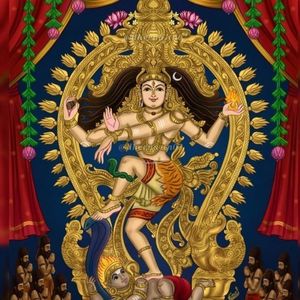
Lyrics:
नमोऽस्तु नटराजाय सर्वसिद्धिप्रदायिने ।
सदाशिवाय शान्ताय नृत्यशास्त्रैकसाक्षिणे ॥1॥
भो नटेश सुरश्रेष्ठ मां पश्य कृपया हर ।
कौशलं मे प्रदेह्याऽऽशु नृत्ये नित्यं जटाधर ॥2॥
सर्वाङ्गसुन्दरं देहि भावनां शुद्धिमुत्तमाम् ।
नृत्येऽहं विजयी जाये त्वदनुग्रहलाभतः ॥3॥
शिवाय ते नमो नित्यं नटराज विभो प्रभो ।
द्रुतं सिद्धिं प्रदेहि त्वं नृत्ये नाट्ये महेश्वर ॥4॥
नमस्करोमि श्रीकण्ठ तव पादारविन्दयोः ।
नृत्यसिद्धिं कुरु स्वामिन् नटराज नमोऽस्तु ते ॥5॥
सुस्तोत्रं नटराजस्य प्रत्यहं यः पठेत् सुधीः ।
नृत्ये विजयमाप्नोति लोकप्रीतिं च विन्दति ॥6॥
namo'stu nat'araajaaya sarvasiddhipradaayine .
sadaashivaaya shaantaaya nri'tyashaastraikasaakshine ..1..
bho nat'esha surashresht'ha maam' pashya kri'payaa hara .
kaushalam' me pradehyaa''shu nri'tye nityam' jat'aadhara ..2..
sarvaangasundaram' dehi bhaavanaam' shuddhimuttamaam .
nri'tye'ham' vijayee jaaye tvadanugrahalaabhatah' ..3..
shivaaya te namo nityam' nat'araaja vibho prabho .
drutam' siddhim' pradehi tvam' nri'tye naat'ye maheshvara ..4..
namaskaromi shreekant'ha tava paadaaravindayoh' .
nri'tyasiddhim' kuru svaamin nat'araaja namo'stu te ..5..
sustotram' nat'araajasya pratyaham' yah' pat'het sudheeh' .
nri'tye vijayamaapnoti lokapreetim' cha vindati ..6..
Meaning:
Verse 1
नमोऽस्तु नटराजाय सर्वसिद्धिप्रदायिने ।
सदाशिवाय शान्ताय नृत्यशास्त्रैकसाक्षिणे ॥
This opening verse offers humble salutations to Nataraja, the Lord of the Dance, who is the granter of all perfections or siddhis. The term Nataraja identifies Shiva as the king of actors and dancers, representing the cosmic energy that orchestrates the rhythm of the universe. He is addressed as Sadashiva, the eternally auspicious one, and Shanta, the peaceful one. This juxtaposition of intense movement in dance and inner stillness reflects the core of Shaiva philosophy, where the Supreme Reality remains calm and unaffected while performing the five-fold cosmic acts of creation, maintenance, and destruction.
Nataraja is the presiding deity of Chidambaram, performing the Ananda Tandava to sustain the world. The epithet Nrityashastraikasakshine is particularly significant, as it positions Shiva as the sole witness or the supreme authority of the Natyashastra. It suggests that all forms of artistic expression are observed and validated by him. Philosophically, the Sakshi or witness state is the goal of a seeker, where one observes the play of nature without attachment. By invoking him, the practitioner seeks not just technical skill but the spiritual realization that comes through disciplined art and devotion to the eternal witness of the cosmic dance.
Verse 2
भो नटेश सुरश्रेष्ठ मां पश्य कृपया हर ।
कौशलं मे प्रदेह्याऽऽशु नृत्ये नित्यं जटाधर ॥
The second verse is a direct prayer to Natesha, the chief among gods, asking for his divine gaze and compassion. The practitioner addresses Shiva as Hara, the remover of sins and obstacles, requesting immediate mastery and skill in the art of dance. The use of the term Surashreshtha emphasizes Shivas supremacy in the celestial hierarchy, acknowledging him as the source of all creative arts. This appeal is not merely for physical dexterity but for the divine grace that transforms a mechanical performance into a spiritual offering.
The description of Shiva as Jatadhara, the one with matted hair, carries deep philosophical weight. The matted locks are said to have broken the fall of the celestial river Ganga, symbolizing the containment and control of immense power and knowledge. In the context of a dancer, this implies the necessity of discipline and the stabilization of the mind. Just as Shiva holds the turbulent Ganga, the artist must hold their emotions and energies with focus. The plea for Kaushalam or skill reflects the Vedic ideal of Yoga being excellence in action, where the performer seeks to align their movements with the divine rhythm of the cosmos.
Verse 3
सर्वाङ्गसुन्दरं देहि भावनां शुद्धिमुत्तमाम् ।
नृत्येऽहं विजयी जाये त्वदनुग्रहलाभतः ॥
In this verse, the seeker asks for two distinct qualities: physical beauty in movement and internal emotional purity. Sarvangasundaram refers to the perfection of the physical form and the grace of every limb, which is essential for the Angika Abhinaya or physical expression in Indian classical dance. However, the prayer quickly moves beyond the external to ask for Bhavanam Shuddhimuttamam, the highest purity of feelings. This aligns with the aesthetic theory of Rasa, where the artists internal state must be pure to evoke a divine experience in the audience.
The latter half of the verse expresses a desire for victory in the field of dance, explicitly stating that such success is only possible through Shivas Anugraha or grace. In Indian philosophy, Anugraha is the fifth act of Shiva, representing the power of liberation and divine favor. The victory mentioned here is not just competitive success but the triumph over the ego and the limitations of the self. By attributing potential success to the Lord, the dancer practices humility, ensuring that the art remains a form of worship rather than a means of self-aggrandizement. The pursuit of beauty is thus harmonized with the pursuit of spiritual truth.
Verse 4
शिवाय ते नमो नित्यं नटराज विभो प्रभो ।
द्रुतं सिद्धिं प्रदेहि त्वं नृत्ये नाट्ये महेश्वर ॥
This verse reinforces the practitioners devotion through eternal salutations to Shiva, addressing him as Vibhu, the all-pervading, and Prabhu, the master. These epithets highlight the omnipresence of the divine energy that animates all matter. When Shiva is called Maheshvara, it signifies his role as the Great Lord of the universe, who transcends the cycles of creation and destruction. The prayer seeks Drutam Siddhim, or swift accomplishment, in both Nritya, pure dance, and Natya, dramatic representation, covering the entire spectrum of performing arts.
The distinction between dance and drama is significant in the Sanskrit aesthetic tradition. Nritya focuses on rhythm and movement, while Natya incorporates storytelling and characterization. By asking for perfection in both, the artist seeks a holistic mastery of expression. Shiva is the originator of these arts, having taught them to the sage Bharata. The philosophical undertone is that the entire world is a stage or a dance-drama orchestrated by the Lord. Realizing this allows the artist to see their performance as a microcosm of the cosmic play, leading to a state of spiritual attainment through the medium of creative excellence.
Verse 5
नमस्करोमि श्रीकण्ठ तव पादारविन्दयोः ।
नृत्यसिद्धिं कुरु स्वामिन् नटराज नमोऽस्तु ते ॥
The fifth verse focuses on the act of total surrender, as the devotee bows before the lotus feet of Shrikantha. The name Shrikantha, meaning the one with the beautiful or auspicious throat, refers to the episode of the churning of the ocean. Shiva drank the Halahala poison to save the world, which turned his throat blue. This epithet serves as a reminder of Shivas compassion and his role as the protector of all beings. By seeking refuge at his feet, the dancer acknowledges that the source of all talent and life is the divine sacrifice and protection offered by the Lord.
The repetition of the request for Nrityasiddhi emphasizes the artists singular focus and dedication. Addressing Shiva as Svamin acknowledges him as the true owner and master of the artists body and soul. This relationship of master and servant in the spiritual sense helps in dissolving the artists individual identity into the universal consciousness. The lotus feet symbolize the point where the transcendent touches the mundane, providing a path for the devotee to rise above worldly attachments. Thus, the salutation is an act of aligning ones personal creative journey with the divine will, ensuring that the dance becomes a vehicle for liberation.
Verse 6
सुस्तोत्रं नटराजस्य प्रत्यहं यः पठेत् सुधीः ।
नृत्ये विजयमाप्नोति लोकप्रीतिं च विन्दति ॥
The final verse constitutes the Phala-shruti, describing the benefits of reciting this hymn. It states that a Sudhih, a person of clear intellect and wisdom, who chants this stotram daily will achieve excellence in the art of dance. The term Sudhih is important as it implies that the recitation should not be a mechanical act but one performed with understanding and devotion. Regularity in practice, denoted by Pratyaham, reflects the discipline required both in spiritual life and in the mastery of any art form.
Beyond technical success, the verse promises Lokapriti, the affection and appreciation of the world. In a philosophical sense, this indicates that the artist becomes a source of joy and inspiration for others, fostering a sense of harmony in society. When an artist attains divine grace, their work resonates with a universal truth that transcends cultural boundaries. The ultimate goal of Indian aesthetics is to lead the spectator to a state of Bliss or Ananda. Thus, the one who masters this prayer and the art it represents does not just win competitions but wins hearts, fulfilling the true purpose of art by elevating the collective consciousness of the people.





Other stotras


