Omkareshwara Stuti
Lyrics:
पार्वत्युवाच -
महादेवमहानन्दकरुणामृतसागर ।
श्रुतमुत्तममाख्यानं महाकालगणस्य च ॥1॥
किं वान्यत् प्रीतिजनकं क्षेत्रमस्ति महेश्वर ।
क्षेत्राणां त्वं पतिः शम्भो विशिष्टं वक्तुमर्हसि ॥2॥
ईश्वर उवाच -
क्षेत्रमस्त्येकमुत्कृष्टमुत्फुल्लकमलानने ।
ओङ्कारं नाम विमलं कलिकल्मषनाशनम् ॥3॥
तत्र शैववरा नित्यं निवसन्ति सहस्रशः ।
ते सर्वे मम लिङ्गार्चां कुर्वन्त्येव प्रतिक्षणम् ॥4॥
भासिताभासितैर्नित्यं शान्ता दान्ता जितेन्द्रियाः ।
रुद्राक्षवरभूषाढ्या भालाक्षान्यस्तमानसाः ॥5॥
तत्रास्ति सरितां श्रेष्ठा लिङ्गसङ्गतरङ्गिता ।
नर्मदा शर्मदा नित्यं स्नानात्पानावगाहनात् ॥6॥
पापौघसङ्घभङ्गाढ्या वातपोतसुशीतला ।
तत्रास्ति कुण्डमुत्कृष्टमोङ्काराख्यं शुचिस्मिते ॥7॥
तत्कुण्डदर्शनादेव मल्लोके निवसेच्चिरम् ।
तत्कुण्डोदकपानेन हृदि लिङ्गं प्रजायते ॥8॥
भावाः पिबन्ति तत्कुण्डजलं शीतं विमुक्तये ।
तृप्तिं प्रयान्ति पितरः तत्कुण्डजलतर्पिताः ॥9॥
सदा तत्कुण्डरक्षार्थं गणाः संस्थापिता मया ।
कुण्डधारप्रभृतयः शूलमुद्गरपाणयः ॥10॥
गजेन्द्रचर्मवसना मृगेन्द्रसमविक्रमाः ।
हरीन्द्रानपि ते हन्युर्गिरीन्द्रसमविग्रहाह ॥11॥
धनुःशरकराः सर्वे जटाशोभितमस्तकाः ।
अग्निरित्यादिभिर्मन्त्रैर्भस्मोद्धूलितविग्रहा ॥12॥
सङ्ग्राममुखराः सर्वे गणा मेदुरविग्रहाः ।
कदाचिदननुज्ञाप्त तान् गणान् मददर्पितः ॥13॥
अप्सरोभिः परिवृतो मरुतां पतिरुद्धतः ।
आरुह्याभ्रमुनाथं तं क्रीडितुं नर्मदाजले ॥14॥
समाजगाम त्वरितः शच्या साकं शिवे तदा ।
तदा तं गणपाः क्रुद्धाः सर्वे ते ह्यतिमन्यवः ॥15॥
सगजं पातयन्नब्धौ शच्या साकं सुरेश्वरम् ।
सुरांस्तदा सवरुणान् बिभिदुः पवनानलान् ॥16॥
निस्त्रिंशवरधाराभिः सुतीक्ष्णाग्रैः शिलीमुखैः ।
मुद्गरैर्बिभिदुश्चान्ये सवाहायुधभूषणान् ॥17॥
विवाहनांस्तदा देवान् स्रवद्रक्तान् स्खलत्पदान् ।
कान्दिशीकान् मुक्तकेशान् क्षणाच्चक्रुर्गणेश्वराः ॥18॥
अप्सरास्ता विकन्नराः रुदन्त्यो मुक्तमूर्धजाः ।
हाहा बतेति क्रन्दन्त्यः स्रवद्रक्तार्द्रवाससः ॥19॥
तथा देवगणाः सर्वे शक्राद्या भयकम्पिताः ।
ओङ्कारं तत्र तल्लिङ्गं शरणं जग्मुरीश्वरम् ॥20॥
paarvatyuvaacha -
mahaadevamahaanandakarunaamri'tasaagara .
shrutamuttamamaakhyaanam' mahaakaalaganasya cha ..1..
kim' vaanyat preetijanakam' kshetramasti maheshvara .
kshetraanaam' tvam' patih' shambho vishisht'am' vaktumarhasi ..2..
eeshvara uvaacha -
kshetramastyekamutkri'sht'amutphullakamalaanane .
onkaaram' naama vimalam' kalikalmashanaashanam ..3..
tatra shaivavaraa nityam' nivasanti sahasrashah' .
te sarve mama lingaarchaam' kurvantyeva pratikshanam ..4..
bhaasitaabhaasitairnityam' shaantaa daantaa jitendriyaah' .
rudraakshavarabhooshaad'hyaa bhaalaakshaanyastamaanasaah' ..5..
tatraasti saritaam' shresht'haa lingasangatarangitaa .
narmadaa sharmadaa nityam' snaanaatpaanaavagaahanaat ..6..
paapaughasanghabhangaad'hyaa vaatapotasusheetalaa .
tatraasti kund'amutkri'sht'amonkaaraakhyam' shuchismite ..7..
tatkund'adarshanaadeva malloke nivasechchiram .
tatkund'odakapaanena hri'di lingam' prajaayate ..8..
bhaavaah' pibanti tatkund'ajalam' sheetam' vimuktaye .
tri'ptim' prayaanti pitarah' tatkund'ajalatarpitaah' ..9..
sadaa tatkund'arakshaartham' ganaah' sam'sthaapitaa mayaa .
kund'adhaaraprabhri'tayah' shoolamudgarapaanayah' ..10..
gajendracharmavasanaa mri'gendrasamavikramaah' .
hareendraanapi te hanyurgireendrasamavigrahaaha ..11..
dhanuh'sharakaraah' sarve jat'aashobhitamastakaah' .
agnirityaadibhirmantrairbhasmoddhoolitavigrahaa ..12..
sangraamamukharaah' sarve ganaa meduravigrahaah' .
kadaachidananujnyaapta taan ganaan madadarpitah' ..13..
apsarobhih' parivri'to marutaam' patiruddhatah' .
aaruhyaabhramunaatham' tam' kreed'itum' narmadaajale ..14..
samaajagaama tvaritah' shachyaa saakam' shive tadaa .
tadaa tam' ganapaah' kruddhaah' sarve te hyatimanyavah' ..15..
sagajam' paatayannabdhau shachyaa saakam' sureshvaram .
suraam'stadaa savarunaan bibhiduh' pavanaanalaan ..16..
nistrim'shavaradhaaraabhih' suteekshnaagraih' shileemukhaih' .
mudgarairbibhidushchaanye savaahaayudhabhooshanaan ..17..
vivaahanaam'stadaa devaan sravadraktaan skhalatpadaan .
kaandisheekaan muktakeshaan kshanaachchakrurganeshvaraah' ..18..
apsaraastaa vikannaraah' rudantyo muktamoordhajaah' .
haahaa bateti krandantyah' sravadraktaardravaasasah' ..19..
tathaa devaganaah' sarve shakraadyaa bhayakampitaah' .
onkaaram' tatra tallingam' sharanam' jagmureeshvaram ..20..
Meaning:
Verse 1
पार्वत्युवाच -
महादेवमहानन्दकरुणामृतसागर ।
श्रुतमुत्तममाख्यानं महाकालगणस्य च ॥1॥
In this opening verse, the Goddess Parvati addresses Lord Shiva using several highly significant epithets that reveal his multifaceted nature. Mahadeva identifies him as the Supreme Deity, the one who remains the source and end of all celestial beings and the cosmic order. Mahananda refers to the state of eternal, unconditioned bliss that constitutes Shiva’s essential being, suggesting that he is the reservoir of joy for the entire universe. Karunamritasagara is a beautiful compound word describing Shiva as an ocean of the nectar of compassion. This highlights his role as the ultimate refuge for those seeking relief from the sufferings of worldly existence, portraying him as a benevolent protector whose mercy is as vast and deep as the sea.
The mythological context of this verse is situated within a divine dialogue typical of the Puranas, specifically the Skanda Purana. Parvati mentions that she has previously heard the excellent narrative concerning the Ganas, or the celestial attendants, of Mahakala. Mahakala represents Shiva as the master of time and the force of ultimate dissolution. By acknowledging this, Parvati sets the stage for a deeper inquiry into the sacred geography associated with Shiva’s presence. She acts as the seeker of wisdom, representing the human soul’s yearning to understand the mysteries of divine manifestation and the importance of holy sites where the divine and earthly realms intersect.
Philosophically, this verse emphasizes the importance of Shravana, or the act of listening to sacred stories, as a primary step in the path of devotion. The epithets used here suggest that Shiva is not a distant ruler but an accessible fountain of grace. The mention of Mahakala’s Ganas implies that the path to the supreme is guarded by various spiritual forces, and understanding their role is essential for a practitioner. This interaction between the Divine Mother and the Great Lord serves as a model for the Guru-Shishya relationship, where the teacher’s compassion meets the student’s sincere desire for knowledge.
Verse 2
किं वान्यत् प्रीतिजनकं क्षेत्रमस्ति महेश्वर ।
क्षेत्राणां त्वं पतिः शम्भो विशिष्टं वक्तुमर्हसि ॥2॥
Parvati continues her inquiry by asking Lord Shiva if there is another sacred site that is particularly pleasing and spiritually significant. She addresses him as Maheshwara, the Great Controller, and Shambhu, the source of auspiciousness and peace. By calling him the Lord of all kshetras, she acknowledges that every holy place on earth is ultimately a manifestation of his power and presence. She requests him to describe a specific, distinguished location that holds a unique place among the many pilgrimage centers dedicated to his worship. This query stems from her desire to reveal to the world the most effective means of attaining spiritual merit through the visiting of holy lands.
The mythological significance of a kshetra in Indian thought is that of a field of spiritual harvest. Just as a fertile field yields crops when sown with seeds, a sacred kshetra yields spiritual fruits when an aspirant performs rituals and meditation there. Parvati’s request is aimed at identifying a place that is pre-eminent in its ability to grant liberation and joy. The term Pritijanakam indicates a place that not only grants merit but also delights the heart of the devotee and the Lord himself. This suggests that certain locations on earth have a higher concentration of divine energy, making them more conducive to transcendental experiences.
From a philosophical perspective, Shiva being called the Lord of Fields implies his immanence in the physical world. While he is transcendent, he chooses to localize his energy in specific spots for the benefit of humanity. The request for a specific or vishishta description highlights the Vedic and Puranic tradition of highlighting the Mahatmya or greatness of particular shrines to inspire faith. This verse reflects the idea that while God is everywhere, sacred spaces act like lenses that focus the divine light, allowing the devotee to perceive the reality of the self more clearly through the medium of the physical environment.
Verse 3
ईश्वर उवाच -
क्षेत्रमस्त्येकमुत्कृष्टमुत्फुल्लकमलानने ।
ओङ्कारं नाम विमलं कलिकल्मषनाशनम् ॥3॥
Lord Shiva, addressed here as Ishwara, begins his response to Parvati. He addresses her with the charming epithet Utphullakamalanane, meaning one whose face is like a fully blossomed lotus. He declares that there is indeed one supreme and excellent sacred place known by the name Omkara. He describes this site as Vimala, which means pure or stainless, and emphasizes its primary function as Kalikalmashanashanam, the destroyer of the sins and impurities associated with the Kali Yuga. This response introduces the legendary site of Omkareshwar, located on the banks of the Narmada river, as the pinnacle of holy retreats.
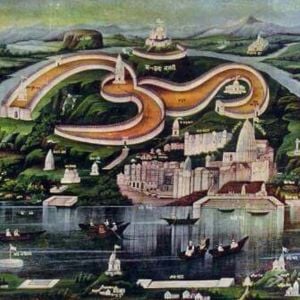
The mythological context of the name Omkara is deeply rooted in the primordial sound of the universe. In the Puranas, the island of Mandhata, where the temple is located, is said to be shaped like the sacred syllable Om. By identifying the place with the Pranava, the sound-symbol of the Absolute, Shiva indicates that the geography of the site itself is a physical representation of the highest metaphysical reality. The mention of the Kali Yuga is significant as it suggests that in an age of spiritual decline, such powerful sites are essential for maintaining the purity of the soul and finding a path back to righteousness.
Philosophically, this verse equates the physical sacred site with the cleansing power of divine sound. The word Vimala suggests that the kshetra is free from the three gunas of nature in their agitated state, providing a space of pure Sattva. By calling it a destroyer of sins, Shiva points to the transformative power of pilgrimage. It is not merely a physical journey but a process of internal purification where the heavy burdens of past actions are dissolved by the sanctity of the environment. The blossomed lotus comparison for Parvati’s face mirrors the blossoming of consciousness that occurs when one realizes the greatness of the Omkara kshetra.
Verse 4
तत्र शैववरा नित्यं निवसन्ति सहस्रशः ।
ते सर्वे मम लिङ्गार्चां कुर्वन्त्येव प्रतिक्षणम् ॥4॥
In this verse, Shiva describes the inhabitants of the Omkara kshetra, noting that thousands of the best among Shaivas or devotees of Shiva reside there permanently. He emphasizes that these devotees are not merely residents but are constantly engaged in the worship of his Linga. The phrase pratikshanam, meaning at every moment, highlights the intensity and continuity of their devotion. This creates a picture of a place that is perpetually vibrant with spiritual activity, where the mundane passage of time is replaced by a continuous cycle of adoration and meditation on the divine form of the Linga.
Mythologically, the Linga is the beginningless and endless pillar of light that represents Shiva’s formless and all-pervading nature. The presence of thousands of enlightened devotees worshipping the Linga at Omkareshwar suggests that the site is a hub of spiritual energy. These devotees are referred to as Shaivavara, the best of the followers of Shiva, indicating that the kshetra attracts souls of high caliber who have renounced worldly distractions to focus entirely on the ultimate reality. Their collective worship creates a powerful spiritual atmosphere that benefits any pilgrim who enters the sacred boundaries of the island.
Philosophically, this verse underscores the importance of Sangha or the company of the holy. To live in a place where everyone is focused on the divine makes it easier for an individual to maintain their own spiritual practice. The emphasis on constant worship suggests that the goal of human life is to achieve a state of Uninterrupted Awareness of God. By mentioning that these devotees worship his Linga every moment, Shiva teaches that true devotion is not a periodic ritual but a state of being where every breath and every second is offered to the Divine, transforming the act of living itself into a continuous sacrifice.
Verse 5
भासिताभासितैर्नित्यं शान्ता दान्ता जितेन्द्रियाः ।
रुद्राक्षवरभूषाढ्या भालाक्षान्यस्तमानसाः ॥5॥
Shiva elaborates on the characteristics of the holy men residing in Omkara. They are described as being adorned with holy ash, referred to as bhasita and abhasita, which they smear on their bodies daily. They are shanta or peaceful, danta or self-controlled, and jitendriyah, meaning they have conquered their senses. Furthermore, they are richly adorned with the best of Rudraksha beads and have their minds firmly fixed on the Bhalaksha, which is the third eye of Shiva or the eye of spiritual wisdom located on the forehead. These descriptions provide a vivid portrait of the ideal ascetic who has internalised the presence of the Lord.
The mythological symbolism of ash in Saivism represents the ultimate reality that remains when the illusory world is burnt away by the fire of wisdom. By smearing ash, the devotees signal their detachment from the perishable body. Rudraksha beads are believed to have originated from the tears of Shiva, symbolizing his compassion for the world; wearing them is a way for the devotee to stay connected to Shiva’s grace. The focus on the third eye suggests that these sages are not looking at the world with their physical eyes but are seeing through the lens of spiritual intuition, looking beyond duality into the unity of existence.
Philosophically, this verse outlines the ethical and spiritual requirements for higher realization. Shanti and Dama are foundational virtues in Vedanta, signifying peace of mind and control of the senses. A mind fixed on the Bhalaksha indicates a state of Samadhi or deep concentration where the individual ego merges with the cosmic consciousness. This verse serves as a guide for spiritual aspirants, suggesting that the true beauty of a person lies not in external ornaments but in the jewels of self-control, peace, and unwavering devotion. The residents of Omkara embody the living philosophy of Shiva, where every aspect of their appearance and behavior reflects their spiritual attainment.
Verse 6
तत्रास्ति सरितां श्रेष्ठा लिङ्गसङ्गतरङ्गिता ।
नर्मदा शर्मदा नित्यं स्नानात्पानावगाहनात् ॥6॥
Shiva now introduces the geographic and spiritual lifeline of the Omkara kshetra: the river Narmada. He calls her the best among rivers, emphasizing that her waves are sanctified by their constant contact with the Shiva Linga. The verse uses the beautiful epithet Sharmada, meaning the giver of joy or bliss. Shiva explains that this river provides spiritual and temporal happiness through three primary acts: snana or bathing in its waters, pana or drinking its water, and avagahana or complete immersion. The Narmada is thus presented not just as a body of water but as a living goddess who purifies and gladdens the souls of all who approach her.
Mythologically, the Narmada is considered one of the holiest rivers in India, often said to have sprung from the body of Shiva himself during his intense penance. Unlike the Ganges, which requires bathing to purify sins, the Narmada is said to purify a person by its mere sight. The phrase lingasangataraṅgitā suggests that as the river flows around the island of Omkareshwar, its waters are perpetually touching the sacred rocks that are naturally formed as Lingas, known as Banalingas. This physical contact between the water and the stone symbol of Shiva makes the river an extension of the Lord’s own body, carrying his blessings to everyone.
Philosophically, the river represents the flow of divine grace through the material world. The term Sharmada implies that the bliss provided by the Narmada is not a fleeting pleasure but a deep, spiritual contentment that arises from the removal of impurities. The three acts of bathing, drinking, and immersion symbolize different levels of engagement with the divine. Drinking the water represents internalizing the divine, bathing represents external purification, and immersion represents the total surrender of the self into the infinite ocean of God’s presence. The Narmada thus acts as a bridge between the physical and the spiritual realms.
Verse 7
पापौघसङ्घभङ्गाढ्या वातपोतसुशीतला ।
तत्रास्ति कुण्डमुत्कृष्टमोङ्काराख्यं शुचिस्मिते ॥7॥
In this verse, Shiva continues to praise the environment of Omkara, addressing Parvati as Shuchismite, the one with a pure and holy smile. He describes the atmosphere as being cooled by gentle breezes, referred to as vata-pota-sushitala, which add to the serenity of the place. He highlights that this sacred site is rich in the power to shatter the massive accumulation of sins, termed papaughasanghabhangadhya. Central to this purification is a supreme pond or tank known as the Omkara-kunda, which Shiva identifies as a particularly excellent feature of the landscape.
The mythological significance of the Omkara-kunda lies in its association with the primordial sound. Such kundas or holy tanks in temple complexes are often viewed as the concentrated essence of the divine power present in the kshetra. The breeze mentioned here is not just a physical cooling agent but is often interpreted in a spiritual sense as the breath of the divine that soothes the heat of worldly suffering. The address to Parvati as one with a pure smile suggests that the knowledge of such a holy place brings joy to the pure-hearted, as it provides a tangible means for humanity to overcome the consequences of their past transgressions.
Philosophically, the shattering of sins implies the destruction of the vasanas or latent tendencies that bind the soul to the cycle of rebirth. A sacred tank like the Omkara-kunda serves as a focal point for the pilgrim’s intention to cleanse their inner self. The cooling breeze symbolizes the peace that descends upon a person when they enter a sanctified space, leaving behind the turbulence of the ego-driven life. This verse emphasizes that the external beauty and physical features of a holy site are reflections of its internal spiritual power to heal and restore the soul to its original state of purity and joy.
Verse 8
तत्कुण्डदर्शनादेव मल्लोके निवसेच्चिरम् ।
तत्कुण्डोदकपानेन हृदि लिङ्गं प्रजायते ॥8॥
Shiva describes the extraordinary spiritual benefits derived from the Omkara-kunda. He states that by simply beholding or having the darshana of this sacred pond, a person earns the merit to reside in his divine abode, Shivayoka, for a very long time. More profoundly, he reveals that by drinking the water from this kunda, a Shiva Linga is birthed or manifested within the heart of the devotee. This implies a transformation where the external symbol of the deity becomes an internal reality, leading to a state of constant communion with the divine within oneself.
Mythologically, the promise of residence in Shiva’s world reflects the Puranic concept of Salokya Mukti, where the devotee lives in the same realm as the Lord. The manifestation of the Linga in the heart is a powerful mystical image. It suggests that the water of the Omkara-kunda is permeated with the essence of Shiva’s being. When a devotee consumes it with faith, they are not just hydrating their body but are taking in a spiritual seed that grows into a permanent realization of God’s presence. This internal Linga represents the Atman, the true self, which is identical to Shiva.
Philosophically, this verse transitions from the importance of external pilgrimage to internal realization. Darshana, or seeing, is a significant act in Indian spirituality where the eye becomes a channel for grace. However, the act of drinking the water and the subsequent manifestation of the Linga in the heart points toward the internalization of worship. It suggests that the ultimate purpose of visiting a sacred site is to awaken the dormant divinity within the human heart. The kunda thus acts as a catalyst for the transition from dualistic worship to the non-dual realization that the Lord resides within the core of one's own being.
Verse 9
भावाः पिबन्ति तत्कुण्डजलं शीतं विमुक्तये ।
तृप्तिं प्रयान्ति पितरः तत्कुण्डजलतर्पिताः ॥9॥
In this verse, Shiva explains the dual benefits of the Omkara-kunda for both the living and the departed. He mentions that Bhavas, referring to enlightened beings or those with a deep spiritual temperament, drink the cool water of the pond for the purpose of attaining liberation or vimukti. Simultaneously, he notes that the ancestors or Pitrus attain supreme satisfaction when they are offered libations made from the water of this kunda. This highlights the pond’s role as a bridge between different planes of existence, serving the needs of seekers of truth and the spirits of the forefathers.
The mythological context involves the practice of Tarpana, or the offering of water to ancestors to help them in their journey through the afterlife. In Hindu tradition, a sacred site’s efficacy is often measured by its ability to benefit the Pitrus. By using the water of the Omkara-kunda, the merit of the ritual is amplified immensely, ensuring that the ancestors reach higher realms of peace. The mention of Bhavas drinking for liberation suggests that the water has the power to dissolve the subtle bonds of karma, making it a nectar of immortality for those who are on the final stages of their spiritual journey.
Philosophically, the verse addresses the continuity of the soul and the interconnectedness of generations. Liberation is the ultimate goal of the individual, while the satisfaction of ancestors represents the fulfillment of one’s social and spiritual duties towards their lineage. The cool nature of the water symbolizes the quenching of the fires of desire and the pacification of the restless mind. By serving both the living seeker and the departed soul, the Omkara-kunda is presented as a universal source of grace that harmonizes the different dimensions of the human experience, leading everything toward a state of spiritual fulfillment and peace.
Verse 10
सदा तत्कुण्डरक्षार्थं गणाः संस्थापिता मया ।
कुण्डधारप्रभृतयः शूलमुद्गरपाणयः ॥10॥
Shiva reveals that the sanctity of the Omkara-kunda is not left unguarded. He states that he has permanently stationed his Ganas, or divine attendants, to protect the pond. He specifically mentions Kundadhara and others as the leaders of these guardians. These Ganas are described as being armed with the Shula or trident and the Mudgara or mace. This indicates that the sacred space is under divine protection and that any intrusion by unworthy or arrogant forces is met with the formidable power of Shiva’s own army.
Mythologically, the Ganas are a diverse group of beings who serve Shiva and live on Mount Kailash or in his various sacred abodes. Kundadhara is a specific attendant whose name implies his role as the holder or protector of the kunda. The trident and mace are weapons that symbolize the destruction of ego and the three types of miseries (Adhyatmika, Adhibhautika, and Adhidaivika). The presence of these armed guardians emphasizes that a holy site is a spiritual fortress, and the treasures of grace it holds are protected from those who would approach it with impure intentions or without the required humility and permission.
Philosophically, the protection of the pond symbolizes the preservation of spiritual purity. The weapons held by the Ganas represent the necessary discipline and strength required to guard one's internal spiritual progress. Just as Shiva protects the external kunda with his Ganas, the aspirant must protect the inner kunda of their heart with the weapons of viveka or discrimination and vairagya or dispassion. The mention of these guardians serves to instill a sense of awe and respect in the pilgrim, reminding them that entering a sacred space is a privilege that requires a state of mental and spiritual readiness.
Verse 11
गजेन्द्रचर्मवसना मृगेन्द्रसमविक्रमाः ।
हरीन्द्रानपि ते हन्युर्गिरीन्द्रसमविग्रहाह ॥11॥
Shiva continues his description of the Ganas who guard the Omkara-kunda, painting a picture of immense strength and terrifying beauty. He describes them as wearing the hides of great elephants, termed gajendracharma-vasana. They possess the prowess and valor of the king of beasts, the lion, and are said to be capable of slaying even the most powerful of lions or divine beings. Their physical forms are described as being as massive and immovable as the king of mountains, the Girindra. This imagery reinforces their role as invincible protectors who embody the raw, primordial power of Lord Shiva himself.
Mythologically, wearing elephant skin is a trait the Ganas share with Shiva, who is famously known as Gajasamhara-murti, the slayer of the elephant demon Gajasura. The elephant skin symbolizes the conquest of pride and massive ego. The comparison to lions and mountains highlights their status as the peak of physical and spiritual power. By stating they could slay even the strongest creatures, Shiva illustrates that no earthly or celestial force can challenge the authority of these guardians when they are performing their divine duty. Their mountain-like stature suggests they are the unshakeable pillars of the kshetra’s defense.
Philosophically, the appearance of the Ganas represents the transformation of wild, elemental forces into the service of the divine. The massive size and lion-like bravery signify that the path of Shiva is not for the faint-hearted; it requires a colossal strength of character. The elephant skin serves as a reminder that the spiritual journey involves stripping away the thick outer layers of worldly identity and arrogance. These guardians represent the fierce aspect of protection that ensures the sacred environment remains untainted by the chaos of the mundane world, providing a safe haven for the sincere devotee to practice their austerities.
Verse 12
धनुःशरकराः सर्वे जटाशोभितमस्तकाः ।
अग्निरित्यादिभिर्मन्त्रैर्भस्मोद्धूलितविग्रहा ॥12॥
The description of the Ganas is further detailed, noting that they carry bows and arrows in their hands and have their heads adorned with matted hair or jatas. A crucial spiritual detail is added: their bodies are entirely smeared with holy ash while they chant sacred mantras such as the Agniriti mantra. This practice of Bhasma-uddhulana, or smearing ash, combined with the recitation of Vedic mantras, identifies them as advanced spiritual beings who have integrated the fire of ritual and the fire of knowledge into their very existence.
Mythologically, the Agniriti mantra is part of the Bhasma Jabala Upanishad and other Saivite texts, where ash is consecrated by identifying it with the various elements like fire, water, and air. This ritual signifies that the entire universe is essentially of the nature of ash, meaning it is transient. Matted hair is the traditional symbol of an ascetic who has withdrawn from the societal norms of grooming, representing a focus on the eternal rather than the temporal. The bows and arrows indicate that these ascetics are also warriors, ready to strike down the internal enemies of lust, anger, and greed that hinder spiritual progress.
Philosophically, this verse shows the union of the ascetic and the warrior, a theme common in the Gana tradition. The use of mantras to apply ash indicates that their physical bodies have been sacralized and turned into instruments of divine will. The bow and arrow represent focused intention and the piercing nature of wisdom. By smearing ash with the Agniriti mantra, they affirm that their limited selves have been burnt in the fire of Shiva-consciousness. These guardians thus embody the ideal of the spiritual soldier who protects the sanctity of the self and the sacred site through a combination of ritual purity and uncompromising discipline.
Verse 13
सङ्ग्राममुखराः सर्वे गणा मेदुरविग्रहाः ।
कदाचिदननुज्ञाप्त तान् गणान् मददर्पितः ॥13॥
Shiva describes the Ganas as being always ready for battle and possessing robust, powerful bodies. He then begins a specific narrative to illustrate their power. He mentions that once, a certain being, filled with arrogance and pride, entered the sacred precincts without obtaining the permission of these guardians. The term madadarpitah describes a state of being blinded by power or status, leading one to ignore the protocols of the sacred. This sets the stage for a conflict between the divine protectors of the Omkara-kunda and an intruder who lacks the necessary humility to enter such a space.
The mythological context introduces a common theme in Puranic literature where even high-ranking gods or celestial beings are humbled when they disregard the sanctity of Shiva’s territory. The Ganas, though usually peaceful in their meditation, become sangrama-mukhara or fierce in battle when the boundaries of the holy kshetra are violated. The robust nature of their bodies, medura-vigraha, suggests they are nourished by the divine energy of the place and are more than a match for any external force. This narrative serves as a warning that spiritual merit cannot be attained through force or pride, but only through surrender and respect.
Philosophically, this verse addresses the danger of spiritual and material pride. The "permission" required to enter the kshetra is not just a formal rule but a symbol of the mental state required for spiritual experience. One cannot approach the highest truth with an ego-inflated mind. The arrogance of the intruder represents the human tendency to try and conquer the divine or use sacred resources for sensory gratification without reverence. The Ganas here represent the cosmic laws of the sacred that automatically react against such disharmony, ensuring that the sanctity of the supreme reality is maintained and that the ego is eventually subdued.
Verse 14
अप्सरोभिः परिवृतो मरुतां पतिरुद्धतः ।
आरुह्याभ्रमुनाथं तं क्रीडितुं नर्मदाजले ॥14॥
The intruder is revealed to be the Lord of the Maruts, Indra, the king of the gods. He is described as being surrounded by beautiful Apsaras and characterized as uddhatah, or haughty and arrogant. Riding upon his divine elephant, Airavata, who is called Abhramunatha or the Lord of the Clouds, Indra came to the Narmada river with the intention of playing and enjoying himself in its waters. This verse depicts Indra’s arrival as a grand, worldly procession focused on sensory pleasure and the display of his celestial status, starkly contrasting with the ascetic purity of the Omkara site.
Mythologically, Indra often represents the pinnacle of celestial enjoyment and the ego that comes with high office. His retinue of Apsaras and his mount Airavata are symbols of his immense wealth and power. However, his intention to kriditum or play in the Narmada waters indicates a lack of awareness regarding the river’s spiritual significance. For Indra, the Narmada was merely a beautiful spot for recreation, whereas for the devotees and Ganas, it was a goddess and a path to liberation. This fundamental misunderstanding of the sacredness of the environment is what leads to his eventual humbling by the guardians of the kunda.
Philosophically, Indra’s character here represents the distracted human mind that seeks sensory pleasure even in the presence of the divine. The Apsaras represent the alluring objects of the senses, and the great elephant represents the powerful, yet often uncontrolled, ego. The verse highlights the clash between Bhoga, or worldly enjoyment, and Yoga, or spiritual union. By entering the sacred space of Omkareshwar with the mindset of a reveler rather than a pilgrim, Indra fails to show the required respect to the presiding deity and his protectors, illustrating how power and wealth can often become veils that hide the true nature of the sacred.
Verse 15
समाजगाम त्वरितः शच्या साकं शिवे तदा ।
तदा तं गणपाः क्रुद्धाः सर्वे ते ह्यतिमन्यवः ॥15॥
Indra arrived quickly at the Narmada accompanied by his consort, Shachi. Shiva addresses Parvati as Shive, noting that at that moment, the leaders of the Ganas, the Ganapas, became extremely angry. Their anger, termed atimanyavah, was not a personal petty rage but a divine indignation triggered by Indra’s disrespectful and unpermitted entry into the protected zone of the Omkara-kunda. The Ganas, who are usually absorbed in their own austerities, are suddenly galvanized into action to defend the honor of the sacred site against the king of the gods.
The mythological dynamic here shows that the protectors of a holy place do not distinguish between a commoner and the king of heaven if the rules of the kshetra are broken. Even Shachi, the queen of the gods, being present does not deter them. The Ganas’ anger represents the fierce aspect of the divine that protects the truth. In Puranic stories, when a devotee or a god becomes too proud of their status, Shiva or his representatives intervene to shatter that pride. The rapid arrival of Indra and his immediate confrontation with the Ganas sets the pace for a dramatic demonstration of the Ganas’ superior power.
Philosophically, the anger of the Ganas can be seen as the natural consequence of violating the harmony of a sacred space. When one approaches a high-energy spiritual center with a low-frequency, ego-driven intention, a conflict is inevitable. This verse teaches that the divine possesses a protective boundary that cannot be crossed by the unrefined ego. The "Ganapas" represent the watchful aspects of our own spiritual conscience that should guard our internal practice from being overrun by worldly desires and the arrogance of past achievements. The confrontation serves as a necessary step in the purification of Indra’s character.
Verse 16
सगजं पातयन्नब्धौ शच्या साकं सुरेश्वरम् ।
सुरांस्तदा सवरुणान् बिभिदुः पवनानलान् ॥16॥
The Ganas acted decisively, throwing the Lord of the Gods, Indra, along with his elephant Airavata and his wife Shachi, into the water. They did not stop with Indra; they also attacked the other prominent gods in his retinue, including Varuna the lord of oceans, Vayu the lord of winds (Pavana), and Agni the lord of fire (Anala). The Ganas began to pierce and overwhelm these elemental deities, demonstrating that the guardians of Shiva’s sacred pond held power far superior to the cosmic administrators of the universe.
Mythologically, this scene is a powerful subversion of the usual celestial hierarchy. Indra, Varuna, Vayu, and Agni are the Lokapalas, the guardians of the directions and the masters of the natural elements. However, in the presence of Shiva’s concentrated energy at Omkara, their elemental powers are rendered ineffective. The act of throwing the king of gods into the water symbolizes the drowning of his pride. By subduing the elemental gods, the Ganas show that the spiritual power derived from Shiva-bhakti transcends the natural laws and the deities who govern them, asserting the supremacy of the path of devotion over mere celestial status.
Philosophically, this verse represents the subduing of the senses and the elemental forces of the mind. Indra often symbolizes the mind, and the other gods represent the various sensory organs and psychological functions. When an individual enters the deep state of meditation represented by the Omkara-kshetra, the active, often arrogant functions of the mind and senses must be submerged and quieted. The Ganas’ attack represents the rigorous process of spiritual discipline that breaks down the conditioned responses of our nature. This forceful humbling is a form of grace that prepares the soul for a deeper, more authentic encounter with the divine reality.
Verse 17
निस्त्रिंशवरधाराभिः सुतीक्ष्णाग्रैः शिलीमुखैः ।
मुद्गरैर्बिभिदुश्चान्ये सवाहायुधभूषणान् ॥17॥
The Ganas employed a variety of formidable weapons in their battle against the gods. They used the sharp edges of swords, termed nistrimsha, and arrows with extremely sharp tips known as shilimukha. Some Ganas used maces or mudgaras to strike the deities. The gods were attacked along with their divine vehicles or vahanas, their weapons, and their celestial ornaments. This comprehensive assault stripped the gods of their outward symbols of power and authority, leaving them vulnerable and defeated despite their high status in the cosmic order.
Mythologically, the weapons of the Ganas are not just physical tools but are imbued with the power of Shiva’s tapas. The word nistrimsha literally means "more than thirty digits," referring to a long sword, and shilimukha means "stone-faced" or "bee-like," referring to the precision of the arrows. By targeting the vahanas (mounts) and bhushanas (ornaments) of the gods, the Ganas were systematically dismantling the identity and the ego-support of the celestial beings. This battle serves as a reminder that in the realm of the absolute, external power and divine accoutrements hold no weight if they are not accompanied by true spiritual humility.
Philosophically, the different weapons represent various aspects of Viveka or spiritual discernment. The sword represents the ability to cut through the knots of ignorance, while the arrows represent the focused application of truth that reaches the core of a problem. The mace symbolizes the crushing of the hard shell of the ego. By destroying the "vehicles" and "ornaments" of the gods, the Ganas illustrate that the soul must be stripped of all its worldly and even heavenly identifications before it can truly perceive the divine. This verse portrays the painful but necessary process of ego-destruction that precedes spiritual rebirth.
Verse 18
विवाहनांस्तदा देवान् स्रवद्रक्तान् स्खलत्पदान् ।
कान्दिशीकान् मुक्तकेशान् क्षणाच्चक्रुर्गणेश्वराः ॥18॥
In a single moment, the leaders of the Ganas reduced the gods to a state of total disarray. The gods were left without their mounts, their bodies were bleeding, and they were stumbling with faltering steps. They were described as fleeing in all directions in terror, with their hair disheveled and loose. This image of the once-mighty gods looking like helpless, frightened refugees emphasizes the overwhelming and instantaneous nature of the power wielded by the Ganas of Shiva when they are protecting the sanctity of the Omkara-kshetra.
Mythologically, the disheveled hair and the stumbling steps of the gods are signs of complete defeat and the loss of divine dignity. The term kandishika refers to those who are so panicked that they look around in all directions wondering where to run. This is a significant reversal of roles, as the gods are usually the ones who provide refuge to others. The transformation from being the masters of the universe to being bleeding fugitives highlights the Puranic lesson that no one, regardless of their position, is above the spiritual laws governing the sacred abodes of Shiva. Their mounts, which represent their specific cosmic functions, being lost signifies their loss of control over their own domains.
Philosophically, this verse depicts the state of the human soul when its worldly foundations are suddenly shaken. The bleeding and stumbling represent the suffering that comes when the ego is forcibly removed from its comfort zone. The loose hair symbolizes the loss of social and psychological order. However, this state of total vulnerability is often the turning point in a spiritual journey. Only when the gods—and by extension, the human ego—realize their complete helplessness can they begin to seek a higher, more stable refuge. The Ganas, in their role as "shatterers," are actually facilitating this transition toward true surrender.
Verse 19
अप्सरास्ता विकन्नराः रुदन्त्यो मुक्तमूर्धजाः ।
हाहा बतेति क्रन्दन्त्यः स्रवद्रक्तार्द्रवाससः ॥19॥
The Apsaras, who had come for enjoyment, were also caught in the chaos. They were scattered and separated from their companions, their hair flying loose as they wept in distress. They were heard crying out in pain and sorrow, with their celestial garments soaked in the blood of the wounded gods. This description of the once-glamorous and joyful celestial dancers now in a state of mourning and terror underscores the total collapse of the atmosphere of sensory pleasure that Indra had tried to impose upon the sacred ground.
Mythologically, Apsaras represent the heights of sensory beauty and worldly delight. Their presence with Indra was intended for kriditum, or play. Their current state of crying and being stained with blood signifies the end of that illusory play. The cries of "Haha bata" are traditional expressions of grief and shock in Sanskrit literature. The transformation of their garments from divine finery to blood-soaked rags serves as a stark reminder of the transience of all worldly pleasures when they are divorced from spiritual purpose. The sanctity of the Narmada and Omkara has essentially "repelled" the superficial beauty of the heavenly court.
Philosophically, this verse represents the cessation of sensory allure when one faces the harsh reality of one’s own limitations or the magnitude of the divine. The weeping Apsaras symbolize the senses that have been overwhelmed and can no longer provide the distraction they once did. This represents a stage in spiritual crisis where the things that once gave joy now cause pain or appear empty. It is a purification of the aesthetic sense, moving from the appreciation of outward, temporary beauty to the recognition of the need for an inner, eternal sanctuary that cannot be disturbed by the fluctuations of fortune.
Verse 20
तथा देवगणाः सर्वे शक्राद्या भयकम्पिताः ।
ओङ्कारं तत्र तल्लिङ्गं शरणं जग्मुरीश्वरम् ॥20॥
In the final verse of this section, all the groups of gods, led by Indra (Shakra), were trembling with intense fear. Recognizing their defeat and the futility of their pride, they finally realized the true nature of the place they had intruded upon. They collectively sought refuge, or sharanam, in the Lord himself, manifested there as the Omkara Linga. Their journey, which began as an arrogant excursion for pleasure, ended in a state of total surrender at the feet of the very deity whose sanctuary they had disrespected.
Mythologically, this is the classic resolution of a "Darpaharana" story. The gods, having been stripped of their mounts, weapons, and pride, have nowhere else to go but to the source of all power. By taking refuge in the Omkara Linga, they acknowledge Shiva as the supreme authority and the ultimate protector. The Omkara Linga is not just a stone symbol here but is identified directly with Ishwara, the Lord. This act of surrender, or Prapatti, transforms their defeat into a spiritual victory, as they finally attain the true purpose of being in a sacred kshetra, which is communion with the divine.
Philosophically, the verse emphasizes the theme of surrender as the ultimate solution to the human predicament. The trembling of the gods represents the shaking of the foundations of the ego. When every external support is gone, the soul is forced to look inward or toward the highest reality for safety. The "refuge" in the Omkara Linga represents the merging of the individual consciousness into the primordial sound and the eternal reality of Shiva. It teaches that while the divine may be fierce in dismantling our arrogance, it is always a compassionate refuge for those who approach with humility and surrender. This concludes the narrative of how the sacredness of Omkareshwar is maintained and how it ultimately brings even the highest beings to the path of devotion.





Other stotras


