Vishnu Ashtottara Shatanamavali
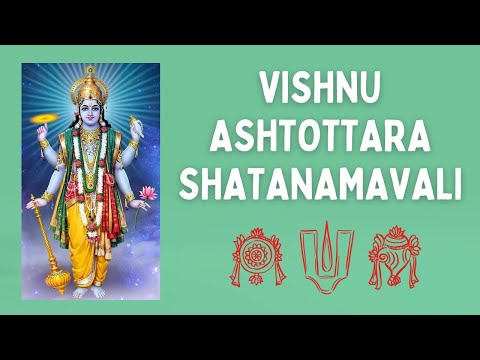
Lyrics:
ॐ विष्णवे नमः, ॐ जिष्णवे नमः, ॐ वषट्काराय नमः, ॐ देवदेवाय नमः, ॐ वृषाकपये नमः, ॐ दामोदराय नमः, ॐ दीनबन्धवे नमः, ॐ आदिदेवाय नमः, ॐ अदितेः सुताय नमः, ॐ पुण्डरीकाय नमः, ॐ परानन्दाय नमः, ॐ परमात्मने नमः, ॐ परात्पराय नमः, ॐ परशुधारिणे नमः, ॐ विश्वात्मने नमः, ॐ कृष्णाय नमः, ॐ कलिमलापहाय नमः, ॐ कौस्तुभोद्भासितोरस्काय नमः, ॐ नराय नमः, ॐ नारायणाय नमः, ॐ हरये नमः, ॐ हराय नमः, ॐ हरप्रियाय नमः, ॐ स्वामिने नमः, ॐ वैकुण्ठाय नमः, ॐ विश्वतोमुखाय नमः, ॐ हृषीकेशाय नमः, ॐ अप्रमेयात्मने नमः, ॐ वराहाय नमः, ॐ धरणीधराय नमः, ॐ वामनाय नमः, ॐ वेदवक्त्रे नमः, ॐ वासुदेवाय नमः, ॐ सनातनाय नमः, ॐ रामाय नमः, ॐ विरामाय नमः, ॐ विरताय नमः, ॐ रावणारये नमः, ॐ रमापतये नमः, ॐ वैकुण्ठवासिने नमः, ॐ वसुमते नमः, ॐ धनदाय नमः, ॐ धरणीधराय नमः, ॐ धर्मेशाय नमः, ॐ धरणीनाथाय नमः, ॐ ध्येयाय नमः, ॐ धर्मभृतां वराय नमः, ॐ सहस्रशीर्षे नमः, ॐ पुरुषाय नमः, ॐ सहस्राक्षाय नमः, ॐ सहस्रपादे नमः, ॐ सर्वगाय नमः, ॐ सर्वविदे नमः, ॐ सर्वशरण्याय नमः, ॐ साधुवल्लभाय नमः, ॐ कौसल्यानन्दनाय नमः, ॐ श्रीमते नमः, ॐ रक्षःकुलविनाशकाय नमः, ॐ जगत्कर्त्रे नमः, ॐ जगद्भर्त्रे नमः, ॐ जगज्जेत्रे नमः, ॐ जनार्तिघ्ने नमः, ॐ जानकीवल्लभाय नमः, ॐ देवाय नमः, ॐ जयरूपाय नमः, ॐ जलेश्वराय नमः, ॐ क्षीराब्धिवासिने नमः, ॐ क्षीराब्धितनयावल्लभाय नमः, ॐ शेषशायिने नमः, ॐ पन्नगारिवाहनाय नमः, ॐ विष्टरश्रवसे नमः, ॐ माधवाय नमः, ॐ मथुरानाथाय नमः, ॐ मोहदाय नमः, ॐ मोहनाशनाय नमः, ॐ दैत्यारये नमः, ॐ पुण्डरीकाक्षाय नमः, ॐ अच्युताय नमः, ॐ मधुसूदनाय नमः, ॐ सोमाय नमः, ॐ सूर्याग्निनयनाय नमः, ॐ नृसिंहाय नमः, ॐ भक्तवत्सलाय नमः, ॐ नित्याय नमः, ॐ निरामयाय नमः,ॐ शुद्धाय नमः, ॐ नरदेवाय नमः, ॐ जगत्प्रभवे नमः, ॐ हयग्रीवाय नमः, ॐ जितरिपवे नमः, ॐ उपेन्द्राय नमः, ॐ रुक्मिणीपतये नमः, ॐ सर्वदेवमयाय नमः, ॐ श्रीशाय नमः, ॐ सर्वाधाराय नमः, ॐ सनातनाय नमः, ॐ सौम्याय नमः, ॐ सौख्यप्रदाय नमः, ॐ स्रष्ट्रे नमः, ॐ विश्वक्सेनाय नमः, ॐ जनार्दनाय नमः, ॐ यशोदातनयाय नमः, ॐ योगिने नमः, ॐ योगशास्त्रपरायणाय नमः, ॐ रुद्रात्मकाय नमः, ॐ रुद्रमूर्तये नमः, ॐ राघवाय नमः, ॐ मधुसूदनाय नमः।
om vishnave namah', om jishnave namah', om vashat'kaaraaya namah', om devadevaaya namah', om vri'shaakapaye namah', om daamodaraaya namah', om deenabandhave namah', om aadidevaaya namah', om aditeh' sutaaya namah', om pund'areekaaya namah', om paraanandaaya namah', om paramaatmane namah', om paraatparaaya namah', om parashudhaarine namah', om vishvaatmane namah', om kri'shnaaya namah', om kalimalaapahaaya namah', om kaustubhodbhaasitoraskaaya namah', om naraaya namah', om naaraayanaaya namah', om haraye namah', om haraaya namah', om harapriyaaya namah', om svaamine namah', om vaikunt'haaya namah', om vishvatomukhaaya namah', om hri'sheekeshaaya namah', om aprameyaatmane namah', om varaahaaya namah', om dharaneedharaaya namah', om vaamanaaya namah', om vedavaktre namah', om vaasudevaaya namah', om sanaatanaaya namah', om raamaaya namah', om viraamaaya namah', om virataaya namah', om raavanaaraye namah', om ramaapataye namah', om vekunt'havaasine namah', om vasumate namah', om dhanadaaya namah', om dharaneedharaaya namah', om dharmeshaaya namah', om dharaneenaathaaya namah',
om dhyeyaaya namah', om dharmabhri'taam varaaya namah', om sahasrasheershe namah', om purushaaya namah', om sahasraakshaaya namah', +om sahasrapaade namah', om sarvagaaya namah', om sarvavide namah', om sarvasharanyaaya namah', om saadhuvallabhaaya namah', om kausalyaanandanaaya namah', om shreemate namah', om rakshah'kulavinaashakaaya namah', om jagatkartre namah', om jagadbhartre namah', om jagajjetre namah', om janaartighne namah', om jaanakeevallabhaaya namah', om devaaya namah', om jayaroopaaya namah',
om jaleshvaraaya namah', om ksheeraabdhivaasine namah', om ksheeraabdhitanayaavallabhaaya namah', om sheshashaayine namah', om pannagaarivaahanaaya namah', om visht'arashravase namah', om maadhavaaya namah', om mathuraanaathaaya namah', om mohadaaya namah', om mohanaashanaaya namah', om daityaaraye namah', om pund'areekaakshaaya namah', om achyutaaya namah', om madhusoodanaaya namah', om somaaya namah',
om sooryaagninayanaaya namah', om nri'simhaaya namah', om bhaktavatsalaaya namah', om nityaaya namah', om niraamayaaya namah', om shuddhaaya namah', om naradevaaya namah', om jagatprabhave namah', om jitaripave namah', om hayagreevaaya namah', om upendraaya namah', om rukmineepataye namah', om sarvadevamayaaya namah', om shreeshaaya namah', om sarvaadhaaraaya namah', om sanaatanaaya namah', om saumyaaya namah', om saukhyapradaaya namah', om srasht're namah', om vishvaksenaaya namah', om janaardanaaya namah', om yashodaatanayaaya namah', om yogine namah', om yogashaastraparaayanaaya namah', om rudraatmakaaya namah', om rudramoortaye namah', om raaghavaaya namah', om madhusoodanaaya namah'.
Meaning :
- ॐ विष्णवे नमः (Vishnu)
'Vishnu' originates from the Sanskrit root 'Vish,' meaning to enter or pervade. This name signifies that He is the omnipresent reality, existing within every atom of the cosmos. It represents His fundamental role as the universal sustainer, enveloping, protecting, and nourishing all of creation across time and infinite space.
- ॐ जिष्णवे नमः (Jishnu)
'Jishnu' translates to the perpetually victorious one. It highlights the deity’s supreme, invincible nature in the cosmic battle against ignorance and evil. Whenever cosmic balance is threatened, He triumphs over demonic forces, ensuring that righteousness prevails. Devotees invoke this name to seek spiritual victory over their own internal struggles.
- ॐ वषट्काराय नमः (Vashatkara)
This name represents the Lord as the ultimate recipient of all Vedic sacrifices (Yajnas). 'Vashat' is a sacred exclamation uttered while offering oblations into the fire. Calling Him Vashatkara means He is both the ritual itself and the supreme divine entity who accepts and blesses our selfless offerings and prayers.
- ॐ देवदेवाय नमः (Devadeva)
'Devadeva' identifies Him as the Supreme God of all gods. While various deities govern specific cosmic functions like natural elements or planetary movements, He is the ultimate sovereign who empowers them. This name emphasizes His absolute authority, showing that all celestial beings bow to His supreme, unmatched divine will.
- ॐ वृषाकपये नमः (Vrishakapi)
'Vrishakapi' combines 'Vrisha' (Dharma or righteousness) and 'Kapi' (one who uplifts). It describes Him as the fierce protector and uplifter of universal moral order. He firmly establishes cosmic justice, showering immense grace upon the righteous while actively destroying the destructive forces that threaten harmony, truth, and universal cosmic balance.
- ॐ दामोदराय नमः (Damodara)
'Damodara' refers to Krishna’s endearing childhood pastime where His mother, Yashoda, tied His waist (udara) with a rope (dama). Theologians also interpret this as the universe resting within His magnificent cosmic belly. It beautifully symbolizes how the boundless, uncontainable Supreme Lord can only be bound by a devotee's pure love.
- ॐ दीनबन्धवे नमः (Dinabandhu)
'Dinabandhu' translates to the compassionate friend (bandhu) of the helpless and distressed (dina). It reveals His profoundly merciful nature. He does not judge devotees by their wealth or status; rather, He offers unconditional love, profound solace, and unwavering protection to the vulnerable, the sorrowful, and the spiritually surrendered souls.
- ॐ आदिदेवाय नमः (Adideva)
'Adideva' proclaims Him as the primordial deity, the original source of everything. He existed before the dawn of creation, before time, space, and the cosmos were formed. As the first and eternal God, He remains the fundamental, uncaused cause of the universe, orchestrating the eternal cycles of cosmic existence.
- ॐ अदितेः सुताय नमः (Aditeh Sutaya)
This name refers to His incarnation as Vamana, the dwarf Brahmin who was born as the beloved son (suta) of the celestial mother, Aditi. He appeared to restore the heavens to the demigods by humbling the demon king Bali, demonstrating that divine grace ultimately restores cosmic order and righteousness.
- ॐ पुण्डरीकाय नमः (Pundarika)
'Pundarika' metaphorically describes His beautiful, compassionate eyes resembling a fully bloomed white lotus. The lotus represents profound purity, rising unblemished from muddy waters. Similarly, this name signifies His pristine divine nature, untouched by material impurities, while His gentle, lotus-like gaze constantly showers infinite grace, peace, and awakening upon His devotees.
- ॐ परानन्दाय नमः (Parananda)
'Parananda' describes Him as the embodiment of supreme, unadulterated bliss. Unlike fleeting material pleasures, His divine joy is infinite, eternal, and perfectly complete. Devotees chant this name to connect with His ecstatic nature, seeking to transcend worldly sorrows and experience the ultimate spiritual happiness found only in complete divine union.
- ॐ परमात्मने नमः (Paramatmane)
'Paramatman' means the Supreme Soul or the universal spirit. While individual souls (jivatman) reside within physical bodies, He is the ultimate, localized consciousness residing simultaneously within the hearts of all living beings. He acts as the eternal witness, inner guide, and ultimate destination for every soul journeying through existence.
- ॐ परात्पराय नमः (Paratpara)
'Paratpara' signifies the one who is greater than the greatest, completely transcending even the highest conceptual realms of the universe. It points to His absolute, limitless state of existence. He is beyond all material laws, dimensions, and limits, establishing Him as the ultimate, supreme reality towering above everything else.
- ॐ परशुधारिणे नमः (Parashudharine)
This name honors His powerful incarnation as Parashurama, the fierce warrior-sage who wielded a divine axe (parashu). He descended to earth to annihilate corrupt, tyrannical kings who oppressed the innocent and abandoned Dharma. The axe symbolizes the decisive severance of ego, cruelty, and ignorance to restore peace and spiritual justice.
- ॐ विश्वात्मने नमः (Vishvatmane)
'Vishvatman' identifies Him as the very soul and vital life-force of the entire universe. Just as a soul animates a physical body, His divine presence animates and sustains the cosmos. Every galaxy, star, and living entity is intricately woven into His infinite consciousness, forming a deeply interconnected, living cosmic web.
- ॐ कृष्णाय नमः (Krishna)
'Krishna' translates to the all-attractive one, often associated with His beautiful dark-blue complexion resembling a monsoon cloud. As the most beloved avatar, He draws all souls toward Himself through His enchanting leelas (pastimes), profound wisdom in the Bhagavad Gita, and supreme love, representing the ultimate fusion of divinity and approachability.
- ॐ कलिमलापहाय नमः (Kalimalapahaya)
This name praises Him as the ultimate cleanser of sins and impurities (mala) specific to the dark age of Kali Yuga. Amidst modern moral decline, ignorance, and spiritual degradation, taking His holy name acts as a powerful purifying force, destroying karmic burdens and guiding souls toward spiritual liberation and enlightenment.
- ॐ कौस्तुभोद्भासितोरस्काय नमः (Kaustubhodbhasitoraskaya)
This highly descriptive name reveres Him as the one whose broad chest is brilliantly illuminated by the Kaustubha gem. Emerging from the churning of the cosmic ocean, this radiant jewel symbolizes pure consciousness. It signifies His unmatched royal splendor, majestic divine beauty, and His supreme sovereignty over the entire universe.
- ॐ नराय नमः (Nara)
'Nara' refers to the original, eternal cosmic man or the supreme spirit from whom all humanity originates. It also signifies His role as the ultimate guide and companion of the human soul. Often paired with Narayana, it highlights the inseparable, deeply intimate bond between the human seeker and the Divine.
- ॐ नारायणाय नमः (Narayana)
'Narayana' implies the supreme resting place or ultimate refuge for all living beings (Nara). It refers to the one who dwells on the cosmic waters of creation. As the absolute culmination of spiritual seeking, Narayana is the source, sustainer, and final destination where all souls eventually merge in infinite peace.
- ॐ हरये नमः (Hari)
'Hari' originates from the Sanskrit root meaning 'to take away.' It identifies the Lord as the supreme thief who steals away the illusions, sorrows, and karmic sins of His devotees. By surrendering to Him, spiritual seekers find ultimate liberation from the endless, painful cycles of birth, death, and material suffering.
- ॐ हराय नमः (Hara)
'Hara' signifies the one who completely removes or destroys universal suffering and cosmic dissolution. While commonly associated with Lord Shiva, as Vishnu, it reveals that He is the ultimate force who gently takes away our worldly attachments, dismantling the ego to prepare the soul for eternal peace and spiritual enlightenment.
- ॐ हरप्रियाय नमः (Harapriyaya)
'Harapriyaya' beautifully describes Vishnu as the ultimate beloved of Lord Shiva (Hara). This name highlights the profound, inseparable harmony and mutual reverence between the deities. It signifies that despite their different cosmic roles in the Hindu trinity, they share an eternal, loving unity reflecting the oneness of the Supreme Brahman.
- ॐ स्वामिने नमः (Swamine)
'Swamine' proclaims Him as the absolute master, rightful owner, and supreme sovereign of the entire cosmos. He is the ultimate authority to whom all living entities belong. Recognizing Him as Swami fosters a deep sense of humility, encouraging devotees to serve Him with unconditional love, loyalty, and complete self-surrender.
- ॐ वैकुण्ठाय नमः (Vaikunthaya)
'Vaikuntha' represents the one who is completely free from anxiety, restrictions, or hindrances. It is also the name of His supreme, eternal celestial abode. This name assures devotees that by taking refuge in Him, they transcend worldly anxieties and attain a blissful, liberated state of existence free from all sorrow.
- ॐ विश्वतोमुखाय नमः (Vishvatomukhaya)
'Vishvatomukhaya' describes the Lord as having faces pointing in every conceivable direction. It is a powerful metaphor for His ultimate omniscience and omnipresence. He witnesses every action, hears every silent prayer, and watches over the entire universe simultaneously, ensuring that no devotee or cosmic event is ever beyond His gaze.
- ॐ हृषीकेशाय नमः (Hrishikeshaya)
'Hrishikesha' means the supreme master of all inner senses (hrishika). While human beings constantly struggle to control their turbulent physical and mental faculties, He is the ultimate controller. Devotees invoke this powerful name to seek divine assistance in mastering their own minds, overcoming temptations, and attaining deep inner spiritual focus.
- ॐ अप्रमेयात्मने नमः (Aprameyatmane)
'Aprameyatman' identifies Him as the supreme soul whose boundless magnitude cannot be measured, defined, or comprehended by human intellect or material logic. He completely transcends all finite limitations of time, space, and form. Devotees realize that He can only be truly experienced through boundless devotion, not through mere intellectual calculation.
- ॐ वराहाय नमः (Varahaya)
'Varaha' honors His magnificent incarnation as the colossal cosmic boar. When the demonic forces dragged the Earth (Bhudevi) into the darkest depths of the cosmic ocean, He compassionately dove into the abyss. He vanquished the evil Hiranyaksha and gently lifted the Earth upon His tusks, restoring life, cosmic order, and balance.
- ॐ धरणीधराय नमः (Dharanidharaya)
'Dharanidhara' praises Him as the ultimate sustainer and protector of the Earth. Whether lifting it as Varaha or balancing it dynamically as the cosmic force of gravity and divine will, He ensures that our planetary home remains secure, providing a stable, nourishing foundation for all life and spiritual evolution.
- ॐ वामनाय नमः (Vamanaya)
'Vamana' celebrates His deceptive yet beautiful incarnation as a radiant dwarf Brahmin. By asking the proud demon king Bali for just three paces of land, He expanded to encompass the entire cosmos. This name profoundly teaches that divine grace can humble the greatest egos and conquer the universe through sublime humility.
- ॐ वेदवक्त्रे नमः (Vedavaktre)
'Vedavaktra' translates to the original speaker and eternal source of the sacred Vedas. It signifies that the absolute spiritual truths, cosmic laws, and divine hymns are the very breath of the Supreme Lord. He actively guides humanity toward enlightenment by constantly revealing divine wisdom through these timeless, sacred scriptures.
- ॐ वासुदेवाय नमः (Vasudevaya)
'Vasudeva' holds a dual meaning: He is the beloved son of King Vasudeva, and He is the omnipresent spirit who dwells (vasa) within all beings and deities (deva). It establishes Him as the absolute, all-pervading divine consciousness that simultaneously wraps the universe while residing deeply within every living heart.
- ॐ सनातनाय नमः (Sanatanaya)
'Sanatana' declares His absolutely eternal, unchanging nature. He is without a beginning, middle, or end. While entire galaxies, planetary systems, and earthly lives undergo endless cycles of creation and destruction, He remains a constant, timeless reality. He is the permanent, unshakable foundation of existence amidst a constantly shifting, transient universe.
- ॐ रामाय नमः (Ramaya)
'Rama' refers to His majestic incarnation as the perfect king of Ayodhya, who flawlessly embodies absolute righteousness and Dharma. The name also means 'the one who delights.' Chanting His name brings immense, deeply calming joy to the heart, purifying the mind and inspiring devotees to lead lives of noble integrity.
- ॐ विरामाय नमः (Viramaya)
'Virama' signifies the ultimate resting place or the absolute cessation of all cosmic activities. During the grand universal dissolution, all creation gracefully dissolves and rests peacefully within Him. For the spiritual seeker, it represents the final, blissful stillness attained when the restless mind permanently rests within His divine, comforting embrace.
- ॐ विरताय नमः (Virataya)
'Virata' describes Him as entirely detached and completely unattached to material creation. Although He actively creates, playfully sustains, and ultimately destroys the vast universe, He remains completely unaffected by its endless turbulence or dualities. He teaches devotees to act selflessly in the world while remaining perfectly anchored in inner spiritual peace.
- ॐ रावणारये नमः (Ravanaraye)
'Ravanari' highlights His decisive role as Lord Rama, the ultimate vanquisher of the powerful demon king Ravana. Ravana symbolizes towering ego, unchecked lust, and destructive arrogance. By destroying him, the Lord proves that divine truth will always rise to annihilate tyranny, restoring moral balance, righteousness, and universal peace to the world.
- ॐ रमापतये नमः (Ramapataye)
'Ramapati' honors Him as the eternal husband of Goddess Rama (Lakshmi), the divine mother of spiritual and material wealth. This union represents the perfect balance of cosmic power and supreme compassion. Together, they govern the universe, ensuring that prosperity and spiritual abundance constantly flow to earnest, devoted, and righteous souls.
- ॐ वैकुण्ठवासिने नमः (Vaikunthavasine)
'Vaikunthavasine' explicitly refers to His permanent residence in Vaikuntha, the supreme, luminous spiritual realm completely devoid of sorrow, fear, or ignorance. It is the ultimate spiritual destination. Devotees chant this name longing to transcend the painful cycle of rebirth and join Him in this eternal paradise of absolute, unbroken bliss.
- ॐ वैकुण्ठवासिने नमः (Vaikunthavasine)
'Vaikunthavasine' refers to His permanent residence ('vasine') in Vaikuntha, the supreme, luminous spiritual realm completely devoid of sorrow, fear, or ignorance. It is the ultimate spiritual destination. Devotees chant this name longing to transcend the painful cycle of rebirth and join Him in this eternal paradise of absolute, unbroken bliss.
- ॐ वसुमते नमः (Vasumate)
'Vasu' means wealth or substance, and 'Mate' signifies possession. This name identifies Him as the ultimate possessor of all true wealth. This includes not only material riches but also the supreme spiritual treasures of knowledge, bliss, and virtue. All forms of opulence and auspiciousness find their eternal source in Him alone.
- ॐ धनदाय नमः (Dhanadaya)
'Dhanadaya' means the benevolent giver of wealth. As the ultimate source of prosperity, He bestows both material abundance and spiritual riches upon His devotees according to their karma and sincerity. He grants worldly success while reminding us that the greatest wealth is attaining His eternal, blissful divine service and liberation.
- ॐ धरणीधराय नमः (Dharanidharaya)
'Dharanidhara' praises Him as the ultimate bearer and supporter of the Earth ('Dharani'). His divine power is the invisible foundation that holds our world and the entire cosmos in its place. He is the unwavering, constant force that prevents chaos, ensuring stability and order throughout all creation.
- ॐ धर्मेशाय नमः (Dharmeshaya)
'Dharmeshaya' identifies Him as the Supreme Lord ('Isha') of Dharma. He is not merely a follower of cosmic law; He is its very source, embodiment, and final authority. All principles of righteousness, morality, and cosmic order emanate from His divine will, and He incarnates to re-establish them.
- ॐ धरणीनाथाय नमः (Dharaninathaya)
'Dharaninatha' proclaims Him as the divine master and ruler ('Natha') of the Earth. He holds absolute sovereignty over the planet and all its inhabitants. As its rightful lord, He governs its destiny, protects its creatures, and ensures that it remains a nurturing stage for souls to evolve spiritually.
- ॐ ध्येयाय नमः (Dhyeyaya)
'Dhyeyaya' signifies that He is the supreme and ultimate object of meditation. For all sages, yogis, and sincere spiritual seekers, He is the one true goal of all contemplation. Focusing the mind upon His divine form and nature purifies the consciousness and leads directly to profound spiritual awakening.
- ॐ धर्मभृतां वराय नमः (Dharmabhritam Varaya)
This name declares Him as the most excellent ('Vara') among all who uphold Dharma. Even among righteous kings, great saints, and celestial beings who live by cosmic law, He stands as the supreme, flawless exemplar. His life as Lord Rama is the perfect illustration of this absolute, unshakeable integrity.
- ॐ सहस्रशीर्षे नमः (Sahasrashirshe)
'Sahasrashirsha' describes His cosmic form as having a thousand heads. 'Thousand' here symbolizes infinity. It represents His infinite consciousness, boundless knowledge, and universal awareness. He is the cosmic mind that simultaneously thinks, knows, and perceives through every being in the entire universe, all at once.
- ॐ पुरुषाय नमः (Purushaya)
'Purusha' refers to the Supreme Being, the primordial cosmic person, and the indwelling spirit. He is the ultimate conscious entity who pervades and animates the material universe (Prakriti). This name acknowledges Him as the fundamental consciousness that gives life, purpose, and existence to everything in creation.
- ॐ सहस्राक्षाय नमः (Sahasrakshaya)
'Sahasrakshaya' praises the one with a thousand eyes. This is a powerful metaphor for His absolute omniscience. His infinite eyes see everything across all dimensions of time and space. He is the eternal, all-perceiving witness of the cosmos, from the grandest galactic event to the quietest, most secret prayer.
- ॐ सहस्रपादे नमः (Sahasrapade)
'Sahasrapada' signifies the one with a thousand feet. This symbolizes His complete omnipresence and boundless power. His feet are everywhere, grounding and supporting the entire universe. He is the stable foundation upon which creation stands and the dynamic energy that is present within every atom of existence.
- ॐ सर्वगाय नमः (Sarvagaya)
'Sarvagaya' means the one who goes everywhere, the all-pervading reality. Like the space that exists both inside and outside a pot, He permeates every single particle of creation. He is the subtle, immanent divine essence that flows through and connects every aspect of the vast, interconnected cosmos.
- ॐ सर्वविदे नमः (Sarvavide)
'Sarvavide' proclaims Him as the omniscient one who knows all. He is the original source of all knowledge and the ultimate knower of every thought, action, and secret desire. He perfectly understands the intricate workings of the universe and the innermost hearts of every single living being without exception.
- ॐ सर्वशरण्याय नमः (Sarvasharanyaya)
'Sarvasharanyaya' identifies Him as the ultimate, universal refuge for all souls. He is the supreme sanctuary for anyone seeking protection from worldly sorrow, fear, and the cycle of rebirth. Regardless of their past, all beings can find unconditional safety, peace, and eternal shelter by surrendering to Him.
- ॐ साधुवल्लभाय नमः (Sadhuvallabhaya)
'Sadhuvallabha' means the cherished beloved of the pious and saintly ('Sadhus'). It reveals His special, intimate affection for those who are devoted, righteous, and pure-hearted. While He is impartial, He reveals His sweetest, most loving nature to those who dedicate their lives to spiritual truth and devotion.
- ॐ कौसल्यानन्दनाय नमः (Kausalyanandanaya)
This name lovingly remembers Him as Lord Rama, the beloved son and joy-giver ('nandana') of His mother, Queen Kausalya. It celebrates His divine accessibility in human form, highlighting the sweet, profound, and intimate loving relationship the Supreme Lord shares with His most cherished and intimate devotees.
- ॐ श्रीमते नमः (Shrimate)
'Shrimate' describes Him as the eternal possessor of 'Shri' (Goddess Lakshmi), who represents all forms of wealth, auspiciousness, and beauty. This signifies that all prosperity and good fortune are inherent aspects of His divine nature. He is the ultimate source of splendor, and His presence guarantees divine grace.
- ॐ रक्षःकुलविनाशकाय नमः (Rakshahkulavinashakaya)
This powerful name honors Him as the ultimate destroyer ('vinashakaya') of the demon race ('Rakshasa-kula'). He incarnates repeatedly to annihilate arrogant, adharmic forces that threaten cosmic balance. This assures devotees that evil will never ultimately triumph, for He is the eternal guardian of universal righteousness and peace.
- ॐ जगत्कर्त्रे नमः (Jagatkartre)
'Jagatkartre' praises Him as the supreme creator ('kartre') of the universe ('jagat'). He is the uncaused first cause, the divine architect from whose cosmic dream all of creation emanates. Every galaxy, star, and living being is a manifestation of His magnificent, limitless, and playful creative power.
- ॐ जगद्भर्त्रे नमः (Jagadbhartre)
'Jagadbhartre' identifies Him as the divine sustainer ('bhartre') of the world. After creating the universe, He does not abandon it. Instead, His divine energy actively maintains, nourishes, and upholds all cosmic laws and life processes, ensuring that creation continues its journey in a stable and orderly fashion.
- ॐ जगज्जेत्रे नमः (Jagatjetre)
'Jagatjetre' honors Him as the ultimate conqueror of the universe. This is not a conquest of force, but a spiritual victory achieved through love, compassion, and the establishment of Dharma. By vanquishing adharmic forces in His various avatars, He reclaims the world for righteousness, conquering hearts and minds for eternity.
- ॐ जनार्तिघ्ने नमः (Janartighne)
'Janartighne' reveals His profound compassion as the remover ('ghne') of the suffering ('arti') of the people ('jana'). He is the divine physician who mercifully destroys the worldly pains, mental agonies, and spiritual ignorance of all beings who take sincere refuge in Him, leading them to ultimate peace.
- ॐ जानकीवल्लभाय नमः (Janakivallabhaya)
This name beautifully refers to Lord Rama as the most beloved ('vallabha') of Janaki (Sita). It celebrates the divine ideal of love, loyalty, and righteous partnership. Their relationship serves as the eternal benchmark for pure, unconditional devotion, where the Lord and His divine consort are eternally inseparable and devoted.
- ॐ देवाय नमः (Devaya)
'Devaya' identifies Him as the supreme divine being, the 'shining one.' He is the ultimate reality whose inherent effulgence illuminates the entire cosmos, giving light and power to the sun, moon, and all other deities. This fundamental name acknowledges His pure, self-luminous nature as the source of all divinity.
- ॐ जयरूपाय नमः (Jayarupaya)
'Jayarupaya' means He is the very embodiment ('rupa') of victory ('jaya'). He is not merely victorious; He is victory itself. Wherever He is present, success in the path of Dharma is absolutely guaranteed. This name assures devotees that aligning with Him means aligning with the ultimate, inevitable triumph of truth.
- ॐ जलेश्वराय नमः (Jaleshwaraya)
'Jaleshwaraya' proclaims Him the supreme lord ('Ishwara') of the cosmic waters ('jala'). As Narayana, He rests upon the causal ocean from which all creation emerges. Water is the source of life and purity, and as its master, He controls the very essence of universal creation, sustenance, and dissolution.
- ॐ क्षीराब्धिवासिने नमः (Kshirabdhivasine)
'Kshirabdhivasine' describes Him as the one who resides ('vasine') in the celestial Ocean of Milk ('Kshira Abdhi'). This pristine, tranquil abode symbolizes the state of pure, unadulterated consciousness and infinite bliss. It is from this divine realm of peace that He oversees the workings of the entire cosmos.
- ॐ क्षीराब्धितनयावल्लभाय नमः (Kshirabdhi-tanaya-vallabhaya)
This name honors Him as the beloved ('vallabha') of the daughter ('tanaya') of the milk ocean. This daughter is Goddess Lakshmi, who emerged during its churning. It celebrates His eternal union with the goddess of fortune, signifying that supreme bliss and divine prosperity are forever united in Him.
- ॐ शेषशायिने नमः (Sheshashayine)
'Sheshashayine' depicts Him as the one who serenely reclines ('shayine') upon the divine serpent Ananta Shesha. Shesha represents the remainder of reality after cosmic dissolution, as well as infinite time. The Lord's rest upon him signifies His complete mastery over time, space, and all cosmic cycles.
- ॐ पन्नगारिवाहनाय नमः (Pannagarivahanaya)
This name identifies Him as the one whose vehicle ('vahana') is the enemy ('ari') of serpents ('pannaga')—the divine eagle, Garuda. Garuda represents the power of the Vedas, immense courage, and lightning speed. Riding him signifies the Lord's absolute command over divine knowledge and His ability to reach devotees instantly.
- ॐ विष्टरश्रवसे नमः (Vishtarashravase)
'Vishtarashravase' means the one whose fame ('shravas') is vast and widespread ('vishtara'). His divine glories and magnificent deeds are infinite, celebrated in all scriptures, and sung by sages and celestial beings across all realms of existence. His renown is as boundless as the universe He governs.
- ॐ माधवाय नमः (Madhavaya)
'Madhava' is a name rich with meaning, most commonly known as the husband ('dhava') of the goddess of fortune, 'Ma' (Lakshmi). It signifies the union of the Supreme Lord with His divine potency of grace and abundance. It also means 'sweet one,' referring to His enchanting nature as Krishna.
- ॐ मथुरानाथाय नमः (Mathuranathaya)
'Mathuranatha' specifically honors Him as the divine Lord ('natha') of the holy city of Mathura. This name celebrates His beloved incarnation as Krishna, who was born there. It connects His supreme, cosmic nature to the sweet, intimate, and accessible pastimes He performed on Earth for His devotees.
- ॐ मोहदाय नमः (Mohadaya)
'Mohadaya' describes Him as the granter ('daya') of delusion ('moha'). He wields the power of Maya, the cosmic illusion that binds worldly souls to material existence. This power is part of the divine play, testing beings and veiling the ultimate reality from those who are not yet ready.
- ॐ मोहनाशनाय नमः (Mohanashanaya)
'Mohanashanaya' is the compassionate counterpart, meaning the destroyer ('nashanaya') of delusion. For sincere devotees who seek Him, He mercifully lifts the very same veil of Maya. He bestows divine wisdom and clarity, dispelling ignorance and illuminating the direct path to spiritual liberation and truth.
- ॐ दैत्यारये नमः (Daityaraye)
'Daityari' proclaims Him as the sworn enemy ('ari') of the demons ('Daityas'). He is the divine warrior who unfailingly protects the cosmic order by confronting and destroying demonic forces that thrive on chaos, ego, and adharma. This name assures the protection of all righteous and devout souls.
- ॐ पुण्डरीकाक्षाय नमः (Pundarikakshaya)
'Pundarikakshaya' praises His divine beauty as the one whose eyes ('aksha') are like lotus flowers ('pundarika'). The lotus symbolizes purity, detachment, and spiritual perfection. His compassionate gaze is eternally pure, bestowing immense peace, grace, and spiritual awakening upon all who look towards Him with devotion.
- ॐ अच्युताय नमः (Achyutaya)
'Achyuta' means the infallible one, who never slips, deviates, or fails. He is eternally perfect and unchanging in His nature, power, and promises. For devotees, this name is a source of immense comfort, signifying that He is an absolutely constant and reliable refuge in a transient world.
- ॐ मधुसूदनाय नमः (Madhusudanaya)
'Madhusudana' celebrates Him as the glorious slayer ('sudana') of the demon Madhu. At the dawn of creation, He defeated the demons Madhu and Kaitabha, who threatened to destroy Lord Brahma and the nascent universe. This name establishes His eternal role as the primordial protector of cosmic order.
- ॐ सोमाय नमः (Somaya)
'Somaya' identifies Him with Soma, which refers to both the moon and its divine, immortalizing nectar. Like the moon, He has a cool, soothing, and beautiful nature that brings relief from the scorching heat of worldly suffering. He is the ultimate source of spiritual bliss and eternal life.
Of course. Here is the detailed meaning of each name, continuing in the same way with individual paragraphs of approximately 50 words each:
- ॐ सूर्याग्निनयनाय नमः (Suryagninayanaya)
This name describes His cosmic form, where the sun (Surya) and fire (Agni) serve as His divine eyes (nayana). The sun represents His all-seeing, illuminating consciousness that dispels ignorance, while fire symbolizes His purifying energy that burns away impurities. His gaze is the source of all light, power, and justice.
- ॐ नृसिंहाय नमः (Nrisimhaya)
Salutations to His fierce man-lion (Nri-simha) incarnation. He manifested this awe-inspiring form to protect His devotee Prahlada from the otherwise invincible demon Hiranyakashipu. This name celebrates the Lord's terrifying power against evil and His boundless, immediate compassion for those who surrender to Him completely, protecting them against all odds.
- ॐ भक्तवत्सलाय नमः (Bhaktavatsalaya)
This beautiful name means He feels tender affection ('vatsala') for His devotees ('bhakta'), like a mother cow for her calf. It reveals His deeply personal and merciful nature, where He overlooks the faults of those who love Him. He is not a distant ruler but a compassionate parent, eternally cherishing his surrendered souls.
- ॐ नित्याय नमः (Nityaya)
This name proclaims His absolute, eternal nature. He is beyond the grasp of time, having no beginning and no end. While universes are created and dissolved in endless cycles, He alone remains the constant, changeless, and ever-present reality, offering a permanent anchor for souls navigating the temporary material world.
- ॐ निरामयाय नमः (Niramayaya)
He is the one who is completely free ('Nir') from all ailments ('amaya'), both physical and spiritual. He is absolutely pure, flawless, and eternally healthy, untouched by the maladies of the material world like disease, decay, or ignorance. Meditating on this name invokes a state of spiritual and mental well-being.
- ॐ शुद्धाय नमः (Shuddhaya)
This name identifies Him as the embodiment of absolute purity. His essence is completely untouched by the modes of material nature (gunas) and the taint of karma. He is the sacred source from which all purity flows, and by remembering Him, devotees can cleanse their own hearts and minds of all impurities.
- ॐ नरदेवाय नमः (Naradevaya)
'Naradeva' identifies Him as the supreme God ('deva') among human beings ('nara'). In His incarnations like Rama and Krishna, He lives among humanity, setting the perfect example of divine conduct in a human form. He is the Lord of humanity, guiding and uplifting souls while on Earth.
- ॐ जगत्प्रभवे नमः (Jagatprabhave)
'Jagatprabhu' means the supreme Lord ('prabhu') of the entire universe ('jagat'). This name asserts His absolute sovereignty and authority over all of creation. Every cosmic law, every celestial body, and every living being operates under His ultimate command, making Him the one true master of all existence.
- ॐ हयग्रीवाय नमः (Hayagrivaya)
This name honors His divine incarnation with the head of a horse, Hayagriva. He appeared in this form to recover the stolen Vedas and restore sacred knowledge to the world. He is revered as the supreme embodiment of divine wisdom, intellect, and all forms of learning and arts.
- ॐ जितरिपवे नमः (Jitaripave)
'Jitaripu' means the one who has completely conquered ('jita') all enemies ('ripu'). This refers not only to His external victories over demons but also His complete mastery over internal enemies like lust, anger, and greed. He is the ultimate victor, eternally established in a state of perfect peace.
- ॐ उपेन्द्राय नमः (Upendraya)
This name refers to His Vamana incarnation as the younger brother ('upa') of Indra. By appearing as a junior, He humbly approached King Bali and yet reclaimed the three worlds with his cosmic steps. It signifies that even in a subordinate form, His supreme divine power remains undiminished and absolute.
- ॐ रुक्मिणीपतये नमः (Rukminipataye)
'Rukminipati' celebrates Him as Krishna, the beloved husband ('pati') of Rukmini, who is an incarnation of the Goddess Lakshmi. This name highlights His divine romantic pastimes (lila) and the eternal, loving bond between the Lord and His supreme consort, representing the ideal divine union.
- ॐ सर्वदेवमयाय नमः (Sarvadevamayaya)
This name proclaims that He is the one who consists of ('maya') all the gods ('sarva deva'). All the different deities and celestial beings are manifestations of His singular, supreme power. Worshipping any god is ultimately an offering to Him, as He is the source of all divine forms.
- ॐ श्रीशाय नमः (Shrishaya)
'Shrisha' identifies Him as the Lord ('Isha') of Shri (Goddess Lakshmi). Shri represents all forms of wealth, beauty, auspiciousness, and spiritual grace. As Her eternal consort, He is the ultimate master and bestower of all prosperity, both material and spiritual, upon the universe.
- ॐ सर्वाधाराय नमः (Sarvadharaya)
'Sarvadhara' means the fundamental support ('adhara') of everything ('sarva'). He is the ultimate substratum upon which the entire creation rests. Just as a screen supports all images projected upon it, His existence is the foundational reality that upholds every atom of the cosmos.
- ॐ सनातनाय नमः (Sanatanaya)
'Sanatana' declares His absolutely eternal, unchanging nature. He is without a beginning, middle, or end. While entire galaxies, planetary systems, and earthly lives undergo endless cycles of creation and destruction, He remains a constant, timeless reality, the permanent foundation of existence amidst a transient universe.
- ॐ सौम्याय नमः (Saumyaya)
'Saumya' describes His gentle, placid, and serene nature, as pleasing and tranquil as the full moon. While He possesses ferocious forms like Narasimha, His essential disposition is one of immense peace and benevolence. This name is an invocation of His calming and graceful presence.
- ॐ सौख्यप्रदाय नमः (Saukhyapradaya)
He is the bestower ('pradaya') of true happiness and bliss ('saukhya'). Unlike fleeting worldly pleasures, the joy that He grants is profound, spiritual, and everlasting. Taking refuge in Him is the only path to attaining ultimate, unshakeable peace and contentment that transcends all material circumstances.
- ॐ स्रष्ट्रे नमः (Srashtre)
'Srashtre' reveres Him as the ultimate Creator. He is the original source from which all universes, worlds, and beings are manifested. Through His divine will and cosmic potency, He brings forth all of existence, acting as the primary agent of the magnificent act of cosmic creation.
- ॐ विश्वक्सेनाय नमः (Vishvaksenaya)
This name identifies Him with Vishvaksena, the powerful commander-in-chief of His celestial armies. He represents the Lord's active, dynamic power that maintains order throughout the universe and removes all obstacles from the path of His devotees. He is invoked to ensure success in righteous endeavors.
- ॐ जनार्दनाय नमः (Janardanaya)
'Janardana' means the one who is sought by the people ('jana') for liberation and prosperity. It also means the chastiser of the wicked. He is the ultimate protector who destroys evil forces and simultaneously provides refuge and fulfills the righteous desires of all beings who turn to Him.
- ॐ यशोदातनयाय नमः (Yashodatanayaya)
This is a deeply endearing name for Lord Krishna, the beloved son ('tanaya') of Mother Yashoda. It celebrates His most intimate and accessible human-like pastimes in Vrindavan, highlighting how the Supreme Lord of the universe allows Himself to be bound by the pure, selfless love of His devotee.
- ॐ योगिने नमः (Yogine)
'Yogine' proclaims Him as the supreme master of Yoga. He is the ultimate goal of all yogic practices and the perfect embodiment of spiritual union and discipline. He is in a state of eternal, perfect connection with His own Self, and He is the source of all yogic knowledge.
- ॐ योगशास्त्रपरायणाय नमः (Yogashastraparayanaya)
He is the ultimate authority and final destination ('parayana') of all the scriptures ('shastra') on Yoga. The entire science of Yoga originates from Him and ultimately leads to Him. He is both the subject and the object of all yogic teachings, the path and the supreme goal.
- ॐ रुद्रात्मकाय नमः (Rudratmakaya)
This name means He whose very soul or essence ('atmaka') is Rudra (Shiva). It signifies the profound non-duality between Vishnu and Shiva, revealing that they are fundamentally one and the same Supreme Reality expressing itself in different forms and functions. He embodies the cosmic dissolution power of Rudra.
- ॐ रुद्रमूर्तये नमः (Rudramurtaye)
'Rudramurti' identifies Him as one who can assume the very form ('murti') of Rudra. This again emphasizes the unity of Hari and Hara. Vishnu, the preserver, contains within Him the potential for transformation and dissolution, showing that all divine powers of the trinity reside within Him.
- ॐ राघवाय नमः (Raghavaya)
'Raghava' honors Him as Lord Rama, the illustrious descendant of the Raghu dynasty. This name connects His divine, timeless nature to His celebrated lineage as a human king. It evokes His noble character, His unwavering adherence to Dharma, and His glorious deeds as the ideal ruler.
- ॐ मधुसूदनाय नमः (Madhusudanaya)
'Madhusudana' celebrates Him as the glorious slayer ('sudana') of the demon Madhu. At the dawn of creation, He defeated the demons Madhu and Kaitabha, who threatened to destroy Lord Brahma and the nascent universe. This name establishes His eternal role as the primordial protector of cosmic order.





Other stotras


