Mahavishnu Sharanagati Stotram
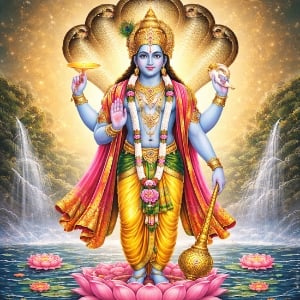
Lyrics:
अकारार्थो विष्णुर्जगदुदयरक्षाप्रलयकृन्-
मकारार्थो जीवस्तदुपकरणं वैष्णवमिदम् ।
उकारोऽनन्यर्हं नियमयति सम्बन्धमनयो-
स्त्रयीसारस्त्र्यात्मा प्रणव इममर्थं समदिशत् ॥१॥
मन्त्रब्रह्मणि मध्यमेन नमसा पुंसःस्वरूपङ्गति-
र्गम्यं शिक्षितमीक्षितेन पुरतःपश्चादपि स्थानतः ।
स्वातन्त्र्यं निजरक्षणं समुचिता वृत्तिश्च नान्योचिता
तस्यैवेति हरेर्विविच्य कथितं स्वस्यापि नार्हं ततः ॥२॥
अकारार्थायैवस्वमहमथ मह्यं न निवहाः
नराणां नित्यानामयनमिति नारायणपदम् ।
यमाहास्मै कालं सकलमपि सर्वत्र सकला-
स्ववस्थास्वाविः स्युर्मम सहजकैङ्कर्यविधयः ॥३॥
देहासक्तात्मबुद्धिर्यदि भवति पदं साधु विद्यात्तृतीयं
स्वातन्त्र्यान्धो यदि स्यात्प्रथममितरशेषत्वधीश्चेद् द्वितीयम् ।
आत्मत्राणोन्मुखश्चेन्नम इति च पदं बान्धवाभासलोलः
शब्दं नारायणाख्यं विषयचपलधीश्चेच्चतुर्थीं प्रपन्नः ॥४॥
नेतृत्वं नित्ययोगं समुचितगुणजातं तनुख्यापनञ्चो-
पायं कर्त्तव्यभागं त्वथ मिथुनपरं प्राप्यमेवं प्रसिद्धम् ।
स्वामित्वं प्रार्थनां च प्रबलतरविरोधिप्रहाणं दशैतान्
मन्तारं त्रायते चेत्यधिगतनियमः षट्पदोऽयं द्विखण्डः ॥५॥
ईशानाञ्जगतामधीशदयितां नित्यानपायां श्रियं
संश्रित्याश्रयणोचिताखिलगुणस्याङ्घ्री हरेराश्रये ।
इष्टोपायतया श्रिया च सहितायात्मेश्वरायार्थये
कर्तुं दास्यमशेषमप्रतिहतं नित्यं त्वहं निर्ममः ॥६॥
मत्प्राप्त्यर्थतया मयोक्तमखिलं सन्त्यज्य धर्मं पुनः
मामेकं मदवाप्तये शमणमित्यार्तोऽवसायं कुरु ।
त्वामेकं व्यवसाययुक्तमखिलज्ञानादिपूर्णो ह्यहं
मत्प्राप्तिप्रतिबन्धकैर्विरहितं कुर्यां शुचं मा कृथाः ॥७॥
निश्चित्य त्वदधीनतां मयि सदा कर्माद्युपायान् हरे
कर्तुं त्यक्तुमपि प्रपत्तुमनलं सीदामि दुःखाकुलः ।
एतज्ज्ञानमुपेयुषो मम पुनस्सर्वापराधक्षयं
कर्तासीति दृढोऽस्मि ते तु चरमं वाक्यं स्मरन्सारथेः ॥८॥
शाखानामुपरि स्थितेन मनुना मूलेन लब्धात्मकः
सत्ताहेतुसकृज्जपेन सकलं कालं द्वयेन क्षिपन् ।
वेदोत्तंसविहारसारथिदयागुम्फेन विस्त्रम्भितः
सारज्ञो यदि कश्चिदस्ति भुवने नाथः स यूथस्य नः ॥९॥
akaaraartho vishnurjagadudayarakshaapralayakri'n-
makaaraartho jeevastadupakaranam vaishnavamidam .
ukaaro'nanyarham niyamayati sambandhamanayo-
strayeesaarastryaatmaa pranava imamartham samadishat ..1..
mantrabrahmani madhyamena namasaa pumsah'svaroopangati-
rgamyam shikshitameekshitena puratah'pashchaadapi sthaanatah' .
svaatantryam nijarakshanam samuchitaa vri'ttishcha naanyochitaa
tasyaiveti harervivichya kathitam svasyaapi naarham tatah' ..2..
akaaraarthaayaivasvamahamatha mahyam na nivahaah'
naraanaam nityaanaamayanamiti naaraayanapadam .
yamaahaasmai kaalam sakalamapi sarvatra sakalaa-
svavasthaasvaavih' syurmama sahajakainkaryavidhayah' ..3..
dehaasaktaatmabuddhiryadi bhavati padam saadhu vidyaattri'teeyam
svaatantryaandho yadi syaatprathamamitarasheshatvadheeshched dviteeyam .
aatmatraanonmukhashchennama iti cha padam baandhavaabhaasalolah'
shabdam naaraayanaakhyam vishayachapaladheeshchechchaturtheem prapannah' ..4..
netri'tvam nityayogam samuchitagunajaatam tanukhyaapanancho-
paayam karttavyabhaagam tvatha mithunaparam praapyamevam prasiddham .
svaamitvam praarthanaam cha prabalataravirodhiprahaanam dashaitaan
mantaaram traayate chetyadhigataniyamah' shat'pado'yam dvikhand'ah' ..5..
eeshaanaanjagataamadheeshadayitaam nityaanapaayaam shriyam
samshrityaashrayanochitaakhilagunasyaanghree hareraashraye .
isht'opaayatayaa shriyaa cha sahitaayaatmeshvaraayaarthaye
kartum daasyamasheshamapratihatam nityam tvaham nirmamah' ..6..
matpraaptyarthatayaa mayoktamakhilam santyajya dharmam punah'
maamekam madavaaptaye shamanamityaarto'vasaayam kuru .
tvaamekam vyavasaayayuktamakhilajnyaanaadipoorno hyaham
matpraaptipratibandhakairvirahitam kuryaam shucham maa kri'thaah' ..7..
nishchitya tvadadheenataam mayi sadaa karmaadyupaayaan hare
kartum tyaktumapi prapattumanalam seedaami duh'khaakulah' .
etajjnyaanamupeyusho mama punassarvaaparaadhakshayam
kartaaseeti dri'd'ho'smi te tu charamam vaakyam smaransaaratheh' ..8..
shaakhaanaamupari sthitena manunaa moolena labdhaatmakah'
sattaahetusakri'jjapena sakalam kaalam dvayena kshipan .
vedottamsavihaarasaarathidayaagumphena vistrambhitah'
saarajnyo yadi kashchidasti bhuvane naathah' sa yoothasya nah' ..9..
Meaning:
Verse 1
अकारार्थो विष्णुर्जगदुदयरक्षाप्रलयकृन्-
मकारार्थो जीवस्तदुपकरणं वैष्णवमिदम् ।
उकारोऽनन्यर्हं नियमयति सम्बन्धमनयो-
स्त्रयीसारस्त्र्यात्मा प्रणव इममर्थं समदिशत् ॥१॥
The verse explains the meaning hidden within the sacred syllable Om. The syllable ‘A’ represents Bhagavan Vishnu, who creates, sustains, and dissolves the universe. He is the ultimate cause behind all cosmic processes. The syllable ‘Ma’ represents the individual soul, the jiva, who functions as an instrument within this divine system. The jiva is dependent and not independent in action.
The syllable ‘U’ establishes the relationship between Bhagavan and the jiva. It indicates that the connection is exclusive and inseparable. The soul belongs to Bhagavan alone and cannot exist meaningfully apart from Him. This is not a temporary connection but an eternal one.
This teaching is drawn from the essence of the three Vedas. The pranava, Om, is not just a sound but a complete philosophical statement. It reveals the nature of Bhagavan, the soul, and their relationship. Spiritually, this verse teaches that realization begins when one understands one’s dependence on Bhagavan and accepts that one’s existence is meaningful only in relation to Him.
Verse 2
मन्त्रब्रह्मणि मध्यमेन नमसा पुंसःस्वरूपङ्गति-
र्गम्यं शिक्षितमीक्षितेन पुरतःपश्चादपि स्थानतः ।
स्वातन्त्र्यं निजरक्षणं समुचिता वृत्तिश्च नान्योचिता
तस्यैवेति हरेर्विविच्य कथितं स्वस्यापि नार्हं ततः ॥२॥
This verse explains the role of the word ‘Namah’ within the mantra. It teaches the inner transformation required for true surrender. The term ‘Namah’ means negation of independence. It signifies that the individual gives up the false sense of self-ownership and control.
Through proper understanding of the mantra, a person realizes their true nature. This realization is not limited to one moment or place. It becomes a constant awareness, guiding actions in all states of life. The seeker understands that independence is not appropriate for the soul. Protection, action, and purpose all belong to Bhagavan alone.
The verse emphasizes that the jiva has no rightful claim over itself. Even the sense of ‘I’ is not truly independent. Everything belongs to Hari. This is a radical shift from ego-centered living to Bhagavan-centered existence. Philosophically, this verse dismantles the illusion of autonomy and replaces it with conscious dependence on Bhagavan.
Verse 3
अकारार्थायैवस्वमहमथ मह्यं न निवहाः
नराणां नित्यानामयनमिति नारायणपदम् ।
यमाहास्मै कालं सकलमपि सर्वत्र सकला-
स्ववस्थास्वाविः स्युर्मम सहजकैङ्कर्यविधयः ॥३॥
This verse focuses on the meaning of the word Narayana. The speaker declares that he belongs entirely to the one denoted by ‘A’, that is Bhagavan Vishnu. He rejects the idea that he belongs to himself or to others. This is a clear affirmation of total surrender.
The word Narayana means the eternal refuge of all beings. It indicates that all souls rest in Him and are sustained by Him. He is present at all times, in all places, and in all conditions. There is no moment or state where His presence is absent.
The devotee expresses a deep desire that all actions, in every condition, should become natural acts of service to Bhagavan. This is not forced discipline but spontaneous devotion. The philosophical insight here is that true freedom lies in accepting one’s role as a servant of Bhagavan. When this understanding becomes natural, every action turns into worship.
Verse 4
देहासक्तात्मबुद्धिर्यदि भवति पदं साधु विद्यात्तृतीयं
स्वातन्त्र्यान्धो यदि स्यात्प्रथममितरशेषत्वधीश्चेद् द्वितीयम् ।
आत्मत्राणोन्मुखश्चेन्नम इति च पदं बान्धवाभासलोलः
शब्दं नारायणाख्यं विषयचपलधीश्चेच्चतुर्थीं प्रपन्नः ॥४॥
This verse classifies different spiritual states based on one’s understanding. If a person identifies completely with the body, they are in the lowest stage. They see themselves only as physical beings and remain attached to material identity.
If a person is blinded by the idea of independence, they fall into another form of ignorance. They believe they are self-sufficient and do not recognize their dependence on Bhagavan. This is considered the first stage of misunderstanding.
If a person understands that they are dependent but does not fully surrender, they are in an intermediate stage. They are aware but not fully committed. The term ‘Namah’ becomes meaningful when one actively seeks protection from Bhagavan.
Finally, one who is distracted by worldly objects but turns toward Narayana is in the fourth stage. This stage involves conscious surrender despite inner restlessness. The verse teaches that spiritual progress is gradual and depends on clarity of understanding and willingness to surrender.
Verse 5
नेतृत्वं नित्ययोगं समुचितगुणजातं तनुख्यापनञ्चो-
पायं कर्त्तव्यभागं त्वथ मिथुनपरं प्राप्यमेवं प्रसिद्धम् ।
स्वामित्वं प्रार्थनां च प्रबलतरविरोधिप्रहाणं दशैतान्
मन्तारं त्रायते चेत्यधिगतनियमः षट्पदोऽयं द्विखण्डः ॥५॥
This verse explains the components of the mantra in a structured way. It describes ten essential principles that are conveyed through the mantra. These include Bhagavan’s leadership, eternal connection with the soul, and possession of auspicious qualities.
It also highlights the means to reach Him, the duties of the seeker, and the ultimate goal of union with Him. The mantra teaches that Bhagavan is the master, and the soul must approach Him through prayer and surrender.
Another key point is the removal of obstacles. The devotee must actively eliminate opposing tendencies that prevent surrender. The mantra protects the one who understands and follows these principles.
The phrase ‘six-footed and two-part’ refers to the structure of the mantra itself. It is compact but complete. Philosophically, this verse shows that the mantra is not just for recitation but for internalizing a complete spiritual framework that leads to liberation.
Verse 6
ईशानाञ्जगतामधीशदयितां नित्यानपायां श्रियं
संश्रित्याश्रयणोचिताखिलगुणस्याङ्घ्री हरेराश्रये ।
इष्टोपायतया श्रिया च सहितायात्मेश्वरायार्थये
कर्तुं दास्यमशेषमप्रतिहतं नित्यं त्वहं निर्ममः ॥६॥
This verse describes the act of surrender through the grace of Lakshmi. Lakshmi is described as inseparable from Bhagavan and full of compassion. She acts as the mediator who makes surrender possible for the soul.
The devotee approaches Bhagavan through Lakshmi, recognizing her as the embodiment of mercy. Bhagavan’s feet are described as the ultimate refuge, possessing all qualities needed for protection.
The seeker prays for uninterrupted service to Bhagavan. This service is not partial or conditional. It is complete and free from selfish motives. The term ‘nirmama’ indicates absence of possessiveness.
Spiritually, this verse highlights that surrender is not achieved through effort alone. Divine grace plays a central role. Lakshmi’s presence ensures that Bhagavan accepts the devotee. This establishes a relationship of love, service, and protection that continues eternally.
Verse 7
मत्प्राप्त्यर्थतया मयोक्तमखिलं सन्त्यज्य धर्मं पुनः
मामेकं मदवाप्तये शमणमित्यार्तोऽवसायं कुरु ।
त्वामेकं व्यवसाययुक्तमखिलज्ञानादिपूर्णो ह्यहं
मत्प्राप्तिप्रतिबन्धकैर्विरहितं कुर्यां शुचं मा कृथाः ॥७॥
This verse reflects the direct instruction of Bhagavan, similar to the teaching in the Gita. Bhagavan asks the devotee to abandon all other paths and focus solely on Him. This is not a rejection of dharma but a call to transcend limited understanding.
The devotee is asked to approach Bhagavan with determination and clarity. Bhagavan assures that He is complete in knowledge and power. There is nothing lacking in Him.
He also promises to remove all obstacles that prevent the devotee from reaching Him. This includes past actions and inner impurities. The devotee is told not to grieve or worry.
The deeper meaning is that ultimate surrender requires exclusive focus. When the mind stops seeking multiple supports and turns entirely toward Bhagavan, the path becomes clear. This verse emphasizes trust in Bhagavan’s assurance and complete reliance on His grace.
Verse 8
निश्चित्य त्वदधीनतां मयि सदा कर्माद्युपायान् हरे
कर्तुं त्यक्तुमपि प्रपत्तुमनलं सीदामि दुःखाकुलः ।
एतज्ज्ञानमुपेयुषो मम पुनस्सर्वापराधक्षयं
कर्तासीति दृढोऽस्मि ते तु चरमं वाक्यं स्मरन्सारथेः ॥८॥
In this verse, the devotee expresses helplessness and surrender. He recognizes that he is completely dependent on Bhagavan. He feels incapable of performing spiritual practices or renouncing them properly.
This sense of limitation leads to genuine surrender. The devotee approaches Bhagavan not out of pride but out of exhaustion and suffering. This is the turning point in spiritual life.
The devotee firmly believes that Bhagavan will remove all faults and sins. This confidence is based on Bhagavan’s final assurance, as given in the Gita. The remembrance of Bhagavan’s words strengthens faith.
Philosophically, this verse shows that surrender is not an act of strength but of honest recognition of one’s limitations. When the ego drops, grace becomes active. The devotee no longer struggles alone but rests in Bhagavan’s protection.
Verse 9
शाखानामुपरि स्थितेन मनुना मूलेन लब्धात्मकः
सत्ताहेतुसकृज्जपेन सकलं कालं द्वयेन क्षिपन् ।
वेदोत्तंसविहारसारथिदयागुम्फेन विस्त्रम्भितः
सारज्ञो यदि कश्चिदस्ति भुवने नाथः स यूथस्य नः ॥९॥
This verse concludes by praising the one who understands the essence of the teaching. Such a person grasps the root meaning behind the many branches of knowledge. They do not get lost in complexity but hold on to the core truth.
By repeating the mantra even once with proper understanding, they spend their entire life meaningfully. The mantra becomes the basis of their existence.
The reference to the charioteer points to Bhagavan Krishna guiding Arjuna. It symbolizes divine guidance that leads the seeker forward. The compassion of Bhagavan supports and strengthens the devotee.
The verse declares that such a realized person becomes a leader for others. They guide the community with clarity and wisdom. Spiritually, this final verse emphasizes that true knowledge is not intellectual accumulation but deep understanding of the relationship between the soul and Bhagavan, lived through surrender and devotion.





Other stotras


