Radha Kripa Kataksha Stotram
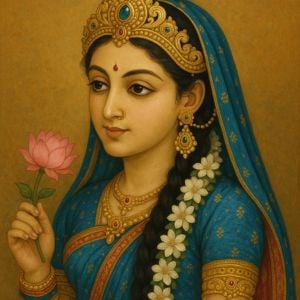
मुनीन्द्रवृन्दवन्दिते त्रिलोकशोकहारिणि प्रसन्नवक्त्रपङ्कजे निकुञ्जभूविलासिनि । व्रजेन्द्रभानुनन्दिनि व्रजेन्द्रसूनुसङ्गते कदा करिष्यसीह मां कृपाकटाक्षभाजनम् ॥ १ ॥
'O worshiped by hosts of sages, O remover of the sorrows of the three worlds, O lotus-faced one, O delight of the groves of Vrindavan! O daughter of Vrishabhanu, O consort of the son of Nanda (Krishna), when will you make me an object of your merciful glance?'
This verse begins by addressing Radha with several beautiful epithets. 'Munindra-vrinda-vandite' refers to her being adored by the greatest sages, highlighting her supreme position even above exalted spiritual personalities. 'Triloka-shoka-harini' means she removes the sorrows of all three worlds, indicating her immense power and compassion. Her 'prasanna-vaktra-pankaje' or 'lotus-like cheerful face' signifies her eternal beauty and joyful nature. 'Nikunja-bhu-vilasini' describes her as one who delights in the groves of Vrindavan, the divine abode where her pastimes with Krishna take place. Finally, she is identified as 'Vrajendra-bhanu-nandini' (daughter of Vrishabhanu, the king of Vraja) and 'Vrajendra-sunu-sangate' (the beloved associate of Krishna, the son of Nanda Maharaj). The verse ends with a humble prayer, 'kada karishyasi iha mam kripa-kataksha-bhajanam' – 'When will you make me an object of your merciful glance here?' This is the central plea of the entire Radha Kripa Kataksha Stotra.
अशोकवृक्षवल्लरीवितानमण्डपस्थिते प्रवालबालपल्लवप्रभारुणाङ्घ्रिकोमले । वराभयस्फुरत्करे प्रभूतसम्पदालये कदा करिष्यसीह मां कृपाकटाक्षभाजनम् ॥ २॥
'O one who resides in a canopy-like pavilion of Ashoka creepers, O one whose tender feet are as reddish as coral sprouts and young shoots, O one whose hands bestow boons and fearlessness, O abode of immense wealth, when will you make me an object of your merciful glance?'
This verse describes Radha's enchanting form and divine attributes. She is envisioned as residing in a beautiful setting, an 'Ashoka-vriksha-vallari-vitana-mandapa-sthite' – a pavilion formed by the canopy of Ashoka trees and creepers, symbolizing the natural beauty of Vrindavan and her intimate connection with it. Her feet are described as 'pravala-bala-pallava-prabharunanghri-komale', meaning they are tender and reddish like young coral sprouts and new leaves, signifying their softness, beauty, and auspiciousness. Her hands are 'varabhaya-sphurat-kare', indicating that they grant both boons (desires) and fearlessness to her devotees, showing her power to protect and fulfill. She is also 'prabhuta-sampad-alaye', the abode of immense wealth, which in a spiritual context refers not just to material riches but to all spiritual opulence and blessings. The devotee again humbly requests her merciful glance.
अनङ्गरङ्गमङ्गलप्रसङ्गभङ्गुरभ्रुवां सविभ्रमं ससम्भ्रमं दृगन्तबाणपातनैः । निरन्तरं वशीकृतप्रतीतिनन्दनन्दने कदा करिष्यसीह मां कृपाकटाक्षभाजनम् ॥ ३॥
'O one whose playful, curved eyebrows, in the auspicious drama of Cupid's sports, with charming and joyous glances like falling arrows from the corner of her eyes, constantly captivate the son of Nanda (Krishna), making Him feel ever-subdued, when will you make me an object of your merciful glance?'
This verse extols Radha's unique power to captivate even Krishna, the Supreme Lord. The phrase 'ananga-ranga-mangala-prasanga-bhangura-bhruvam' refers to her 'curved eyebrows' in the 'auspicious drama of Cupid's sports', highlighting her enchanting beauty and romantic prowess. Her 'driganta-bana-patanaih' means 'by the falling arrows from the corner of her eyes', which are described as 'savibhramam sasambhramam' – 'charming and joyous' or 'with graceful movements and eagerness'. These glances 'nirantaram vashikrita-pratiti-nanda-nandane' – 'constantly and with conviction captivate the son of Nanda (Krishna)'. This emphasizes that even Krishna, the master of all, is completely enchanted and controlled by Radha's loving glances, demonstrating her supreme position in love and affection. The devotee prays to be blessed by the same captivating glance.
तडित्सुवर्णचम्पकप्रदीप्तगौरविग्रहे मुखप्रभापरास्तकोटिशारदेन्दुमण्डले । विचित्रचित्रसञ्चरच्चकोरशाबलोचने कदा करिष्यसीह मां कृपाकटाक्ष भाजनम् ॥ ४॥
'O one whose fair complexion shines brightly like lightning, gold, and champaka flowers, O one whose facial effulgence surpasses millions of autumnal moons, O one whose eyes are like the playful movements of a young chakora bird, when will you make me an object of your merciful glance?'
Here, Radha's exquisite beauty is described through vivid comparisons. Her complexion, 'tadi-suvarna-champaka-pradipta-gaura-vigrahe', is likened to the brilliance of lightning, the luster of gold, and the radiant yellow of champaka flowers, all signifying her dazzling, fair, and effulgent form. Her 'mukha-prabha-parasta-koti-sharadendu-mandale' means 'her facial effulgence defeats millions of autumnal moons', implying that her face is far more beautiful, serene, and bright than even the most enchanting full moon. Her eyes are 'vichitra-chitra-sancharac-chakora-shabalochane', compared to the 'playful and varied movements of a young chakora bird'. The chakora bird is known in Indian poetry for gazing at the moon, and here it suggests the restless, captivating, and beautiful movements of Radha's eyes. The plea for her merciful glance continues, aspiring to witness such divine beauty.
मदोन्मदातियौवने प्रमोदमानमण्डिते प्रियानुरागरञ्जिते कलाविलासपण्डिते । अनन्यधन्यकुञ्जराज्यकामकेलिकोविदे कदा करिष्यसीह मां कृपाकटाक्षभाजनम् ॥५॥
'O one who possesses intoxicated and abundant youth, O one adorned with great joy, O one dyed in the color of beloved Krishna's love, O one skilled in the arts of divine sport, O one expert in the amorous pastimes in the supremely blessed kingdom of groves, when will you make me an object of your merciful glance?'
This verse focuses on Radha's divine youth, joy, love, and expertise in divine pastimes. She is described as having 'madonmadati-yauvane', 'intoxicated and abundant youth', signifying her eternal freshness, vitality, and enchanting appeal. She is 'pramodamana-mandite', 'adorned with great joy', indicating her perpetually blissful nature. 'Priya-anuraga-ranjite' means 'colored/dyed in the love of her beloved (Krishna)', highlighting her profound and deep affection for Krishna, which is the essence of her being. She is 'kala-vilasa-pandite', 'skilled in the arts of divine sport', referring to her mastery of the 64 arts, particularly those related to lila (divine play) and prema (love). Furthermore, she is 'ananya-dhanya-kunja-rajya-kama-keli-kovide', meaning 'expert in the amorous pastimes in the supremely blessed kingdom of groves', which points to her central role in the most intimate and sacred pastimes in Vrindavan, where only she can orchestrate such divine love sports. The devotee yearns for a glance from this embodiment of love and divine expertise.
अशेषहावभावधीरहीरहारभूषिते प्रभूतशातकुम्भकुम्भकुम्भकुम्भसुस्तनि । प्रशस्तमन्दहास्यचूर्णपूर्णसौख्यसागरे कदा करिष्यसीह मां कृपाकटाक्षभाजनम् ॥ ६॥
'O one adorned with a necklace of steady diamonds, symbolizing all graceful expressions and sentiments, O one whose beautiful breasts are like golden pitchers, O ocean of happiness filled with the powder of praiseworthy gentle smiles, when will you make me an object of your merciful glance?'
This verse delves into further details of Radha's physical and emotional beauty. She is 'ashesha-hava-bhava-dhira-hira-hara-bhushite', meaning 'adorned with a necklace of steady diamonds which represent all graceful expressions and sentiments'. 'Havas' and 'bhavas' are subtle expressions of love and emotion, and here they are poetically compared to a brilliant diamond necklace, indicating her complete mastery and manifestation of divine emotions. Her breasts are described as 'prabhuta-shatakumbha-kumbha-kumbha-kumbha-sustani', comparing them to 'golden pitchers', signifying their beautiful shape and radiant golden hue. The repetition of 'kumbha' emphasizes the fullness and beauty. She is also 'prashasta-manda-hasya-churna-purna-saukhya-sagare', an 'ocean of happiness filled with the powder of praiseworthy gentle smiles'. This imagery suggests that her gentle smile (manda-hasya) is so potent and pervasive that it fills an entire ocean of happiness, making her the source of supreme bliss. The prayer for her merciful glance continues.
मृणालवालवल्लरी तरङ्गरङ्गदोर्लते लताग्रलास्यलोलनीललोचनावलोकने । ललल्लुलन्मलन्मनोज्ञमुग्धमोहनाश्रिते कदा करिष्यसीह मां कृपाकटाक्षभाजनम् ॥ ७॥
'O one whose arms are like graceful lotus stems and creepers, dancing in waves of joy, O one whose dark blue eyes gaze with playful movements like the tip of a swaying creeper, O one who is the abode of beautiful, charming, and enchanting bewilderment, when will you make me an object of your merciful glance?'
This verse continues the poetic description of Radha's form, focusing on her arms and eyes. Her arms, 'mrinala-vala-vallari-taranga-ranga-dor-late', are likened to 'tender lotus stems and creepers that dance in waves of joy', signifying their softness, flexibility, and graceful movements. Her 'lata-agra-lasya-lola-nila-lochanavalokane' describes her 'dark blue eyes' as gazing with 'playful movements like the tip of a swaying creeper', indicating the captivating and dynamic nature of her glances. The phrase 'lalal-lulan-malan-manojna-mugdha-mohana-ashrite' is a beautiful alliteration, meaning she is 'the abode of beautiful, charming, and enchanting bewilderment'. This refers to the delightful and captivating effect she has on all, especially Krishna, who is endlessly enchanted by her. The devotee wishes to experience the blessing of such a glance.
सुवर्णमालिकाञ्चितत्रिरेखकम्बुकण्ठगे त्रिसूत्रमङ्गलीगुणत्रिरत्नदीप्तिदीधिते । सलोलनीलकुन्तलप्रसूनगुच्छगुम्फिते कदा करिष्यसीह मां कृपाकटाक्षभाजनम् ॥ ८॥
'O one whose conch-like neck is adorned with a golden necklace and three lines (auspicious marks), O one whose auspicious thread with three jewels radiates brilliant effulgence, O one whose dark blue locks of hair are playfully intertwined with bunches of flowers, when will you make me an object of your merciful glance?'
This verse details Radha's neck, jewelry, and hair. Her neck is 'suvarna-malika-anchita-tri-rekha-kambu-kanthage', meaning it is 'conch-like' (an auspicious shape) and adorned with a 'golden necklace' and 'three lines'. These three lines on the neck are considered auspicious marks of beauty in Indian tradition. She wears 'tri-sutra-mangali-guna-tri-ratna-dipti-didhite', an 'auspicious thread (like a mangal-sutra) with three jewels that radiate brilliant effulgence', symbolizing her married status to Krishna and her divine adornments. Her 'salola-nila-kuntala-prasuna-guccha-gumphite' describes her 'playful dark blue locks of hair' which are 'intertwined with bunches of flowers', indicating her natural beauty and how she adorns herself with fresh blossoms from Vrindavan. The plea for her merciful glance is repeated.
नितम्बबिम्बलम्बमानपुष्पमेखलागुणे प्रशस्तरत्नकिङ्किणीकलापमध्यमञ्जुले । करीन्द्रशुण्डदण्डकावराहसौभगोरुके कदा करिष्यसीह मां कृपाकटाक्षभाजनम् ॥ ९॥
'O one whose beautiful hips are adorned with a waist-belt of hanging flowers, O one who is charming in the midst of a multitude of praiseworthy jeweled ankle bells, O one whose auspicious thighs are like the trunk of a great elephant, when will you make me an object of your merciful glance?'
This verse describes Radha's lower body, emphasizing her grace and beauty. Her 'nitamba-bimba-lamba-mana-pushpa-mekhala-gune' refers to her 'beautiful hips' adorned with a 'waist-belt of hanging flowers', symbolizing her natural elegance and the floral adornments of Vrindavan. She is 'prashasta-ratna-kinkini-kalapa-madhya-manjule', 'charming amidst a multitude of praiseworthy jeweled ankle bells', indicating the sweet sound and beauty of her ornaments. Her 'karindra-shunda-dandaka-avaraha-saubhaga-uruke' compares her 'auspicious thighs' to the 'trunk of a great elephant', a traditional simile in Indian aesthetics for strength, grace, and beauty. The devotee's prayer for her merciful glance continues, hoping to be blessed by the sight of her divine form.
अनेकमन्त्रनादमञ्जुनूपुरारवस्खल त्समाजराजहंसवंशनिक्वणातिगौरवे । विलोलहेमवल्लरीविडम्बचारुचङ्क्रमे कदा करिष्यसीह मां कृपाकटाक्षभाजनम् ॥१०॥
'O one whose tinkling ankle bells, resembling many auspicious mantra-like sounds, surpass the majestic sound of a flock of royal swans, O one whose beautiful gait imitates the swaying of a playful golden creeper, when will you make me an object of your merciful glance?'
This verse focuses on Radha's enchanting ankle bells and graceful walk. Her 'aneka-mantra-nada-manju-nupurarava-skhalat-samaja-rajahamsa-vamsha-nikvanati-gaura-ve' describes the 'tinkling sound of her ankle bells' as 'many auspicious mantra-like sounds', which are so melodious that they 'surpass the majestic sound of a flock of royal swans'. This emphasizes the divine, enchanting, and spiritually significant nature of the sound produced by her movements. Her 'vilola-hema-vallari-vidamba-charu-chanakrame' means her 'beautiful gait' imitates the 'swaying of a playful golden creeper', signifying her exquisite grace, fluidity, and captivating movements. The devotee humbly requests her merciful glance to experience such divine beauty and sound.
अनन्तकोटिविष्णुलोकनम्रपद्मजार्चिते हिमाद्रिजापुलोमजाविरिञ्चजावरप्रदे । अपारसिद्धिऋद्धिदिग्धसम्पदङ्गुलीनखे कदा करिष्यसीह मां कृपाकटाक्षभाजनम् ॥११॥
'O one worshiped by Brahma and revered by millions of Vishnu-loka residents, O one who bestows boons to Parvati (daughter of Himalaya), Indrani (daughter of Puloma), and Saraswati (daughter of Brahma), O one whose toenails are adorned with the wealth of infinite siddhis (perfections) and riddhis (prosperity), when will you make me an object of your merciful glance?'
This verse highlights Radha's supreme divinity and power. She is 'ananta-koti-vishnu-loka-namra-padma-jar-chite', meaning she is 'worshiped by Brahma (Padma-ja, born from lotus) and revered by millions of residents of Vishnu-loka (the abodes of Vishnu)'. This establishes her position as superior even to the great demigods and divine beings. She is also 'himadri-ja-puloma-ja-virinchi-ja-vara-prade', meaning she 'bestows boons' upon Parvati (daughter of Himalaya), Indrani (daughter of Puloma), and Saraswati (daughter of Brahma), indicating her power to grant desires to even the most exalted goddesses. Her 'apara-siddhi-riddhi-digdha-sampad-angulini-khe' signifies that her 'toenails' are 'adorned with the wealth of infinite siddhis (spiritual perfections) and riddhis (material prosperity)'. This implies that simply looking at her toenails can bestow all perfections and opulence, showcasing her immense spiritual power and the blessings that emanate from her very being. The devotee reiterates the humble prayer for her merciful glance.
मखेश्वरि क्रियेश्वरि स्वधेश्वरि सुरेश्वरि त्रिवेदभारतीश्वरि प्रमाणशासनेश्वरि । रमेश्वरि क्षमेश्वरि प्रमोदकाननेश्वरि व्रजेश्वरि व्रजाधिपे श्रीराधिके नमोऽस्तु ते ॥ १२॥
'O Queen of sacrifices, O Queen of actions, O Queen of offerings to ancestors, O Queen of demigods, O Queen of the three Vedas and Saraswati, O Queen of authoritative scriptures, O Queen of beauty, O Queen of forgiveness, O Queen of the blissful forest (Vrindavan), O Queen of Vraja, O Supreme Ruler of Vraja, O Sri Radhika, obeisances to You!'
This verse is a direct salutation (namo 'stu te) to Radha, addressing her with a cascade of titles that emphasize her sovereignty over various domains. She is 'makheshvari' (Queen of sacrifices), 'kriyeshvari' (Queen of actions), 'svadheshvari' (Queen of offerings to ancestors), and 'sureshvari' (Queen of demigods), indicating her control and influence over all religious rites and celestial beings. She is 'tri-veda-bharatishvari' (Queen of the three Vedas and Saraswati, the goddess of knowledge) and 'pramana-shasaneshvari' (Queen of authoritative scriptures), highlighting her embodiment of divine knowledge and truth. She is 'rameshvari' (Queen of beauty and prosperity, referring to Lakshmi) and 'kshamashvari' (Queen of forgiveness), showing her gentle and compassionate nature. Finally, she is 'pramoda-kananeshvari' (Queen of the blissful forest, Vrindavan), 'vrajeshvari' (Queen of Vraja), and 'vrajadhipa' (Supreme Ruler of Vraja), firmly establishing her as the empress of the divine abode of Vrindavan. The verse concludes with a humble 'Namo 'stu te' – 'Obeisances to You, Sri Radhika'.
अमुं ममाद्भुतं स्तवं निशम्य भानुनन्दनी करोतु सन्ततं जनं कृपाकटाक्षभाजनम् । भवेत्तदैव सञ्चितत्रिरूपकर्मनाशनं भवेत्तदा व्रजेन्द्रसूनुमण्डलप्रवेशनम् ॥ १३॥
'May the daughter of Vrishabhanu, upon hearing this wonderful hymn of mine, constantly make this person an object of her merciful glance. Only then will the accumulated threefold karma be destroyed, and only then will there be entrance into the assembly of the son of Vrajendra (Krishna).'
This concluding verse expresses the devotee's fervent hope and the profound benefits of reciting this hymn. 'Amum mamadbhutam stavam nishamya' means 'upon hearing this wonderful hymn of mine'. The devotee humbly presents the stotra as 'mine', a personal offering. The prayer is 'bhanu-nandini karotu santatam janam kripa-kataksha-bhajanam' – 'May the daughter of Vrishabhanu (Radha) constantly make this person (the reciter) an object of her merciful glance'. The benefits are then enumerated: 'bhavet tadaiva sanchita-trirupa-karma-nashanam' – 'Only then will the accumulated threefold karma be destroyed'. The 'threefold karma' refers to sanchita (accumulated), prarabdha (fructifying), and kriyamana (currently being performed) karmas, the destruction of which liberates one from the cycle of birth and death. And finally, 'bhavet tada vrajendra-sunu-mandala-praveshanam' – 'And only then will there be entrance into the assembly of the son of Vrajendra (Krishna)'. This signifies the ultimate spiritual goal: to attain direct association with Krishna in the divine realm of Vraja, which is only possible through the grace of Sri Radha. This verse beautifully summarizes the essence of the stotra, emphasizing Radha's pivotal role in granting liberation and divine love.
मुनीन्द्रवृन्दवन्दिते त्रिलोकशोकहारिणि प्रसन्नवक्त्रपङ्कजे निकुञ्जभूविलासिनि ।
व्रजेन्द्रभानुनन्दिनि व्रजेन्द्रसूनुसङ्गते कदा करिष्यसीह मां कृपाकटाक्षभाजनम् ॥ १ ॥
अशोकवृक्षवल्लरीवितानमण्डपस्थिते प्रवालबालपल्लवप्रभारुणाङ्घ्रिकोमले ।
वराभयस्फुरत्करे प्रभूतसम्पदालये कदा करिष्यसीह मां कृपाकटाक्षभाजनम् ॥ २॥
अनङ्गरङ्गमङ्गलप्रसङ्गभङ्गुरभ्रुवां सविभ्रमं ससम्भ्रमं दृगन्तबाणपातनैः ।
निरन्तरं वशीकृतप्रतीतिनन्दनन्दने कदा करिष्यसीह मां कृपाकटाक्षभाजनम् ॥ ३॥
तडित्सुवर्णचम्पकप्रदीप्तगौरविग्रहे मुखप्रभापरास्तकोटिशारदेन्दुमण्डले ।
विचित्रचित्रसञ्चरच्चकोरशाबलोचने कदा करिष्यसीह मां कृपाकटाक्ष भाजनम् ॥ ४॥
मदोन्मदातियौवने प्रमोदमानमण्डिते प्रियानुरागरञ्जिते कलाविलासपण्डिते ।
अनन्यधन्यकुञ्जराज्यकामकेलिकोविदे कदा करिष्यसीह मां कृपाकटाक्षभाजनम् ॥५॥
अशेषहावभावधीरहीरहारभूषिते प्रभूतशातकुम्भकुम्भकुम्भकुम्भसुस्तनि ।
प्रशस्तमन्दहास्यचूर्णपूर्णसौख्यसागरे कदा करिष्यसीह मां कृपाकटाक्षभाजनम् ॥ ६॥
मृणालवालवल्लरी तरङ्गरङ्गदोर्लते लताग्रलास्यलोलनीललोचनावलोकने ।
ललल्लुलन्मलन्मनोज्ञमुग्धमोहनाश्रिते कदा करिष्यसीह मां कृपाकटाक्षभाजनम् ॥ ७॥
सुवर्णमालिकाञ्चितत्रिरेखकम्बुकण्ठगे त्रिसूत्रमङ्गलीगुणत्रिरत्नदीप्तिदीधिते ।
सलोलनीलकुन्तलप्रसूनगुच्छगुम्फिते कदा करिष्यसीह मां कृपाकटाक्षभाजनम् ॥ ८॥
नितम्बबिम्बलम्बमानपुष्पमेखलागुणे प्रशस्तरत्नकिङ्किणीकलापमध्यमञ्जुले ।
करीन्द्रशुण्डदण्डकावराहसौभगोरुके कदा करिष्यसीह मां कृपाकटाक्षभाजनम् ॥ ९॥
अनेकमन्त्रनादमञ्जुनूपुरारवस्खल त्समाजराजहंसवंशनिक्वणातिगौरवे ।
विलोलहेमवल्लरीविडम्बचारुचङ्क्रमे कदा करिष्यसीह मां कृपाकटाक्षभाजनम् ॥१०॥
अनन्तकोटिविष्णुलोकनम्रपद्मजार्चिते हिमाद्रिजापुलोमजाविरिञ्चजावरप्रदे ।
अपारसिद्धिऋद्धिदिग्धसम्पदङ्गुलीनखे कदा करिष्यसीह मां कृपाकटाक्षभाजनम् ॥११॥
मखेश्वरि क्रियेश्वरि स्वधेश्वरि सुरेश्वरि त्रिवेदभारतीश्वरि प्रमाणशासनेश्वरि ।
रमेश्वरि क्षमेश्वरि प्रमोदकाननेश्वरि व्रजेश्वरि व्रजाधिपे श्रीराधिके नमोऽस्तु ते ॥ १२॥
अमुं ममाद्भुतं स्तवं निशम्य भानुनन्दनी करोतु सन्ततं जनं कृपाकटाक्षभाजनम् ।
भवेत्तदैव सञ्चितत्रिरूपकर्मनाशनं भवेत्तदा व्रजेन्द्रसूनुमण्डलप्रवेशनम् ॥ १३॥
munindravrindavandite trilokashokaharini prasannavaktrapankaje nikunjabhuvilasini .
vrajendrabhanunandini vrajendrasunusangate kada karishyasiha mam kripakatakshabhajanam .. 1 ..
ashokavrikshavallarivitanamandapasthite pravalabalapallavaprabharunanghrikomale .
varabhayasphuratkare prabhutasampadalaye kada karishyasiha mam kripakatakshabhajanam .. 2..
anangarangamangalaprasangabhangurabhruvam savibhramam sasambhramam drigantabanapatanaih .
nirantaram vashikritapratitinandanandane kada karishyasiha mam kripakatakshabhajanam .. 3..
taditsuvarnachampakapradiptagauravigrahe mukhaprabhaparastakotisharadendumandale .
vichitrachitrasancharachchakorashabalochane kada karishyasiha mam kripakataksha bhajanam .. 4..
madonmadatiyauvane pramodamanamandite priyanuragaranjite kalavilasapandite .
ananyadhanyakunjarajyakamakelikovide kada karishyasiha mam kripakatakshabhajanam ..5..
asheshahavabhavadhirahiraharabhushite prabhutashatakumbhakumbhakumbhakumbhasustani .
prashastamandahasyachurnapurnasaukhyasagare kada karishyasiha mam kripakatakshabhajanam .. 6..
mrinalavalavallari tarangarangadorlate latagralasyalolanilalochanavalokane .
lalallulanmalanmanojnyamugdhamohanashrite kada karishyasiha mam kripakatakshabhajanam .. 7..
suvarnamalikanchitatrirekhakambukanthage trisutramangaligunatriratnadiptididhite .
salolanilakuntalaprasunaguchchhagumphite kada karishyasiha mam kripakatakshabhajanam .. 8..
nitambabimbalambamanapushpamekhalagune prashastaratnakinkinikalapamadhyamanjule .
karindrashundadandakavarahasaubhagoruke kada karishyasiha mam kripakatakshabhajanam .. 9..
anekamantranadamanjunupuraravaskhala tsamajarajahamsavamshanikvanatigaurave .
vilolahemavallarividambacharuchankrame kada karishyasiha mam kripakatakshabhajanam ..10..
anantakotivishnulokanamrapadmajarchite himadrijapulomajavirinchajavaraprade .
aparasiddhiriddhidigdhasampadangulinakhe kada karishyasiha mam kripakatakshabhajanam ..11..
makheshvari kriyeshvari svadheshvari sureshvari trivedabharatishvari pramanashasaneshvari .
rameshvari kshameshvari pramodakananeshvari vrajeshvari vrajadhipe shriradhike namostu te .. 12..
amum mamadbhutam stavam nishamya bhanunandani karotu santatam janam kripakatakshabhajanam .
bhavettadaiva sanchitatrirupakarmanashanam bhavettada vrajendrasunumandalapraveshanam .. 13..





Other stotras


