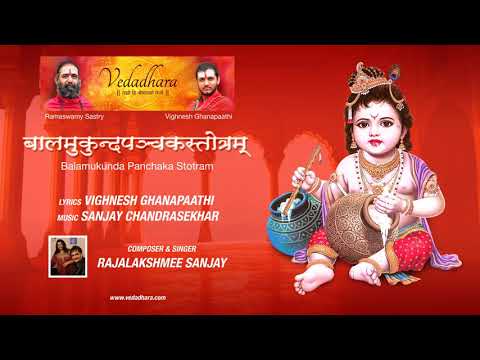
Bala Mukunda Panchaka Stotram
अव्यक्तमिन्द्रवरदं वनमालिनं तं
पुण्यं महाबलवरेण्यमनादिमीशम्।
दामोदरं जयिनमद्वयवेदमूर्तिं
बालं मुकुन्दममरं सततं नमामि।1।
गोलोकपुण्यभवने च विराजमानं
पीताम्बरं हरिमनन्तगुणादिनाथम्।
राधेशमच्युतपरं नरकान्तकं तं
बालं मुकुन्दममरं सततं नमामि।2।
गोपीश्वरं च बलभद्रकनिष्ठमेकं
सर्वाधिपं च नवनीतविलेपिताङ्गम्।
मायामयं च नमनीयमिळापतिं तं
बालं मुकुन्दममरं सततं नमामि।3।
पङ्केरुहप्रणयनं परमार्थतत्त्वं
यज्ञेश्वरं सुमधुरं यमुनातटस्थम्।
माङ्गल्यभूतिकरणं मथुराधिनाथं
बालं मुकुन्दममरं सततं नमामि।4।
संसारवैरिणमधोक्षजमादिपूज्यं
कामप्रदं कमलमाभमनन्तकीर्तिम्।
नारायणं सकलदं गरुडध्वजं तं
बालं मुकुन्दममरं सततं नमामि।5।
कृष्णस्य संस्तवमिमं सततं जपेद्यः
प्राप्नोति कृष्णकृपया निखिलार्थभोगान्।
पुण्यापवर्गसकलान् सकलान् निकामान्
निःशेषकीर्तिगुणगानवरान् नरः सः।6।
avyaktamindravaradam' vanamaalinam' tam'
punyam' mahaabalavarenyamanaadimeesham.
daamodaram' jayinamadvayavedamoortim'
baalam' mukundamamaram' satatam' namaami.1.
golokapunyabhavane cha viraajamaanam'
peetaambaram' harimanantagunaadinaatham.
raadheshamachyutaparam' narakaantakam' tam'
baalam' mukundamamaram' satatam' namaami.2.
gopeeshvaram' cha balabhadrakanisht'hamekam'
sarvaadhipam' cha navaneetavilepitaangam.
maayaamayam' cha namaneeyamil'aapatim' tam'
baalam' mukundamamaram' satatam' namaami.3.
pankeruhapranayanam' paramaarthatattvam'
yajnyeshvaram' sumadhuram' yamunaatat'astham.
maangalyabhootikaranam' mathuraadhinaatham'
baalam' mukundamamaram' satatam' namaami.4.
sam'saaravairinamadhokshajamaadipoojyam'
kaamapradam' kamalamaabhamanantakeertim.
naaraayanam' sakaladam' garud'adhvajam' tam'
baalam' mukundamamaram' satatam' namaami.5.
kri'shnasya sam'stavamimam' satatam' japedyah'
praapnoti kri'shnakri'payaa nikhilaarthabhogaan.
punyaapavargasakalaan sakalaan nikaamaan
nih'sheshakeertigunagaanavaraan narah' sah'.6.
This is a beautiful stuti to Bala Mukunda – child Krishna, filled with deep Vedantic and devotional meaning. Let us go verse by verse and understand it clearly.
Verse 1
अव्यक्तमिन्द्रवरदं वनमालिनं तं
पुण्यं महाबलवरेण्यमनादिमीशम्।
दामोदरं जयिनमद्वयवेदमूर्तिं
बालं मुकुन्दममरं सततं नमामि॥
I constantly bow to Bala Mukunda —
the unmanifest Supreme Reality,
the giver of boons even to Indra,
the One adorned with a forest garland,
the most sacred, supremely powerful, beginningless Lord.
He is Damodara, the victorious One,
the embodiment of non-dual Vedic truth,
the immortal child who grants liberation.
Verse 2
गोलोकपुण्यभवने च विराजमानं
पीताम्बरं हरिमनन्तगुणादिनाथम्।
राधेशमच्युतपरं नरकान्तकं तं
बालं मुकुन्दममरं सततं नमामि॥
I bow to that immortal child Mukunda —
who shines in the holy realm of Goloka,
clad in yellow garments,
Hari, the Lord of infinite virtues.
He is the Lord of Radha,
the infallible Supreme,
the destroyer of Naraka (evil),
the eternal divine child.
Verse 3
गोपीश्वरं च बलभद्रकनिष्ठमेकं
सर्वाधिपं च नवनीतविलेपिताङ्गम्।
मायामयं च नमनीयमिळापतिं तं
बालं मुकुन्दममरं सततं नमामि॥
I bow to Bala Mukunda —
the Lord of the Gopis,
the younger brother of Balarama,
the one Supreme ruler of all.
His body is smeared with freshly churned butter,
He appears through divine Maya,
He is worthy of worship,
the Lord of Lakshmi.
Verse 4
पङ्केरुहप्रणयनं परमार्थतत्त्वं
यज्ञेश्वरं सुमधुरं यमुनातटस्थम्।
माङ्गल्यभूतिकरणं मथुराधिनाथं
बालं मुकुन्दममरं सततं नमामि॥
I bow to that immortal child Mukunda —
whose eyes are like lotuses,
who is the Supreme Truth,
the Lord of sacrifices,
sweet and charming,
who stands on the banks of Yamuna.
He is the source of auspiciousness and prosperity,
the Lord of Mathura.
Verse 5
संसारवैरिणमधोक्षजमादिपूज्यं
कामप्रदं कमलमाभमनन्तकीर्तिम्।
नारायणं सकलदं गरुडध्वजं तं
बालं मुकुन्दममरं सततं नमामि॥
I bow to Bala Mukunda —
the enemy of worldly bondage,
the transcendental Lord beyond material perception,
worshipped first by all.
He grants righteous desires,
radiant like a lotus,
of endless fame.
He is Narayana,
the giver of everything,
the one whose flag bears Garuda.
Phala Shruti (Fruit of Recitation)
कृष्णस्य संस्तवमिमं सततं जपेद्यः
प्राप्नोति कृष्णकृपया निखिलार्थभोगान्।
पुण्यापवर्गसकलान् सकलान् निकामान्
निःशेषकीर्तिगुणगानवरान् नरः सः॥
Whoever regularly chants this praise of Krishna
attains, by Krishna’s grace:
all worldly enjoyments,
all forms of merit,
liberation (moksha),
all noble desires fulfilled,
endless good reputation,
and the blessing of singing His divine qualities.
This hymn salutes Krishna as:
The Supreme Brahman
The charming child of Vrindavan
The Lord of Radha
The destroyer of evil
The source of auspiciousness
The giver of both worldly prosperity and liberation
It beautifully unites devotion and Vedanta — the playful butter-stealing child is also the non-dual Absolute.





Other stotras


