Shankara Pancha Ratna Stotram
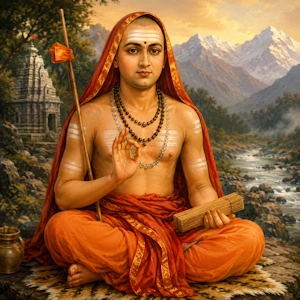
Lyrics:
शिवांशं त्रयीमार्गगामिप्रियं तं
कलिघ्नं तपोराशियुक्तं भवन्तम्।
परं पुण्यशीलं पवित्रीकृताङ्गं
भजे शङ्कराचार्यमाचार्यरत्नम्।।1।।
करे दण्डमेकं दधानं विशुद्धं
सुरैर्ब्रह्मविष्ण्वादिभिर्ध्यानगम्यम्।
सुसूक्ष्मं वरं वेदतत्त्वज्ञमीशं
भजे शङ्कराचार्यमाचार्यरत्नम्।।2।।
रवीन्द्वक्षिणं सर्वशास्त्रप्रवीणं
समं निर्मलाङ्गं महावाक्यविज्ञम्।
गुरुं तोटकाचार्यसम्पूजितं तं
भजे शङ्कराचार्यमाचार्यरत्नम्।।3।।
चरं सच्चरित्रं सदा भद्रचित्तं
जगत्पूज्यपादाब्जमज्ञाननाशम्।
जगन्मुक्तिदातारमेकं विशालं
भजे शङ्कराचार्यमाचार्यरत्नम्।।4।।
यतिश्रेष्ठमेकाग्रचित्तं महान्तं
सुशान्तं गुणातीतमाकाशवासम्।
निरातङ्कमादित्यभासं नितान्तं
भजे शङ्कराचार्यमाचार्यरत्नम्।।5।।
पठेत् पञ्चरत्नं सभक्तिर्हि भक्तः
सदा शङ्कराचार्यरत्नस्य नित्यम्।
लभेत प्रपूर्णं सुखं जीवनं सः
कृपां साधुविद्यां धनं सिद्धिकीर्ती।।6।।
shivaam'sham' trayeemaargagaamipriyam' tam'
kalighnam' taporaashiyuktam' bhavantam.
param' punyasheelam' pavitreekri'taangam'
bhaje shankaraachaaryamaachaaryaratnam..1..
kare dand'amekam' dadhaanam' vishuddham'
surairbrahmavishnvaadibhirdhyaanagamyam.
susookshmam' varam' vedatattvajnyameesham'
bhaje shankaraachaaryamaachaaryaratnam..2..
raveendvakshinam' sarvashaastrapraveenam'
samam' nirmalaangam' mahaavaakyavijnyam.
gurum' tot'akaachaaryasampoojitam' tam'
bhaje shankaraachaaryamaachaaryaratnam..3..
charam' sachcharitram' sadaa bhadrachittam'
jagatpoojyapaadaabjamajnyaananaasham.
jaganmuktidaataaramekam' vishaalam'
bhaje shankaraachaaryamaachaaryaratnam..4..
yatishresht'hamekaagrachittam' mahaantam'
sushaantam' gunaateetamaakaashavaasam.
niraatankamaadityabhaasam' nitaantam'
bhaje shankaraachaaryamaachaaryaratnam..5..
pat'het pancharatnam' sabhaktirhi bhaktah'
sadaa shankaraachaaryaratnasya nityam.
labheta prapoornam' sukham' jeevanam' sah'
kri'paam' saadhuvidyaam' dhanam' siddhikeertee..6..
Meaning:
Verse 1
शिवांशं त्रयीमार्गगामिप्रियं तं
कलिघ्नं तपोराशियुक्तं भवन्तम्।
परं पुण्यशीलं पवित्रीकृताङ्गं
भजे शङ्कराचार्यमाचार्यरत्नम्।।1।।
The verse begins by describing Adi Shankaracharya as शिवांशम्, a manifestation or portion of Shiva. This does not merely imply physical incarnation. In the traditional Advaita understanding, it signifies that the same divine consciousness that appears as Shiva manifested through Shankara to restore spiritual wisdom. The poet sees him not as an ordinary scholar but as a divinely inspired teacher.
त्रयीमार्गगामिप्रियम् refers to one who loves and upholds the path of the threefold Vedic wisdom. The word त्रयी denotes the Vedas. Shankaracharya dedicated his life to establishing the authority of the Vedas and interpreting their highest teachings. कलिघ्नम् means destroyer of the evils of Kali Yuga. During his time, philosophical confusion, sectarian divisions, and misinterpretations of scripture had become widespread. Through debate, teaching, and writing, he restored clarity and spiritual direction.
तपोराशियुक्तम् describes him as a treasury of austerity. His life was marked by renunciation, discipline, and unwavering dedication to truth. परं पुण्यशीलम् means one of supremely virtuous conduct. His character itself became a teaching. पवित्रीकृताङ्गम् signifies that every aspect of his being had been sanctified by knowledge and tapas.
The verse concludes by calling him आचार्यरत्नम्, the jewel among teachers. In Indian thought, a true teacher does not merely convey information. He transforms lives by transmitting wisdom. Shankaracharya is revered because he united scriptural mastery, personal purity, spiritual realization, and compassion for humanity. Thus the devotee declares, 'I worship Shankaracharya, the precious gem among all spiritual masters.'
Verse 2
करे दण्डमेकं दधानं विशुद्धं
सुरैर्ब्रह्मविष्ण्वादिभिर्ध्यानगम्यम्।
सुसूक्ष्मं वरं वेदतत्त्वज्ञमीशं
भजे शङ्कराचार्यमाचार्यरत्नम्।।2।।
The image presented here is that of the wandering monk. करे दण्डमेकं दधानम् means 'holding a single staff in his hand.' The staff is an important symbol in the life of a sannyasi. It represents discipline, self-control, and unwavering commitment to Brahman. Shankaracharya is visualized as the ideal renunciate who abandoned worldly attachments in pursuit of the highest truth.
विशुद्धम् means perfectly pure. Purity here refers not only to external conduct but also to freedom from ego, attachment, and ignorance. Such purity allows one to become a transparent channel for divine wisdom. The phrase सुरैर्ब्रह्मविष्ण्वादिभिर्ध्यानगम्यम् suggests that even divine beings such as Brahma and Vishnu contemplate and honor the spiritual reality represented through him. This is poetic praise expressing his exalted spiritual stature.
सुसूक्ष्मम् points to subtlety. Advaita Vedanta deals with realities beyond sensory perception. The Self cannot be grasped through ordinary thinking. Therefore Shankara is described as subtle, dwelling in truths that transcend material appearances. वरम् means excellent or supreme.
वेदतत्त्वज्ञम् is one who knows the essential truth of the Vedas. Shankaracharya repeatedly taught that the ultimate message of the Vedas is the identity of the individual Self and Brahman. ईशम् means lordly or masterful, indicating spiritual sovereignty born of realization.
The verse therefore portrays Shankaracharya as the perfect monk, pure in conduct, profound in understanding, subtle in wisdom, and firmly established in the essence of Vedic revelation. He is not praised merely for scholarship but for direct realization of the truths that the scriptures proclaim.
Verse 3
रवीन्द्वक्षिणं सर्वशास्त्रप्रवीणं
समं निर्मलाङ्गं महावाक्यविज्ञम्।
गुरुं तोटकाचार्यसम्पूजितं तं
भजे शङ्कराचार्यमाचार्यरत्नम्।।3।।
रवीन्द्वक्षिणम् literally means 'having the Sun and Moon as eyes.' This expression is traditionally associated with Shiva. Since Shankaracharya is viewed as a manifestation of Shiva, the poet applies this divine imagery to him. The Sun symbolizes knowledge that removes darkness. The Moon symbolizes compassion and cooling grace. Together they represent perfect balance between wisdom and mercy.
सर्वशास्त्रप्रवीणम् means one thoroughly proficient in all branches of sacred knowledge. Shankaracharya displayed extraordinary mastery over the Vedas, Upanishads, Brahma Sutras, Bhagavad Gita, logic, grammar, and numerous philosophical systems. Yet his learning was not for intellectual pride. It was directed toward liberation.
समम् indicates equanimity. He viewed all beings through the lens of non-duality. निर्मलाङ्गम् means one whose entire being is spotless and pure. This purity reflects freedom from selfish motives and inner impurities.
महावाक्यविज्ञम् is especially significant. The Mahavakyas such as 'Tat Tvam Asi' and 'Aham Brahmasmi' are the great declarations of the Upanishads. Shankaracharya not only understood them intellectually but realized their truth directly. For him, they revealed the non-dual identity between the individual Self and Brahman.
The verse also remembers Totakacharya, one of Shankara's foremost disciples. तोटकाचार्यसम्पूजितम् means honored and worshipped by Totakacharya. This recalls the deep devotion of disciples who recognized the greatness of their Guru. In Indian tradition, the reverence of realized disciples serves as testimony to the spiritual stature of the teacher.
Thus the verse celebrates Shankaracharya as a master of all knowledge, established in purity, illuminated by the wisdom of the Mahavakyas, and deeply loved by devoted disciples.
Verse 4
चरं सच्चरित्रं सदा भद्रचित्तं
जगत्पूज्यपादाब्जमज्ञाननाशम्।
जगन्मुक्तिदातारमेकं विशालं
भजे शङ्कराचार्यमाचार्यरत्नम्।।4।।
चरम् here suggests one who moved throughout the land. Shankaracharya traveled extensively across Bharat. He visited sacred places, engaged scholars in debate, established monasteries, and spread the message of Advaita. His life was dynamic and dedicated to the welfare of society.
सच्चरित्रम् means possessing noble conduct. In Indian philosophy, conduct is considered a reflection of inner realization. Knowledge without character is incomplete. Shankaracharya embodied the virtues he taught. सदा भद्रचित्तम् describes a mind always inclined toward goodness, benevolence, and the welfare of all beings.
जगत्पूज्यपादाब्जम् means 'whose lotus feet are worshipped by the world.' The lotus is a symbol of purity and transcendence. Just as a lotus remains untouched by the mud in which it grows, the realized sage remains untouched by worldly bondage while living among people.
अज्ञाननाशम् means destroyer of ignorance. According to Advaita Vedanta, ignorance of one's true nature is the root cause of suffering. Shankaracharya's teachings are intended to remove this ignorance through inquiry and knowledge. He taught that liberation is not the creation of something new but the recognition of what one already is.
जगन्मुक्तिदातारम् means giver of liberation to the world. He did not grant liberation as a personal favor. Rather, he revealed the path by which seekers can realize their own true nature. विशालम् signifies vastness, reflecting the expansive nature of his wisdom and compassion.
The verse honors him as a wandering teacher whose pure life, noble mind, and liberating wisdom continue to guide seekers across generations.
Verse 5
यतिश्रेष्ठमेकाग्रचित्तं महान्तं
सुशान्तं गुणातीतमाकाशवासम्।
निरातङ्कमादित्यभासं नितान्तं
भजे शङ्कराचार्यमाचार्यरत्नम्।।5।।
यतिश्रेष्ठम् means the greatest among renunciates. A yati is one who has restrained the senses and dedicated life to spiritual realization. Shankaracharya became a monk at a very young age and remained steadfast in that path throughout his life.
एकाग्रचित्तम् refers to one-pointed concentration. Such mental focus is essential for realizing the Self. The scattered mind perceives multiplicity, while the concentrated mind discovers the underlying unity of existence. महान्तम् means great, not merely in social influence but in spiritual stature.
सुशान्तम् signifies profound peace. This is not temporary calmness but the peace arising from knowledge of Brahman. गुणातीतम् means transcending the three gunas of sattva, rajas, and tamas. According to Vedanta, these qualities govern all worldly experience. One who has gone beyond them abides in pure consciousness.
आकाशवासम् literally means dwelling in the sky. Symbolically it indicates limitless freedom. Just as the sky is unaffected by clouds passing through it, the realized sage remains untouched by changing circumstances. निरातङ्कम् means free from fear and anxiety. Such fearlessness arises when one knows the immortal Self.
आदित्यभासम् compares him to the Sun. The Sun dispels darkness effortlessly. Likewise, the wisdom of the Guru removes ignorance. नितान्तम् suggests completeness and perfection.
This verse presents Shankaracharya as the ideal liberated sage: peaceful, fearless, free from worldly limitations, established beyond the gunas, and radiating the light of knowledge for the benefit of all seekers.
Verse 6
पठेत् पञ्चरत्नं सभक्तिर्हि भक्तः
सदा शङ्कराचार्यरत्नस्य नित्यम्।
लभेत प्रपूर्णं सुखं जीवनं सः
कृपां साधुविद्यां धनं सिद्धिकीर्ती।।6।।
This concluding verse describes the fruits of reciting the hymn. पञ्चरत्नम् means 'five jewels,' referring to the five verses of praise that precede it. The devotee who recites them with devotion is said to receive various blessings. Indian devotional literature often concludes with such a phalashruti, a statement of benefits intended to encourage regular recitation and contemplation.
सभक्तिः emphasizes that devotion is essential. Mere mechanical repetition is not the goal. The hymn becomes transformative when recited with reverence, understanding, and faith. By remembering Shankaracharya, the devotee aligns with the ideals he embodied: purity, wisdom, renunciation, compassion, and realization.
प्रपूर्णं सुखं जीवनम् means a fulfilled and harmonious life. This should not be understood merely as material comfort. In the traditional sense, true happiness arises from inner clarity, spiritual growth, and freedom from confusion. कृपाम् refers to grace, the subtle assistance that helps a seeker progress on the path.
साधुविद्याम् means noble knowledge. This includes scriptural understanding, discrimination between the eternal and the temporary, and insight into the nature of the Self. धनम् may indicate material prosperity, but it can also signify the wealth of virtue and wisdom. सिद्धिकीर्ती refers to accomplishment and good reputation earned through righteous living.
The deeper message is that sincere contemplation of a realized Guru gradually transforms the mind. By honoring Shankaracharya, one absorbs his teachings and ideals. The highest fruit of such devotion is not external success but awakening to the non-dual truth that he tirelessly taught throughout his life.





Other stotras


