Pranava Ashtaka Stotram
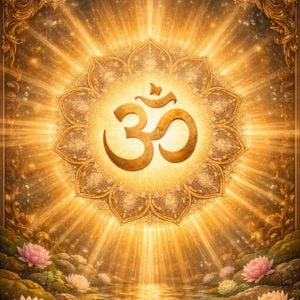
Lyrics:
अचतुराननमुस्वभुवं हरि-
महरमेव सुनादमहेश्वरम्।
परममुज्ज्वलबिन्दुसदाशिवं
प्रणवकारमहं प्रणमामि तम्।।1।।
अरचनाख्यकलामुसुपाकला-
मकृतिनाशकलां लयनादगाम्।
परमबिन्दुरनुग्रहगां कलां
प्रणवकारमहं प्रणमामि तम्।।2।।
अगणनाथमुकारजनार्दन-
मरविमेव सुनादकलाम्बिकाम्।
परमबिन्दुशिवं परमेश्वरं
प्रणवकारमहं प्रणमामि तम्।।3।।
अपृथिवीमुजलामकृशानुकं
परमनादमयं परबिन्दुखम्।
भुवनबीजमहापरमेश्वरं
प्रणवकारमहं प्रणमामि तम्।।4।।
अनिनदं क्षितिचक्रसमुद्भवं
हृदयचक्रजमुद्ध्वनिमुज्ज्वलम्।
मखजमेकसहस्रदले गतं
प्रणवकारमहं प्रणमामि तम्।।5।।
पुनरमातृमयं तदुमानगं
शुभममेयमयं त्रिगुणात्मकम्।
परमनादपरां परबैन्दवं
प्रणवकारमहं प्रणमामि तम्।।6।।
त्रिपुरधाममयं परमात्मकं
परमहंसमयं लयमोक्षदम्।
सुनियमागमतत्त्वयुतं प्रभं
प्रणवकारमहं प्रणमामि तम्।।7।।
ओङ्कारं परमात्मकं त्रिगुणकं चाम्बाम्बिकाम्बालिका-
रूपं नादमनादिशक्ति- विभवाविद्यासुविद्यायुतम्।
बिन्दुं ब्रह्ममयं तदन्तरगतां श्रीसुन्दरीं चिन्मयीं
साक्षाच्छ्रीप्रणवं सदैव शुभदं नित्यं परं नौम्यहम्।।8।।
achaturaananamusvabhuvam' hari-
maharameva sunaadamaheshvaram.
paramamujjvalabindusadaashivam'
pranavakaaramaham' pranamaami tam..1..
arachanaakhyakalaamusupaakalaa-
makri'tinaashakalaam' layanaadagaam.
paramabinduranugrahagaam' kalaam'
pranavakaaramaham' pranamaami tam..2..
agananaathamukaarajanaardana-
maravimeva sunaadakalaambikaam.
paramabindushivam' parameshvaram'
pranavakaaramaham' pranamaami tam..3..
apri'thiveemujalaamakri'shaanukam'
paramanaadamayam' parabindukham.
bhuvanabeejamahaaparameshvaram'
pranavakaaramaham' pranamaami tam..4..
aninadam' kshitichakrasamudbhavam'
hri'dayachakrajamuddhvanimujjvalam.
makhajamekasahasradale gatam'
pranavakaaramaham' pranamaami tam..5..
punaramaatri'mayam' tadumaanagam'
shubhamameyamayam' trigunaatmakam.
paramanaadaparaam' parabaindavam'
pranavakaaramaham' pranamaami tam..6..
tripuradhaamamayam' paramaatmakam'
paramaham'samayam' layamokshadam.
suniyamaagamatattvayutam' prabham'
pranavakaaramaham' pranamaami tam..7..
onkaaram' paramaatmakam' trigunakam' chaambaambikaambaalikaa-
roopam' naadamanaadishakti- vibhavaavidyaasuvidyaayutam.
bindum' brahmamayam' tadantaragataam' shreesundareem' chinmayeem'
saakshaachchhreepranavam' sadaiva shubhadam' nityam' param' naumyaham..8..
Meaning:
Verse 1
अचतुराननमुस्वभुवं हरि-
महरमेव सुनादमहेश्वरम्।
परममुज्ज्वलबिन्दुसदाशिवं
प्रणवकारमहं प्रणमामि तम्।।1।।
This verse is a salutation to Pranava, the sacred syllable Om, viewed as the source and essence of all divine manifestations. The expression "अचतुराननम्" refers to Brahma, the four-faced creator. "स्वभुवम्" means the self-born creator. "हरिम्" refers to Vishnu, the sustainer. "हरम्" points to Shiva, the dissolver. The verse presents these deities not as separate beings but as expressions emerging from the cosmic vibration of Om.
The phrase "सुनादमहेश्वरम्" refers to Maheshvara as pure divine sound. In many Tantric and Upanishadic traditions, creation begins not with matter but with sound. Before form appears, vibration exists. That primordial vibration is the subtle meaning of Om.
The "उज्ज्वलबिन्दु" or radiant bindu represents the concentrated point of pure consciousness from which the universe unfolds. Sadashiva is mentioned as the supreme state where creation, preservation, and dissolution remain in perfect balance. He is neither merely a deity nor a cosmic function but the eternal witness behind all existence.
Philosophically, the verse teaches that all divine forms originate from a single reality. Brahma, Vishnu, and Shiva are different expressions of one consciousness. Om is the bridge between the manifest universe and the unmanifest Absolute. By bowing to Pranava, the seeker bows not merely to a sound but to the very source of existence, consciousness, and spiritual liberation.
Verse 2
अरचनाख्यकलामुसुपाकला-
मकृतिनाशकलां लयनादगाम्।
परमबिन्दुरनुग्रहगां कलां
प्रणवकारमहं प्रणमामि तम्।।2।।
This verse describes various divine powers or kalas that arise from Pranava. The word "कला" refers to a ray, aspect, potency, or functional manifestation of the Supreme. The verse outlines different stages through which the cosmic process operates.
"अरचनाख्यकला" points to the power that transcends ordinary manifestation. "सुपाकला" signifies the power that matures and perfects creation. "अकृतिनाशकला" represents the force that destroys ignorance, limitation, and incomplete understanding. "लयनादगाम्" indicates the power that leads all beings back into dissolution and absorption.
The final phrase speaks of the supreme bindu as the source of the grace-bestowing power. In Shaiva and Shakta philosophy, grace is not merely kindness from a deity. It is the direct revelation of one's true nature. Anugraha, divine grace, is considered the highest function of the Supreme because it liberates the soul from bondage.
Mythologically, creation proceeds through many stages and powers. These powers are often personified as goddesses or divine energies. Yet all these energies ultimately arise from the single source represented by Om.
The deeper teaching is that creation, preservation, destruction, concealment, and grace are not separate processes. They are movements within one divine consciousness. Pranava contains all these powers in seed form. The seeker who meditates upon Om gradually moves beyond the cycle of becoming and enters the state of divine grace symbolized by the supreme bindu.
Verse 3
अगणनाथमुकारजनार्दन-
मरविमेव सुनादकलाम्बिकाम्।
परमबिन्दुशिवं परमेश्वरं
प्रणवकारमहं प्रणमामि तम्।।3।।
This verse unfolds the inner symbolism of Om by associating its components with divine forms. "अगणनाथ" refers to Ganesha, the lord of hosts and remover of obstacles. "उकारजनार्दन" identifies the syllable U with Vishnu, the sustainer of the universe. The verse further speaks of Ambika as the embodiment of the subtle power of divine sound.
In many Tantric traditions, the syllables A, U, and M correspond to creation, preservation, and dissolution. They are also linked with Brahma, Vishnu, and Shiva. The verse integrates these correspondences into a unified vision.
The mention of Ambika is significant. Divine sound is not merely vibration but conscious energy. Ambika represents that living power through which the universe manifests. She is the dynamic aspect of consciousness, while Shiva represents pure awareness itself.
The "परमबिन्दु" is the transcendental point beyond all duality. It is the source from which both Shiva and Shakti emerge. Paramashiva and Parameshvara here denote the supreme reality beyond all limited forms and concepts.
The philosophical message is profound. Every deity worshipped in Hindu tradition is a doorway into the same ultimate reality. Ganesha, Vishnu, Ambika, and Shiva are not competing gods but interconnected manifestations of one consciousness. Om gathers all these dimensions into a single sacred symbol. Meditation on Pranava therefore becomes a complete spiritual practice, encompassing wisdom, devotion, energy, and transcendence.
Verse 4
अपृथिवीमुजलामकृशानुकं
परमनादमयं परबिन्दुखम्।
भुवनबीजमहापरमेश्वरं
प्रणवकारमहं प्रणमामि तम्।।4।।
This verse describes Pranava as transcending the material elements. "अपृथिवीम्" indicates that it is beyond earth. "उजलाम्" points beyond water. "अकृशानुकम्" means beyond fire. Though only some elements are mentioned explicitly, the implication is that Pranava transcends all five elements.
The phrase "परमनादमयं" means composed of supreme sound. This is not audible sound but the subtle vibration underlying existence. Yogic traditions speak of this as Anahata Nada, the unstruck sound that arises spontaneously within consciousness.
"परबिन्दुखम्" refers to the supreme bindu, the source of bliss and consciousness. The bindu is often portrayed as the seed from which all worlds emerge. It contains infinite potential in an undivided state.
The term "भुवनबीज" means the seed of all worlds. Just as a mighty tree exists within a tiny seed, the entire cosmos exists within the subtle essence of Om. Mahaparameshvara is the supreme lord who manifests and sustains this cosmic process.
Philosophically, the verse teaches transcendence. The spiritual seeker is asked to move beyond identification with the body and material elements. Earth, water, fire, air, and space belong to the changing world. Pranava belongs to the eternal dimension of reality. Meditation on Om gradually shifts awareness from the transient to the permanent, from matter to consciousness, and from limitation to infinity.
Verse 5
अनिनदं क्षितिचक्रसमुद्भवं
हृदयचक्रजमुद्ध्वनिमुज्ज्वलम्।
मखजमेकसहस्रदले गतं
प्रणवकारमहं प्रणमामि तम्।।5।।
This verse describes the ascent of spiritual sound through the subtle centers of the body. "अनिनदम्" refers to the subtle sound beyond ordinary hearing. It emerges from the foundational levels of existence symbolized by the earthly sphere.
The phrase "हृदयचक्रजम्" points to the heart chakra. Yogic traditions teach that divine sound becomes perceptible within the purified heart. The heart is not merely an emotional center but a spiritual gateway where the individual soul encounters the universal Self.
"उद्ध्वनिमुज्ज्वलम्" describes the luminous sound rising upward. As spiritual practice deepens, consciousness ascends through increasingly subtle states. The seeker experiences inner light, inner sound, and profound stillness.
The expression "एकसहस्रदले गतम्" refers to the thousand-petalled lotus at the crown of the head, known as Sahasrara. This is considered the highest center of spiritual realization. When consciousness reaches this state, individuality dissolves into universal awareness.
Mythologically, the journey resembles the ascent of the soul from ignorance to enlightenment. Philosophically, it symbolizes the awakening of latent spiritual potential. The subtle sound of Om acts as a guide leading consciousness upward through various levels of experience. The destination is not a place but a state of realization where the seeker recognizes the identity of the individual self and the supreme reality. Thus Pranava becomes both the path and the goal.
Verse 6
पुनरमातृमयं तदुमानगं
शुभममेयमयं त्रिगुणात्मकम्।
परमनादपरां परबैन्दवं
प्रणवकारमहं प्रणमामि तम्।।6।।
This verse presents Pranava as the source of all letters, sounds, and forms. "मातृमयम्" refers to the matrix of letters, often called Matrika. According to Tantric philosophy, the entire universe arises from sound, and all sounds arise from the divine alphabet.
The reference to Uma points to the divine mother as the embodiment of wisdom and creative power. Uma is not merely a goddess but the cosmic intelligence through which consciousness expresses itself as the universe.
The phrase "अमेयमयम्" means immeasurable and beyond all calculation. No intellect can fully grasp the infinite reality symbolized by Om. It can only be experienced directly through spiritual realization.
"त्रिगुणात्मकम्" indicates that Pranava contains the three gunas: sattva, rajas, and tamas. These are the fundamental qualities governing all creation. Yet Pranava itself remains beyond them, just as the screen remains unaffected by the images projected upon it.
The verse also mentions supreme sound and supreme bindu. Together they represent consciousness and energy, Shiva and Shakti, stillness and creativity. Their union gives rise to the universe.
The deeper philosophical teaching is that all diversity originates from a single source. Every language, thought, form, and experience emerges from the same divine foundation. By contemplating Om, the seeker traces creation back to its origin and discovers the unity hidden behind apparent multiplicity.
Verse 7
त्रिपुरधाममयं परमात्मकं
परमहंसमयं लयमोक्षदम्।
सुनियमागमतत्त्वयुतं प्रभं
प्रणवकारमहं प्रणमामि तम्।।7।।
This verse glorifies Pranava as the supreme abode underlying the three worlds or three states of consciousness. "त्रिपुरधाममयम्" can be understood as permeating the waking, dream, and deep sleep states. It is present in all experiences yet remains untouched by them.
"परमात्मकम्" identifies it with the Supreme Self. This is the Atman spoken of in the Upanishads, the innermost essence of every being. It is eternal, pure, and self-luminous.
The phrase "परमहंसमयम्" refers to the state of the Paramahamsa, the realized sage who can distinguish the real from the unreal. Such a sage perceives the same divine consciousness everywhere.
"Layamokshadam" means the giver of dissolution and liberation. Dissolution here does not imply destruction but the ending of ignorance. Liberation is the recognition of one's true nature as pure consciousness.
The verse also highlights discipline, scriptural wisdom, and spiritual principles. Authentic realization does not arise accidentally. It is supported by right conduct, right understanding, and sustained practice.
The philosophical message is that Om encompasses the entire spiritual journey. It is the Self being sought, the path leading toward realization, and the liberation attained at the end. Therefore the seeker bows to Pranava as the supreme light guiding all spiritual evolution.
Verse 8
ओङ्कारं परमात्मकं त्रिगुणकं चाम्बाम्बिकाम्बालिका-
रूपं नादमनादिशक्ति- विभवाविद्यासुविद्यायुतम्।
बिन्दुं ब्रह्ममयं तदन्तरगतां श्रीसुन्दरीं चिन्मयीं
साक्षाच्छ्रीप्रणवं सदैव शुभदं नित्यं परं नौम्यहम्।।8।।
This concluding verse offers a grand synthesis of all the themes presented throughout the hymn. Om is described as the Supreme Self, the source of the three gunas, and the essence of various forms of the Divine Mother including Amba, Ambika, and Ambalika.
The verse portrays Om as both sound and power. "नाद" is the cosmic vibration. "अनादिशक्ति" is the beginningless energy through which the universe manifests. Knowledge and ignorance alike arise within this divine framework. Both worldly understanding and spiritual wisdom ultimately depend upon the same underlying consciousness.
The "बिन्दुं ब्रह्ममयं" identifies the bindu as Brahman itself. Within this bindu resides Sri Sundari, the embodiment of pure consciousness and supreme beauty. In the Shri Vidya tradition, Tripura Sundari represents the highest reality appearing as both transcendence and immanence.
The phrase "चिन्मयीं" emphasizes that the essence of all existence is consciousness. Matter, energy, thought, and experience are expressions of this one conscious reality. Om is therefore not merely a sacred syllable but the living presence of the Absolute.
The verse concludes by declaring Pranava to be eternally auspicious and supremely beneficial. It bestows both worldly welfare and spiritual realization. To bow before Om is to bow before the source, substance, and ultimate goal of all existence. Through this realization, the seeker transcends limitation and abides in the infinite light of Brahman.





Other stotras


