Guru Totaka Stotram
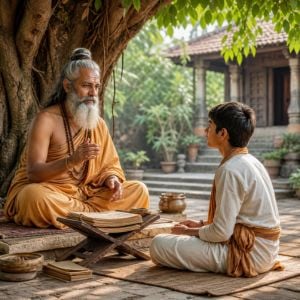
Lyrics:
स्मितनिर्जितकुन्दसुमं ह्यसमं
मुखधूतसुधांशुमदं शमदम्।
सुखरूपपरात्मरतं निरतं
श्रितकल्पतरुं प्रणमामि गुरुम्।।1।।
जलबुद्बुदवत् क्षणभङ्गयुते
मलमूत्रवसासहिते वपुषि।
कुरुतेऽभिमतिं हृदयं हि मुधा
लघु वारय देशिक तां दयया।।2।।
धृतदण्डकमण्डलुजापसरं
सततं हृदये शशिखण्डधरम्।
दधतं नमतां वृजिनौघहरं
ददतं प्रतिभां प्रणमामि गुरुम्।।3।।
करणानि समानि भवन्ति कदा
तरणं नु कथं भववारिनिधेः।
शरणं मम नास्ति गुरो त्वदृते
निरुपाधिकृपाजलधेऽव जवात्।।4।।
चरितं न मयेषदपीह शुभं
भरितं जठरं बहुधाऽघचयात्।
छुरितं हृदयं नितरां तमसा
त्वरितं विमलं तनु तद्गुरुराट्।।5।।
गलितेऽपघने पलितेऽपि शिर-
स्यलितं मम देशिक नैव हृदा।
तव पादपयोजयुगे नु कदा
निरतं निरतं प्रलभेत मुदम्।।6।।
करुणार्द्रविलोचन मोचय मां
भवबन्धनतो बहुधा व्यथितम्।
क्वथितं प्रतिघादिकृशानुवशात्
करुणारससेचनतोऽव गुरो।।7।।
शिव एव भवानिति मे धिषणा
ह्युदपद्यत देशिक चेन्न तथा।
सकलं जगदप्यवबुध्यति ते
समतां सकलेष्वपि तत्तु कथम्।।8।।
विषयेषु सदा रमते हृदयं
विषतुल्यधियं दिश तत्र गुरो।
लषितत्वदपाङ्गझरी प्रसरत्व-
चिरान्मयि बन्धविनाशकरी।।9।।
सदसन्मतिरेव न मेऽस्ति गुरो
विरतिं प्रति सा करणं गदिता।
विरतिः क्व नु मे विषयाशहृदः
कथमाप्नुव एव विमुक्तिपथम्।।10।।
ब्रुवते निगमा बहुवारमिदं
जगदभ्रतलादिसदृक्षमिति।
मम तादृशधीः समुदेति कदा
वद देशिक मेऽङ्घ्रिजुषे कृपया।।11।।
जननी जनकः सुतदारमुखाः
स्वहिताय लषन्ति सदा मनुजम्।
गुरुरेव लषत्यखिलस्य हितं
तदहं तव पादयुगं श्रितवान्।।12।।
मदमोहमुखान्तरशत्रुगृहं
दमशान्तिविरक्तिसुहृद्रहितम्।
कथमेनमवेर्भवसागरतः
किमसाध्यमिदं वद देशिक ते।।13।।
धुनुषेऽघचयं पदनन्तृनृणां
तनुषे भविकं सकृदीक्षणतः।
जनुषे सदसच्च यथा न भवेन्
मम कर्म तथा कुरु देशिकराट्।।14।।
समवाप्य सुदुर्लभविप्रजनु-
र्यतितामपि को नु जनो मदृते।
व्यवहारवशत्वमुपैति गुरो
गतिरेव न मे तव पादमृते।।15।।
उददीधर एव बहून्मनुजान्
कृपया भवसागरमध्यगतान्।
किमयं तव भारती लोकगुरो
न हि भूभृदहेरणुरस्ति भरः।।16।।
दमुना यमुनाजनकश्च विधु-
र्मिलिताः शतशोऽपि न शक्नुवते।
यदपाकरणे तदचित्तिमिरं
त्वमपाकुरुषे वचसैव गुरो।।17।।
गुरुशङ्करनिर्मितभाष्यसुधा
सरिदीशनिमज्जनतृप्तमिमम्।
प्रविधाय गुरो भववारिनिधे-
र्लघु तारय मां करुणार्द्रदृशा।।18।।
पदनम्रजनौघपुमर्थकरी
प्रबलाघसमुद्रनिमग्नतरी।
मयि देशिक ते श्रुतिमूर्धचरी
प्रसरेन्नु कदा सुकटाक्षझरी।।19।।
बहुजन्मशतार्जितपुण्यवशाद्
भवदीयदया समवापि मया।
भवबन्धनतो न बिभेमि गुरो
करणीयमपीह न मेऽस्त्यपरम्।।20।।
स्वरेवऽघगिरेर्भजतां दिविषत्
तरवे प्रतिभाजितगोगुरवे।
पुरवैरिपदाब्जनिविष्टहृदे
करवै प्रणतिं जगतीगुरवे।।21।।
smitanirjitakundasumam' hyasamam'
mukhadhootasudhaam'shumadam' shamadam.
sukharoopaparaatmaratam' niratam'
shritakalpatarum' pranamaami gurum..1..
jalabudbudavat kshanabhangayute
malamootravasaasahite vapushi.
kurute'bhimatim' hri'dayam' hi mudhaa
laghu vaaraya deshika taam' dayayaa..2..
dhri'tadand'akamand'alujaapasaram'
satatam' hri'daye shashikhand'adharam.
dadhatam' namataam' vri'jinaughaharam'
dadatam' pratibhaam' pranamaami gurum..3..
karanaani samaani bhavanti kadaa
taranam' nu katham' bhavavaarinidheh'.
sharanam' mama naasti guro tvadri'te
nirupaadhikri'paajaladhe'va javaat..4..
charitam' na mayeshadapeeha shubham'
bharitam' jat'haram' bahudhaa'ghachayaat.
chhuritam' hri'dayam' nitaraam' tamasaa
tvaritam' vimalam' tanu tadgururaat'..5..
galite'paghane palite'pi shira-
syalitam' mama deshika naiva hri'daa.
tava paadapayojayuge nu kadaa
niratam' niratam' pralabheta mudam..6..
karunaardravilochana mochaya maam'
bhavabandhanato bahudhaa vyathitam.
kvathitam' pratighaadikri'shaanuvashaat
karunaarasasechanato'va guro..7..
shiva eva bhavaaniti me dhishanaa
hyudapadyata deshika chenna tathaa.
sakalam' jagadapyavabudhyati te
samataam' sakaleshvapi tattu katham..8..
vishayeshu sadaa ramate hri'dayam'
vishatulyadhiyam' disha tatra guro.
lashitatvadapaangajharee prasaratva-
chiraanmayi bandhavinaashakaree..9..
sadasanmatireva na me'sti guro
viratim' prati saa karanam' gaditaa.
viratih' kva nu me vishayaashahri'dah'
kathamaapnuva eva vimuktipatham..10..
bruvate nigamaa bahuvaaramidam'
jagadabhratalaadisadri'kshamiti.
mama taadri'shadheeh' samudeti kadaa
vada deshika me'nghrijushe kri'payaa..11..
jananee janakah' sutadaaramukhaah'
svahitaaya lashanti sadaa manujam.
gurureva lashatyakhilasya hitam'
tadaham' tava paadayugam' shritavaan..12..
madamohamukhaantarashatrugri'ham'
damashaantiviraktisuhri'drahitam.
kathamenamaverbhavasaagaratah'
kimasaadhyamidam' vada deshika te..13..
dhunushe'ghachayam' padanantri'nri'naam'
tanushe bhavikam' sakri'deekshanatah'.
janushe sadasachcha yathaa na bhaven
mama karma tathaa kuru deshikaraat'..14..
samavaapya sudurlabhaviprajanu-
ryatitaamapi ko nu jano madri'te.
vyavahaaravashatvamupaiti guro
gatireva na me tava paadamri'te..15..
udadeedhara eva bahoonmanujaan
kri'payaa bhavasaagaramadhyagataan.
kimayam' tava bhaaratee lokaguro
na hi bhoobhri'daheranurasti bharah'..16..
damunaa yamunaajanakashcha vidhu-
rmilitaah' shatasho'pi na shaknuvate.
yadapaakarane tadachittimiram'
tvamapaakurushe vachasaiva guro..17..
gurushankaranirmitabhaashyasudhaa
sarideeshanimajjanatri'ptamimam.
pravidhaaya guro bhavavaarinidhe-
rlaghu taaraya maam' karunaardradri'shaa..18..
padanamrajanaughapumarthakaree
prabalaaghasamudranimagnataree.
mayi deshika te shrutimoordhacharee
prasarennu kadaa sukat'aakshajharee..19..
bahujanmashataarjitapunyavashaad
bhavadeeyadayaa samavaapi mayaa.
bhavabandhanato na bibhemi guro
karaneeyamapeeha na me'styaparam..20..
svareva'ghagirerbhajataam' divishat
tarave pratibhaajitagogurave.
puravairipadaabjanivisht'ahri'de
karavai pranatim' jagateegurave..21..
Meaning:
Verse 1
स्मितनिर्जितकुन्दसुमं ह्यसमं
मुखधूतसुधांशुमदं शमदम्।
सुखरूपपरात्मरतं निरतं
श्रितकल्पतरुं प्रणमामि गुरुम्।।1।।
The opening verse of this stotram offers a beautiful physical and spiritual description of the Guru. Literally, the poet states that the Guru’s smile surpasses the beauty of the Kunda flower, a type of jasmine known for its pristine whiteness. His face is said to humiliate the moon, referred to here as Sudhanshu or the vessel of nectar, suggesting that the Guru's countenance possesses a coolness and brilliance that no celestial body can match. He is described as Shadam, the granter of internal peace, and Sukharupa, the embodiment of bliss.
The mythological imagery used here is rich. The comparison to the Kunda flower and the Moon are classical Sanskrit tropes for purity and serenity. More significantly, the Guru is called a Shrita-kalpataru, the wish-fulfilling tree for those who take refuge in him. In Hindu mythology, the Kalpataru is a divine tree in Indra's heaven that grants all desires. Here, the Guru is elevated above this divine object because he grants not just worldly boons but the ultimate peace of the self.
Philosophically, the epithet Paramatmaratam is crucial. It signifies that the Guru is perpetually established in the Supreme Self. He is not merely a teacher of words but one whose very existence is rooted in the non-dual reality of Brahman. By bowing to such a Guru, the seeker acknowledges that the Guru is a bridge between the mundane world and the infinite bliss of the Atman. This verse sets the tone for the entire hymn by establishing the Guru as the supreme refuge who combines physical grace with the highest spiritual realization.
Verse 2
जलबुद्बुदवत् क्षणभङ्गयुते
मलमूत्रवसासहिते वपुषि।
कुरुतेऽभिमतिं हृदयं हि मुधा
लघु वारय देशिक तां दयया।।2।।
In this second verse, the seeker turns inward to reflect on the nature of the physical body and the ego. The poet uses the metaphor of a water bubble, or jala-budbuda, to describe the human frame. Just as a bubble appears on the surface of water and vanishes in an instant, the human body is transient and fragile. Furthermore, the verse describes the body as being composed of impure substances like waste and marrow, emphasizing its biological limitations.
Despite this transience and impurity, the human heart remains deeply attached to the body through Abhimati, or false identification and pride. This ego makes one believe that the body is the true self, leading to endless suffering and worldly entanglement. The seeker laments that the heart is vainly and foolishly obsessed with this decaying form, wasting the opportunity of human life on temporal pleasures.
The spiritual prayer here is for the Deshika, or the spiritual guide, to intervene through his grace. The seeker asks the Guru to quickly remove this delusion of bodily identification. In Indian philosophy, the first step toward liberation is Viveka, the discrimination between the eternal Self and the ephemeral body. By invoking the Guru's compassion, the seeker admits that self-effort alone is often insufficient to break the deep-seated habit of ego. The Guru's intervention is sought to dissolve the false sense of "I" and "mine" that binds the soul to the material world.
Verse 3
धृतदण्डकमण्डलुजापसरं
सततं हृदये शशिखण्डधरम्।
दधतं नमतां वृजिनौघहरं
ददतं प्रतिभां प्रणमामि गुरुम्।।3।।
This verse provides an iconographic description of the Guru as a Sannyasin or a renunciant. He is described as holding the Danda, the sacred staff of a monk, the Kamandalu, a water pot used for ritual purity, and a rosary or Japasara for meditation. These physical attributes symbolize the Guru’s commitment to the path of knowledge and his role as a protector of Dharma. The Danda represents control over thought, word, and deed, while the rosary signifies constant remembrance of the divine.
The verse contains a profound mythological and philosophical layer when it describes the Guru as always carrying Shashikhandadharam, the one who wears the crescent moon, in his heart. This is a direct reference to Lord Shiva. It implies that the Guru is internally one with Mahadeva, the source of all wisdom. By meditating on the moon-crested Lord, the Guru remains a channel for divine energy. He is called Vrijinaughaharam, the destroyer of the massive pile of his devotees' sins, and the granter of Pratibha, or divine intuition and creative intelligence.
Spiritually, the act of bowing to the Guru is presented as a means to clear the mind of past karmic imprints. The Guru does not just teach; he actively transforms the seeker's consciousness. By holding the image of the Guru in one's mind, the seeker gains access to the same spiritual clarity that the Guru possesses. The epithets suggest that the Guru is both a humble ascetic in appearance and a powerful divine force in reality, capable of illuminating the darkest corners of the human intellect with the light of wisdom.
Verse 4
करणानि समानि भवन्ति कदा
तरणं नु कथं भववारिनिधेः।
शरणं मम नास्ति गुरो त्वदृते
निरुपाधिकृपाजलधेऽव जवात्।।4।।
The fourth verse expresses the spiritual anxiety of the seeker who struggles with the turbulence of the senses. The poet asks when his Karanani, or senses and mental faculties, will finally become tranquil and balanced. The senses are naturally outward-moving, seeking gratification in the material world, which makes spiritual progress difficult. The verse uses the common but powerful metaphor of Bhavavarindhi, the ocean of worldly existence, and asks how such a vast and treacherous sea can ever be crossed.
In the face of these overwhelming obstacles, the seeker realizes his own helplessness. He declares that there is no Sharanam, or refuge, other than the Guru. The Guru is addressed as Nirupadhikrupa-jaladhi, an ocean of unconditional grace. Unlike worldly grace which may be transactional, the Guru’s compassion flows without any motive or condition. This epithet highlights the philosophical view that the Guru is a personification of God's grace, appearing in human form to rescue those drowning in the cycle of birth and rebirth.
The urgent plea "ava javat" or "save me quickly" reflects the intensity of the seeker's desire for liberation. In Indian philosophy, the state of Samatva or equanimity is the hallmark of a realized soul. Since the seeker finds himself far from this state, he surrenders to the Guru as the only boatman capable of navigating the stormy waters of Samsara. The verse emphasizes the doctrine of Sharanagati, or total surrender, suggesting that when personal effort reaches its limit, the Guru's infinite grace takes over to ensure the soul's safe passage.
Verse 5
चरितं न मयेषदपीह शुभं
भरितं जठरं बहुधाऽघचयात्।
छुरितं हृदयं नितरां तमसा
त्वरितं विमलं तनु तद्गुरुराट्।।5।।
This verse is a poignant confession of human fallibility. The seeker admits that he has not performed even a small amount of auspicious deeds or Shubha charitam in this life. Instead, he describes his life as being filled with spiritual negligence. The phrase "bharitam jatharam" literally means the stomach is filled, but metaphorically it suggests that his entire being is saturated with a collection of sins or Aghachaya. This honest self-appraisal is a necessary stage in the path of Bhakti, where the seeker strips away all pretension before the master.
The heart is described as being smeared or enveloped by Tamas, the quality of darkness, ignorance, and inertia. In the Sankhya and Vedanta systems, Tamas is the veil that prevents the light of the Atman from shining through. When the heart is "churitam" or covered by this darkness, one loses the ability to see the truth. The seeker addresses the Guru as Gururat, the king of teachers, and begs him to quickly make his heart Vimala, or stainless and pure.
The philosophical significance here lies in the Guru's power of purification. Just as the sun dispels the darkest night, the Guru’s presence and teachings can incinerate the accumulated impurities of many lifetimes. The seeker does not ask for worldly wealth or power; he asks for the purification of his internal instrument, the Antahkarana. Only a pure heart can reflect the light of the Self. By calling the Guru "Gururat," the poet acknowledges that only the supreme master has the authority and power to effect such a profound internal transformation.
Verse 6
गलितेऽपघने पलितेऽपि शिर-
स्यलितं मम देशिक नैव हृदा।
तव पादपयोजयुगे नु कदा
निरतं निरतं प्रलभेत मुदम्।।6।।
In the sixth verse, the poet reflects on the physical decline that comes with age and the tragic irony of human desire. He notes that his limbs have become weak or Galita, and his hair has turned grey, denoted by the word Palita. Despite these undeniable signs of the body's approaching end, the heart remains unshakeable in its worldly attachments. The word Alitam implies that the heart has not yet turned away from its old habits and distractions, even though the vessel carrying it is crumbling.
The seeker asks a yearning question: when will his heart finally find constant joy or Mudam in the lotus feet of the Guru, the Padapayojayuge? The term "Niratam Niratam" emphasizes a state of perpetual and uninterrupted devotion. Usually, human devotion is flickering and subject to moods, but the seeker craves for a permanent state of absorption in the Guru's grace. This reflects the philosophical goal of Jivanmukti, where the mind is so fixed on the divine that physical decay no longer causes distress.
The mention of the "lotus feet" is a standard but deep metaphor in Indian spirituality. The feet of the Guru represent the lowest point of the divine that touches the earth, making them the most accessible point of contact for the devotee. They are said to secrete the nectar of wisdom. By focusing on the feet, the seeker practices humility and seeks to anchor his wavering mind in something eternal. The verse serves as a reminder that time is running out, and the only true refuge from the ravages of time is the blissful service of the spiritual master.
Verse 7
करुणार्द्रविलोचन मोचय मां
भवबन्धनतो बहुधा व्यथितम्।
क्वथितं प्रतिघादिकृशानुवशात्
करुणारससेचनतोऽव गुरो।।7।।
The seventh verse is a beautiful appeal to the Guru's mercy. The Guru is addressed as Karunardravilocana, the one whose eyes are moist with compassion. This imagery suggests that the Guru feels the pain of the disciple as his own. The seeker asks for Mochaya, or liberation, from the bonds of worldly existence, describing himself as "bahudha vyathitam," or someone who is suffering in manifold ways. Life in Samsara is viewed not as a playground but as a place of constant agitation and sorrow.
The poet uses a vivid metaphor of being scorched or boiled (Kvathitam) by the fire (Krishanu) of opposition, anger, and worldly afflictions. The word Pratigha refers to the friction and resistance one faces in the world, which generates the heat of suffering. To cool this intense heat, the seeker begs the Guru to sprinkle him with the "Karuna-rasa," the nectar or water of compassion. This divine cooling effect is the only remedy for the fires of material existence that burn the soul.
Philosophically, this verse highlights the role of the Guru as a savior from the three types of miseries (Tapatraya) defined in Indian thought: those caused by the body/mind, those caused by other beings, and those caused by natural forces. The Guru’s glance is considered a potent spiritual transmission that can instantly calm the agitated mind. By seeking this "sprinkling" of grace, the devotee expresses total dependence on the Guru to soothe his internal turmoil and break the chains of birth and death that cause such immense pain.
Verse 8
शिव एव भवानिति मे धिषणा
ह्युदपद्यत देशिक चेन्न तथा।
सकलं जगदप्यवबुध्यति ते
समतां सकलेष्वपि तत्तु कथम्।।8।।
This verse explores the identity between the Guru and the Divine. The seeker declares that his intellect or Dhishana has realized that the Guru is none other than Shiva himself. In the Advaita tradition, the Guru is not merely a human being but the absolute reality appearing in form. The poet argues that if the Guru were not indeed Shiva, how could he possibly maintain such perfect equanimity or Samata toward the entire world and all beings within it?
The concept of Samata is central to Indian philosophy. It describes a state where one views a friend and an enemy, gold and a stone, with the same unruffled vision. This level of balance is impossible for an ordinary human mind bound by likes and dislikes. Only an enlightened being, one who sees the same Self in everything, can possess such universal equanimity. Therefore, the Guru's behavior serves as proof of his divinity. If he sees the world as a manifestation of himself, he is truly the Lord of the Universe.
The term Deshika is used here to denote the one who points the way. By recognizing the Guru as Shiva, the seeker’s own path becomes clearer. It is not an act of blind faith but a logical conclusion drawn from observing the Guru’s extraordinary spiritual state. This realization is meant to dissolve the seeker’s own ego, for if the Guru is Shiva, then the disciple’s goal is to realize that same Shiva-nature within himself. The verse reinforces the idea that the Guru is the living embodiment of the highest philosophical truths.
Verse 9
विषयेषु सदा रमते हृदयं
विषतुल्यधियं दिश तत्र गुरो।
लषितत्वदपाङ्गझरी प्रसरत्व-
चिरान्मयि बन्धविनाशकरी।।9।।
In the ninth verse, the seeker addresses the problem of worldly desire. He admits that his heart constantly finds pleasure in Vishayesu, or sense objects. This is the natural tendency of the mind—to seek happiness in the external world. However, the seeker understands that these pleasures are temporary and ultimately lead to bondage. He prays to the Guru to grant him the wisdom to see these sense objects as poison or Visha-tulya. This is a classic wordplay in Sanskrit: Vishaya (object) vs Visha (poison).
The seeker then asks for the Guru's glance, described as Apangajhari, a flowing stream or current from the corner of the Guru's eye. He desires this stream of grace to flow over him without delay (Achirat). This glance is characterized as Bandha-vinashakari, the destroyer of all bonds. In the Indian tradition, the Look of Grace (Nayana Diksha) is considered a powerful way for a master to transmit spiritual energy and shatter the karmic chains of the disciple.
Philosophically, this verse deals with Vairagya, or dispassion. True dispassion does not come from forced suppression but from a higher realization where the lower pleasures lose their charm. By seeing worldly objects as poison, the mind naturally turns away from them toward the eternal bliss of the Self. The Guru's glance acts as the catalyst for this shift in perspective. It provides the seeker with a "taste" of higher joy, making the pursuit of mundane objects seem insignificant and dangerous in comparison to spiritual freedom.
Verse 10
सदसन्मतिरेव न मेऽस्ति गुरो
विरतिं प्रति सा करणं गदिता।
विरतिः क्व नु मे विषयाशहृदः
कथमाप्नुव एव विमुक्तिपथम्।।10।।
The tenth verse discusses the essential prerequisites for spiritual liberation. The poet admits that he lacks Sat-asat-mati, which is the discriminatory faculty to distinguish between the eternal (Sat) and the non-eternal (Asat). In Vedanta, this is called Viveka. This discrimination is said to be the primary instrument or Karana for developing Virati, or detachment. Without knowing what is truly valuable, one cannot let go of what is worthless.
The seeker expresses a sense of despair, asking how detachment can ever arise in a heart that is still thirsty for worldly objects (Vishayasha-hridah). If there is no Viveka, there can be no Vairagya; and if there is no Vairagya, the path to liberation or Vimuktipatham remains closed. This logical chain highlights the difficulty of the spiritual path. The seeker is essentially telling the Guru that he is stuck at the very beginning of the journey and has no hope of progressing on his own.
Spiritually, this verse is an admission of complete dependence on the Guru for the "eyes of wisdom." The seeker acknowledges that his own intellect is clouded by desire and cannot perform the necessary discrimination. By presenting this problem to the Guru, the seeker is asking for the Guru’s grace to ignite the spark of Viveka within him. It emphasizes that the Guru is not just a teacher of facts but the one who restores the seeker’s lost faculty of spiritual vision, making the path to freedom possible once again.
Verse 11
ब्रुवते निगमा बहुवारमिदं
जगदभ्रतलादिसदृक्षमिति।
मम तादृशधीः समुदेति कदा
वद देशिक मेऽङ्घ्रिजुषे कृपया।।11।।
This verse references the authority of the Nigamas, or the Vedas and Upanishads. The poet notes that the scriptures repeatedly state that the world is like the sky or a collection of clouds—insubstantial and ever-changing. The metaphor "Abhratala-sadrisha" suggests that just as clouds appear in the sky without affecting the sky itself, the world appears in the consciousness without being truly real in an ultimate sense. This is the core of Advaitic cosmology: the world is a temporary appearance, not the final reality.
Despite hearing this truth many times, the seeker laments that he has not yet attained the actual realization or "Tadrisha-dhih"—the firm conviction of this truth. Intellectual understanding is one thing, but living in the constant awareness of the world's dream-like nature is another. He asks the Guru, when will such an understanding finally arise in him? He identifies himself as "Anghrijushe," one who is devoted to the Guru’s feet, and begs for this wisdom to be bestowed upon him through grace.
The philosophical point here is the gap between Shravana (hearing) and Anubhava (direct experience). One may study the scriptures for years, but the deep-seated belief in the reality of the material world remains. Only the Guru's specific instructions and grace can bridge this gap. The Guru is the "Deshika" who can translate the abstract truths of the Vedas into a lived reality for the disciple. By asking the Guru to speak or "vada," the seeker seeks that specific word or Upadesha that will finally dispel his ignorance.
Verse 12
जननी जनकः सुतदारमुखाः
स्वहिताय लषन्ति सदा मनुजम्।
गुरुरेव लषत्यखिलस्य हितं
तदहं तव पादयुगं श्रितवान्।।12।।
In this verse, the poet provides a realistic comparison between worldly relationships and the relationship with a Guru. He observes that parents (Janani, Janakah), children (Suta), and spouses (Dara) generally care for a person out of a sense of self-interest or mutual benefit. This is not to say they are unloving, but their love is often "Svahitaya," for their own well-being or within the boundaries of worldly attachment. In the cycle of Samsara, most bonds are transactional or based on biological and social roles.
In contrast, the Guru is described as the only one who truly desires "Akhilasya hitam," the welfare of all, without any personal motive. The Guru’s compassion is universal and selfless. He does not want anything from the disciple; he only wants the disciple to be free from suffering. This unique quality makes the Guru the supreme well-wisher. Recognizing this, the seeker declares that he has taken refuge in the Guru's feet as the only truly reliable and altruistic sanctuary in existence.
Philosophically, this verse highlights the concept of the "Suhrid," or the friend of all beings. In Indian thought, only an enlightened being can be a true Suhrid because they have no personal ego or desires to fulfill. The Guru’s love is described as "Ahaituki Kripa," or causeless mercy. By shifting his reliance from worldly kin to the spiritual master, the seeker is moving from the realm of conditioned love to the realm of unconditioned grace. This surrender marks a turning point where the seeker prioritizes spiritual liberation over social and emotional security.
Verse 13
मदमोहमुखान्तरशत्रुगृहं
दमशान्तिविरक्तिसुहृद्रहितम्।
कथमेनमवेर्भवसागरतः
किमसाध्यमिदं वद देशिक ते।।13।।
The thirteenth verse provides a vivid psychological map of the human condition. The seeker describes his own mind as a house (Griham) inhabited by internal enemies (Antar-shatru) such as pride (Mada) and delusion (Moha). These are part of the Arishadvarga, the six enemies that prevent spiritual growth. Furthermore, this internal house is completely devoid of "friends" like self-restraint (Dama), inner peace (Shanti), and detachment (Virakti). It is a desolate and dangerous place.
Given this internal state, the seeker asks the Guru, "How can you save such a person from the ocean of existence?" He feels inherently unworthy and ill-equipped for liberation. However, he immediately counters this doubt by asking, "Kim asadhyam idam vada deshika te?"—Is anything impossible for you? This shift from self-doubt to total faith in the Guru's power is the core of the verse. Even though the disciple is filled with vices, the Guru's power of transformation is limitless.
The mythological context involves the idea of the Guru as the supreme alchemist. Just as a philosopher’s stone turns iron into gold, the Guru can turn a mind filled with "enemies" into a vessel of "friends." The philosophical significance is that grace is not dependent on the merit of the disciple but on the power of the master. By admitting his flaws, the seeker clears the way for the Guru to enter and renovate his internal world. The verse concludes that while the seeker’s situation is dire, it is nothing compared to the Guru's infinite capacity to save.
Verse 14
धुनुषेऽघचयं पदनन्तृनृणां
तनुषे भविकं सकृदीक्षणतः।
जनुषे सदसच्च यथा न भवेन्
मम कर्म तथा कुरु देशिकराट्।।14।।
This verse celebrates the transformative power of the Guru's presence. The poet states that the Guru shakes off or destroys the pile of sins (Aghachayam) of those who bow to his feet. More remarkably, he is said to spread or bestow auspiciousness (Bhavikam) with just a single glance (Sakrid-ikshanatah). This reinforces the belief in "Drishti-diksha," where the Guru’s look alone is enough to purify a soul and alter its destiny. The Guru is the source of all that is good and holy.
The seeker’s primary prayer here concerns the cycle of Karma. He asks the Guru to act in such a way that his past actions (Karma) no longer produce results that lead to further births (Janushe). In Indian philosophy, both good (Sat) and bad (Asat) actions lead to rebirth; good karma leads to heaven and bad to hell, but both keep the soul bound to the wheel of Samsara. The seeker wants to reach a state where he is no longer subject to these dualities and can attain final liberation.
The epithet "Deshikaraj" or King of Teachers is used to emphasize the Guru's sovereignty over the laws of nature and karma. The Guru is the one who can "neutralize" the seeds of karma so they do not sprout into future lives. This is a profound philosophical request—the seeker is asking not just for a better life, but for the end of the very process of becoming. It demonstrates a high level of spiritual maturity, where the goal is the complete cessation of the ego's journey through time and space.
Verse 15
समवाप्य सुदुर्लभविप्रजनु-
र्यतितामपि को नु जनो मदृते।
व्यवहारवशत्वमुपैति गुरो
गतिरेव न मे तव पादमृते।।15।।
In the fifteenth verse, the poet reflects on the rarity of his current birth. He mentions having obtained a very rare human birth (Sudurlabha) and specifically a "Vipra-janu," the life of a seeker or one dedicated to knowledge. He even mentions having attained "Yatitam," or the state of an ascetic. In Hindu thought, being born as a human and having the inclination toward spirituality are considered the greatest possible blessings, earned through the merits of countless past lives.
However, the poet laments his own failure despite these advantages. He asks, "Who else but me, having reached such heights, would still fall back into the slavery of worldly transactions (Vyavahara-vashatvam)?" He feels a sense of shame for being distracted by mundane affairs when he should be focused solely on the Absolute. This highlights the psychological struggle of a seeker who knows the truth intellectually but finds it difficult to live it constantly due to the momentum of old habits.
The conclusion of the verse is a total surrender: "Gatireva na me tava padam-rite"—I have no other goal or refuge except your feet. Having seen the futility of his own efforts and the trap of his own nature, the seeker realizes that only the Guru can provide the final "Gati" or destination. This verse teaches that even for those on the highest stages of monastic life, the grace of the Guru is the only thing that prevents a spiritual fall and ensures the final breakthrough.
Verse 16
उददीधर एव बहून्मनुजान्
कृपया भवसागरमध्यगतान्।
किमयं तव भारती लोकगुरो
न हि भूभृदहेरणुरस्ति भरः।।16।।
This verse uses a powerful analogy to describe the ease with which the Guru can save a devotee. The seeker notes that the Guru has already lifted many humans who were stuck in the middle of the ocean of worldly existence (Bhavasagara). The Guru's track record as a savior is well-established. Addressing him as "Lokaguro" or the teacher of the entire world, the seeker asks if his own salvation is really such a difficult task for someone of the Guru's stature.
The metaphor used is that of a mountain-lifting serpent or King of Mountains. For a massive being like the Sheshanaga (who holds the earth) or a great mountain, a tiny atom (Anu) is no burden at all. The seeker identifies himself as that tiny atom. Compared to the Guru's infinite power and the many great souls he has already liberated, saving the speaker is a trivial task. This is an expression of both humility (calling oneself an atom) and supreme confidence in the Guru's capacity.
Philosophically, this verse addresses the seeker’s feelings of insignificance and despair. By reminding himself and the Guru of the Guru's past acts of grace, the seeker builds his own faith. The title "Bharati" may refer to the specific lineage of the Guru (like the Sringeri Sharada Peetham) or simply his radiant wisdom. The underlying message is that the Guru's grace is like a universal force of gravity that pulls everything toward divinity; one only needs to stop resisting and let the Guru's power do the work.
Verse 17
दमुना यमुनाजनकश्च विधु-
र्मिलिताः शतशोऽपि न शक्नुवते।
यदपाकरणे तदचित्तिमिरं
त्वमपाकुरुषे वचसैव गुरो।।17।।
The seventeenth verse compares the Guru’s power to the most powerful lights in the universe. The poet mentions Damuna (Fire), Yamuna-janaka (the Sun, who is the father of the river Yamuna), and Vidhu (the Moon). He states that even if hundreds of these celestial lights were to come together, they would still be unable to dispel the specific kind of darkness he is suffering from. Physical light can only dispel physical darkness; it has no power over the internal realm.
The darkness the seeker faces is "Achit-timiram," the darkness of non-consciousness or ignorance (Ajnana). This internal gloom is what causes the soul to forget its true nature and wander in Samsara. The poet marvels that the Guru can remove this deep, ancient darkness "vachasaiva"—simply by his word. The "Mahavakya" or the great Upanishadic statements uttered by the Guru have the power to instantly illuminate the soul and destroy the darkness of aeons.
This verse highlights the unique role of the Guru as the dispeller of spiritual ignorance. In the famous "Guru Gita," the syllable 'Gu' means darkness and 'Ru' means its remover. Here, the Guru’s speech is portrayed as a metaphysical light that transcends the laws of physics. While the Sun and Moon illuminate the world of objects, the Guru illuminates the Subject—the Seer. This philosophical distinction elevates the Guru above all cosmic deities, positioning him as the ultimate source of the only light that truly matters: the light of Self-realization.
Verse 18
गुरुशङ्करनिर्मितभाष्यसुधा
सरिदीशनिमज्जनतृप्तमिमम्।
प्रविधाय गुरो भववारिनिधे-
र्लघु तारय मां करुणार्द्रदृशा।।18।।
In this verse, the poet pays homage to the intellectual and spiritual lineage of Adi Shankaracharya. He refers to the "Bhashya-sudha," the nectar-like commentaries written by Guru Shankara. These commentaries on the Upanishads, Bhagavad Gita, and Brahma Sutras are the foundational texts of Advaita Vedanta. The seeker aspires to be "triptam" or completely satisfied and saturated by immersing himself in the river (Sarid-isha) of this philosophical nectar.
The request to the Guru is to make him worthy of this immersion. The seeker wants his intellect to be purified by these teachings so that he can finally cross the ocean of existence (Bhavavarindhi). He asks the Guru to facilitate this "laghu" or easily, through his moist glance of compassion. This verse emphasizes the importance of Shastra (scripture) and the Guru's role in making those scriptures come alive for the disciple. Without the Guru’s guidance, the vast river of Bhashyas might be overwhelming; with his grace, it becomes a refreshing and liberating bath.
Philosophically, the verse integrates the path of Jnana (knowledge) with the path of Bhakti (devotion). Studying the Bhashyas is the intellectual work, but the "immersion" and the final "crossing" are only possible through the Guru’s grace. It portrays the Guru as the guardian of the tradition who hands down the nectar of wisdom. By invoking the name of Shankara, the poet also aligns himself with a timeless tradition of masters who have consistently pointed toward the non-dual reality as the only cure for the sorrows of the world.
Verse 19
पदनम्रजनौघपुमर्थकरी
प्रबलाघसमुद्रनिमग्नतरी।
मयि देशिक ते श्रुतिमूर्धचरी
प्रसरेन्नु कदा सुकटाक्षझरी।।19।।
The nineteenth verse focuses on the "Sukataksha-jhari," the flowing stream of the Guru’s benevolent glance. This glance is described as "Pumarthakari," the fulfiller of the four goals of human life (Purusharthas): Dharma, Artha, Kama, and Moksha. For those who bow at his feet, the Guru ensures that they lack nothing in the material world while also guiding them toward the final goal of liberation. He is the provider of both temporal and eternal well-being.
A powerful metaphor is used: the Guru’s glance is a boat (Tari) for those who are drowning in the vast and deep ocean of sins (Prabalagha-samudra). When a person is overwhelmed by their own past mistakes and karmic burdens, the Guru’s look of grace acts as a life-raft. Furthermore, this grace is described as "Shruti-murdha-chari," something that moves or is established in the "head of the Vedas," which means the Upanishads. This implies that the Guru's grace is the very essence of the highest Vedic truth.
The seeker asks with great longing: "When will this stream of grace flow upon me?" This shows that the devotee is waiting for that moment of spiritual "Shaktipat" or transmission. Philosophically, the verse suggests that the Guru's glance is not just a physical act but a metaphysical event that carries the weight of the entire Vedic revelation. It is the practical application of the Upanishadic wisdom. By being touched by this glance, the seeker is not just helped but is fundamentally reconnected to the source of all existence.
Verse 20
बहुजन्मशतार्जितपुण्यवशाद्
भवदीयदया समवापि मया।
भवबन्धनतो न बिभेमि गुरो
करणीयमपीह न मेऽस्त्यपरम्।।20।।
In the penultimate verse, the seeker arrives at a state of profound peace and realization. He acknowledges that he has finally obtained the Guru's grace (Bhavadiya-daya) not by chance, but as the result of merit (Punya) accumulated over hundreds of previous lifetimes. This reflects the Indian philosophical view that meeting a true Guru and receiving his grace is the culmination of a long spiritual journey spanning many incarnations. It is the greatest reward for all past efforts.
Having received this grace, the seeker declares, "I no longer fear the bonds of existence" (Bhava-bandhanato na bibhemi). The terror of birth, death, and suffering has vanished because he is now under the protection of the master. He goes even further to state that he has nothing more to achieve or do in this world ("karaniyam api iha na me asti aparam"). This is the state of "Krita-kritya," one who has accomplished everything that needed to be accomplished.
This verse describes the transition from a seeker to a "Siddha" or a realized soul through the power of grace. The fearlessness mentioned is the "Abhaya" promised by the Upanishads. When one realizes their identity with the eternal through the Guru's mercy, the world of change loses its power to threaten. The seeker's journey ends here, as he finds that in the Guru’s grace, all desires are fulfilled and all duties are completed. It is a state of total fulfillment and spiritual rest.
Verse 21
स्वरेवऽघगिरेर्भजतां दिविषत्
तरवे प्रतिभाजितगोगुरवे।
पुरवैरिपदाब्जनिविष्टहृदे
करवै प्रणतिं जगतीगुरवे।।21।।
The final verse is a grand concluding salutation to the Guru, using a series of majestic metaphors. The Guru is compared to "Svar," the thunderbolt of Indra, which shatters the mountains of sins (Agha-giri) of those who worship him. Just as the thunderbolt is invincible, the Guru's power to destroy negative karma is absolute. He is also called the "Divishat-taru," the divine tree or Kalpataru of the gods, highlighting his role as the source of all blessings.
The verse uses the epithet "Pratibhajita-go-gurave," which compares the Guru’s brilliance to that of Brihaspati, the preceptor of the gods, who is the master of speech and wisdom. Most importantly, the Guru is described as "Puravairi-padabja-nivishta-hride"—one whose heart is perpetually fixed on the lotus feet of the enemy of the three cities, Lord Shiva. This brings the stotram full circle, reminding us that the Guru's power comes from his own constant devotion and union with the Supreme Divine.
The poet concludes with "Karavai pranatim jagati-gurave," offering his final prostrations to the Teacher of the Universe. Philosophically, this verse establishes the Guru as a cosmic figure who integrates all divine powers. He is the destroyer of obstacles, the granter of boons, and the source of ultimate wisdom. By bowing to such a "Jagatiguru," the seeker dissolves his own identity into the universal consciousness that the Guru represents. The hymn ends on a note of total adoration, acknowledging the Guru as the supreme light of the world.





Other stotras


