Hanuman Chalisa English Lyrics And Meaning
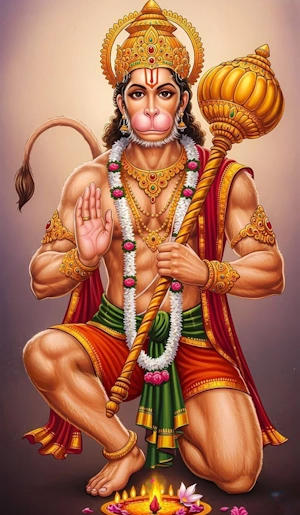
DOHA 1
Shri Guru Charan Saroj Raj Nij Man Mukur Sudhaari Barnau Raghuvar Bimal Jasu Jo Daayak Phal Chaari
Having cleansed the mirror of my mind with the dust of the lotus feet of my Divine Guru, I describe the pure glory of Shri Raghuveer Lord Rama, which bestows the four fruits of life.
In this verse, the mind is compared to a mirror. Just as one cannot see their face clearly in a dirty mirror, God's realization is impossible in a mind filled with desires and ego. The Guru’s grace is the medium that removes the dust of ignorance and illuminates the intellect. Philosophically, it mentions the Purushartha Chatushtaya which are the four pillars of the Indian way of life: Dharma (Righteousness), Artha (Prosperity), Kama (Desire), and Moksha (Liberation). Placing the Guru at the highest pedestal is a hallmark of the Indian knowledge tradition, as only the Guru paves the path for the disciple to transcend the material world. Singing the pure glory of Raghuvar is not just an act of devotion but a process of purifying the consciousness. The use of the word Raj or dust is highly significant; it symbolizes the humility and surrender of the seeker. Only when a seeker makes themselves as subtle as the dust of the Guru’s feet do they become worthy of the supreme state.
DOHA 2
Buddhi Heen Tanu Jaanikai Sumirau Pavan Kumar Bal Budhi Vidya Dehu Mohi Harahu Kalesh Bikaar
Knowing myself to be ignorant and lacking in strength, I meditate upon the son of the Wind, Hanuman. I pray to him to grant me strength, wisdom, and knowledge, and to remove all my miseries and flaws.
Here, the devotee expresses a sense of complete surrender while acknowledging their limitations. Hanuman Ji is considered a synthesis of power and intellect; therefore, he is capable of bestowing these virtues. Spiritually, the words Kalesh (affliction) and Bikaar (defect or impurity) are vital. In Yoga philosophy, five types of Kleshas are described: Avidya (ignorance), Asmita (ego), Raga (attachment), Dvesha (aversion), and Abhinivesha (fear of death). The prayer seeks the removal of these. The name Pawan Kumar signifies the dominance of the air element, which is the basis of our Prana (life force). Devotion to Hanuman means disciplining one's life force, which naturally leads to the development of physical strength, mental wisdom, and spiritual knowledge. This prayer destroys the seeker's ego and connects them to divine power.
CHAUPAI 1
Jai Hanuman Gyan Gun Sagar Jai Kapis Tihun Lok Ujagar
Victory to Lord Hanuman, who is an infinite ocean of knowledge and virtue. Victory to the Lord of the Monkeys, whose glory illuminates all the three worlds of Heaven, Earth, and the Netherworld.
The word Ocean indicates Hanuman’s infinite depth and unlimited wisdom. He is not just powerful but also a master of grammar and scriptures. While the term Kapis is often used for Sugriva or Bali, Hanuman is regarded as the spiritual master of the entire Vanara race. Tihun Lok Ujagar means his fame is not limited to the mortal world but pervades the entire universe. Philosophically, Hanuman is considered foremost among the wise because of the dominance of Sattva Guna or purity. This verse inspires the devotee to ignite the light of knowledge within and emerge from the darkness of the world.
CHAUPAI 2
Ram Doot Atulit Bal Dhama Anjani Putra Pavan Sut Nama
You are the messenger of Lord Rama and the abode of incomparable power. You are known as the son of Mother Anjani and the son of the Wind.
The adjective Atulit Bal Dhama clarifies that Hanuman’s power cannot be compared to anyone else because his strength is dedicated to the service of the Supreme Soul. He is not just the master of power but its very sanctuary. Spiritually, being the son of the Wind, he possesses the speed and power of the air. He is considered an incarnation of Prana Shakti or life energy. Calling him Anjani Putra highlights his aspect of maternal devotion and affection. His primary identity is Ram Doot because he completely surrendered his existence at the feet of Rama. This shows that when an individual abandons ego and becomes an instrument of God, they become a source of infinite power.
CHAUPAI 3
Mahabir Bikram Bajrangi Kumati Nivaar Sumati Ke Sangi
You are a great hero, extremely valiant, and possess a body as strong as a thunderbolt. You dispel evil thoughts and are the companion of those with noble intellect.
The word Bajrangi is a derivative of Vajrang, meaning one whose body is as hard as a thunderbolt. This symbolizes his physical and mental fortitude, capable of destroying any obstacle. Philosophically, Kumati (wicked mind) and Sumati (noble mind) symbolize the negative and positive thoughts within us. Hanuman's presence destroys internal impurities and leads one toward discernment and wisdom. The word Sangi (companion) suggests that Hanuman is not just a deity to be worshipped, but a friend who guides our character. The purpose of his prowess has always been the establishment of Dharma and the destruction of Adharma, helping the seeker emerge victorious in internal conflicts.
CHAUPAI 4
Kanchan Baran Biraj Subesa Kaanan Kundal Kunchit Kesa
Your complexion glows like gold, and you look magnificent in beautiful attire. You wear elegant earrings in your ears, and your hair is curly.
His golden complexion symbolizes divinity and radiance, as gold never tarnishes. It reflects the aura generated by his power of celibacy and penance, which attracts the minds of devotees. Spiritually, the earrings represent the constant listening to the Vedas and words of truth. The curly hair signifies youth and energy. Subesa indicates his gentle and disciplined form. Although he appears in a monkey form, his divine appearance astonishes even the gods. This description helps the devotee meditate on the physical form of God, which increases concentration and deepens devotion.
CHAUPAI 5
Haath Bajra Aur Dhvaja Birajai Kaandhe Moonj Janeu Saajai
In your hands, the thunderbolt and the flag of victory are resplendent. The sacred thread made of Munja grass adorns your shoulder.
The thunderbolt represents his invincible power and the suppression of the wicked, while the flag represents the victory of Dharma and his identity as a devotee of Rama. The sacred thread (Janeu) signifies his Brahmanical dignity and spiritual discipline. Mythologically, the Munja thread is worn during the Upanayana ceremony, proving that Hanuman is not just physically strong but also a scholar of scriptures and a disciplined celibate. Having both a mace and a flag shows a balance between power and fame. This form teaches the seeker that power should always be used for the protection of righteousness. Hanuman’s appearance represents a wonderful confluence of heroism and scholarship.
CHAUPAI 6
Shankar Suvan Kesari Nandan Tej Pratap Maha Jag Bandan
You are the incarnation of Lord Shiva himself and the son of Kesari. Your radiance and majesty are so great that the entire world worships you.
Hanuman is considered the eleventh Rudra incarnation of Lord Shiva, which is the basis of his immense destructive and protective powers. By calling him Shankar himself, his supreme authority and divinity are confirmed. Philosophically, Shiva is the God of welfare, and Hanuman represents that aspect of Shiva which is filled with the spirit of service. Kesari Nandan connects his earthly birth and devotion to his father. His radiance is as intense as the sun. The whole world bows to him because he is the remover of distress. This verse addresses that pervasive power of Hanuman which is an extension of the Shiva element present in every atom of the universe.
CHAUPAI 7
Bidyavan Guni Ati Chatur Ram Kaaj Karibe Ko Aatur
You are highly learned, virtuous, and very clever. You are always eager to perform the tasks of Lord Rama.
Here, the word Chatur (clever) does not mean cunning, but rather the wisdom by which he takes the right decisions even in difficult situations. He is called Bidyavan because he is a knower of the Vedas and grammar. He possesses all eight Siddhis and nine Nidhis, yet he remains eager to serve. The spiritual message is that merely having knowledge is not enough unless that knowledge is put into service. Hanuman’s character is the best example of selfless Karma Yoga. Ram's work is his highest priority, showing that a true devotee’s life is dedicated solely to fulfilling God's will. His eagerness symbolizes the absence of laziness and an unbreakable enthusiasm. This teaches every individual to remain active toward their duty.
CHAUPAI 8
Prabhu Charitra Sunibe Ko Rasiya Ram Lakhan Sita Man Basiya
You are a great lover of listening to the tales of the Lord’s character. Lord Rama, Mother Sita, and Lakshman reside in your heart.
The word Rasiya indicates his deep passion. It is said that wherever the Ramayana is recited, Hanuman is present in an invisible form, listening with tearful eyes. This is the height of devotion. Philosophically, this highlights the importance of Shravan Bhakti or devotion through listening, which is the first step on the path of devotion. The Lord's character is the nectar for his ears. The residence of Rama, Sita, and Lakshman in his heart symbolizes a state where there is no difference between the devotee and God. This quality of Hanuman teaches that finding joy in the stories of God is the simplest way to concentrate the mind.
CHAUPAI 9
Sukshma Roop Dhari Siyahi Dekhava Bikat Roop Dhari Lanka Jarava
You appeared before Mother Sita by taking a very tiny form, and then, assuming a terrifying and gigantic form, you burnt Lanka to ashes.
This demonstrates his mastery over Siddhis like becoming tiny and becoming giant. The tiny form represents the humility and caution he used while entering Lanka and gaining Mother Sita's trust. The terrifying form was the manifestation of his fierce aspect necessary for the destruction of unrighteousness. Mythologically, the burning of Lanka was the beginning of the end of Ravana's ego. Spiritually, this teaches that a wise person must know the art of changing their behavior according to the situation. To be subtle where humility is needed and to be giant where the wicked must be destroyed is true heroism.
CHAUPAI 10
Bhima Roop Dhari Asura Sanhare Ramchandra Ke Kaaj Sanvare
Assuming a massive form like Bhima, you destroyed the demons and accomplished all the tasks of Lord Ramchandra.
The word Bhima here signifies his extraordinary physical strength and fearlessness. He not only destroyed enemies in battle but also assisted Rama at every step as a messenger, playing a key role in the establishment of Dharma. The word Sanvare means to refine or organize, indicating that whatever obstacles arose in Rama's work, Hanuman made them easy using his intellect and strength. Spiritually, demons symbolize the negative tendencies within us, such as lust, anger, and greed, the destruction of which is possible only through Hanuman's grace. This verse assures the devotee that if they are under Hanuman’s protection, the complex tasks of their life will be easily accomplished.
CHAUPAI 11
Laaye Sanjivan Lakhan Jiyaaye Shri Raghubir Harashi Ur Laaye
You brought the Sanjivani herb and revived Lakshman. Overjoyed by this, Lord Rama embraced you warmly with great love.
This verse highlights Hanuman as a savior and a healer. When Lakshman was struck down in battle, it was Hanuman who flew across the ocean to bring the life-saving herb. The act of Rama embracing Hanuman represents the union of the soul with the divine through selfless service. It shows that God is indebted to the devotee who serves His loved ones. Spiritually, Sanjivani represents the spiritual wisdom that revives a person from the death-like state of ignorance. Hanuman is the bringer of this wisdom.
CHAUPAI 12
Raghupati Kinhi Bahut Badaai Tum Mama Priya Bharatahi Sam Bhaai
Lord Rama praised you excessively and said that you are as dear to Him as His own brother Bharat.
For a devotee, there is no higher achievement than being compared to the Lord’s own family. Bharat is considered the pinnacle of devotion and sacrifice. By equating Hanuman to Bharat, Lord Rama removes the distinction between a servant and a brother. This teaches that true devotion transcends birth and status. In the eyes of the Divine, the one who serves with total surrender becomes part of the Divine family itself.
CHAUPAI 13
Sahas Badan Tumharo Jasu Gaave Asa Kahi Shripati Kantha Lagaave
Saying that the thousand-mouthed serpent Sheshnag sings your praises, the Lord of Lakshmi Shri Rama embraced you again.
This verse signifies universal acclaim. Sheshnag is said to support the earth and has a thousand mouths, implying that even with a thousand tongues, one cannot fully describe Hanuman’s glory. Rama embracing Hanuman again emphasizes the emotional bond and the physical manifestation of divine grace. It suggests that when the entire universe recognizes a seeker’s virtue, God personally acknowledges and accepts that seeker.
CHAUPAI 14
Sanakaadik Brahmaadi Munisa Naarad Saarad Sahit Ahisa
Sages like Sanaka, gods like Brahma, and great saints along with Narada, Goddess Saraswati, and the King of Serpents all sing your glory.
This lists the highest authorities of knowledge, creation, and music in Indian tradition. Sanaka and his brothers represent eternal celibacy and wisdom. Brahma represents creation. Narada represents the path of chanting and Saraswati represents all learning. When it is said they all praise Hanuman, it means that Hanuman is the master of all these fields. He is the personification of the Vedas and the ultimate goal of all spiritual disciplines.
CHAUPAI 15
Yam Kuber Digapaal Jahaan Te Kabi Kobid Kahi Sake Kahaan Te
Even the god of death Yama, the god of wealth Kuber, and the guardians of all directions cannot fully describe your greatness. How then can earthly poets and scholars find words to do so.
This verse places Hanuman beyond the reach of time and material wealth. Yama controls death and Kuber controls wealth, yet even they are humbled by Hanuman’s spiritual stature. The mention of poets and scholars indicates that Hanuman’s essence is beyond intellectual description. He is an experience of the heart rather than a subject of logic. It reminds the seeker that the divine power of Hanuman is infinite and cannot be confined by human language.
CHAUPAI 16
Tum Upakaar Sugrivahi Kinha Ram Milaaya Raaj Pad Dinha
You did a great favor for Sugriva by introducing him to Lord Rama and helping him regain his royal throne.
This verse shows Hanuman as a diplomat and a kingmaker. Sugriva was in exile and fear, but Hanuman’s intervention changed his destiny. Spiritually, this signifies that Hanuman acts as the bridge between the seeking soul Sugriva and the Supreme Soul Rama. Without the Guru’s mediation, the seeker often cannot find the path to the Divine. Hanuman not only provides the connection but also ensures the seeker regains their lost spiritual glory.
CHAUPAI 17
Tumharo Mantra Vibhishan Maana Lankeshwar Bhaye Sab Jag Jaana
Vibhishan followed your advice and became the King of Lanka, a fact known to the whole world.
Even in the enemy camp, Hanuman recognized the potential for righteousness in Vibhishan. By following Hanuman’s counsel to surrender to Rama, Vibhishan was saved from destruction and given the kingdom. This illustrates that following the guidance of a realized soul leads to both material success and spiritual safety. It highlights Hanuman’s role as a wise counselor who can turn a seeker’s life from darkness to light.
CHAUPAI 18
Jug Sahasra Jojan Par Bhaanu Lilyo Taahi Madhur Phal Jaanu
You leaped toward the Sun, which is located thousands of miles away, thinking it was a sweet red fruit, and swallowed it.
This refers to a childhood incident that symbolizes Hanuman’s infinite potential and his command over the cosmic elements. The Sun represents the source of all energy and light. Hanuman swallowing the sun symbolizes the seeker’s ability to internalize the highest energy and knowledge through intense focus. It also shows that for a powerful soul, even the most impossible cosmic tasks are as simple as eating a small fruit.
CHAUPAI 19
Prabhu Mudrika Meli Mukh Maahi Jaladhi Laanghi Gaye Acharaaj Naahi
Carrying the Lord’s ring in your mouth, you jumped across the vast ocean, and it is no surprise that you could do so.
When Hanuman leaped to Lanka to find Mother Sita, he carried Rama’s ring as a token of identity. The ocean represents the worldly existence full of tides of emotions and obstacles. Carrying the Lord’s name or token gives one the strength to cross this ocean of life effortlessly. The poet says there is no surprise here because for someone empowered by Rama’s grace, nothing is impossible. It teaches that faith is the ultimate vehicle for overcoming life's greatest barriers.
CHAUPAI 20
Durgaam Kaaj Jagat Ke Jete Sugam Anugraha Tumhare Tete
All the difficult and impossible tasks in this world become easy by your grace and blessings.
This is a verse of ultimate assurance. The word Durgam means difficult or impenetrable. In human life, many situations seem like dead ends. However, the grace of Hanuman acts as a catalyst that transforms obstacles into opportunities. This is not just about physical work but also about internal spiritual progress. By invoking Hanuman, the seeker gains the mental strength and clarity to navigate through the toughest challenges of the material world.
CHAUPAI 21
Ram Duwaare Tum Rakhwaare Hot Na Agya Binu Paisare
You are the sentinel at the doorstep of Lord Rama’s divine abode. No one can enter or gain access to Rama’s grace without your permission and command.
This verse establishes Hanuman as the gatekeeper of the Divine. In spiritual practice, this means that one cannot reach the Supreme Reality Lord Rama without first mastering the qualities that Hanuman represents like discipline, devotion, and selfless service. He acts as the intermediary. Just as one must pass through a doorway to enter a house, a seeker must pass through the grace of the Guru or the Prana Shakti represented by Hanuman to reach the state of God-realization. It emphasizes that devotion to Hanuman is the essential first step to attaining Lord Rama.
CHAUPAI 22
Sab Sukh Lahai Tumhari Sarna Tum Rakshak Kahu Ko Darna
All happiness and comforts are found in your shelter. When you are the protector, there is no reason to fear anything in the world.
This verse provides a sense of total security to the devotee. The word Sarna or surrender implies that once a seeker places their trust in Hanuman, all material and spiritual joys naturally follow. The second part of the verse addresses the most basic human emotion which is fear. Fear arises from a sense of being alone or unprotected. By acknowledging Hanuman as the ultimate guardian, the devotee becomes fearless. This fearlessness is not arrogance but a deep-seated peace that comes from divine protection.
CHAUPAI 23
Aapan Tej Samharo Aapai Teenon Lok Haank Te Kaanpai
Only you can control your own immense radiance and energy. When you let out a roar, all the three worlds tremble with the vibrations of your power.
Hanuman is the personification of infinite energy. This verse suggests that his power is so vast that no one else in the universe can contain or manage it except himself. His roar symbolizes the awakening of the consciousness and the destruction of the darkness of ignorance. Spiritually, this refers to the activation of the inner life force. When the inner energy is awakened through devotion, it shakes the foundations of the ego and the three states of existence which are waking, dreaming, and deep sleep, leading the seeker toward the fourth state of enlightenment.
CHAUPAI 24
Bhoot Pisaach Nikat Nahi Aave Mahabir Jab Naam Sunaave
Ghosts, evil spirits, and negative energies do not dare to come near when the name of the great hero Mahabir is chanted.
This is one of the most famous verses for protection against the paranormal or psychological fears. Here, Bhoot and Pisaach can be understood literally as spirits or metaphorically as negative thoughts, anxieties, and past traumas that haunt the mind. Chanting the name of Hanuman creates a protective vibration or a shield around the seeker. The name Mahabir signifies supreme courage. When courage is invoked through the name of Hanuman, all shadows of fear and negativity are instantly dispelled.
CHAUPAI 25
Naase Rog Hare Sab Peera Japat Nirantar Hanumat Beera
All diseases are destroyed and all pains vanish when the name of the brave Hanuman is chanted continuously.
This verse highlights the healing power of devotion. Chanting is a form of sound therapy that calms the nervous system and strengthens the resolve. Nirantar means without interruption, suggesting that consistent practice is key to physical and mental well-being. Hanuman is the master of the life breath or Prana, and since all bodily ailments are related to the flow of Prana, his grace helps in restoring health. It reassures the devotee that no affliction is too great for the power of the divine name.
CHAUPAI 26
Sankat Se Hanuman Chhudave Man Kram Bachan Dhyan Jo Lave
Hanuman delivers one from all troubles and difficulties if they focus their mind, actions, and speech upon him.
This verse provides a formula for successful prayer. It requires the integration of three levels of existence: Man (thoughts), Kram (actions), and Bachan (speech). When a seeker aligns their thoughts, their deeds, and their words toward the divine, they achieve a state of integrity. In this state of total focus, Hanuman’s grace becomes active. It teaches that devotion is not just a mental exercise but a lifestyle that involves being honest in speech and righteous in action.
CHAUPAI 27
Sab Par Ram Tapasvee Raja Tin Ke Kaaj Sakal Tum Saaja
Lord Rama is the supreme king of all ascetics, and you have accomplished all his tasks and missions.
Rama is called Tapasvee Raja, which is a unique combination of a king and a hermit. This indicates that Rama is the master of both the material world and the spiritual path. Hanuman is the executive power who carries out the will of this supreme master. For a seeker, this means that Hanuman is the one who helps manage the responsibilities of the world while keeping the spiritual goal in sight. It reflects the idea that the devotee does the work, but the strength and success come from Hanuman.
CHAUPAI 28
Aur Manorath Jo Koi Lave Soyi Amit Jeevan Phal Paave
Whatever other desires or wishes someone brings to you, they receive the inexhaustible and limitless fruits of life.
While the ultimate goal of devotion is liberation, this verse acknowledges that humans have worldly desires or Manorath. Hanuman is so compassionate that he fulfills even these earthly wishes. However, the use of the word Amit (limitless) suggests that his grace does not just provide a temporary fix but leads the seeker toward a deeper fulfillment. He gives not just what the devotee wants, but what is ultimately good for their soul, leading to a life of abundance and purpose.
CHAUPAI 29
Chaaron Jug Partap Tumhara Hai Parsiddha Jagat Ujiyara
Your glory prevails through all the four ages of Satya, Treta, Dwapara, and Kali. Your fame is world-famous and illuminates the entire universe.
This verse establishes Hanuman as a Chiranjeevi or an immortal being who exists beyond the limits of time. His relevance is not limited to the era of the Ramayana but is eternal. In the current age of Kali Yuga, where mental unrest is high, Hanuman’s light or Ujiyara acts as a guiding star. It suggests that the principles Hanuman stands for like loyalty, strength, and humility are timeless truths that will always benefit humanity regardless of the era.
CHAUPAI 30
Sadhu Sant Ke Tum Rakhwaare Asur Nikandan Ram Dulare
You are the protector of sages and saints. You are the destroyer of demons and are the beloved of Lord Rama.
This verse describes Hanuman’s dual nature. He is incredibly gentle and protective toward the virtuous and those on the path of truth (the Sadhu and Sant). At the same time, he is fierce and destructive toward evil forces (the Asur). This balance of being a protector and a destroyer is necessary for the maintenance of Dharma. Being called Ram Dulare (the darling of Rama) signifies that his actions are always in perfect harmony with the divine will. It encourages the seeker to cultivate saintly qualities to receive his protection.
CHAUPAI 31
Ashta Siddhi Nau Nidhi Ke Daata Asabar Din Janaki Maata
You are the bestower of the eight supernatural powers and the nine types of wealth. This was the boon granted to you by Mother Janaki Sita.
This verse highlights Hanuman as the source of all possible attainments. The eight Siddhis are yogic powers like becoming tiny, heavy, or invisible, while the nine Nidhis represent material and spiritual treasures. Usually, these are very difficult to attain through penance, but Mother Sita, being the divine mother of the universe, gave Hanuman the authority to grant these to his devotees. This means that for a devotee of Hanuman, nothing in the material or spiritual world is out of reach. It also shows the deep bond between the Mother and the servant.
CHAUPAI 32
Ram Rasayan Tumhare Paasa Sada Raho Raghupati Ke Daasa
You possess the elixir of Rama’s name. You always remain the humble servant of the Lord of the Raghus.
Ram Rasayan refers to the chemical or essence of Rama's name. Just as medicine or an elixir can cure diseases and grant longevity, the name of Rama cures the disease of worldly existence. Hanuman is the custodian of this elixir. Despite having all powers and wealth, he chooses to remain a Daasa or a servant. This teaches that the highest state of existence is not the possession of power, but the state of constant devotion and humility before the Divine.
CHAUPAI 33
Tumhare Bhajan Ram Ko Paave Janam Janam Ke Dukh Bisraave
By singing your praises and worshipping you, one finds Lord Rama and is freed from the sufferings of many lifetimes.
This verse confirms that Hanuman is the direct path to God. Worship of Hanuman removes the karmic baggage of many past births. Often, a seeker feels overwhelmed by their past mistakes or current suffering. This verse provides hope that the simple act of Bhajan or devotion to Hanuman clears the path to the Supreme Reality. It suggests that Hanuman filters the soul, making it pure enough to experience the presence of Rama.
CHAUPAI 34
Anta Kaal Raghubar Pur Jaayi Jahaan Janami Hari Bhakta Kahaayi
At the time of death, such a devotee goes to the divine abode of Lord Rama, and if they are born again, they are known as true devotees of Hari.
This verse addresses the ultimate human concern which is the end of life. It promises that a life dedicated to Hanuman ensures a peaceful transition to the divine abode. Even if the cycle of rebirth continues, the person is born into a environment where they continue their spiritual journey as a devotee. It ensures spiritual continuity and eventual liberation. It emphasizes that the fruit of this devotion is not temporary but lasts beyond physical death.
CHAUPAI 35
Aur Devta Chitt Na Dharayi Hanumat Sei Sarba Sukh Karayi
One need not focus their mind on any other deity. Serving Hanuman alone provides all the happiness and fulfillment one could desire.
This is not a statement of disrespect toward other gods, but a recommendation of Ekanta Bhakti or one-pointed devotion. It tells the seeker that Hanuman is a complete manifestation of divine power. By focusing all energy on one point, the seeker avoids confusion and gains deep results. It reassures the devotee that Hanuman is capable of providing everything ranging from material needs to spiritual enlightenment, making him a complete refuge.
CHAUPAI 36
Sankat Kate Mite Sab Peera Jo Sumirai Hanumat Balbeera
All troubles end and all pains are erased for those who remember the powerful and brave Hanuman.
This verse is a powerful affirmation of Hanuman’s role as Sankatmochan or the remover of obstacles. Sumirai means to remember or contemplate. The moment the mind shifts from the problem to the strength of Hanuman, the intensity of the suffering begins to diminish. It highlights that the solution to life's crises is often a shift in consciousness from fear to faith in the divine power.
CHAUPAI 37
Jai Jai Jai Hanuman Gosain Kripa Karahu Gurudev Ki Naai
Victory, victory, victory to you, Lord Hanuman. I pray that you bestow your grace upon me just as a Divine Guru does.
Chanting Jai three times signifies victory over the three types of miseries which are physical, mental, and spiritual. Hanuman is addressed here as Gosain which means master of the senses. The devotee asks Hanuman to take the role of a Guru. A Guru does not just grant wishes but provides the wisdom to navigate life. This marks the transition of the devotee from a seeker of boons to a seeker of knowledge and guidance.
CHAUPAI 38
Jo Sat Baar Paath Kar Koyi Chhutahi Bandi Maha Sukh Hoyi
Whoever recites this prayer a hundred times is released from all bondages and attains great happiness.
This verse mentions the fruit of regular practice. A hundred times can mean literal repetition or a state of complete immersion. Bandi refers to the bondages of ego, habits, and worldly attachments. Great happiness is the natural state of a soul that has been freed from these chains. It encourages the seeker to be disciplined and persistent in their spiritual practice to see real transformation in their life.
CHAUPAI 39
Jo Yah Padhe Hanuman Chalisa Hoye Siddhi Saakhi Gaurisa
Whoever reads these forty verses of the Hanuman Chalisa will attain success and perfection. Lord Shiva himself is the witness to this truth.
Siddhi here means the successful completion of one’s goals. The mention of Gaurisa or Lord Shiva as a witness is significant because Hanuman is an incarnation of Shiva. It adds divine authority to the efficacy of the prayer. It guarantees the seeker that their efforts in reading this Chalisa will not go in vain and will lead to an enriched life.
CHAUPAI 40
Tulsidas Sada Hari Chera Keejai Naath Hriday Mah Dera
Tulsidas is forever the servant of Lord Hari. He prays, O Lord, please make your home in my heart forever.
In the concluding verse, the poet Tulsidas identifies himself as a humble servant. He makes the ultimate request which is for the Divine to reside permanently in his heart. This signifies that the goal of all prayer and praise is to have a constant awareness of God within oneself. It moves the focus from external worship to internal presence.
CONCLUDING DOHA
Pavan Tanay Sankat Haran Mangal Murti Roop Ram Lakhan Sita Sahit Hriday Basahu Sur Bhoop
O Son of the Wind, the destroyer of all troubles, and the embodiment of auspiciousness, please dwell in my heart along with Lord Rama, Lakshman, and Mother Sita.
This final prayer summarizes the essence of the entire Chalisa. Hanuman is described as the one who turns every situation into something auspicious (Mangal). By asking him to reside in the heart along with the divine family of Rama, the devotee is asking for a state of perpetual grace and protection. It ends the prayer with a vision of a heart that is a temple, where strength (Hanuman), righteousness (Rama), loyalty (Lakshman), and peace (Sita) live together.
shreeguru charana saroja raja nija mana mukura sudhaari .
barana_um' raghubara bimala jasa jo daayaka phala chaari .
buddhi heena tanu jaanikai sumiraum pavanakumaara .
bala budhi bidyaa dehu mohim harahu kalesha bikaara .
jaya hanumaana jnyaana guna saagara .
jaya kapeesha tihum' loka ujaagara ..1..
raama doota atulita bala dhaamaa .
anjaniputra pavanasuta naamaa ..2..
mahaabeera bikrama bajarangee .
kumati nivaara sumati ke sangee ..3..
kanchana barana biraaja subesaa .
kaanana kund'ala kunchita kesaa ..4..
haatha bajra aru dhvajaa biraajai .
kaam'dhe moom'ja janeoo chhaajai ..5..
shankara svayam kesareenandana .
teja prataapa mahaa jaga bandana ..6..
bidyaavaana gunee ati chaatura .
raama kaaja karibe ko aatura ..7..
prabhu charitra sunibe ko rasiyaa .
raama lakhana seetaa mana basiyaa ..8..
sookshma roopa dhari siyahim dikhaavaa .
bikat'a roopa dhari lanka jaraavaa ..9..
bheema roopa dhari asura sam'haare .
raamachandra ke kaaja sam'vaare ..10..
laaya sam'jeevani lakhana jiyaaye .
shreeraghubeera harashi ura laaye ..11..
raghupati keenhee bahuta bad'aaee .
tuma mama priya bharatahim sama bhaaee ..12.
sahasa badana tumharo jasa gaavaim .
asa kahi shreepati kant'ha lagaavaim ..13..
sanakaadika brahmaadi muneeshaa .
naarada saarada sahita aheeshaa ..14..
jama kubera digapaala jahaam' te .
kabi kobida kahi sakaim kahaam' te ..15..
tuma upakaara sugreevahim keenhaa .
raama milaaya raaja-pada deenhaa ..16..
tumharo mantra bibheeshana maanaa .
lankeshvara bhae saba jaga jaanaa ..17..
juga sahasra jojana para bhaanoo .
leelyo taahi madhura phala jaanoo ..18..
prabhu mudrikaa meli mukha maaheem .
jaladhi laanghi gaye acharaja naaheem ..19..
durgama kaaja jagata ke je te .
sugama anugraha tumhare te te ..20..
raama duaare tuma rakhavaare .
hota na aajnyaa binu paisaare ..21..
saba sukha lahahim tumhaaree sharanaa .
tuma rakshaka kaahoo ko d'ara naa ..22..
aapana teja samhaaro aape .
teenaum loka haam'ka te kaam'pe ..23..
bhoota pishaacha nikat'a naheem aavai .
mahaabeera jaba naama sunaavai ..24..
naasai roga harai saba peeraa .
japata nirantara hanumata beeraa ..25..
sankat'a tem hanumaana chhud'aavai .
mana krama bachana dhyaana jo laavaim ..26..
saba para raama raaya sirataajaa .
tina ke kaaja sakala tuma saajaa ..27..
aura manoratha jo koi laavai .
taasu amita jeevana phala paavai ..28..
chaariu juga parataapa tumhaaraa .
hai parasiddha jagata ujiyaaraa ..29..
saadhu santa ke tuma rakhavaare .
asura nikandana raama dulaare ..30..
asht'a siddhi nava nidhi ke daataa .
asa bara deenha jaanakee maataa ..31..
raama rasaayana tumhare paasaa .
saadara hau raghupati ke daasaa ..32..
tumhare bhajana raama ko paavai .
janama janama ke dukha bisaraavai ..33..
anta kaala raghubara pura jaaee .
jahaam janma hari bhagata kahaaee ..34..
aura devataa chitta na dharaee .
hanumata sei sarba sukha karaee ..35..
sankat'a kat'ai mit'ai saba peeraa .
jo sumirai hanumata balabeeraa ..36..
jaya jaya jaya hanumaana gosaaeem .
kri'paa karahu gurudeva kee naaeem ..37..
jo shata baara paat'ha kara koee .
chhoot'ahim bandi mahaa sukha hoee ..38..
jo yaha pad'haim hanumaana chaaleesaa .
hoya siddhi saakhee gaureesaa ..39..
tulaseedaasa sadaa hari cheraa .
keejai naatha hri'daya maham' d'eraa ..40..
pavana tanaya sankat'a harana mangala moorati roopa .
raama lakhana seetaa sahita hri'daya basahu sura bhoopa ..
श्रीगुरु चरन सरोज रज निज मन मुकुर सुधारि ।
बरनउँ रघुबर बिमल जस जो दायक फल चारि ।
बुद्धि हीन तनु जानिकै सुमिरौं पवनकुमार ।
बल बुधि बिद्या देहु मोहिं हरहु कलेश बिकार ।
जय हनुमान ज्ञान गुण सागर ।
जय कपीश तिहुँ लोक उजागर ॥१।
राम दूत अतुलित बल धामा ।
अंजनिपुत्र पवनसुत नामा ॥२॥
महाबीर बिक्रम बजरंगी ।
कुमति निवार सुमति के संगी ॥३॥
कंचन बरन बिराज सुबेसा ।
कानन कुंडल कुंचित केसा ॥४॥
हाथ बज्र अरु ध्वजा बिराजै ।
काँधे मूँज जनेऊ छाजै ॥५॥
शंकर स्वयं केसरीनंदन ।
तेज प्रताप महा जग बंदन ॥६॥
बिद्यावान गुणी अति चातुर ।
राम काज करिबे को आतुर ॥७॥
प्रभु चरित्र सुनिबे को रसिया ।
राम लखन सीता मन बसिया ॥८॥
सूक्ष्म रूप धरि सियहिं दिखावा ।
बिकट रूप धरि लंक जरावा ॥९॥
भीम रूप धरि असुर सँहारे ।
रामचंद्र के काज सँवारे ॥१०॥
लाय सँजीवनि लखन जियाये ।
श्रीरघुबीर हरषि उर लाये ॥११॥
रघुपति कीन्ही बहुत बडाई ।
तुम मम प्रिय भरतहिं सम भाई ॥१२।
सहस बदन तुम्हरो जस गावैं ।
अस कहि श्रीपति कंठ लगावैं ॥१३॥
सनकादिक ब्रह्मादि मुनीशा ।
नारद सारद सहित अहीशा ॥१४॥
जम कुबेर दिगपाल जहाँ ते ।
कबि कोबिद कहि सकैं कहाँ ते ॥१५॥
तुम उपकार सुग्रीवहिं कीन्हा ।
राम मिलाय राज-पद दीन्हा ॥१६॥
तुम्हरो मंत्र बिभीषन माना ।
लंकेश्वर भए सब जग जाना ॥१७॥
जुग सहस्र जोजन पर भानू ।
लील्यो ताहि मधुर फल जानू ॥१८॥
प्रभु मुद्रिका मेलि मुख माहीं ।
जलधि लांघि गये अचरज नाहीं ॥१९॥
दुर्गम काज जगत के जे ते ।
सुगम अनुग्रह तुम्हरे ते ते ॥२०॥
राम दुआरे तुम रखवारे ।
होत न आज्ञा बिनु पैसारे ॥२१॥
सब सुख लहहिं तुम्हारी शरना ।
तुम रक्षक काहू को डर ना ॥२२॥
आपन तेज सम्हारो आपे ।
तीनौं लोक हाँक ते काँपे ॥२३॥
भूत पिशाच निकट नहीं आवै ।
महाबीर जब नाम सुनावै ॥२४॥
नासै रोग हरै सब पीरा ।
जपत निरंतर हनुमत बीरा ॥२५॥
संकट तें हनुमान छुडावै ।
मन क्रम बचन ध्यान जो लावैं ॥२६॥
सब पर राम राय सिरताजा ।
तिन के काज सकल तुम साजा ॥२७॥
और मनोरथ जो कोइ लावै ।
तासु अमित जीवन फल पावै ॥२८॥
चारिउ जुग परताप तुम्हारा ।
है परसिद्ध जगत उजियारा ॥२९॥
साधु संत के तुम रखवारे ।
असुर निकंदन राम दुलारे ॥३०॥
अष्ट सिद्धि नव निधि के दाता ।
अस बर दीन्ह जानकी माता ॥३१॥
राम रसायन तुम्हरे पासा ।
सादर हौ रघुपति के दासा ॥३२॥
तुम्हरे भजन राम को पावै ।
जनम जनम के दुख बिसरावै ॥३३॥
अंत काल रघुबर पुर जाई ।
जहां जन्म हरि भगत कहाई ॥३४॥
और देवता चित्त न धरई ।
हनुमत सेइ सर्ब सुख करई ॥३५॥
संकट कटै मिटै सब पीरा ।
जो सुमिरै हनुमत बलबीरा ॥३६॥
जय जय जय हनुमान गोसाईं ।
कृपा करहु गुरुदेव की नाईं ॥३७॥
जो शत बार पाठ कर कोई ।
छूटहिं बंदि महा सुख होई ॥३८॥
जो यह पढैं हनुमान चालीसा ।
होय सिद्धि साखी गौरीसा ॥३९॥
तुलसीदास सदा हरि चेरा ।
कीजै नाथ हृदय महँ डेरा ॥४०॥
पवन तनय संकट हरन मंगल मूरति रूप ।
राम लखन सीता सहित हृदय बसहु सुर भूप ॥
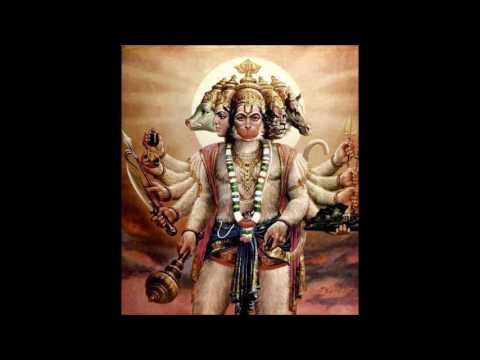
Click on the image below to listen to Hanuman Chalisa - Normal chanting - No Music
Click on the image below to listen to Hanuman Chalisa - Soorya Gayatri





Other stotras


