Ekamukhi Hanuman Kavacham
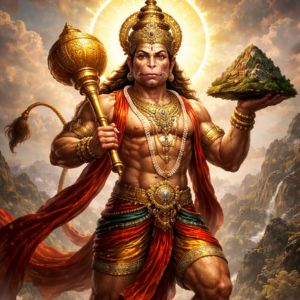
Verse 1
पार्वत्युवाच
भगवन् देवदेवेश लोकनाथ जगद्गुरो ।
शोकाकुलानां लोकानां केन रक्षा भवेद्ध्रुवम् ॥
The literal meaning of this verse reveals Goddess Parvati addressing Lord Shiva, asking, O Lord, God of Gods, Master of the Universe, and Universal Teacher, by what means can there be certain protection for people who are overwhelmed by sorrow?
In the mythological context, this conversation invokes the traditional Agamic framework where Parvati asks a question for the benefit of all humanity, and Shiva answers. Here she is seeking an ultimate, infallible protective armor to shield mortals from the inevitable sufferings of earthly life.
Philosophically, Parvati represents the inquisitive human soul seeking refuge, while Shiva, addressed as Devadevesha and Jagadguro, signifies the Supreme Reality that dispels ignorance. The sorrow mentioned represents the suffering of Samsara, the continuous cycle of worldly existence. The plea for protection is the individual soul's profound yearning for spiritual liberation and divine grace.
Verse 2
सङ्ग्रामे सङ्कटे घोरे भूतप्रेतादिके भये ।
दुःखदावाग्निसन्तप्तचेतसां दुःखभागिनाम् ॥
The literal translation highlights the various afflictions faced by living beings: in terrible battles, in severe crises, from fears caused by ghosts and spirits, and for those whose minds are tormented by the forest fire of suffering, who bear the heavy burden of sorrow.
Mythologically, the verse reflects an ancient Indian cosmology fraught with external and supernatural threats. Battles and malevolent spirits represent the literal, everyday dangers that warriors and ordinary citizens faced, necessitating a divine shield or Kavacham to ensure physical survival and mental sanity.
On a deeper spiritual level, the battlefield symbolizes the internal psychological war between virtues and vices. The ghosts and spirits represent lingering past karmas and negative thought patterns that haunt the mind. The forest fire of suffering is the inescapable nature of worldly desires that consume inner peace, emphasizing the need for an anchor in this chaotic existence.
Verse 3
ईश्वर उवाच
शृणु देवि प्रवक्ष्यामि लोकानां हितकाम्यया ।
विभीषणाय रामेण प्रेम्णा दत्तं च यत्पुरा ॥
Literally, Lord Shiva replies, Listen, O Goddess, I shall reveal it out of a desire for the welfare of the worlds. That which was given in ancient times by Lord Rama to Vibhishana with deep love.
Mythologically, this establishes the sacred lineage and origin of the Kavacham. Lord Rama bestowed this specific protective shield upon Vibhishana, the righteous demon king, after he surrendered. It highlights the divine promise of absolute protection for any refugee who sincerely seeks shelter under the Divine.
Spiritually, Shiva acting as the revealer underscores the profound unity between Shaivism and Vaishnavism. Rama's love for Vibhishana symbolizes the boundless grace of the Supreme toward any seeker who surrenders completely, regardless of their past actions or origins, proving that pure devotion easily dissolves all previous karmic boundaries.
Verse 4
कवचं कपिनाथस्य वायुपुत्रस्य धीमतः ।
गुह्यं ते सम्प्रवक्ष्यामि विशेषाच्छृणु सुन्दरि ॥
The literal meaning is: I will tell you the armor of the lord of monkeys, the highly intelligent son of the wind god. Listen carefully to this supreme secret, O beautiful one.
In the mythological context, Hanuman is introduced through his primary attributes as the king of monkeys and the son of Vayu, the wind god. This directly references his extraordinary birth, divine heritage, and his supreme intellect, setting him apart as the ultimate warrior and scholar.
Philosophically, the armor or Kavacham is not a physical object but a powerful vibratory shield constructed of mantras. Calling Hanuman intelligent (dhimatah) points to his role as the perfect embodiment of Jnana (wisdom) and Bhakti (devotion). This indicates that true protection from worldly suffering comes only through enlightened devotion and the realization of sacred secrets.
Verse 5
ध्यायेद्बालदिवाकरधृतिनिभं देवारिदर्पापहं
देवेन्द्रप्रमुखप्रशस्तयशसं देदीप्यमानं रुचा ।
सुग्रीवादिसमस्तवानरयुतं सुव्यक्ततत्त्वप्रियं
संरक्तारुणलोचनं पवनजं पीताम्बरालङ्कृतम् ॥
Literally, one should meditate on the wind god's son, adorned in yellow garments, radiating like the rising morning sun, who destroys the pride of the enemies of gods. He is praised by Indra, brilliantly shining, accompanied by Sugriva, fond of clear truth, with red-hued eyes.
Mythologically, Hanuman's red eyes and sun-like radiance recall his childhood attempt to swallow the sun, from which he gained immense solar power. His association with Sugriva and the praise of Indra remind us of his unwavering loyalty and his pivotal, celebrated role in the Ramayana epic.
Spiritually, meditating on his sun-like form actively dispels the inner darkness of ignorance. His fondness for the clear truth (suvyakta-tattva) represents the awakened soul's natural affinity for Brahman. The yellow garments signify spiritual purity, auspiciousness, and the vibrant life force that sustains all contemplative practices.
Verse 6
उद्यन्मार्तण्डकोटिप्रकटरुचियुतं चारुवीरासनस्थं
मौञ्जीयज्ञोपवीतारुणरुचिरशिखाशोभितं कुण्डलाङ्गम् ।
भक्तानामिष्टदं तं प्रणतमुनिजनं वेदनादप्रमोदं
ध्यायेद्देवं विधेयं प्लवगकुलपतिं गोष्पदीभूतवार्धिम् ॥
The literal meaning describes him possessing the brilliance of ten million rising suns, seated in a beautiful heroic posture. Adorned with a Munja grass sacred thread, a red crest, and earrings, he grants devotees' desires, joys bowing sages with Veda sounds, and reduced the ocean to a hoofprint.
Mythologically, crossing the ocean as if it were a cow's hoofprint refers to his miraculous leap to Lanka, demonstrating unimaginable strength powered by devotion. The sacred thread and Vedic chanting highlight his revered status as a supreme Brahminical scholar and master of scriptures.
Spiritually, the heroic posture (Virasana) represents unwavering steadfastness in spiritual practice. Crossing the vast ocean signifies overcoming the turbulent sea of worldly illusion (Samsara) through the sheer power of faith. Pleasing sages with Vedic sounds indicates that the highest wisdom aligns perfectly with selfless divine service.
Verse 7
वज्राङ्गं पिङ्गकेशाढ्यं स्वर्णकुण्डलमण्डितम् ।
नियुद्धकर्मकुशलं पारावारपराक्रमम् ॥
Literally, this verse praises him as having a thunderbolt-like body, rich with reddish-brown hair, and adorned with golden earrings. He is highly skilled in hand-to-hand combat and possesses valor as vast and boundless as the ocean.
Mythologically, his indestructible body (Vajranga) originates from Lord Indra's thunderbolt striking his jaw during childhood, after which all gods blessed him with absolute invulnerability. His martial combat skill refers to defeating formidable demonic entities like Lankini purely through physical prowess.
Philosophically, the adamantine body represents the unbreakable resolve and discipline of a true yogi. His vast, oceanic valor symbolizes the boundless potential of the human spirit when it is fully aligned with divine purpose, rendering it capable of confronting and conquering the greatest inner mental demons.
Verse 8
वामहस्ते महावृक्षं दशास्यकरखण्डनम् ।
उद्यद्दक्षिणदोर्दण्डं हनुमन्तं विचिन्तयेत् ॥
Literally, one should meditate on Hanuman, who holds in his left hand a massive tree that shattered the hands of the ten-headed Ravana, and whose right arm is raised like a formidable, punishing staff.
Mythologically, holding the uprooted tree recalls his devastating destruction of the Ashoka grove and his annihilation of numerous demons in Lanka. Striking and shattering Ravana's confidence demonstrates his physical superiority even over the conqueror of the three worlds.
Spiritually, the uprooted tree symbolizes the forceful destruction of deep-rooted karmic conditioning and the deeply entrenched ego. The raised right arm represents a constant state of vigilance, the readiness to defend righteousness (Dharma), and the upholding of strict spiritual laws against the forces of ignorance.
Verse 9
अपराजित नमस्तेऽस्तु नमस्ते रामपूजित ।
प्रस्थानं च करिष्यामि सिद्धिर्भवतु मे सदा ॥
The literal translation is: Salutations to you, the undefeated one; salutations to you, who are worshipped by Lord Rama. I am setting out on a journey, may success and fulfillment always be mine.
Mythologically, Hanuman being worshipped by Rama refers to the emotional moments after the war when Rama embraced him, declaring Hanuman to be as dear to him as his own brother Bharata, recognizing his matchless, selfless service.
Spiritually, by seeking the blessings of the undefeated one before commencing any journey, the devotee deeply acknowledges that true success in the journey of life comes only through divine grace. It signifies the complete surrender of individual agency and ego to the Supreme Will, ensuring spiritual victory.
Verse 10
यो वारांनिधिमल्पपल्वलमिवोल्लङ्घ्य प्रतापान्वितो
वैदेहीघनशोकतापहरणो वैकुण्ठतत्त्वप्रियः ।
अक्षाद्यर्चितराक्षसेश्वरमहादर्पापहारी रणे ।
सोऽयं वानरपुङ्गवोऽवतु सदा युष्मान्समीरात्मजः ॥
Literally, he who leaped over the ocean as if it were a small puddle, full of valor, who removed the intense sorrow of Sita, and is fond of Vaikuntha's truth. In battle, he destroyed the immense pride of Ravana. May that excellent monkey, the wind's son, always protect you all.
Mythologically, this beautifully encapsulates his epic journey to Lanka, locating Mother Sita, and slaying Ravana's formidable son, Aksha Kumara. It highlights his pivotal, heroic role as the supreme messenger and invincible protector in the Ramayana epic.
Philosophically, removing Sita's sorrow represents divine wisdom removing the anguish of the individual soul separated from the universal consciousness. His love for Vaikuntha's truth signifies absolute absorption in the highest spiritual reality, while leaping the ocean symbolizes transcending worldly limitations effortlessly through pure devotion.
Verse 11
वज्राङ्गं पिङ्गकेशं कनकमयलसत्कुण्डलाक्रान्तगण्डं
नाना विद्याधिनाथं करतलविधृतं पूर्णकुम्भं दृढं च
भक्ताभीष्टाधिकारं विदधति च सदा सर्वदा सुप्रसन्नं
त्रैलोक्यत्राणकारं सकलभुवनगं रामदूतं नमामि ॥
Literally, I bow to Rama's messenger, whose body is like a thunderbolt, with reddish-brown hair and golden earrings touching his cheeks. He masters diverse sciences, holds a firm full pitcher, always grants devotees' desires, is ever pleased, protects the three worlds, and travels all realms.
Mythologically, Hanuman as the master of sciences reflects his diligent learning from the Sun God, Surya. The radiant golden earrings were divine gifts. His ability to travel through all realms signifies his unrestricted cosmic movement and supreme yogic capabilities.
Spiritually, the full pitcher (Purna Kumbha) in his hand symbolizes the absolute fullness of supreme knowledge, immortality, and spiritual completion. His ever-pleased, blissful state represents the inherent joy (Ananda) of a fully self-realized being who operates purely as an instrument of the Divine.
Verse 12
उद्यल्लाङ्गूलकेशप्रलयजलधरं भीममूर्तिं कपीन्द्रं
वन्दे रामाङ्घ्रिपद्मभ्रमरपरिवृतं तत्त्वसारं प्रसन्नम् ।
वज्राङ्गं वज्ररूपं कनकमयलसत्कुण्डलाक्रान्तगण्डं
दम्भोलिस्तम्भसारप्रहरणविकटं भूतरक्षोऽधिनाथम् ॥
The literal meaning is: I bow to the monkey lord whose rising tail and hair resemble doomsday clouds, possessing a terrifying form. He is a bee at Rama's lotus feet, the joyful essence of truth. With an indestructible body, he fiercely strikes with weapon-like force, mastering ghosts and demons.
Mythologically, his tail resembling doomsday clouds points to his majestic burning of Lanka, where his expanding cosmic form struck absolute terror into malevolent beings. He is recognized here as the ultimate vanquisher of dark, supernatural entities.
Philosophically, acting as a bee at Rama's lotus feet exemplifies the highest state of Bhakti, constant absorption in the nectar of the Divine. His terrifying form serves only to eradicate the devotee's ego and inner impurities, while his true internal essence remains pure joy and ultimate truth.
Verse 13
वामे करे वैरिभयं वहन्तं शैलं च दक्षे निजकण्ठलग्नम् ।
दधानमासाद्य सुवर्णवर्णं भजेज्ज्वलत्कुण्डलरामदूतम् ॥
Literally, bearing in his left hand a mountain that brings fear to enemies, and keeping his right hand close to his neck. I worship the messenger of Rama, possessing a magnificent golden complexion and brilliantly radiant earrings.
Mythologically, holding the mountain refers to his incredible, superhuman feat of carrying the entire Sanjeevani mountain to save Lakshmana's life when he could not identify the specific healing herbs on the battlefield.
Spiritually, the mountain symbolizes the immense burden of worldly responsibilities and karmas, which the divine devotee carries effortlessly. His golden complexion reflects profound spiritual illumination, and bringing the healing herb implies his divine power to resurrect the spiritually dead and heal a fractured mind.
Verse 14
पद्मरागमणिकुण्डलत्विषा पाटलीकृतकपोलमण्डलम् ।
दिव्यगेहकदलीवनान्तरे भावयामि पवमाननन्दनम् ॥
The literal meaning is: His entire cheek area is made beautifully pinkish-red by the brilliant luster of his ruby earrings. I continuously meditate upon the son of the wind god, who resides peacefully within a divine banana grove.
Mythologically, Hanuman is traditionally believed to reside permanently as an immortal (Chiranjeevi) in a mystical banana grove (Kadali Vana) high in the Himalayas, where he spends his eternity endlessly chanting the sacred name of Lord Rama.
Philosophically, the red glow on his cheeks signifies the warmth of supreme devotion and the active, vibrant flow of spiritual energy (Prana). The banana grove represents an inner sanctuary of profound peace, meditation, and complete detachment from the turbulent material world.
Verse 15
ईश्वर उवाच
इति वदति विशेषाद्राघवो राक्षसेन्द्रम्
प्रमुदितवरचित्तो रावणस्यानुजो ह ।
रघुवरवरदूतं पूजयामास भूयः
स्तुतिभिरकृतार्थः स्वं परं मन्यमानः ॥
Literally, Lord Shiva said: As Rama spoke thus specifically to the lord of demons, Vibhishana, with a highly delighted heart, repeatedly worshipped the excellent messenger of Rama. Feeling unfulfilled by mere praises, he considered Hanuman his ultimate, supreme refuge.
Mythologically, this completely contextualizes the Kavacham's origin. Vibhishana deeply realizes Hanuman's absolute greatness because it was Hanuman's initial intervention and counsel that facilitated Vibhishana's successful surrender and acceptance by Lord Rama.
Spiritually, worshipping the servant of the Lord is consistently considered higher than worshipping the Lord Himself in the Bhakti tradition. Vibhishana's profound devotion to Hanuman illustrates that the grace of a true guru or pure devotee is absolutely essential to attain the Supreme Reality.
Verse 16
वन्दे विद्युद्वलयसुभगस्वर्णयज्ञोपवीतं
कर्णद्वन्द्वे कनकरुचिरे कुण्डले धारयन्तम् ।
उच्चैर्हृष्यद्द्युमणिकिरणश्रेणिसम्भाविताङ्गं
सत्कौपीनं कपिवरवृतं कामरूपं कपीन्द्रम् ॥
Literally, I bow to the monkey lord whose golden sacred thread is beautiful like lightning, wearing shining golden earrings. His body is honored by the rays of the rejoicing sun, wearing a simple loincloth, surrounded by monkeys, capable of taking any form at will.
Mythologically, the golden sacred thread and earrings are divine gifts representing his strict Brahminical purity and Vedic authority. His ability to change form (Kamamrupa) denotes his yogic power to shrink to the size of a tiny insect or grow as large as a mountain.
Philosophically, the loincloth (Kaupina) symbolizes absolute asceticism and total mastery over the senses (Brahmacharya). His capacity to take any form signifies the liberated soul's infinite adaptability and profound freedom when entirely released from physical bodily identification.
Verse 17
श्रीराम उवाच
हनुमान् पूर्वतः पातु दक्षिणे पवनात्मजः ।
प्रतीच्यां पातु रक्षोघ्न उत्तरस्यामब्धिपारगः ॥
Literally, Lord Rama said: May Hanuman protect me in the east, and the son of the wind protect the south. May the destroyer of demons protect the west, and the crosser of the ocean protect the northern direction.
Mythologically, this verse initiates the actual Kavacham or spiritual protective armor, mapping Hanuman's diverse epithets and past heroic deeds to specific cardinal directions, effectively forming an impenetrable divine fortress around the practitioner.
Spiritually, the directions represent the multidimensional aspects of human life and the varied directions from which worldly distractions attack. By invoking divine protection in all directions, the devotee safely seals their consciousness against negative external influences, remaining perfectly centered in God.
Verse 18
उदीच्यामूर्ध्वगः पातु केसरीप्रियनन्दनः ।
अधश्च विष्णुभक्तस्तु पातु मध्ये च पावनिः ॥
The literal meaning is: May the beloved son of Kesari, who travels upward, protect the zenith. May the devotee of Lord Vishnu protect the nadir, and the purifying one protect the middle space.
Mythologically, Kesari was Hanuman's earthly father. Traveling upwards recalls his majestic flight to the sun and his leap across the ocean. Being a pure Vishnu-bhakta confirms his eternal devotion to Rama, who is an avatar of Vishnu.
Philosophically, protecting the space above and below ensures that the spiritual seeker is completely shielded from cosmic and earthly disturbances. The purifying one in the center signifies the vital purification of the heart chakra, anchoring the human soul firmly in righteousness.
Verse 19
अवान्तरदिशः पातु सीताशोकविनाशनः ।
लङ्काविदाहकः पातु सर्वापद्भ्यो निरन्तरम् ॥
Literally, may the destroyer of Sita's sorrow protect the intermediate directions. May the fierce burner of Lanka continuously protect me from all types of calamities.
Mythologically, protecting the intermediate directions completes the total spatial shielding. His burning of Lanka with his tail was a majestic display of righteous anger against evil, while consoling Mother Sita displayed his profound, boundless compassion.
Spiritually, unexpected calamities represent sudden karmic reactions. The burning of Lanka symbolizes the intense incineration of worldly attachments, greed, and the false ego, allowing the inner spatial consciousness to remain absolutely pure and protected from multifaceted spiritual pitfalls.
Verse 20
सुग्रीवसचिवः पातु मस्तकं वायुनन्दनः ।
भालं पातु महावीरो भ्रुवोर्मध्ये निरन्तरम् ॥
Literally, may the minister of Sugriva protect the head, and the son of Vayu protect the forehead. May the great hero continuously protect the space between the eyebrows.
Mythologically, protecting specific body parts forms the core mechanism of Nyasa. As Sugriva's minister, Hanuman offered unparalleled, wise counsel. Placing his presence on the head establishes perfect wisdom at the highest physical point.
Philosophically, the space between the eyebrows is the Ajna Chakra, the sacred seat of intuition and the third eye. Placing the great hero there radically focuses the mind, guarding the intellect against delusion and deeply awakening higher spiritual insight.
Verse 21
नेत्रे छायाऽपहारी च पातु नः प्लवगेश्वरः ।
कपोलकर्णमूले तु पातु श्रीरामकिङ्करः ॥
The literal translation is: May the lord of monkeys, the destroyer of the shadow, protect our eyes. May the servant of Lord Rama protect the cheeks and the roots of the ears.
Mythologically, the destroyer of the shadow specifically refers to Hanuman slaying the terrible demoness Simhika, who magically caught flying beings by firmly grasping their shadows cast upon the ocean water.
Spiritually, the eyes are primary organs of sight, easily distracted by worldly illusions. Protecting them ensures pure, divine vision. The ears are meant to constantly hear divine names; thus, the servant of Rama perfectly filters out worldly noise and preserves true spiritual hearing.
Verse 22
नासाग्रे अञ्जनासूनुर्वक्त्रं पातु हरीश्वरः ।
वाचं रुद्रप्रियः पातु जिह्वां पिङ्गललोचनः ॥
Literally, may the son of Anjana protect the tip of the nose, and the lord of monkeys protect the face. May the one dear to Rudra protect speech, and the one with reddish-brown eyes protect the tongue.
Mythologically, Anjana was Hanuman's mother. Hanuman is universally considered the powerful eleventh incarnation of Lord Rudra. His reddish-brown eyes emphasize his fierce, hyper-vigilant, protective nature against all forms of Adharma.
Philosophically, protecting the face and nose signifies strict control over the vital breath (Pranayama). Guarding the tongue and speech underscores the supreme importance of truthfulness and reciting the divine name, transforming everyday communication into an ongoing act of devotion.
Verse 23
पातु दन्तान् फाल्गुनेष्टश्चिबुकं दैत्यप्राणहृत् ।
पातु कण्ठं च दैत्यारिः स्कन्धौ पातु सुरार्चितः ॥
The literal meaning is: May the one worshipped by Phalguna protect the teeth, and the taker of demons' lives protect the chin. May the enemy of demons protect the neck, and the one worshipped by gods protect the shoulders.
Mythologically, Arjuna requested Hanuman to powerfully reside on his chariot's flag during the Mahabharata war, ensuring total invincibility. Hanuman is universally revered by all gods for his unmatched, selfless divine service.
Spiritually, the teeth and chin are intimately involved in articulation and intake. Protecting the neck secures the Vishuddha Chakra, ensuring the absolute purity of expression. Guarding the shoulders signifies receiving divine strength to effortlessly bear the burdens of spiritual and worldly duties.
Verse 24
भुजौ पातु महातेजाः करौ तु चरणायुधः ।
नखान्नखायुधः पातु कुक्षिं पातु कपीश्वरः ॥
Literally, may the one with great radiance protect the arms, and the one whose weapons are his feet protect the hands. May the one whose weapons are his nails protect the nails, and the monkey lord protect the abdomen.
Mythologically, Hanuman valiantly fought many terrible demons using his bare hands, feet, and nails as lethal weapons, gloriously showcasing his innate, weaponless martial prowess and primal strength in serving the divine cause.
Philosophically, the arms and hands represent action and karma. Their divine protection ensures that all actions are performed selflessly as an offering to God. Protecting the abdomen signifies guarding the vital digestive fire, properly assimilating both physical and spiritual nourishment.
Verse 25
वक्षो मुद्रापहारी च पातु पार्श्वे भुजायुधः ।
लङ्काविभञ्जनः पातु पृष्ठदेशे निरन्तरम् ॥
Literally, may the one who brought the ring protect the chest, and the one whose arms are weapons protect the sides. May the fierce destroyer of Lanka continuously protect the back region.
Mythologically, Hanuman carried Rama's sacred signet ring to Lanka as a vital token of identification for Mother Sita. His complete destruction of Lanka's fortifications proved his unmatched physical strength and brilliant strategic warfare.
Spiritually, the chest houses the deeply spiritual heart chakra, the true seat of devotion. The ring is the ultimate symbol of divine remembrance. Protecting the back signifies an absolute defense against unseen enemies and past karmas attempting to pull the seeker backward.
Verse 26
नाभिञ्च रामदूतस्तु कटिं पात्वनिलात्मजः ।
गुह्मं पातु महाप्राज्ञः सृक्किणी च शिवप्रियः ॥
The literal meaning is: May the messenger of Rama protect the navel, and the wind's son protect the waist. May the highly wise one protect the private parts, and the one dear to Shiva protect the corners of the mouth.
Mythologically, being dear to Shiva references Hanuman's powerful origin as a direct manifestation of Shiva's cosmic energy. His immense, boundless wisdom perfectly guides his strict celibacy and moral perfection.
Philosophically, the navel is the center of physical vitality, and the waist and private parts intimately relate to primal, creative energies. Protecting these areas ensures absolute sexual purity and the vital sublimation of lower energies into transcendent spiritual power.
Verse 27
ऊरू च जानुनी पातु लङ्काप्रासादभञ्जनः ।
जङ्घे पातु महाबाहुर्गुल्फौ पातु महाबलः ॥
Literally, may the destroyer of Lanka's palaces protect the thighs and knees. May the great-armed one protect the calves, and the one with immense, unequaled strength protect the ankles.
Mythologically, by forcefully kicking and tearing down the grand palaces of Lanka, Hanuman completely dismantled the architectural structures of demonic arrogance. His highly powerful limbs easily enabled his miraculous, universe-spanning leaps.
Spiritually, the legs heavily represent constant movement and progressive advancement on the spiritual path. Protecting them ensures that the devoted practitioner never falters or strays from the path of Dharma, maintaining immense strength to stand incredibly firm in faith.
Verse 28
अचलोद्धारकः पातु पादौ भास्करसन्निभः ।
पादान्ते सर्वसत्वाढ्यः पातु पादाङ्गुलीस्तथा ॥
The literal translation is: May the lifter of the mountain protect the feet, and the one shining like the sun protect them. May the one endowed with all virtues protect the soles of the feet, and likewise the toes.
Mythologically, effortlessly lifting the giant Sanjeevani mountain is one of Hanuman's most universally celebrated feats, perfectly symbolizing his ability to carry the impossible to save life. His sun-like radiance brings immense light and healing.
Philosophically, the feet strongly represent absolute humility and surrender. By placing the mountain-lifter directly at the feet, the devotee deeply recognizes that the foundation of their entire being is supported by divine grace, keeping their spiritual journey perfectly grounded.
Verse 29
सर्वाङ्गानि महावीरः पातु रोमाणि चात्मवान् ।
हनुमत्कवचं यस्तु पठेद्विद्वान् विचाक्षणः ॥
Literally, may the great hero protect all the limbs, and the completely self-possessed one protect the bodily hairs. Whoever, being a wise and highly discerning scholar, reads this sacred armor of Hanuman...
Mythologically, the profound conclusion of the Nyasa ensures no part of the physical body is left remotely vulnerable to attack. Hanuman's entirely self-possessed nature signifies his absolute, flawless self-mastery and internal control.
Spiritually, this indicates that every single hair and cellular structure is profoundly infused with pure divine consciousness. The wise scholar mentioned is one who approaches this daily practice not merely as an empty ritual, but with deep, transformative understanding and unshakeable faith.
Verse 30
स एव पुरुषश्रेष्ठो भक्तिं मुक्तिं च विन्दति ।
त्रिकालमेककालं वा पठेन्मासत्रयं सदा ॥
The literal meaning finishes the previous thought: ...He alone becomes the best among men, attaining both devotion and liberation. One should always read it three times a day or once a day for three months continuously.
Mythologically, this beautifully describes the Phala Shruti, the specific fruits of recitation. The strict prescription of specific times and durations aligns perfectly with ancient Tantric and Agamic disciplines required for achieving absolute Mantra Siddhi.
Philosophically, devotion and liberation are usually seen as two completely distinct paths, but through Hanuman's supreme grace, they are perfectly synthesized. Consistent, disciplined spiritual practice over time trains the mind, eventually creating a completely pure vessel for receiving divine grace.
Verse 31
सर्वान् रिपून् क्षणे जित्वा स पुमान् श्रियमाप्नुयात् ।
मध्यरात्रे जले स्थित्वा सप्तवारं पठेद्यदि ॥
Literally, having conquered all enemies in a mere instant, that person will undoubtedly obtain immense prosperity. If one reads it intensely seven times while standing deeply in water exactly at midnight...
Mythologically, standing in freezing water at midnight is an incredibly intense, traditional ascetic practice designed to invoke rapid divine intervention, spectacularly demonstrating the devoted practitioner's extreme physical endurance and mental focus.
Spiritually, enemies symbolize not just external, physical foes, but dark inner vices like anger, lust, and greed. The midnight water ritual profoundly represents purifying the subconscious mind in the absolute depths of stillness, rapidly awakening spiritual wealth and inner peace.
Verse 32
क्षयाऽपस्मारकुष्ठादितापत्रयनिवारणम् ।
आर्किवारेऽश्वत्थमूले स्थित्वा पठतिः यः पुमान् ॥
The literal translation is: It powerfully becomes the ultimate cure for the three types of afflictions, consumption, epilepsy, leprosy, and so on. The person who faithfully reads it while sitting firmly at the root of a Peepal tree on a Sunday...
Mythologically, the three afflictions encompass physical, externally caused, and supernaturally induced sufferings. The ancient Peepal tree is deeply sacred in Hindu cosmology, fundamentally representing the eternal, cosmic tree of life.
Philosophically, reciting securely under the Peepal tree on a Sunday deeply connects the practitioner with vital solar energy and grounded, ancient wisdom. It perfectly demonstrates that the intense vibration of sacred mantras has profound healing effects, realigning the physical body with cosmic harmony.
Verse 33
अचलां श्रियमाप्नोति सङ्ग्रामे विजयी भवेत् ॥
Literally, continuing the previous verse's benefit: ...He undoubtedly attains unwavering, permanent prosperity and becomes absolutely victorious in any battle.
Mythologically, continuously achieving glorious victory in physical battle and maintaining highly stable material wealth were naturally the paramount concerns for ancient kings and warriors who actively sought the blessings of martial deities like Hanuman.
Spiritually, unwavering prosperity deeply refers to eternal spiritual wealth that cannot ever be lost or stolen, completely unlike temporary material riches. Victory in battle profoundly represents the ultimate, final triumph of the human soul over the continuous onslaught of worldly illusions and ego.
Verse 34
यः करे धारयेन्नित्यं स पुमान् श्रियमाप्नुयात् ।
विवाहे दिव्यकाले च द्यूते राजकुले रणे ॥
The literal meaning is: The man who constantly and faithfully wears it on his hand will definitely obtain prosperity. In marriage, during divine times, in gambling, in the royal court, and in terrible battle...
Mythologically, physically wearing the Kavacham as a consecrated amulet is a highly effective, widely practiced tradition. The verse accurately lists various high-stakes social and survival situations where instant divine intervention was deemed absolutely essential.
Philosophically, continuously wearing it on the hand strongly signifies that all human actions are entirely guided by divine will. It powerfully teaches the devotee to maintain constant remembrance of God, transforming entirely ordinary worldly activities into supreme spiritual offerings.
Verse 35
भूतप्रेतमहादुर्गे रणे सागरसम्प्लवे ।
दशवारं पठेद्रात्रौ मिताहारी जितेन्द्रियः ॥
Literally, amidst terrible ghosts, spirits, great formidable fortresses, in fierce battle, and when violently overwhelmed by the ocean. One should strictly read it ten times at night, eating moderately and having completely conquered the senses.
Mythologically, horrific ghosts, spirits, and violently drowning in the ocean were supreme mortal terrors. Hanuman, as the ultimate master of the senses, is the perfect, invincible deity to invoke for discipline and absolute fearlessness.
Spiritually, strict moderate eating and absolute sense control are the foundational prerequisites for all higher yogic practices. The external dangers strongly represent the highly turbulent ocean of Samsara. Internal purity is strictly required to fully activate the mantras' power.
Verse 36
विजयं लभते लोके मानवेषु नराधिपः ।
सिंहव्याघ्रभये चाग्नौ शरशस्त्रास्त्रयातने ॥
The literal translation is: A king among men undoubtedly attains supreme victory among people in the world. In the intense fear of lions, tigers, fire, and the severe torment of arrows, weapons, and missiles...
Mythologically, the Kavacham securely grants the immense charisma and divine authority critically needed for successful leadership. It promises an impenetrable physical shield against the primal, deadly dangers of the forest and lethal warfare.
Philosophically, fierce lions and tigers closely represent highly aggressive, animalistic passions lurking within the human mind. Devastating fire and weapons are the harsh, painful experiences of daily life. The armor provides inner equanimity completely untouched by torments.
Verse 37
शृङ्खलाबन्धने चैव काराग्रहनियन्त्रणे ।
कायस्तम्भे वह्निदाहे गात्ररोगे च दारुणे ॥
Literally, in being tightly bound by heavy chains, in strict confinement within dark prisons, when the physical body is paralyzed, in the painful burning of fire, and in terrible, incurable diseases of the body...
Mythologically, these intense lines directly and compassionately address the absolute worst physical sufferings imaginable in ancient society, confidently promising miraculous, instant deliverance exclusively through Hanuman's supreme divine intervention.
Spiritually, heavy physical chains and dark prisons are profound metaphors for the soul's tragic bondage to Karma. Paralysis and disease sharply signify deep spiritual stagnation. The recitation completely shatters the ego's chains, wonderfully granting ultimate spiritual liberation and eternal freedom.
Verse 38
शोके महारणे चैव ब्रह्मग्रहविनाशने ।
सर्वदा तु पठेन्नित्यं जयमाप्नोत्यसंशयम् ॥
The literal meaning is: In times of intense sorrow, in great catastrophic battles, and in the necessary destruction of possessions by evil spirits. One should always read it daily; without any doubt, one obtains ultimate victory.
Mythologically, formidable Brahma-grahas are highly powerful, dark spiritual entities or ancient curses that cause profound, inescapable misfortune. Consistent daily recitation ensures a permanent, invincible divine shield against these invisible negative forces.
Philosophically, the ultimate, divine promise of victory without a doubt wonderfully reassures the anxious seeker. It actively cultivates an absolutely unshakeable faith. The consistent practice of chanting serves to continuously purify consciousness, keeping the inner light permanently burning.
Verse 39
भूर्जे वा वसने रक्ते क्षौमे वा तालपत्रके ।
त्रिगन्धेनाथवा मस्या लिखित्वा धारयेन्नरः ॥
Literally, a devoted person should carefully write this sacred armor on pure birch bark, red cloth, fine linen, or palm leaf, precisely using the three fragrant substances or ink, and wear it constantly.
Mythologically, this clearly provides the highly specific Tantric ritual instructions for successfully creating a physical amulet. Birch bark and Trigandha possess highly intrinsic energetic purity, perfectly suitable for securely holding intense mantra vibrations.
Spiritually, physically writing the sacred mantra deeply engages both the body and mind in pure devotion. Wearing it fundamentally represents taking continuous, unbroken refuge in the divine. The completely pure materials closely reflect the absolute necessity of a pure heart.
Verse 40
पञ्चसप्तत्रिलौहैर्वा गोपितं कवचं शुभम् ।
गले कट्यां बाहुमूले वा कण्ठे शिरसि धारितम् ॥
The literal translation is: The highly auspicious armor, safely enclosed within five, seven, or three sacred metals. Worn respectfully on the neck, the waist, the root of the arm, the throat, or the head...
Mythologically, tightly encasing the physical amulet in specific, highly esoteric combinations of sacred metals massively amplifies and securely seals the spiritual energy, a deeply common practice in Indian esoteric traditions to protect the wearer.
Philosophically, purposefully placing the amulet on vital bodily energy centers heavily helps align the physical body's subtle energies. It constantly acts as a highly potent physical reminder of the supreme Divine presence shielding the immortal soul.
Verse 41
सर्वान् कामानवाप्नोति सत्यं श्रीरामभाषितम् ॥
Literally, the concluding line states: One successfully attains all desired outcomes and wishes; this is the absolute truth spoken directly by Lord Rama.
Mythologically, the ancient text powerfully concludes by completely authenticating its immense power through the supreme, unquestionable authority of Lord Rama. Since Rama is the absolute truth, His divine words absolutely guarantee the Kavacham's efficacy.
Spiritually, attaining all desires ultimately culminates in the supreme, highest desire for ultimate liberation. Stating it as the eternal truth spoken by Rama firmly establishes perfect faith. It deeply signifies that absolute divine protection is a fundamental cosmic law for surrendered souls.
पार्वत्युवाच
भगवन् देवदेवेश लोकनाथ जगद्गुरो ।
शोकाकुलानां लोकानां केन रक्षा भवेद्ध्रुवम् ॥
सङ्ग्रामे सङ्कटे घोरे भूतप्रेतादिके भये ।
दुःखदावाग्निसन्तप्तचेतसां दुःखभागिनाम् ॥
ईश्वर उवाच
शृणु देवि प्रवक्ष्यामि लोकानां हितकाम्यया ।
विभीषणाय रामेण प्रेम्णा दत्तं च यत्पुरा ॥
कवचं कपिनाथस्य वायुपुत्रस्य धीमतः ।
गुह्यं ते सम्प्रवक्ष्यामि विशेषाच्छृणु सुन्दरि ॥
ध्यायेद्बालदिवाकरधृतिनिभं देवारिदर्पापहं
देवेन्द्रप्रमुखप्रशस्तयशसं देदीप्यमानं रुचा ।
सुग्रीवादिसमस्तवानरयुतं सुव्यक्ततत्त्वप्रियं
संरक्तारुणलोचनं पवनजं पीताम्बरालङ्कृतम् ॥
उद्यन्मार्तण्डकोटिप्रकटरुचियुतं चारुवीरासनस्थं
मौञ्जीयज्ञोपवीतारुणरुचिरशिखाशोभितं कुण्डलाङ्गम् ।
भक्तानामिष्टदं तं प्रणतमुनिजनं वेदनादप्रमोदं
ध्यायेद्देवं विधेयं प्लवगकुलपतिं गोष्पदीभूतवार्धिम् ॥
वज्राङ्गं पिङ्गकेशाढ्यं स्वर्णकुण्डलमण्डितम् ।
नियुद्धकर्मकुशलं पारावारपराक्रमम् ॥
वामहस्ते महावृक्षं दशास्यकरखण्डनम् ।
उद्यद्दक्षिणदोर्दण्डं हनुमन्तं विचिन्तयेत् ॥
अपराजित नमस्तेऽस्तु नमस्ते रामपूजित ।
प्रस्थानं च करिष्यामि सिद्धिर्भवतु मे सदा ॥
यो वारांनिधिमल्पपल्वलमिवोल्लङ्घ्य प्रतापान्वितो
वैदेहीघनशोकतापहरणो वैकुण्ठतत्त्वप्रियः ।
अक्षाद्यर्चितराक्षसेश्वरमहादर्पापहारी रणे ।
सोऽयं वानरपुङ्गवोऽवतु सदा युष्मान्समीरात्मजः ॥
वज्राङ्गं पिङ्गकेशं कनकमयलसत्कुण्डलाक्रान्तगण्डं
नाना विद्याधिनाथं करतलविधृतं पूर्णकुम्भं दृढं च
भक्ताभीष्टाधिकारं विदधति च सदा सर्वदा सुप्रसन्नं
त्रैलोक्यत्राणकारं सकलभुवनगं रामदूतं नमामि ॥
उद्यल्लाङ्गूलकेशप्रलयजलधरं भीममूर्तिं कपीन्द्रं
वन्दे रामाङ्घ्रिपद्मभ्रमरपरिवृतं तत्त्वसारं प्रसन्नम् ।
वज्राङ्गं वज्ररूपं कनकमयलसत्कुण्डलाक्रान्तगण्डं
दम्भोलिस्तम्भसारप्रहरणविकटं भूतरक्षोऽधिनाथम् ॥
वामे करे वैरिभयं वहन्तं शैलं च दक्षे निजकण्ठलग्नम् ।
दधानमासाद्य सुवर्णवर्णं भजेज्ज्वलत्कुण्डलरामदूतम् ॥
पद्मरागमणिकुण्डलत्विषा पाटलीकृतकपोलमण्डलम् ।
दिव्यगेहकदलीवनान्तरे भावयामि पवमाननन्दनम् ॥
ईश्वर उवाच
इति वदति विशेषाद्राघवो राक्षसेन्द्रम्
प्रमुदितवरचित्तो रावणस्यानुजो ह ।
रघुवरवरदूतं पूजयामास भूयः
स्तुतिभिरकृतार्थः स्वं परं मन्यमानः ॥
वन्दे विद्युद्वलयसुभगस्वर्णयज्ञोपवीतं
कर्णद्वन्द्वे कनकरुचिरे कुण्डले धारयन्तम् ।
उच्चैर्हृष्यद्द्युमणिकिरणश्रेणिसम्भाविताङ्गं
सत्कौपीनं कपिवरवृतं कामरूपं कपीन्द्रम् ॥
श्रीराम उवाच
हनुमान् पूर्वतः पातु दक्षिणे पवनात्मजः ।
प्रतीच्यां पातु रक्षोघ्न उत्तरस्यामब्धिपारगः ॥
उदीच्यामूर्ध्वगः पातु केसरीप्रियनन्दनः ।
अधश्च विष्णुभक्तस्तु पातु मध्ये च पावनिः ॥
अवान्तरदिशः पातु सीताशोकविनाशनः ।
लङ्काविदाहकः पातु सर्वापद्भ्यो निरन्तरम् ॥
सुग्रीवसचिवः पातु मस्तकं वायुनन्दनः ।
भालं पातु महावीरो भ्रुवोर्मध्ये निरन्तरम् ॥
नेत्रे छायाऽपहारी च पातु नः प्लवगेश्वरः ।
कपोलकर्णमूले तु पातु श्रीरामकिङ्करः ॥
नासाग्रे अञ्जनासूनुर्वक्त्रं पातु हरीश्वरः ।
वाचं रुद्रप्रियः पातु जिह्वां पिङ्गललोचनः ॥
पातु दन्तान् फाल्गुनेष्टश्चिबुकं दैत्यप्राणहृत् ।
पातु कण्ठं च दैत्यारिः स्कन्धौ पातु सुरार्चितः ॥
भुजौ पातु महातेजाः करौ तु चरणायुधः ।
नखान्नखायुधः पातु कुक्षिं पातु कपीश्वरः ॥
वक्षो मुद्रापहारी च पातु पार्श्वे भुजायुधः ।
लङ्काविभञ्जनः पातु पृष्ठदेशे निरन्तरम् ॥
नाभिञ्च रामदूतस्तु कटिं पात्वनिलात्मजः ।
गुह्मं पातु महाप्राज्ञः सृक्किणी च शिवप्रियः ॥
ऊरू च जानुनी पातु लङ्काप्रासादभञ्जनः ।
जङ्घे पातु महाबाहुर्गुल्फौ पातु महाबलः ॥
अचलोद्धारकः पातु पादौ भास्करसन्निभः ।
पादान्ते सर्वसत्वाढ्यः पातु पादाङ्गुलीस्तथा ॥
सर्वाङ्गानि महावीरः पातु रोमाणि चात्मवान् ।
हनुमत्कवचं यस्तु पठेद्विद्वान् विचाक्षणः ॥
स एव पुरुषश्रेष्ठो भक्तिं मुक्तिं च विन्दति ।
त्रिकालमेककालं वा पठेन्मासत्रयं सदा ॥
सर्वान् रिपून् क्षणे जित्वा स पुमान् श्रियमाप्नुयात् ।
मध्यरात्रे जले स्थित्वा सप्तवारं पठेद्यदि ॥
क्षयाऽपस्मारकुष्ठादितापत्रयनिवारणम् ।
आर्किवारेऽश्वत्थमूले स्थित्वा पठतिः यः पुमान् ॥
अचलां श्रियमाप्नोति सङ्ग्रामे विजयी भवेत् ॥
यः करे धारयेन्नित्यं स पुमान् श्रियमाप्नुयात् ।
विवाहे दिव्यकाले च द्यूते राजकुले रणे ॥
भूतप्रेतमहादुर्गे रणे सागरसम्प्लवे ।
दशवारं पठेद्रात्रौ मिताहारी जितेन्द्रियः ॥
विजयं लभते लोके मानवेषु नराधिपः ।
सिंहव्याघ्रभये चाग्नौ शरशस्त्रास्त्रयातने ॥
शृङ्खलाबन्धने चैव काराग्रहनियन्त्रणे ।
कायस्तम्भे वह्निदाहे गात्ररोगे च दारुणे ॥
शोके महारणे चैव ब्रह्मग्रहविनाशने ।
सर्वदा तु पठेन्नित्यं जयमाप्नोत्यसंशयम् ॥
भूर्जे वा वसने रक्ते क्षौमे वा तालपत्रके ।
त्रिगन्धेनाथवा मस्या लिखित्वा धारयेन्नरः ॥
पञ्चसप्तत्रिलौहैर्वा गोपितं कवचं शुभम् ।
गले कट्यां बाहुमूले वा कण्ठे शिरसि धारितम् ॥
सर्वान् कामानवाप्नोति सत्यं श्रीरामभाषितम् ॥
paarvatyuvaacha
bhagavan devadevesha lokanaatha jagadguro .
shokaakulaanaam' lokaanaam' kena rakshaa bhaveddhruvam ..
sangraame sankat'e ghore bhootapretaadike bhaye .
duh'khadaavaagnisantaptachetasaam' duh'khabhaaginaam ..
eeshvara uvaacha
shri'nu devi pravakshyaami lokaanaam' hitakaamyayaa .
vibheeshanaaya raamena premnaa dattam' cha yatpuraa ..
kavacham' kapinaathasya vaayuputrasya dheematah' .
guhyam' te sampravakshyaami visheshaachchhri'nu sundari ..
dhyaayedbaaladivaakaradhri'tinibham' devaaridarpaapaham'
devendrapramukhaprashastayashasam' dedeepyamaanam' ruchaa .
sugreevaadisamastavaanarayutam' suvyaktatattvapriyam'
sam'raktaarunalochanam' pavanajam' peetaambaraalankri'tam ..
udyanmaartand'akot'iprakat'aruchiyutam' chaaruveeraasanastham'
maunjeeyajnyopaveetaarunaruchirashikhaashobhitam' kund'alaangam .
bhaktaanaamisht'adam' tam' pranatamunijanam' vedanaadapramodam'
dhyaayeddevam' vidheyam' plavagakulapatim' goshpadeebhootavaardhim ..
vajraangam' pingakeshaad'hyam' svarnakund'alamand'itam .
niyuddhakarmakushalam' paaraavaaraparaakramam ..
vaamahaste mahaavri'ksham' dashaasyakarakhand'anam .
udyaddakshinadordand'am' hanumantam' vichintayet ..
aparaajita namaste'stu namaste raamapoojita .
prasthaanam' cha karishyaami siddhirbhavatu me sadaa ..
yo vaaraam'nidhimalpapalvalamivollanghya prataapaanvito
vaideheeghanashokataapaharano vaikunt'hatattvapriyah' .
akshaadyarchitaraakshaseshvaramahaadarpaapahaaree rane .
so'yam' vaanarapungavo'vatu sadaa yushmaansameeraatmajah' ..
vajraangam' pingakesham' kanakamayalasatkund'alaakraantagand'am'
naanaa vidyaadhinaatham' karatalavidhri'tam' poornakumbham' dri'd'ham' cha
bhaktaabheesht'aadhikaaram' vidadhati cha sadaa sarvadaa suprasannam'
trailokyatraanakaaram' sakalabhuvanagam' raamadootam' namaami ..
udyallaangoolakeshapralayajaladharam' bheemamoortim' kapeendram'
vande raamaanghripadmabhramaraparivri'tam' tattvasaaram' prasannam .
vajraangam' vajraroopam' kanakamayalasatkund'alaakraantagand'am'
dambholistambhasaarapraharanavikat'am' bhootaraksho'dhinaatham ..
vaame kare vairibhayam' vahantam' shailam' cha dakshe nijakant'halagnam .
dadhaanamaasaadya suvarnavarnam' bhajejjvalatkund'alaraamadootam ..
padmaraagamanikund'alatvishaa paat'aleekri'takapolamand'alam .
divyagehakadaleevanaantare bhaavayaami pavamaananandanam ..
eeshvara uvaacha
iti vadati visheshaadraaghavo raakshasendram
pramuditavarachitto raavanasyaanujo ha .
raghuvaravaradootam' poojayaamaasa bhooyah'
stutibhirakri'taarthah' svam' param' manyamaanah' ..
vande vidyudvalayasubhagasvarnayajnyopaveetam'
karnadvandve kanakaruchire kund'ale dhaarayantam .
uchchairhri'shyaddyumanikiranashrenisambhaavitaangam'
satkaupeenam' kapivaravri'tam' kaamaroopam' kapeendram ..
shreeraama uvaacha
hanumaan poorvatah' paatu dakshine pavanaatmajah' .
prateechyaam' paatu rakshoghna uttarasyaamabdhipaaragah' ..
udeechyaamoordhvagah' paatu kesareepriyanandanah' .
adhashcha vishnubhaktastu paatu madhye cha paavanih' ..
avaantaradishah' paatu seetaashokavinaashanah' .
lankaavidaahakah' paatu sarvaapadbhyo nirantaram ..
sugreevasachivah' paatu mastakam' vaayunandanah' .
bhaalam' paatu mahaaveero bhruvormadhye nirantaram ..
netre chhaayaa'pahaaree cha paatu nah' plavageshvarah' .
kapolakarnamoole tu paatu shreeraamakinkarah' ..
naasaagre anjanaasoonurvaktram' paatu hareeshvarah' .
vaacham' rudrapriyah' paatu jihvaam' pingalalochanah' ..
paatu dantaan phaalgunesht'ashchibukam' daityapraanahri't .
paatu kant'ham' cha daityaarih' skandhau paatu suraarchitah' ..
bhujau paatu mahaatejaah' karau tu charanaayudhah' .
nakhaannakhaayudhah' paatu kukshim' paatu kapeeshvarah' ..
vaksho mudraapahaaree cha paatu paarshve bhujaayudhah' .
lankaavibhanjanah' paatu pri'sht'hadeshe nirantaram ..
naabhincha raamadootastu kat'im' paatvanilaatmajah' .
guhmam' paatu mahaapraajnyah' sri'kkinee cha shivapriyah' ..
ooroo cha jaanunee paatu lankaapraasaadabhanjanah' .
janghe paatu mahaabaahurgulphau paatu mahaabalah' ..
achaloddhaarakah' paatu paadau bhaaskarasannibhah' .
paadaante sarvasatvaad'hyah' paatu paadaanguleestathaa ..
sarvaangaani mahaaveerah' paatu romaani chaatmavaan .
hanumatkavacham' yastu pat'hedvidvaan vichaakshanah' ..
sa eva purushashresht'ho bhaktim' muktim' cha vindati .
trikaalamekakaalam' vaa pat'henmaasatrayam' sadaa ..
sarvaan ripoon kshane jitvaa sa pumaan shriyamaapnuyaat .
madhyaraatre jale sthitvaa saptavaaram' pat'hedyadi ..
kshayaa'pasmaarakusht'haaditaapatrayanivaaranam .
aarkivaare'shvatthamoole sthitvaa pat'hatih' yah' pumaan ..
achalaam' shriyamaapnoti sangraame vijayee bhavet ..
yah' kare dhaarayennityam' sa pumaan shriyamaapnuyaat .
vivaahe divyakaale cha dyoote raajakule rane ..
bhootapretamahaadurge rane saagarasamplave .
dashavaaram' pat'hedraatrau mitaahaaree jitendriyah' ..
vijayam' labhate loke maanaveshu naraadhipah' .
sim'havyaaghrabhaye chaagnau sharashastraastrayaatane ..
shri'nkhalaabandhane chaiva kaaraagrahaniyantrane .
kaayastambhe vahnidaahe gaatraroge cha daarune ..
shoke mahaarane chaiva brahmagrahavinaashane .
sarvadaa tu pat'hennityam' jayamaapnotyasam'shayam ..
bhoorje vaa vasane rakte kshaume vaa taalapatrake .
trigandhenaathavaa masyaa likhitvaa dhaarayennarah' ..
panchasaptatrilauhairvaa gopitam' kavacham' shubham .
gale kat'yaam' baahumoole vaa kant'he shirasi dhaaritam ..
sarvaan kaamaanavaapnoti satyam' shreeraamabhaashitam ..





Other stotras


