Durga Prarthana
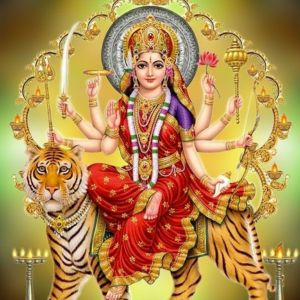
Lyrics:
एतावन्तं समयं सर्वापद्भ्योऽपि रक्षणं कृत्वा।
ग्रामस्य परमिदानीं ताटस्थ्यं केन वहसि दुर्गाम्ब।१।
अपराधा बहुशः खलु पुत्राणां प्रतिपदं भवन्त्येव।
को वा सहते लोके सर्वांस्तान् मातरं विहायैकाम्।२।
मा भज मा भज दुर्गे ताटस्थ्यं पुत्रकेषु दीनेषु।
के वा गृह्णन्ति सुतान् मात्रा त्यक्तान् वदाम्बिके लोके।३।
इतः परं वा जगदम्ब जातु ग्रामस्य रोगप्रमुखावतोऽस्य।
न स्युस्तथा कुर्वचलां कृपामित्यभ्यर्थनां मे सफलीकुरुष्व।४।
पापहीनजनतावनदक्षाः सन्ति निर्जरवरा न कियन्तः।
पापपूर्णजनरक्षणदक्षां त्वां विना भुवि परां न विलोके।५।
etaavantam' samayam' sarvaapadbhyo'pi rakshanam' kri'tvaa.
graamasya paramidaaneem' taat'asthyam' kena vahasi durgaamba.1.
aparaadhaa bahushah' khalu putraanaam' pratipadam' bhavantyeva.
ko vaa sahate loke sarvaam'staan maataram' vihaayaikaam.2.
maa bhaja maa bhaja durge taat'asthyam' putrakeshu deeneshu.
ke vaa gri'hnanti sutaan maatraa tyaktaan vadaambike loke.3.
itah' param' vaa jagadamba jaatu graamasya rogapramukhaavato'sya.
na syustathaa kurvachalaam' kri'paamityabhyarthanaam' me saphaleekurushva.4.
paapaheenajanataavanadakshaah' santi nirjaravaraa na kiyantah'.
paapapoornajanarakshanadakshaam' tvaam' vinaa bhuvi paraam' na viloke.5.
Meaning:
Verse 1
एतावन्तं समयं सर्वापद्भ्योऽपि रक्षणं कृत्वा।
ग्रामस्य परमिदानीं ताटस्थ्यं केन वहसि दुर्गाम्ब।।
For a long time, you have protected this village from every danger.
You have stood like an unseen shield — stopping disease, fear, and destruction.
But now something has changed.
The devotee is not praising here. He is questioning.
Why this sudden silence?
Why are you standing aside now, as if you have nothing to do with us?
The word ‘ताटस्थ्यं’ is powerful. It means neutrality, detachment — like someone watching from the sidelines.
The pain here is not just suffering.
It is the feeling of being left alone after once being protected.
Verse 2
अपराधा बहुशः खलु पुत्राणां प्रतिपदं भवन्त्येव।
को वा सहते लोके सर्वांस्तान् मातरं विहायैकाम्।।
Now the tone shifts.
The devotee accepts something openly:
Yes, we make mistakes. Again and again. At every step.
There is no excuse. No denial.
But then comes the deeper argument.
In this world, who tolerates endless mistakes?
Only a mother.
A mother does not calculate worthiness.
She does not keep a record and decide when to stop loving.
If even she gives up, then who remains?
This is not philosophy.
This is emotional logic — the kind that comes only from a deep relationship.
Verse 3
मा भज मा भज दुर्गे ताटस्थ्यं पुत्रकेषु दीनेषु।
के वा गृह्णन्ति सुतान् मात्रा त्यक्तान् वदाम्बिके लोके।।
Now the plea becomes urgent.
Do not remain indifferent. Do not step back.
Look at us — we are not strong devotees, not perfect beings.
We are helpless.
The word ‘दीनेषु’ shows this — broken, dependent, vulnerable.
If you step away, where do we go?
Who will accept us?
This is the core fear — not suffering, but abandonment.
A rejected child can survive pain.
But not rejection from the mother.
Verse 4
इतः परं वा जगदम्ब जातु ग्रामस्य रोगप्रमुखावतोऽस्य।
न स्युस्तथा कुर्वचलां कृपामित्यभ्यर्थनां मे सफलीकुरुष्व।।
Now the prayer becomes specific.
The devotee is no longer just expressing emotion — he is asking clearly.
Let this village be free from disease.
Let suffering not take root again.
But notice one important phrase — ‘अचलां कृपाम्’
Not temporary help. Not occasional protection.
Steady compassion. Constant grace.
This is a demand for continuity, not just intervention.
And the final line — fulfill this prayer — is said with confidence.
Not begging, but expecting.
Because the relationship is already established.
Verse 5
पापहीनजनतावनदक्षाः सन्ति निर्जरवरा न कियन्तः।
पापपूर्णजनरक्षणदक्षां त्वां विना भुवि परां न विलोके।।
This is the philosophical climax.
Yes, there are many divine beings who protect the good, the pure, the disciplined.
That is not rare.
But who protects the flawed?
Who stands with those who are full of errors, confusion, weakness?
Only you.
This defines Durga’s role clearly —
She is not just a reward-giver to the deserving.
She is the last refuge of the undeserving.
And that is why the devotee insists —
There is no alternative. No substitute.
Insight:
This prayer is intense. It is not formal. It is not polished.
It is a cry — direct, honest, and almost confrontational.
A devotee is standing before Durga, not as a distant worshipper, but as a child who refuses to be ignored.
Deeper insight:
This prayer breaks a common idea.
Many people think:
First become pure, then approach Bhagavan.
This reverses it.
It says:
Because we are not pure, we must approach.
Because we fall, we need the one who does not abandon.
Durga here is not just a destroyer of demons.
She is the one who refuses to give up on imperfect humans.
What this means in real life
This prayer speaks directly to a very real state.
There are times when:
Things start going wrong suddenly
Efforts fail
Health issues appear
Mental pressure builds
And the biggest question comes:
Why now?
This prayer gives a way to respond.
Not by walking away from Goddess.
But by going closer — even if that means questioning, pleading, even arguing.
Because a real relationship allows that.
Durga is not the protector of only the worthy.
She is the refuge of those who fail, fall, and still turn back.
When everything feels uncertain,
the right response is not distance — but deeper surrender.





Other stotras


