Ashtalakshmi Stava
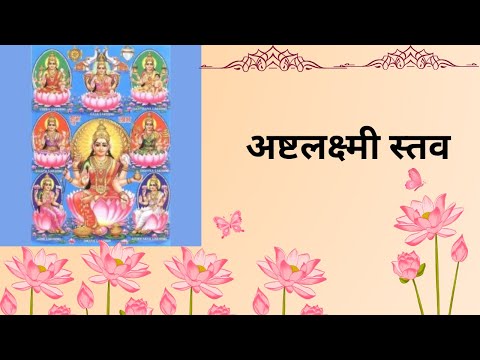
रथमध्यामश्वपूर्वां गजनादप्रबोधिनीम् ।
साम्राज्यदायिनीं देवीं गजलक्ष्मीं नमाम्यहम् ॥ १॥
'I bow to Gajalakshmi, the goddess who is in the midst of chariots, preceded by horses, awakened by the sound of elephants, and bestows empires.'
'This verse invokes Gajalakshmi, one of the significant forms of Lakshmi. She is iconographically depicted flanked by elephants showering her, a visual metaphor for abundant prosperity, immense power, and royal auspiciousness. The imagery of 'chariots' and 'horses' symbolizes victory, progress, and the dynamism required for success, while the 'sound of elephants' heralds regal majesty and good fortune. By bestowing 'empires,' Gajalakshmi is understood as the divine source of sovereignty, vast wealth, and the stable foundation for a prosperous and dominant kingdom. She represents the splendor and opulence associated with royalty.'
धनमग्निर्धनं वायुः धनं भूतानि पञ्च च ।
प्रभूतैश्वर्यसन्धात्रीं धनलक्ष्मीं नमाम्यहम् ॥ २॥
'I bow to Dhanalakshmi, the goddess who embodies wealth as fire, air, and the five elements, and who grants immense prosperity.'
'This verse introduces Dhanalakshmi, the embodiment of wealth. The definition of wealth here is profound and expansive, extending beyond mere material possessions. It encompasses the fundamental forces of nature and the very building blocks of the universe: 'fire,' 'air,' and the 'five elements' (earth, water, fire, air, and ether). This implies that true wealth is not just external acquisition but is intrinsic to the cosmic order and the natural resources that sustain life. As the bestower of 'immense prosperity,' Dhanalakshmi signifies an abundance that permeates all aspects of existence, ensuring not only financial well-being but also a richness of vital resources and overall thriving.'
पृथ्वीगर्भसमुद्भिन्ननानाव्रीहिस्वरूपिणीम् ।
पशुसम्पत्स्वरूपां च धान्यलक्ष्मीं नमाम्यहम् ॥ ३॥
'I bow to Dhanyalakshmi, who manifests as various grains sprouting from the womb of the earth, and who embodies the wealth of cattle.'
'Dhanyalakshmi is revered as the goddess of agricultural bounty and food security. The verse beautifully portrays her connection to the generative power of the earth, where 'various grains sprouting from the womb of the earth' symbolize sustenance, nourishment, and the very foundation of life for all beings. The inclusion of 'wealth of cattle' (Pashu Sampat) further underscores her role in providing essential resources. Historically, cattle were a primary form of wealth, offering milk, labor for farming, and other necessities, thus representing a holistic view of agrarian prosperity. Dhanyalakshmi ensures an abundance of food, symbolizing a thriving, self-sufficient society.'
न मात्सर्यं न च क्रोधो न भीतिर्न च भेदधीः ।
यद्भक्तानां विनीतानां धैर्यलक्ष्मीं नमाम्यहम् ॥ ४॥
'I bow to Dhairyalakshmi, for her humble devotees experience no envy, no anger, no fear, and no divisive intellect.'
'Dhairyalakshmi embodies courage, patience, and inner strength. This verse describes the profound qualities she bestows upon her sincere and humble devotees. The absence of 'envy,' 'anger,' 'fear,' and 'divisive intellect' (bheda-dhih, meaning a mind that creates separation or discord) signifies a state of profound mental tranquility and inner resilience. Dhairyalakshmi represents the spiritual and emotional wealth of fortitude, the unwavering resolve needed to face life's challenges with composure, and the wisdom to live free from destructive emotions. This 'wealth' is invaluable, fostering a peaceful, courageous, and harmonious mind.'
पुत्रपौत्रस्वरूपेण पशुभृत्यात्मना स्वयम् ।
सम्भवन्ती च सन्तानलक्ष्मीं देवीं नमाम्यहम् ॥ ५॥
'I bow to the goddess Santanalakshmi, who manifests herself as children, grandchildren, cattle, and servants.'
'Santanalakshmi is venerated as the goddess of progeny and the prosperity of the family lineage. This verse highlights her manifestation through the blessing of 'children and grandchildren,' ensuring the continuation and growth of one's family line. The inclusion of 'cattle and servants' (pashu-bhritya) in this context reflects an ancient understanding of a prosperous household, where a large, healthy family, along with productive livestock and a well-managed retinue, were considered markers of abundance and stability. Santanalakshmi thus represents the joy of a thriving family, healthy offspring, and a supportive domestic environment, securing the future and heritage of a lineage.'
नानाविज्ञानसन्धात्रीं बुद्धिशुद्धिप्रदायिनीम् ।
अमृतत्वप्रदात्रीं च विद्यालक्ष्मीं नमाम्यहम् ॥ ६॥
'I bow to Vidyalakshmi, who bestows various sciences, purifies intellect, and grants immortality.'
'Vidyalakshmi is the revered goddess of knowledge, wisdom, and learning. She is described as the source of 'various sciences' (nana-vijnana), encompassing all forms of academic, spiritual, and practical knowledge. The phrase 'purifies intellect' (buddhi-shuddhi-pradayinim) signifies that true knowledge leads not just to information but to clarity of thought, discernment, and spiritual insight. Most profoundly, she is celebrated as the grantor of 'immortality' (amritatva-pradatrim). This refers not to endless physical life but to the liberation from the cycle of birth and death (moksha), attained through supreme wisdom and spiritual enlightenment. This form of wealth is intellectual, spiritual, and ultimately leads to existential freedom.'
नित्यसौभाग्यसौशील्यं वरं लक्ष्मीं ददाति या ।
प्रसन्नां स्त्रैणसुलभामादिलक्ष्मीं नमाम्यहम् ॥ ७॥
'I bow to Adhilakshmi, the benevolent Lakshmi who grants eternal good fortune and good conduct, who is easily accessible to women.'
'Adhilakshmi, or Adi Lakshmi, is the primordial form of Lakshmi, the original source from which all other forms of wealth and prosperity emanate. She bestows 'eternal good fortune' (nitya-saubhagya) and 'good conduct' (saushilyam), emphasizing that true and lasting prosperity is intricately linked with virtuous living and ethical behavior. The phrase 'easily accessible to women' (straina-sulabham) suggests her special grace and affinity towards women, who are often regarded as earthly embodiments of Lakshmi in their roles as homemakers and nurturers. Adhilakshmi represents foundational well-being, inherent auspiciousness, grace, and the very essence of existence.'
सर्वशक्तिस्वरूपां च सर्वसिद्धिप्रदायिनीम् ।
सर्वेश्वरीं श्रीविजयलक्ष्मीं देवीं नमाम्यहम् ॥ ८॥
'I bow to the goddess Vijayalakshmi, who embodies all power, grants all accomplishments, and is the sovereign of all.'
'Vijayalakshmi is the powerful goddess of victory, success, and triumph. She is celebrated as the embodiment of 'all power' (sarva-shakti-svarupam), indicating her boundless capacity to bring about desired outcomes. As the grantor of 'all accomplishments' (sarva-siddhi-pradayinim), she ensures that devotees achieve success in all their endeavors, whether they are material pursuits, intellectual challenges, or spiritual quests. Being the 'sovereign of all' (sarveshvarim), she represents ultimate authority and the divine force that helps overcome obstacles and adversaries. This form of Lakshmi guarantees success, victory, and the fulfillment of all righteous aspirations.'
अष्टलक्ष्मीसमाहारस्वरूपां तां हरिप्रियाम् ।
मोक्षलक्ष्मीं महालक्ष्मीं सर्वलक्ष्मीं नमाम्यहम् ॥ ९॥
'I bow to Mokshalakshmi, Mahalakshmi, Sarvalakshmi, who embodies the combined form of the Eight Lakshmis, and who is dear to Hari (Vishnu).'
'This verse serves as a powerful culmination, bringing together the essence of all the preceding forms. It identifies Mahalakshmi as the composite and supreme form, embodying the 'combined essence of the Eight Lakshmis' (Ashtalakshmi-samahara-svarupam). She is revered as 'dear to Hari' (Hari-priyam), signifying her inseparable connection and eternal consortship with Vishnu, the preserver of the universe. The explicit mention of 'Mokshalakshmi' highlights that the highest form of wealth is spiritual liberation (moksha) from worldly attachments and the cycle of rebirth. 'Sarvalakshmi' further emphasizes her all-encompassing nature, representing every conceivable form of wealth—material, intellectual, and spiritual—in its absolute totality.'
दारिद्र्यदु:खहरणं समृद्धिरपि सम्पद: ।
सच्चिदानन्दपूर्णत्वमष्टलक्ष्मीस्तुते: फलम् ॥ १०॥
'The fruit of praising the Eight Lakshmis is the removal of poverty and sorrow, the abundance of wealth, and the fullness of truth, consciousness, and bliss (Satchidananda).'
'This concluding verse eloquently summarizes the profound benefits of reciting or meditating upon the Ashtalakshmi Stotram. The immediate and tangible outcomes include the 'removal of poverty and sorrow' (daridrya-dukha-haranam) and the 'abundance of wealth' (samriddhirapi sampadah), encompassing prosperity in all its forms. However, the ultimate and most profound fruit described is the 'fullness of Satchidananda'—Truth, Consciousness, and Bliss. This signifies that devotion to Lakshmi transcends mere material gains; it leads to spiritual fulfillment, inner joy, the realization of one's true divine nature, and ultimately, liberation from suffering, granting a state of complete existential richness.'
रथमध्यामश्वपूर्वां गजनादप्रबोधिनीम् ।
साम्राज्यदायिनीं देवीं गजलक्ष्मीं नमाम्यहम् ॥ १॥
धनमग्निर्धनं वायुः धनं भूतानि पञ्च च ।
प्रभूतैश्वर्यसन्धात्रीं धनलक्ष्मीं नमाम्यहम् ॥ २॥
पृथ्वीगर्भसमुद्भिन्ननानाव्रीहिस्वरूपिणीम् ।
पशुसम्पत्स्वरूपां च धान्यलक्ष्मीं नमाम्यहम् ॥ ३॥
न मात्सर्यं न च क्रोधो न भीतिर्न च भेदधीः ।
यद्भक्तानां विनीतानां धैर्यलक्ष्मीं नमाम्यहम् ॥ ४॥
पुत्रपौत्रस्वरूपेण पशुभृत्यात्मना स्वयम् ।
सम्भवन्ती च सन्तानलक्ष्मीं देवीं नमाम्यहम् ॥ ५॥
नानाविज्ञानसन्धात्रीं बुद्धिशुद्धिप्रदायिनीम् ।
अमृतत्वप्रदात्रीं च विद्यालक्ष्मीं नमाम्यहम् ॥ ६॥
नित्यसौभाग्यसौशील्यं वरं लक्ष्मीं ददाति या ।
प्रसन्नां स्त्रैणसुलभामादिलक्ष्मीं नमाम्यहम् ॥ ७॥
सर्वशक्तिस्वरूपां च सर्वसिद्धिप्रदायिनीम् ।
सर्वेश्वरीं श्रीविजयलक्ष्मीं देवीं नमाम्यहम् ॥ ८॥
अष्टलक्ष्मीसमाहारस्वरूपां तां हरिप्रियाम् ।
मोक्षलक्ष्मीं महालक्ष्मीं सर्वलक्ष्मीं नमाम्यहम् ॥ ९॥
दारिद्र्यदु:खहरणं समृद्धिरपि सम्पद: ।
सच्चिदानन्दपूर्णत्वमष्टलक्ष्मीस्तुते: फलम् ॥ १०॥
rathamadhyaamashvapoorvaam' gajanaadaprabodhineem .
saamraajyadaayineem' deveem' gajalakshmeem' namaamyaham .. 1..
dhanamagnirdhanam' vaayuh' dhanam' bhootaani pancha cha .
prabhootaishvaryasandhaatreem' dhanalakshmeem' namaamyaham .. 2..
pri'thveegarbhasamudbhinnanaanaavreehisvaroopineem .
pashusampatsvaroopaam' cha dhaanyalakshmeem' namaamyaham .. 3..
na maatsaryam' na cha krodho na bheetirna cha bhedadheeh' .
yadbhaktaanaam' vineetaanaam' dhairyalakshmeem' namaamyaham .. 4..
putrapautrasvaroopena pashubhri'tyaatmanaa svayam .
sambhavantee cha santaanalakshmeem' deveem' namaamyaham .. 5..
naanaavijnyaanasandhaatreem' buddhishuddhipradaayineem .
amri'tatvapradaatreem' cha vidyaalakshmeem' namaamyaham .. 6..
nityasaubhaagyasausheelyam' varam' lakshmeem' dadaati yaa .
prasannaam' strainasulabhaamaadilakshmeem' namaamyaham .. 7..
sarvashaktisvaroopaam' cha sarvasiddhipradaayineem .
sarveshvareem' shreevijayalakshmeem' deveem' namaamyaham .. 8..
asht'alakshmee'samaahaarasvaroopaam' taam' haripriyaam .
mokshalakshmeem' mahaalakshmeem' sarvalakshmeem' namaamyaham .. 9..
daaridryadu:khaharanam' samri'ddhirapi sampada: .
sachchidaanandapoornatvamasht'alakshmeestute: phalam .. 10..





Other stotras


