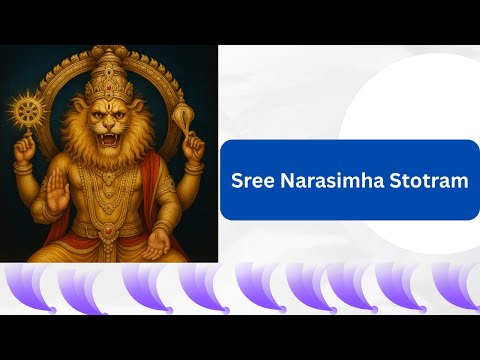
Shri Nrisimha Stotram
जय जय भयहारिन् भक्तचित्ताब्जचारिन्
जय जय नयचारिन् दृप्तमत्तारिमारिन् ।
जय जय जयशालिन् पाहि नः शूरसिंह
जय जय दययार्द्र त्राहि नः श्रीनृसिंह ॥ १॥
Victory, victory to You, O remover of fear, who moves within the lotus of the devotee's heart! Victory, victory to You, who walks the path of righteousness and who is the slayer of arrogant and intoxicated enemies! Victory, victory to You, O ever-glorious one, protect us, O valiant Lion! Victory, victory, O Shri Nrisimha, whose heart melts with compassion, save us!
This opening verse establishes the glorious and dual nature of Lord Nrisimha. He is the 'bhayahārin', the one who dispels fear from the minds of his devotees. His presence is gentle and intimate, poetically described as him 'moving within the lotus of their hearts' ('bhaktacittābjachārin'). Simultaneously, he is the ferocious destroyer ('mārin') of arrogant enemies like Hiranyakashipu. The repeated plea 'pāhi naḥ' (protect us) and 'trāhi naḥ' (save us) is addressed to a Lord who, despite his terrifying 'śūrasiṁha' (brave lion) form, is fundamentally 'dayayārdra', one whose very being is saturated with compassion.
असुरसमरधीरस्त्वं महात्मासि जिष्णो
अमरविसरवीरस्त्वं परात्मासि विष्णो ।
सदयഹൃदय गोप्ता त्वन्न चान्यो विमोह
जय जय दययार्द्र त्राहि नः श्रीनृसिंह ॥ २॥
O victorious one, You are unwavering in battles with the demons and are a great soul! O Vishnu, You are the champion of the host of gods and are the Supreme Self! O compassionate-hearted one, there is no protector other than You; to think otherwise is delusion. Victory, victory, O Shri Nrisimha, whose heart melts with compassion, save us!
This verse connects the specific incarnation of Nrisimha to his universal identity as Vishnu, the Supreme Self ('parātmā'). He is praised as the champion of the gods ('amaravisaravīraḥ'), their ultimate hero in the cosmic struggle against demonic forces. The devotee makes a powerful declaration of faith: the Lord is the sole and ultimate protector ('goptā'), and believing in any other source of ultimate security is a form of 'vimoha', or delusion. This affirms that the fierce warrior who fought the asuras is the same compassionate, supreme reality.
खरतरनखरास्त्रं स्वारिहत्यै विधत्से
परतरवरहस्तं स्वावनायैव धत्से ।
भवभयभयकर्ता कोऽपरस्तार्क्ष्यवाह
जय जय दययार्द्र त्राहि नः श्रीनृसिंह ॥ ३॥
You wield Your extremely sharp claws as weapons for the destruction of Your enemies, yet You hold Your other, most excellent hand for the sole purpose of protecting Your own. O rider of Garuda, who else but You can make even the fear of worldly existence fearful? Victory, victory, O Shri Nrisimha, whose heart melts with compassion, save us!
The devotee here contemplates the specific, awe-inspiring form of the Lord. His very body is a weapon, with his claws ('nakharāstraṁ') used to dispense justice upon evil. In perfect contrast, his hand is raised in a gesture of blessing and protection ('varahastaṁ') for his devotees. The verse then asks a profound rhetorical question. The greatest fear for a soul is 'bhava-bhaya', the fear of the endless cycle of birth and death. The Lord is hailed as 'bhavabhayabhayakartā', the one who instills fear in that very fear itself, meaning that in his presence, even this ultimate existential dread is vanquished.
असुरकुलबलारिः स्वेष्टचेतस्तमोऽरिः
सकलखलबलारिस्त्वं स्वभक्तारिवैरी ।
त्वदित स इनदृक् सत्पक्षपाती न चेह
जय जय दययार्द्र त्राहि नः श्रीनृसिंह ॥ ४॥
You are the enemy of the demonic clan's power, the enemy of the darkness within the minds of Your dear devotees, the enemy of the strength of all wicked beings, and the sworn enemy of the enemies of Your devotees. In this world, there is no one else like You who sees all impartially yet is so partial to the righteous. Victory, victory, O Shri Nrisimha, whose heart melts with compassion, save us!
This verse explores the many ways in which the Lord is an 'ari', or enemy to negativity. He opposes evil on multiple levels: externally, as the destroyer of the demonic clan ('asurakulabalāriḥ'), and internally, as the purifier who vanquishes the darkness of ignorance ('chetastamo'riḥ') from a devotee's mind. The phrase 'svabhaktārivairī' emphasizes his intense loyalty; He considers his devotee's enemy to be his own. The final line presents a beautiful paradox of divine nature: He is 'inadṛk', one who sees all impartially like the sun, yet he is also 'satpakṣapātī', showing special favour and protection to the righteous, as he did for Prahlada.
सकलसुरबलारिः प्राणिमात्रापकारी
तव भजकवरारिर्धर्मविध्वंसकारी ।
सुरवरवरदृप्तः सोऽप्यरिस्ते हतो ह
जय जय दययार्द्र त्राहि नः श्रीनृसिंह ॥ ५॥
He who was an enemy to the strength of all gods, a tormentor of all living beings, an adversary to Your greatest devotee, and a destroyer of dharma; even that enemy, made arrogant by boons from the chief of gods, was indeed slain by You. Victory, victory, O Shri Nrisimha, whose heart melts with compassion, save us!
Here, the poem vividly recalls the specific villain of the Nrisimha story, Hiranyakashipu. His crimes are listed to justify the Lord's wrath: he was a threat to the gods, a menace to all life ('prāṇimātrāpakārī'), an enemy to the supreme devotee Prahlada, and a subverter of cosmic order ('dharmavidhvaṁsakārī'). The verse highlights his seemingly invincible status, as he was 'suravaravaradṛptaḥ', puffed up with pride from the boons granted by Lord Brahma. The triumphant conclusion, 'so'pyariste hato ha' (even he was slain by you), celebrates the Lord's absolute power to restore righteousness, no matter how formidable the evil.
दहनादहहाब्धिपातनाद्गरदानाद्भृगुपातनादपि ।
निजभक्त इहावितो यथा नरसिंहापि सदाव नस्तथा ॥ ६॥
Just as Your own devotee was protected here from fire, from being cast into the dreadful ocean, from being given poison, and even from being thrown from a cliff; in that very same way, O Narasimha, please always protect us.
The tone shifts from adoration to a direct, heartfelt plea based on divine precedent. The devotee recounts the series of lethal trials that Prahlada was forced to endure by his father: he was thrown into fire ('dahana'), pushed into the ocean ('abhipātana'), given poison ('garadāna'), and cast from a mountain ('bhṛgupātana'). Through each ordeal, Prahlada's unwavering faith was met with the Lord's unfailing protection. The devotee now prays for that same quality of absolute, miraculous protection, asking, 'sadāva nastathā'—'protect us always in just the same way'.
निजभृत्यविभाषितं मितं खलु कर्तुं त्वमृतं दयाकर ।
प्रकटीकृतमिध्ममध्यतो निजरूपं नरसिंह दर्शय ॥ ७॥
O compassionate one, in order to make true the measured words spoken by Your servant, You revealed Your true, immortal form from within a pillar. O Narasimha, please show me that form.
This verse focuses on the climax of the story and the deepest longing of a devotee. When challenged by Hiranyakashipu, Prahlada declared that his Lord is omnipresent, even within a palace pillar. To honour his devotee's faith and make his words true ('kartuṁ amṛtaṁ'), the Lord burst forth from that pillar. The prayer now becomes profoundly personal. The devotee is no longer just asking for protection, but for 'darshan'—a direct, personal vision of that divine form which vindicates faith. It is a plea to experience the Lord's reality, not just hear about it.
नाराधनं न हवनं न तपो जपो वा
तीर्थं व्रतं न च कृतं श्रवणादि नो वा ।
सेवा कुटुम्बभरणाय कृतादिदीना
दीनार्तिहन् नरहरेऽघहरेह नोऽव ॥ ८॥
No formal worship, no fire sacrifices, no austerities or chanting have I performed; no pilgrimages or vows, nor have I properly listened to the scriptures. My service has been merely for the maintenance of my family, and I am utterly helpless. O Narahari, remover of the suffering of the destitute and destroyer of sins, please protect us here.
This final verse is a masterpiece of surrender and humility. The devotee confesses their lack of spiritual credentials, admitting they have not performed the traditional rites and practices. Their life has been consumed by worldly duties ('kuṭumbabharaṇāya'). Recognizing their own helplessness ('dīnā'), they abandon all claims of merit and throw themselves completely at the Lord's mercy. They appeal not to their own worthiness, but to the Lord's essential nature as the 'dīnārtihan' (the one who relieves the suffering of the helpless) and 'aghahare' (the remover of all sins). It is the ultimate prayer of the soul that has nothing to offer but its own need for grace.
जय जय भयहारिन् भक्तचित्ताब्जचारिन्
जय जय नयचारिन् दृप्तमत्तारिमारिन् ।
जय जय जयशालिन् पाहि नः शूरसिंह
जय जय दययार्द्र त्राहि नः श्रीनृसिंह ॥ १॥
असुरसमरधीरस्त्वं महात्मासि जिष्णो
अमरविसरवीरस्त्वं परात्मासि विष्णो ।
सदयहृदय गोप्ता त्वन्न चान्यो विमोह
जय जय दययार्द्र त्राहि नः श्रीनृसिंह ॥ २॥
खरतरनखरास्त्रं स्वारिहत्यै विधत्से
परतरवरहस्तं स्वावनायैव धत्से ।
भवभयभयकर्ता कोऽपरस्तार्क्ष्यवाह
जय जय दययार्द्र त्राहि नः श्रीनृसिंह ॥ ३॥
असुरकुलबलारिः स्वेष्टचेतस्तमोऽरिः
सकलखलबलारिस्त्वं स्वभक्तारिवैरी ।
त्वदित स इनदृक् सत्पक्षपाती न चेह
जय जय दययार्द्र त्राहि नः श्रीनृसिंह ॥ ४॥
सकलसुरबलारिः प्राणिमात्रापकारी
तव भजकवरारिर्धर्मविध्वंसकारी ।
सुरवरवरदृप्तः सोऽप्यरिस्ते हतो ह
जय जय दययार्द्र त्राहि नः श्रीनृसिंह ॥ ५॥
दहनादहहाब्धिपातनाद्गरदानाद्भृगुपातनादपि ।
निजभक्त इहावितो यथा नरसिंहापि सदाव नस्तथा ॥ ६॥
निजभृत्यविभाषितं मितं खलु कर्तुं त्वमृतं दयाकर ।
प्रकटीकृतमिध्ममध्यतो निजरूपं नरसिंह दर्शय ॥ ७॥
नाराधनं न हवनं न तपो जपो वा
तीर्थं व्रतं न च कृतं श्रवणादि नो वा ।
सेवा कुटुम्बभरणाय कृतादिदीना
दीनार्तिहन् नरहरेऽघहरेह नोऽव ॥ ८॥
jaya jaya bhayahaarin bhaktachittaabjachaarin
jaya jaya nayachaarin dri'ptamattaarimaarin .
jaya jaya jayashaalin paahi nah' shoorasim'ha
jaya jaya dayayaardra traahi nah' shreenri'sim'ha .. 1..
asurasamaradheerastvam' mahaatmaasi jishno
amaravisaraveerastvam' paraatmaasi vishno .
sadayahri'daya goptaa tvanna chaanyo vimoha
jaya jaya dayayaardra traahi nah' shreenri'sim'ha .. 2..
kharataranakharaastram' svaarihatyai vidhatse
parataravarahastam' svaavanaayaiva dhatse .
bhavabhayabhayakartaa ko'parastaarkshyavaaha
jaya jaya dayayaardra traahi nah' shreenri'sim'ha .. 3..
asurakulabalaarih' svesht'achetastamo'rih'
sakalakhalabalaaristvam' svabhaktaarivairee .
tvadita sa inadri'k satpakshapaatee na cheha
jaya jaya dayayaardra traahi nah' shreenri'sim'ha .. 4..
sakalasurabalaarih' praanimaatraapakaaree
tava bhajakavaraarirdharmavidhvam'sakaaree .
suravaravaradri'ptah' so'pyariste hato ha
jaya jaya dayayaardra traahi nah' shreenri'sim'ha .. 5..
dahanaadahahaabdhipaatanaadgaradaanaadbhri'gupaatanaadapi .
nijabhakta ihaavito yathaa narasim'haapi sadaava nastathaa .. 6..
nijabhri'tyavibhaashitam' mitam' khalu kartum' tvamri'tam' dayaakara .
prakat'eekri'tamidhmamadhyato nijaroopam' narasim'ha darshaya .. 7..
naaraadhanam' na havanam' na tapo japo vaa
teertham' vratam' na cha kri'tam' shravanaadi no vaa .
sevaa kut'umbabharanaaya kri'taadideenaa
deenaartihan narahare'ghahareha no'va .. 8..





Other stotras


