Is Hayagriva A God Or A Demon?
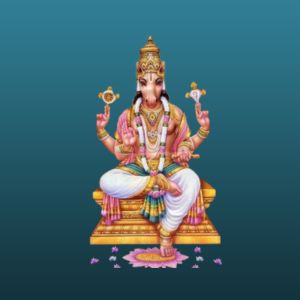
Is Hayagirva a demon or a god? Here's the answer to this intriguing question.
The answer is - both.
There was a demon called Hayagriva.
Lord Vishnu took avatara as Hayagriva to kill this demon.
The demon, Hayagriva-asura observed tapas on the banks of River Saraswathy.
After 1000 years of tapas, Devi appeared before him.
He asked for a boon of immortality.
Devi said, 'If you take birth then you also have to die some day.'
Then the demon said, 'Then only Hayagriva should be able to kill Hayagriva.'
(Meaning - only he should be able to kill himself.)
Hayagriva-asura started harassing everyone.
It was time to end his life.
Hayagriva in Sanskrit means the 'horse-headed'.
In a battle with the Asuras, Bhagawan made himself lose his head with the sharp tip of his own bow.
Then the head was replaced with the head of a horse.
Thus Bhagawan also became 'Hayagriva'.
Then he killed Hayagriva-asura.
This story establishes how short-sighted and impulsive the tamasik demons are.
- Why is it philosophically significant that the divine avatar and the demon share the exact same name and physical form?
It highlights the concept that form alone does not dictate one's nature. The divine can manifest in a form that perfectly mirrors the problem or evil it needs to eradicate. While the demon used his horse-headed form to disrupt cosmic balance through ego, the divine assumed the exact same form to restore order, proving that intent and consciousness separate the demonic from the divine. - What fundamental cosmic law does Devi reveal when the demon asks for immortality?
Devi establishes the absolute law of physical nature: whatever takes birth must inevitably face death. This underscores the principle that no one within the physical creation, not even the most powerful ascetic who has performed a thousand years of penance, is exempt from the cycle of birth and death. - How does the demon's request to be killed only by another Hayagriva reveal his tamasik and short-sighted nature?
The demon arrogantly assumes that since he is Hayagriva, he is effectively making himself invincible, believing no one else could ever possess that exact identity. He lacks the vision to see that the divine is boundless and can take any form, turning his own clever loophole into the precise instrument of his demise. - What is the hidden, mysterious meaning behind Lord Vishnu allowing his own bow to sever his head?
This act represents supreme divine sacrifice and the boundless lengths to which the divine will go to uphold righteousness. It shows that God willingly subjects Himself to physical transformation, and even apparent harm, to mold Himself into the exact solution required by cosmic law to defeat evil. - The demon performed tapas for a thousand years. What does this teach us about the spiritual mechanics of penance?
It teaches that tapas is a neutral mechanism that generates immense power and commands boons regardless of the practitioner's moral character. However, if the intent behind the tapas is rooted in tamas, meaning ignorance and ego, the resulting power ultimately leads to self-destruction rather than spiritual liberation. - What overlooked role does Devi play in the unfolding of this cosmic drama?
Devi acts as the strict upholder of universal truth and boundaries. By flatly denying absolute immortality, she ensures the cosmic order is not broken. By forcing the demon to define a condition for his death, she effectively sets the stage for Lord Vishnu's divine intervention, acting as the catalyst for balance. - How does the story illustrate the ultimate blind spot of a bloated ego?
The demon's ego made him believe he was entirely unique and irreplaceable in the universe. His ultimate blind spot was his failure to recognize that the supreme consciousness is infinitely adaptable and can effortlessly replicate his form to shatter his illusion of supreme invulnerability. - What is the deeper symbolism behind the demon's own words becoming his death warrant?
It emphasizes the principle of karma, where the seeds of our destruction are often hidden within our own arrogant desires. The demon thought he was outsmarting death, but his tamasik impulse made him forge the specific lock for which the divine simply had to forge the matching key. - Beyond the literal translation of the horse head, what does the Hayagriva avatar symbolize in a broader spiritual context?
While the provided story focuses on the physical requirement of the boon, in Vedic tradition, the horse symbolizes immense speed, power, and the unbridled force of wisdom. Thus, Vishnu's transformation represents the unstoppable force of divine knowledge cutting through the deep ignorance of the tamasik demon. - Why is the defeat of Hayagriva-asura fundamentally a victory over tamasik attributes rather than just a physical battle?
Tamasik attributes include delusion, stubbornness, and destructive, selfish impulses. The demon embodied these by harassing the world despite his advanced ascetic penance. The avatar's victory is therefore the triumph of divine intellect and cosmic responsibility over brute force and the spiritual ignorance that misuses power.





English
Purana Stories
Click on any topic to open
7
30
Astrology
Bhagavad Gita
Bhagavatam
Bharat Matha
Devi
Devi Mahatmyam
Ganapathy
Garuda Puranam
Glory of Venkatesha
Hanuman
Kathopanishad
Mahabharatam
Mantra Shastra
Mystique
Practical Wisdom
Purana Stories
Radhe Radhe
Ramayana
Rare Topics
Rigveda Explained
Rituals
Sages and Saints
Shiva
Spiritual books
Sri Suktam
Story of Sri Yantra
Temples
Vedas
Vishnu Sahasranama
Yoga Vasishta
26
17
10
0


