How Belief Systems Shape Consequences
In psychology, there is an equation:
A x B = C
- A stands for adversities.
- B stands for belief system.
- C stands for consequences.
The consequence of whatever you face in life—its impact on you, how you respond and react to it, the result of the original adversity, and the result based on how you react and respond to it—are all based on your belief system.
A x B means the consequence is a product of adversity and your belief system. It also means that the adversity is multiplied as many times by the belief system.
There are more ways to look at it. Let’s say A is not adversity—it is any situation that you face in life, pleasant or unpleasant. So if A is positive, but your belief system, B, is negative, then the outcome, C, will also be negative. If A is positive and B is also positive, the outcome, the consequence, is enhanced in quality.
Now, let’s say A is negative—an adversity or problem you have to face. Even if your belief system is positive, it doesn’t help; the outcome is still negative. -A x +B will still make C negative. So positive thinking or a positive belief system does not always help. Positive thinking is a temporary solution; it is only covering up the problem.
So, how do you make the outcome positive when facing a -A? Make B also negative. Minus into minus makes plus. Negative B does not mean negative thinking in the ordinary sense. Negative thinking is a negation of the world experience. Negation in the sense that affirmation is only mithya, unreal.
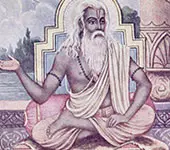
This is what Valmiki told Bharadwaja: asamsaktaya budhya. With an intellect that firmly believes that whatever I am facing is unreal. This is what Lord Rama and others with him demonstrated to us—how they faced adversities. This belief system is the correct belief system. All other techniques are just patchwork. The only solution is to correct and firm up your belief system. Acquire the correct perspective.
When you have this belief system, another change happens—whether A is positive or negative stops mattering to you. It stops bothering you because you are no longer worried about whether C is positive or negative. This is a gradual change that happens as you develop the right belief system and the right perspective. The right perspective that our Vedas teach us, our Upanishads teach us, and great scriptures like Yoga Vasishta teach us.
Now, don’t take this A, B, and C and positive and negative very seriously—I am just playing around with them. What is important is to acquire the correct perspective and the correct belief system.
-
Every life event interacts with your belief system to shape its consequence. Adversity alone doesn’t decide the outcome—your inner filter does.
-
A faulty or negative belief system can corrupt even positive events and make the result painful.
-
When belief is healthy and strong, even tough situations feel manageable or meaningful.
-
But ordinary positive thinking is not enough—it merely paints over pain without removing it.
-
Real transformation happens when the world is seen as unreal, or mithya—a passing appearance, not absolute truth.
-
This negation-based view—seeing both joy and sorrow as fleeting illusions—breaks the grip of suffering.
-
Holding the view that nothing in the world is absolutely real leads to emotional stability and fearless living.
-
Whether something is pleasant or unpleasant no longer shakes you when your belief system is grounded in truth.
-
Only this deeper shift in understanding leads to freedom; all other mental tricks are short-term fixes.
What decides the consequence of what we experience?
The consequence of any situation depends on both the external event and the belief system interpreting it. Your mind doesn't respond to things directly; it responds to what it believes about them. A harsh word, a failure, or even praise—all are filtered through belief. That's what turns an event into suffering or growth.
Why is the belief system more important than the event itself?
Because the same event creates wildly different outcomes depending on the mindset of the person facing it. One person uses failure as fuel, another falls apart. The outer trigger stays the same, but the inner filter changes everything.
Isn't it unrealistic to give belief so much power over outcomes?
Not at all. Every reaction you’ve ever had proves this. A child laughs at a joke you find offensive. A monk remains calm during loss. These differences are due to belief, not the event. That's not fantasy—it’s everyday psychology.
How can a wrong belief ruin even good experiences?
If your belief system is based on fear, doubt, or attachment, you can turn even success into anxiety. A promotion might cause stress, a compliment might spark pride or insecurity. The event was good, but the inner interpretation polluted it.
Is it possible to make belief so pure that nothing spoils it?
Yes. When belief is grounded in truth and detachment, external circumstances stop having control. This doesn’t mean apathy—it means clarity. You engage fully, but you’re not entangled.
Isn't this blaming the victim for their suffering?
It’s not about blame—it’s about inner freedom. Events are often out of our hands. But response isn’t. Saying belief matters gives you back control over your inner life. That’s empowerment, not blame.
Why is positive thinking considered insufficient?
Because it tries to change the feeling without changing the foundation. It tells you to smile while you’re burning inside. That doesn’t last. Real change comes only when you see through the illusion of the experience itself.
If not positive thinking, then what kind of thinking works?
Not positive, not negative—truthful. Seeing that the world is transient and unreal (mithya) dissolves its power over you. That clarity is better than forced positivity.
Isn’t rejecting the world’s reality dangerous or escapist?
No—it’s the key to balanced living. You still engage, but you know it’s all a passing show. Like watching a movie with awareness—it moves you, but doesn’t trap you.
How does the idea of ‘the world is unreal’ help in daily life?
It helps you remain calm when things go wrong and humble when things go well. Nothing sticks to you deeply because you know it’s temporary. This detachment isn’t cold—it’s freeing.
But if the world is unreal, why do we feel pain?
Because we believe it’s real. A nightmare feels real until you wake up. Similarly, suffering continues until the belief in the world’s absolute reality is dropped. Pain fades with perspective.
Isn’t calling the world unreal just philosophical wordplay?
No—it’s a practical shift in perception. If your daily joy and sorrow can be flipped by a single thought, then their base isn’t stable. Recognizing this fragility is the first step to freedom.
What is the benefit of a corrected belief system?
You stop being disturbed by the ups and downs of life. Whether it rains or shines, your peace stays intact. That’s not emotional numbness—it’s maturity.
How do I know if my belief system is correct?
If you stay calm in both praise and insult, in gain and loss, it’s working. If your mind needs outer conditions to stay peaceful, it still needs work.
Does this mean nothing should affect me at all?
Not that nothing affects you, but that nothing controls you. You respond, not react. You care, but don’t collapse. That’s true inner power.
Why are other techniques called patchwork?
Because they deal with symptoms, not the root. You meditate, chant, or distract yourself—but the core belief stays untouched. Unless the foundation changes, the storm always returns.
What makes belief correction the final solution?
Because once you see clearly, you don’t need tools to stay calm. Your mind becomes self-sufficient. The storm still comes, but it passes through you like wind through a net.
Is this change really possible for ordinary people?
Absolutely. It starts with inquiry, deep reflection, and honest living. Small insights build into strong conviction. This is not a saint’s path—it’s a human necessity.





English
Yoga Vasishta
Click on any topic to open
7
30
Astrology
Bhagavad Gita
Bhagavatam
Bharat Matha
Devi
Devi Mahatmyam
Ganapathy
Garuda Puranam
Glory of Venkatesha
Hanuman
Kathopanishad
Mahabharatam
Mantra Shastra
Mystique
Practical Wisdom
Purana Stories
Radhe Radhe
Ramayana
Rare Topics
Rigveda Explained
Rituals
Sages and Saints
Shiva
Spiritual books
Sri Suktam
Story of Sri Yantra
Temples
Vedas
Vishnu Sahasranama
Yoga Vasishta
26
17
10
0


