The World Is A Creation Of The Mind
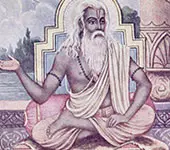
In the Vairagya Prakarana of Yoga Vasishta, Sri Ramji is explaining to Sage Vishwamitra why he is disillusioned with the world.
What is a mountain?
It is nothing but a big rock.
But then why do we address them differently?
What is a tree?
It is nothing but wood, etc.
But then why do we see them differently?
What is the earth?
It is nothing but soil.
But then why do we address them differently?
What is a human being?
Flesh, bones, blood.
But when we see a person coming, we don’t say, look flesh and bones are coming.
We say Rama is coming or Krishna is coming.
Why is this so?
It is just for clarity.
Suppose you want to go to Mount Kailash.
If you say that you are going to ‘The Rock’, nobody would understand.
The earth is rotating around the Sun.
If you say that ‘The soil’ is rotating around the Sun, nobody would understand.
Other than that, it has no relevance.
A mountain is nothing but rock, etc.
A tree is nothing but wood, etc.
Man is nothing but flesh, bones, etc.
In the same way -
This world is nothing but the pancha bhutas.
We just recognize it by millions of different names and shapes.
We like some of them; we dislike some of them.
They are all composed of the same ingredients - the pancha bhutas.
How can you like some and dislike some?
These are just creations of the mind.
-
Everything we perceive in the world — mountains, trees, people — is just made up of basic physical elements (pancha bhutas: earth, water, fire, air, space).
-
The distinctions we make — like rock vs mountain, wood vs tree — are mental conveniences for communication, not fundamental truths.
-
We assign names and identities to help navigate life practically, but they don’t reflect the real essence of what something is.
-
Our emotional reactions — liking or disliking certain things — are based on these superficial labels, not on the underlying reality.
-
Just as a person is made of flesh and bones but is called by name, the world is made of the same five elements but appears in varied forms due to mental labeling.
-
Without these labels, the world would be seen for what it truly is — a play of the same elemental stuff in different shapes.
-
This misperception creates attachment and aversion, which are both rooted in mental constructs, not truth.
-
What makes the world appear so diverse when it's all just made of the same elements?
The diversity we see is a result of mental labeling. The five elements combine in countless ways, and the mind assigns names, forms, and meanings to them. This creates the illusion of variety and uniqueness where there is only elemental sameness. -
Why do we even create these labels if they distort reality?
Labels are practical tools. Without them, basic communication would collapse. You can't tell someone you're going to Kailash by saying you're heading to 'the rock' — they wouldn't understand. -
If everything is really the same inside, why should I bother differentiating anything at all?
Functionally, differentiation helps daily life. But wisdom means knowing that these differences are not absolute. Use names and roles, but don't be fooled into thinking they represent true essence.
-
Why do we say 'Rama is coming' and not 'flesh and bones are coming'?
Because we use names to simplify and personalize interactions. It's easier to engage with a named identity than a raw description of physical matter. -
Is it wrong to see people as individuals if they’re all the same inside?
Not wrong, just incomplete. You can still treat people kindly and respectfully, but understanding their true essence helps reduce bias and ego-driven behavior. -
Isn’t calling someone 'just flesh and bones' disrespectful or dehumanizing?
Not if it's done with clarity, not contempt. The intent isn’t to reduce their worth, but to remind yourself that ego and appearance aren’t the real person.
-
Why is a mountain just a rock and yet we treat it as something else?
Because our perception attaches significance and symbolism to forms. But when stripped down, a mountain is just a pile of rocks arranged in a certain way. -
Does this mean sacred places like Mount Kailash are not special?
They are special in experience and cultural meaning, not in their raw material. The holiness is a mental and spiritual overlay, not geological. -
If a mountain is just rock, why does it inspire awe or fear?
That awe arises from conditioned associations — size, shape, myths, memories. These feelings are real to the mind, even if the substance beneath is ordinary.
-
Why do we react differently to different objects if they’re made of the same five elements?
Because the mind projects qualities onto forms — beauty, danger, comfort — even though all are built from the same basic elements. -
How can I stop being influenced by these projections?
Train yourself to see the underlying reality. Recognize when your preferences are mental habits, not truths. Gradually, your attachments will weaken. -
Isn’t this view too extreme — saying there’s no real difference between a flower and a corpse?
It’s not about denying sensory difference. It’s about recognizing that the core substance is the same, and not letting superficial distinctions control your emotions.
-
What exactly are the pancha bhutas?
They are the five elemental building blocks: earth (solid), water (liquid), fire (energy), air (gas), and space (subtle field). Everything in the physical world is made of them in varying proportions. -
How can knowing this help me in real life?
It helps you detach from illusions. Instead of getting caught up in surface appearances, you develop clarity and peace by understanding the sameness beneath the show. -
Isn’t this idea unscientific — reducing all things to five ancient elements?
It’s symbolic, not a literal chemical chart. Even modern physics says everything is made of fundamental particles. The pancha bhutas are a philosophical lens, not a lab report.
-
How do we get trapped by naming and form?
We create emotional and psychological attachments to names and appearances. These then become the basis of our desire, fear, judgment, and suffering. -
Can I live without making any labels at all?
Not realistically — but you can use them without believing in them absolutely. Let names serve function, not fuel ego or illusion. -
Isn’t labeling necessary for survival?
Yes, but only at the surface level. Deeper awareness allows you to operate in the world without being ruled by the names and forms it projects.





English
Yoga Vasishta
Click on any topic to open
7
30
Astrology
Bhagavad Gita
Bhagavatam
Bharat Matha
Devi
Devi Mahatmyam
Ganapathy
Garuda Puranam
Glory of Venkatesha
Hanuman
Kathopanishad
Mahabharatam
Mantra Shastra
Mystique
Practical Wisdom
Purana Stories
Radhe Radhe
Ramayana
Rare Topics
Rigveda Explained
Rituals
Sages and Saints
Shiva
Spiritual books
Sri Suktam
Story of Sri Yantra
Temples
Vedas
Vishnu Sahasranama
Yoga Vasishta
26
17
10
0


