Health Benefits of Chanting Vishnu Sahasranama
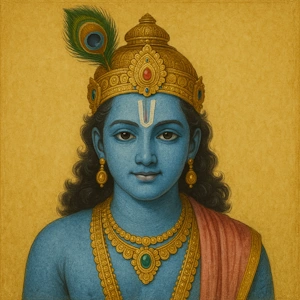
Nathva Ganesham Gajavaktra Yuktam Gurum Smaran Veda Vidam Varenyam Vishnum Vibhum Vaidika Tattvarupam Vaikuntha Samstham Satatam Namami
In Ayurveda, Charaka Samhita says, "Vishnum sahasra murdhanam characharapatim vibhum stuvan nama sahasrena jwaran sarvan vyapohati
" When praised with Sahasranama, Srihari cures all kinds of fevers, difficult and complicated fevers
In the treatment of Meha, diabetes, Ayurveda says, Japyam Purusha Suktagam
Tathaiva Bhagavan Nama Sahasram Bharatoditam
In the case of Yakshma, variations of tuberculosis, it is said, Tathaiva Bhagavan Nama Sahasram Parikeertayet
Praise him with Sahasranama for relief
In the labor room when the child is to be delivered, Avicchhinna Pathyamana Narayana Nama Sahasram
Says Banabhatta, chant Sahasranama continuously for the safety of the mother and child
In this manner, across various genus of scriptures and texts, you will find the greatness of Sahasranama glorified again and again
It is important that the stuti and namaskara should be done with shraddha, devotion, faith
Faith is certainty
When you go and stand in front of a stone idol in the temple, not for a moment should the thought come to your mind, oh, this is a piece of carved stone, a lifeless statue
For you, it is living God who is actually listening to your prayer
You are interacting with him or her as you naturally interact with anyone else
I know one elderly lady who had so much faith that Krishna was with her
that she would insist on taking a separate ticket for him whenever she was traveling
Otherwise, she wouldn't budge
It may not be possible today with insistence on ID cards, but she used to do that
I can't leave him home
He has to be taken with me
Who will feed him if I am not there? And she doesn't want Krishna to be a ticketless traveler
So buy a ticket for him
That is faith
How many of us have that faith? When that much faith is there, God is there for you for real
When you feed Brahmins during Shraddha, you shouldn't see the individuals
You should see your father or mother and the other elders sitting there and having the food offered by you
That is faith
Then it works
Then only it works
An issue came up
Two persons are offering yagnas
One is pure and of good conduct but lacks faith
The other is impure but has absolute faith
Deva said that they are identical in terms of merit
Brahma interfered and corrected them
No, only what is offered with faith is worthy
Whatever is offered without faith is not of any value
It is inconsequential
In the same way, another question was considered
Somebody is perfect in the procedure of the Yagya, but he is a miser
He gives only because he thinks if he doesn't give, something bad is going to happen to him
The other person is not so perfect as far as procedure is concerned, but at heart he wants to give
He likes to give
He likes to give to gods, to men, to plants, to animals
Out of the two whose offerings are nobler, whose offerings are better, Brahma's verdict was that the offerings of the liberal person, the charitable person, that much is the importance of faith, Shraddha
Nasti hyashraddha dhanasya
Dharmagrutye prayojanam
Whatever spiritual practice you follow, whatever religious ritual you perform, if you don't have faith, don't do it
It is a waste of time, waste of energy, waste of resources
For some people, faith is built into them
Right from childhood, mostly due to family background, but not necessarily
Look at Prahlada, his father was a self-proclaimed Vishnu hater
Still Prahlad became an ardent devotee of Srihari
Whenever you talk about bhakti, faith, his is one of the first names that comes to the mind
Hari Om
- Why does the Charaka Samhita, a foundational text of medicine, prescribe the chanting of Vishnu Sahasranama for physical ailments like Jwara or fever?
This reveals a hidden aspect of Vedic science where healing is not merely biochemical but also vibrational and spiritual. By addressing the Sahasramurdhanam, or the thousand-headed cosmic form of the Divine, the practitioner aligns their individual consciousness with the universal rhythm. This spiritual resonance helps in clearing the subtle blockages that manifest as persistent or complicated fevers, proving that true health involves the integration of the soul with the body. - What is the significance of chanting Narayana Nama Sahasram specifically in the labor room during childbirth?
The transition of a soul into the physical world is a vulnerable and sacred moment. Banabhatta emphasizes continuous chanting to create a protective kavacha, or shield, of sound. This ensures that the environment is purified of negative energies, providing safety and grace for both the mother and the newborn, and welcoming the child into a vibration of divinity. - If two people perform a ritual where one is morally pure but faithless, and the other is impure but full of faith, why does Brahma favor the latter?
This highlights the mysterious truth that the Divine values the bhava, or the internal state of being, over external perfection. While moral conduct is important, faith acts as the bridge that connects the human to the Divine. Without Shraddha, a ritual is a lifeless shell; with Shraddha, even a flawed individual creates a genuine channel for grace to flow. - In the context of Meha (diabetes) and Yakshma (tuberculosis), why are specific hymns like Purusha Sukta and Sahasranama recommended alongside medical treatment?
These scriptures suggest that chronic and wasting diseases often have roots in the karmic or subtle body. Purusha Sukta invokes the primal energy of creation, while Sahasranama invokes the sustainer of life. Together, they provide the Pranic energy necessary for the body to respond to treatment, suggesting that the most effective healing is holistic. - What does the story of the elderly lady buying a ticket for Krishna teach us about the nature of God?
It teaches us that God is as real to us as our faith allows Him to be. For her, Krishna was not an abstract concept or a stone statue, but a living companion with physical needs. This level of faith, called "Nischaya," transforms the idol into a living Presence (Archavatara). When we treat the Divine as a reality, the Divine responds as a reality. - Why is it instructed that during Shraddha, one must see their ancestors in the invited Brahmins rather than seeing them as ordinary individuals?
This is the principle of "Adhyasa" or superimposition. By looking past the physical person and seeing the ancestor, you are using your faith to pull the essence of your departed loved ones into the present moment. It is this specific vision that allows the offerings to reach the intended recipients in the subtle realms. - The text mentions that faithless offerings are a waste of resources. Does this mean the physical act of charity has no value at all without faith?
From a worldly perspective, the recipient still benefits, but from a spiritual perspective (Dharmagrutye), the giver gains no merit. Spiritual growth requires the union of the mind and the action. If the heart is absent, the action does not leave a lasting impression (Samskara) on the soul, making it inconsequential for one’s evolution. - Why is the "liberal person" who lacks procedural perfection considered superior to the "miserly person" who follows every rule?
The miser gives out of fear or obligation, which contracts the heart. The liberal person gives out of love and a desire to serve, which expands the heart. Since the goal of all Vedic rituals is the expansion of consciousness, the person with the generous heart is closer to the essence of Dharma than the one who is technically perfect but spiritually closed. - How does the example of Prahlada challenge the idea that faith is purely a result of family upbringing?
Prahlada’s life proves that Shraddha is a "Samskara" carried over from past lives. Even in an environment of extreme hostility toward God, his faith remained unshakable. This suggests that while family helps, true faith is an internal awakening that can bloom anywhere once the soul recognizes its connection to Srihari. - What is the hidden relationship between "Stuti" (praise) and "Namaskara" (bowing) mentioned in the text?
Stuti is the verbal recognition of the Divine's greatness, and Namaskara is the physical surrender of the ego. Together, they form a complete act of Shraddha. By praising the thousand names, the mind is filled with the attributes of God, and by bowing, the ego is dissolved. This combination ensures that the prayer is not just a request, but a total immersion in the Divine.





English
Vishnu Sahasranama
Click on any topic to open
7
30
Astrology
Bhagavad Gita
Bhagavatam
Bharat Matha
Devi
Devi Mahatmyam
Ganapathy
Garuda Puranam
Glory of Venkatesha
Hanuman
Kathopanishad
Mahabharatam
Mantra Shastra
Mystique
Practical Wisdom
Purana Stories
Radhe Radhe
Ramayana
Rare Topics
Rigveda Explained
Rituals
Sages and Saints
Shiva
Spiritual books
Sri Suktam
Story of Sri Yantra
Temples
Vedas
Vishnu Sahasranama
Yoga Vasishta
26
17
10
0


