Azhwar Form Of Vaishnavism
Today we will look at the meaning of the Divya Nama सर्वगः and also something about the approach of the Tamil Saints, Azhvars to Vaishnavism.
Sarvagah from-
सर्वगः सर्ववित् भानुः विष्वक्सेनो जनार्दनः।
वेदो वेदविदव्यङ्गो वेदाङ्गो वेदवित् कविः॥
Sarvagah means he is everywhere.
He goes everywhere.
Bhagavan sees everything.
Bhagavan notices everything.
That's how he manages the world.
This management is what is called palana
Maintenance of the state of the universe as it is, that's what is called stithi.
That's Bhagavan's responsibility.
He will not allow the world to turn into chaos.
He ensures that there is a system in place for everything.
How does Bhagavan do this?
Because he is the root cause of the world.
World has come out of him.
World is made up of him.
So, definitely he is there in everything.
He goes to everyone who calls him.
Bhagavan reaches out to everyone who calls him.
It is not possible that you called him and he didn' respond.
Because Bhagavan is Sarvagah.
The Azhvars are Tamil Vaishnavite Saints.
There were twelve of them.
Collectively they have authored 4,000 verses called the Nalayiram Divya Prabandham.
Bhagavan is there in the Vedas, Puranas, Itihasas.
Which are the aspects of Bhagavan that the Azhvarars picked up, focused on and spread; this is what we will try to see briefly.
Out of the names Vishnu, Vasudeva, and Narayana each representing certain aspects of Bhagavan, the Azhvars focused on Narayana.
Azhvars also said that Bhagavan is one among the Trimurthis, but independent of the other two and his tasks much more than the other two.
Azhvars only gave prominence to Bhumi Devi as Bhagavan's wife.
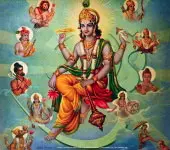
Azhwars have given importance to Bhagavan's saguna aspect, his physical form, even his weapons
This conveys a feeling that Bhagavan is available to us, Bhagavan is accessible, Bhagavan is approachable.
He is the Lord of abundance.
Wherever Bhagavan is there you will see abundance.
Bhagavan rules over the material world and also a world which only his Bhaktas reach.
The concept that the material world was Bhagavan's body itself was highlighted by the Azhvars.
Azhvars started the tradition of addressing Bhagavan with the 12 names starting with Keshava.
They said Bhagavan can be known through the Vedas, but even the Vedas can not reveal him completely.
Bhagavan' kindness and his affection for his devotees is highlighted.
Out of the five forms of Bhagavan, the Azhvars were more drawn towards the Vibhava and Archa forms because they are the most beneficial for his devotees.
Their emotion towards Bhagavan was love.
Not love at the level of an equal.
Their expression of love was worshiping his lotus feet.
About Bhagavan, they were always astonished, amused and in reverence.
-
If Vishnu is everywhere, why don’t I feel his presence during daily stress?
Your attention is scattered, not his presence. Do a 3-minute pause, chant 12 names starting with ‘Keshava’ once each, then one mala of ‘Om Namo Narayanaya’. The mind settles, the presence becomes obvious. -
How does a name like ‘Sarvagah’ change my decisions at work or home?
It raises your accountability. If Bhagavan sees everything, you choose truth over shortcuts. Before a hard choice, recite one verse of Vishnu Sahasranama, then decide. You’ll act cleaner, sleep better. -
Isn’t ‘he is in everything’ just poetry? How is it practical?
If the world is his body, harming people or nature is self-harm. Treat every task as seva to Narayana’s cosmic body. Start by speaking gently for one hour daily after sahasranama. You’ll notice less conflict and more cooperation. -
Why does bhakti insist on the Lord’s form and even his weapons?
Form anchors a wandering mind. The chakra and conch remind you of protection and order. Visualize Vishnu’s form for 60 seconds, then chant 108 names. Focus rises, anxiety drops. -
What if I pray sincerely and nothing improves?
Improve the method, not blame the goal. Fix time, fixed count, fixed place. Do 10 minutes Vishnu Sahasranama daily for 21 days, no breaks. Track one concrete metric, like fewer angry outbursts or better sleep. You’ll see movement. -
How do I involve family without forcing anyone?
Keep it light and short. After dinner, chant any 12 names together, one line each, then end with quiet gratitude. No lectures. Shared sound creates shared peace. -
Can nama japa help physical health, or is it only for the mind?
Rhythm steadies breath, breath steadies the nervous system. Do slow ‘Om Namo Narayanaya’ with 4-4-4-4 breathing for one mala. Many people report calmer pulse and better digestion. It complements medical care, it doesn’t replace it. -
What do I do when I feel unworthy to approach God?
Approach anyway. The name does the lifting. Start with one round of the 12 names, sit near the feet of the form in your mind, and just listen to the sound. Grace meets honesty fast. -
Vedas are vast, how can chanting alone be enough for me?
The name compresses the meaning. Sahasranama is concentrated scripture. If you give it daily attention, it will give you daily guidance. First chant, then read even one shloka meaning. Depth follows practice. -
I keep slipping back into old habits. What is the simplest corrective?
Tie the habit to a name. Each time you notice the slip, say ‘Govinda’ once, then do one good action immediately. Names interrupt, action replaces. -
How do I handle family quarrels that flare up suddenly?
Declare a two-minute sound truce. One person chants ‘Narayana’ softly, others breathe with it. After two minutes, each says one need in one sentence. Close with ‘Achyuta Ananta Govinda’ thrice. It cools the room. -
What is the Azhvar-style takeaway for a busy person today?
Love expressed as service at the Lord’s feet. Pick one daily act of seva at home, like cleaning the puja space before sahasranama. Small, steady offerings build a big heart. -
How do I know if my chanting is working?
You get quicker to truth, slower to anger, kinder in speech, steadier in routines. Review weekly after Sunday sahasranama: truth, anger, speech, routine. If even one improves, keep going. -
What should I do on days I feel spiritually dry?
Reduce the target, not the contact. Do just the first 12 names, then one mala ‘Om Namo Narayanaya’. Offer that dryness itself at his feet. Consistency beats mood. -
How can I connect my earnings and responsibilities to bhakti without becoming impractical?
Begin work with one sahasranama verse, earmark a small fixed portion of income for dharmic use, end day with 12 names. Duty stays sharp, greed stays in check. -
I worry about the future. What specific chant helps?
Chant ‘Vishvaksena’ 11 times to remember the Lord who marshals all obstacles, then continue with your usual sahasranama quota. Fear reduces when command is acknowledged. -
What is a simple monthly discipline to renew devotion?
On Ekadashi or any chosen day, complete Vishnu Sahasranama once, and read meanings of five names. Renewal needs rhythm, not novelty.
Isn’t ‘Sarvagah’ just a poetic exaggeration? How can someone be everywhere?
Think of the ocean. A drop of seawater contains the same salt that is in the entire ocean. In the same way, the entire universe is infused with the essence of Bhagavan. Wherever you look, you see forms and forces that could not exist without him. That is what ‘everywhere’ really means.
If Bhagavan is everywhere, why can’t we see him with our eyes?
You don’t see electricity directly, but you see its effects in light, heat, and motion. In the same way, you may not see Bhagavan with the physical eye, but you see his presence in order, rhythm, compassion, and the very laws of existence that keep the world functioning.
Isn’t the claim that Bhagavan responds to every call just blind faith?
Even in human life, attention responds to what is focused on. If you keep calling someone’s name, their mind turns toward you. Bhagavan, being unlimited awareness, cannot miss a call of genuine devotion. The difficulty is not his absence but our distraction.
Why would the Azhvars treat the world as Bhagavan’s body? Isn’t that fanciful?
Your body is not separate from your self — it is the medium through which you function. In the same way, the cosmos is not separate from Bhagavan; it is the medium of his presence. The Azhvars were pointing to this direct, living reality: the earth, sky, and beings are limbs of the divine.
Why emphasize Narayana over Vishnu or Vasudeva? Isn’t that sectarian?
Each name highlights a different aspect. Vasudeva emphasizes his presence as Krishna, Vishnu emphasizes his all-pervading nature, but Narayana emphasizes the ultimate shelter, the source and refuge of all beings. The Azhvars leaned on this because it speaks most directly to the soul’s need for protection.
Why focus so much on Bhagavan’s form and weapons — isn’t that primitive idol worship?
A form is not a limitation but an access point. You can admire sunlight in theory, but until you feel its warmth on your skin, it’s distant. The form and weapons make Bhagavan accessible, relatable, and real to the devotee, not an abstract concept.
Isn’t it contradictory that Vedas can’t reveal him completely? Then what’s the use of them?
The Vedas point you in his direction, like a map. But to reach the destination, you need to actually walk. The map is true and essential, but it cannot substitute for the living experience of Bhagavan’s presence in devotion.
If Bhagavan is so kind and affectionate, why is the world full of suffering?
Kindness does not mean removal of all struggle. Even parents allow their children to face challenges so they grow. The suffering of the world is not evidence of absence of compassion but a stage for growth, balance, and eventual liberation under his watchful care.





English
Vishnu Sahasranama
Click on any topic to open
7
30
Astrology
Bhagavad Gita
Bhagavatam
Bharat Matha
Devi
Devi Mahatmyam
Ganapathy
Garuda Puranam
Glory of Venkatesha
Hanuman
Kathopanishad
Mahabharatam
Mantra Shastra
Mystique
Practical Wisdom
Purana Stories
Radhe Radhe
Ramayana
Rare Topics
Rigveda Explained
Rituals
Sages and Saints
Shiva
Spiritual books
Sri Suktam
Story of Sri Yantra
Temples
Vedas
Vishnu Sahasranama
Yoga Vasishta
26
17
10
0


