A Powerful Mantra That Does Not Require Initiation From a Guru
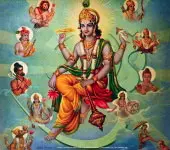
धन्वी – dhanu means bow. Sri Hari’s bow is called शार्ङगम्. He is also called शार्ङ्गी on account of this bow, just as Mahadeva is called Pinakee because of his bow Pinaka. His bow dhanu matches his manliness, paurusha.
पौरुषानुगुणं शार्ङ्गं यस्य धन्वी स कथ्यते
In Ramavatara the Lord was mostly seen with the bow.
पवनः पवतामस्मि रामः शस्त्रभृतामहम्
In Geeta also Bhagavan says, among those who carry weapons I am Rama.
Rama mantras are very powerful.
सर्वेषु मन्त्रवर्गेषु श्रेष्ठं वैष्णवमुच्यते
गाणपत्येषु श्वैवेषु शाक्तसौरेष्वभीष्टदम्
वैष्णवेष्वपि मन्त्रेषु राममन्त्राः फलादिकाः
गाणपत्यादिमन्त्रेषु कोटिकोटिगुणाधिकाः
Among all mantras, the effect of Rama mantras is crores of crores times compared to other mantras.
विनैव दीक्षां विप्रेन्द्र पुरश्चर्यां विनैव हि
विनैव न्यासविधिना जपमात्रेण सिद्धिदाः
There is another interesting thing about Rama mantras. For any mantra to work – this we have been seeing progressively when going through the topics in the section mantra shastra. For any mantra to work, for you to get the benefit of the mantra, it has to come from a guru parampara through mantra deeksha. Then the recipient of the mantra has to practice it through a system called mantra purascharana.
A certain number of chanting is prescribed for each mantra – for example, 8 lakhs for Ashtakshara mantra. This is the standard which applies to everyone, for mantra siddhi. Only after you attain siddhi in any mantra, it will give you results. Sometimes, even after chanting for the specified number of times, siddhi does not come, then you have to repeat.
This chanting cannot be in haphazard manner. It has to be a specific number every day, like 1000 or 3000. You should not vary this from day to day. There are so many more rules to be followed. Then as the chanting progresses, one tenth the number of your chantings – for 8 lakhs, 80,000 – 80,000 ahutis you have to offer in agni as homa, with the same mantra.
Then one tenth of that – 8,000 – so many times you have to do tarpana with the same mantra. Then one tenth of that – 800 times – you have to do abhisheka. Meaning, you have to keep water in a kalasha, chant the mantra 800 times touching that kalasha and then perform abhisheka of that water upon oneself, take bath with that water. Then you have to feed 80 noble brahmins.
This is called panchanga purascharana – purascharana which has got five parts – japa, homa, tarpana, marajana, and brahmana bhojana.
There is also a procedure called nyasa – which is activating or waking up divinity in your body. This also is of many types – lipi nyasa, kara nyasa, anga nyasa. In advanced mantra sadhana, it is much more complex – srishti nyasa, stithi nyasa, samh ara nyasa, shanadhwa nyasa, kala nyasa, tatwa nyasa, bhuvana nyasa, varna nyasa, pada nyasa, and mantra nyasa. It is complex. Only when you follow these procedures mantra would yield result.
But, this shloka says in case of Rama mantras – none of these are required.
विनैव दीक्षां विप्रेन्द्र पुरश्चर्यां विनैव हि
विनैव न्यासविधिना जपमात्रेण सिद्धिदाः
Deeksha, purascharana, nyasa – nothing is required. Only japa – mantra siddhi can be attained through japa. Deeksha is not required means, you do not even need to receive the mantra from a guru. You can presume that you have received the mantra from the Jagadguru Sri Hari himself. Or you can follow the procedure that we have explained in the mantra shastra section – how to take deeksha when you do not have a guru.
There are eight important Rama mantras.
मन्त्रेष्वष्टसु अनायासफलदोऽयं षडक्षरः
षडक्षरोऽयं मन्त्रस्तु महाघौघनिवारणः
Among these the shadakshara mantra – Om Namo Ramaya. This mantra is the easiest, which gives mantra siddhi very fast, very easily. Along with giving siddhi, this mantra also removes ill effects generated by sins you may have done in the past, including past births.
मन्त्रराज इति प्रोक्तः सर्वेषामुत्तमोत्तमः
This mantra is called mantra raja, king of mantras.
दैनन्दिनन्तु दुरितम् पक्षमासर्त्तुवर्षजम्
सर्वं दहति निःशेषं तूलाचलमिवानलः
Everyday troubles, troubles that you face every day, troubles that you face once in a while, they are all burned by this mantra like how fire burns a hay stack.
ब्रह्महत्यासहस्राणि ज्ञानाज्ञानकृतानि च
स्वर्णस्तेयसुरापानगुरुतल्पयुतानि च
कोटिकोटिसहस्राणि ह्युपपापानि यान्यपि
सर्वाण्यपि प्रणश्यन्ति राममन्त्रनुकीर्तनात्
What is a problem, trouble, difficulty in life? It is the result of your own sin from the past. Any difficulty – health issues, wealth issues, relationship issues, obstacles, legal issues – they are because of your own past deeds. Nothing comes by itself. There is a cause behind everything. Unless the sins you have committed in the past, unless they are removed from the roots, troubles do not go away. They keep on coming back in one form or the other.
The best way to remove papas and their effects from the roots is to chant the mantra – Om Namo Ramaya. Sincerely. Seriously. With bhakti.
-
Why is a mantra without formal initiation still spiritually safe?
Because names operate by grace, not exclusivity. Use ‘Om Namo Ramaya’ respectfully, clean space, steady breath. Intention plus consistency keeps the practice aligned and clean. -
How do I start if I have zero background?
Sit straight, palms relaxed. Whisper ‘Om Namo Ramaya’ for 108 counts. Keep a paper tally if you do not have beads. Same time daily for 14 days. That is your on-ramp. -
What is the minimum viable routine for busy mornings?
60 seconds: three slow breaths, 12 repetitions of ‘Om Namo Ramaya’, one line of intent: ‘Guide my next step.’ It is short, but it plants the flag for the day. -
Can I blend Sahasranama with this mantra?
Yes. Do 8 names from Vishnu Sahasranama first, then 54 of ‘Om Namo Ramaya’. Names widen devotion; the mantra drills depth. -
How do I use the name when fear spikes suddenly?
Inhale ‘Om’, exhale ‘Namo Ramaya’ for 6 breaths. Keep shoulders low, jaw unclenched. Fear loses momentum when breath and sound lock together. -
What helps if my mind keeps wandering?
Add a soft beat: tap thumb to each finger as you say the name. The body becomes a metronome; attention rides the rhythm instead of the noise. -
How can this practice support sleep without medication talk?
54 repetitions while lying on the left side, lights dim, phone away. Slow nasal breathing. The brain learns: this sound equals power down. -
How do I bring the family in without debates about rules?
One minute together after dinner: each person says the name thrice. End with 10 seconds of silence. Keep it gentle and predictable. -
My teen rolls eyes at rituals. Any workaround?
Offer a challenge: ‘27 names before exams, no announcements.’ Let results speak. Quiet practice beats arguments. -
What should I chant before a difficult conversation at home?
21 repetitions, then one sentence written on paper: ‘Say the truth kindly.’ Japa clarifies; the sentence anchors. -
How do I steady myself during medical procedures or pain?
Hold one bead or coin. Exhale the name each time the nurse says ‘breathe’. A single focus reduces perceived strain. -
Can walking become practice without looking odd?
Yes. One name every four steps. Mouth closed, eyes soft, shoulders relaxed. Steps become beads; worry drains. -
How do I keep sincerity when results are slow?
Track inputs, not miracles: minutes chanted, days continuous, names learned. Review weekly and add 10% more only if steady. -
Is there a way to target one stubborn habit?
Pick a ‘cutting name’ from Sahasranama — ‘Madhusudana’. Do 12 of that, then 108 of ‘Om Namo Ramaya’. One habit, one month, one notebook line per day. -
What do I do when guilt for missing a day shows up?
Do a repair round: 36 calm repetitions, write one lesson, move on. Bhakti favors return over self-blame. -
How can spouses use this to cool recurring fights?
Agree on a rule: if tone rises, both pause for 12 names aloud. Then talk. Shared rhythm lowers heat faster than logic. -
Can I anchor office focus with the name without being overt?
Keep a tiny dot sticker on the monitor. Each time you see it, one silent ‘Om Namo Ramaya’ plus a single next action. Name, then do. -
What weekly progression actually builds depth?
Mon–Wed: 108 daily, same slot. Thu–Fri: add 8 Sahasranama names before japa. Sat: 3 short sets of 36 across the day. Sun: sit 3 minutes in silence after japa and journal one change. -
How do I close each session so the calm follows me?
Whisper: ‘Let this remembrance shape my words and choices.’ Bow the head, three slow breaths, then act on the next plain duty.





English
Vishnu Sahasranama
Click on any topic to open
7
30
Astrology
Bhagavad Gita
Bhagavatam
Bharat Matha
Devi
Devi Mahatmyam
Ganapathy
Garuda Puranam
Glory of Venkatesha
Hanuman
Kathopanishad
Mahabharatam
Mantra Shastra
Mystique
Practical Wisdom
Purana Stories
Radhe Radhe
Ramayana
Rare Topics
Rigveda Explained
Rituals
Sages and Saints
Shiva
Spiritual books
Sri Suktam
Story of Sri Yantra
Temples
Vedas
Vishnu Sahasranama
Yoga Vasishta
26
17
10
0


