Why Did Nachiketas Faint?
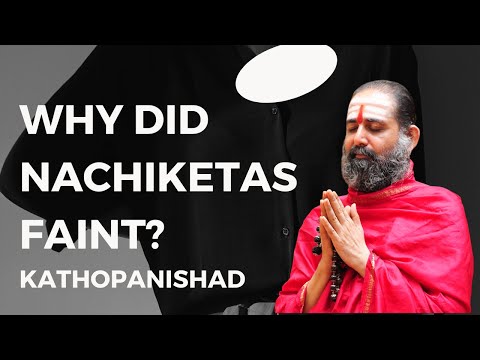
We give over-importance to birth and death. There is nothing more natural than birth and death.
Look at a paddy field or wheat field. Thousands of plants sprout, they grow, they bear grains, and then they die. In the next season, thousands come up again. This keeps on happening.
According to an estimate, 108 billion humans have taken birth on earth. Out of that, only 8 billion remain today. That means one hundred billion human deaths have already taken place on earth. That is 10,000 crores of deaths.
Still, we consider it unnatural for someone to die. Nearly 60 million people die every year, yet death remains a mystery to us. We make so much fuss about death—a purely emotional fuss.
Death is so natural and so common that for Yamaraja and his soldiers, it is routine. It’s like any other daily task. They show in movies and serials, Yamaraja waiting on top of a buffalo with a noose in his hand, waiting to strike. One hundred sixty thousand lives to be taken every day—is that even possible?
The imagery of death is so ridiculous that even a five- or six-year-old boy like Nachiketa could understand its absurdity.
'अनुपश्य यथा पूर्वे प्रतिपश्य तथाऽपरे। सस्यमिव मर्त्यः पच्यते सस्यमिवाजायते पुनः' ('Look back, just as people have died in the past when their time comes, look ahead also. This is what is going to happen.')
Birth and death are so natural and routine that even Yamaraja and his team need not pay any special attention to it.
But that is not what Nachiketa is perplexed about. He is perplexed about two things.
He has been given away in dana. From the object that is given in dana, the recipient should get some benefit—only such objects are given in dana. Even though, as a matter of fact, Nachiketa was given in dana to the ritwiks who conducted the yagna, when he pestered his father, he said, 'I have given you to Mrityu.'
Then Nachiketa said, 'So many have gone before me, and so many will go after. What benefit can I, a small boy, give to Yamaraja which all these who have already gone and are yet to go cannot give? There is no such capability in me.'
Now the second point is, death is so natural and routine. So it is not even that Yamaraja is going to enjoy seeing somebody die, or that he gets a salary or a reward every time a person dies.
So, from Nachiketa’s death, Yamaraja is neither getting a special benefit nor a general benefit. And a dana in which the recipient is not benefited is just a waste. The giver also will not get any benefit from it, from the dana.
These questions weighed heavily upon the tender mind, and Nachiketa just fainted.





English
Kathopanishad
Click on any topic to open
7
30
Astrology
Bhagavad Gita
Bhagavatam
Bharat Matha
Devi
Devi Mahatmyam
Ganapathy
Garuda Puranam
Glory of Venkatesha
Hanuman
Kathopanishad
Mahabharatam
Mantra Shastra
Mystique
Practical Wisdom
Purana Stories
Radhe Radhe
Ramayana
Rare Topics
Rigveda Explained
Rituals
Sages and Saints
Shiva
Spiritual books
Sri Suktam
Story of Sri Yantra
Temples
Vedas
Vishnu Sahasranama
Yoga Vasishta
26
17
10
0


