A Brief Account Of Creation
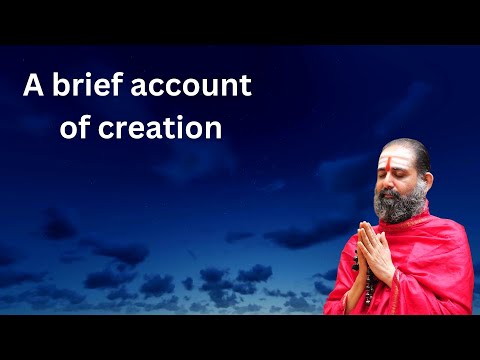
In the previous two episodes, we saw how Vaisampayana, when asked by Janamejaya, offered a brief yet profound glimpse into creation — not as a myth, but as a layered cosmic event narrated in the Mahabharata.
According to this sacred account, Brahma first created six Manasa Putras — sons born not from womb or body, but from thought alone:
Marichi, Atri, Angiras, Pulaha, Pulastya, Kratu.
But there was also a seventh son, born not from the mind — but a force of power and renunciation: Sthanu, who would later be known as Rudra.
From Sthanu came the eleven Rudras, powerful and fearsome:
Mrigavyadha, Sarpa, Nirriti, Ajaikapad, Ahirbudhnya, Pinaki, Dahana, Ishwara, Kapali, Sthanu, Bhava.
These are not just names. They are cosmic energies — destruction, silence, fire, stillness, and fear — born to balance and transform.
The six Manasa Putras started their own vamshas:
-
Angiras had three sons: Brihaspati (Deva Guru), Utathya, and Samvarta.
-
Atri’s sons were many — serene rishis who walked the path of peace.
-
Pulastya became the father of Rakshasas — but also Yakshas, Kinnaras, and Vanaras.
-
From Pulaha came lions, tigers, wolves, Sharabhas, and Kimpurushas.
-
Kratu gave rise to the Valakhilyas — 60,000 thumb-sized sages, who, insulted by Indra, played a role in the birth of Garuda, the king of birds.
Now comes a turning point in creation: the transition from asexual to sexual reproduction.
From Brahma’s right thumb, Daksha was born.
From his left thumb, Daksha’s wife.
They were meant to propagate life through union.
Daksha had:
-
50 daughters, all exquisitely radiant.
-
5000 sons called Haryashwas and 1000 sons called Sabalashwas.
None of these sons survived — they vanished before fulfilling the task of creation.
But how could Daksha attain sadgati (liberation) without sons to perform his shraaddha?
So he introduced the sacred Putrika system:
अपुत्रोऽनेन विधिना सुतां कुर्वीत पुत्रिकाम्।
यदपत्यं भवेदस्यां तन्मम स्यात् स्वधाकरम्॥
‘If there is no son, make the daughter a Putrika. Her son becomes the one to perform the ancestral rites.’
Daksha gave:
-
10 daughters to Dharma
-
27 daughters to Chandra
-
13 daughters to Kashyapa
Total: 50 daughters — the wombs of creation.
The 27 wives of Chandra became the Nakshatras — constellations ruling cosmic time.
The 10 wives of Dharma — Keerthi, Lakshmi, Dhriti, Medha, Pushti, Shraddha, Kriya, Buddhi, Lajja, and Mati — birthed the Eight Vasus:
Dhara, Dhruva, Soma, Aha, Anila, Anala, Pratyusha, Prabhasa.
From Prabhasa, and Brihaspati’s sister, was born Vishwakarma — the divine architect.
Kashyapa, son of Marichi, married Daksha’s daughters and became the father of worlds.
From his union with Tamra (also called Vishwa), were born:
-
Kaki, Shyeni, Bhaasi, Dhritarashtri, Shuki — whose children became owls, eagles, hens, swans, and parrots.
From Krodhavasha, came nine daughters — mothers of:
-
Deer, elephants, bears, monkeys, lions, tigers — the full animal kingdom.
Her daughter Surabhi gave rise to cows and bulls through Rohini, and to horses through Gandharvi.
From Anala, daughter of Rohini, came trees — coconuts, palms, and more.
From Aruna and Sheyni came Garuda and Sampathi — wings of might, born to soar.
And in addition to Kadru, Surasa too was a Nagamatha.
Her sons were nagas with 101 hoods.
Her daughters became mothers of trees, herbs, and creepers — the lifeblood of the earth.
Now let us turn briefly to other key lineages:
-
Surya married Samjna, who once took the form of a mare. In that form, she united with Surya and gave birth to the Ashwini Kumaras — celestial physicians, twin gods of health and radiance.
-
Bhrigu, born from Brahma’s chest, had a son: Kavi.
From Kavi came Shukracharya, guru of Asuras, planet Venus, ruler of rain and drought, yoga and protection.
His brother: Chyavana, who married Arushi, daughter of Manu.
From them came Ourva, born from Arushi’s thigh.
His son: Richeeka, whose son was Jamadagni, whose son was Parashurama — the sixth avatara of Vishnu. -
Brahma also had two more sons: Dhata and Vidhata — brothers of Lakshmi Devi.
Now comes the darker wave.
Adharma took birth during an age of famine, when survival bred violence.
His wife was Nirriti — from whom came Bhaya (Fear), Mahabhaya (Great Fear), and Mrityu (Death).
This Mrityu does not act independently — he takes lives only under the order of Yamaraja, the god of death.
And so we see, in just a few chapters, how Mahabharata paints a sweeping vision of creation:
-
From the mind — came rishis.
-
From body — came Daksha, Dharma, and Sthanu.
-
From union — came suras, asuras, birds, beasts, herbs, and humans.
-
From imbalance — came adharma.
-
And from that, the stage was set — for Vishnu to descend.
Now we have a brief yet sacred glimpse into how this world — visible and invisible — came into being.
In the next episode, we shall continue walking through these lineages, as they converge toward the time of the Pandavas, the Kurukshetra, and the dharma-yuddha that followed.





English
Mahabharatam
Click on any topic to open
7
30
Astrology
Bhagavad Gita
Bhagavatam
Bharat Matha
Devi
Devi Mahatmyam
Ganapathy
Garuda Puranam
Glory of Venkatesha
Hanuman
Kathopanishad
Mahabharatam
Mantra Shastra
Mystique
Practical Wisdom
Purana Stories
Radhe Radhe
Ramayana
Rare Topics
Rigveda Explained
Rituals
Sages and Saints
Shiva
Spiritual books
Sri Suktam
Story of Sri Yantra
Temples
Vedas
Vishnu Sahasranama
Yoga Vasishta
26
17
10
0


