Why We Light a Lamp During Puja
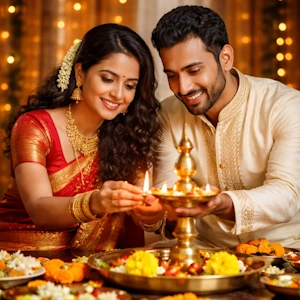
When we sit for puja, one of the first things we do is light a lamp. Most people do this out of habit or tradition. But there is a clear and deep reason behind it. Understanding that reason makes the act more meaningful.
In Indian thought, darkness stands for ignorance. Not just not knowing facts, but a deeper kind of ignorance — not knowing who we really are, what life is for, and what truly matters. Light stands for knowledge and awareness. When you light a lamp, you are making a statement: I am moving from ignorance toward clarity.
The human mind responds to symbols. When you light a flame and watch it burn steadily, something settles inside you. You slow down. You become more present. The lamp signals to your mind that this moment is different from the rest of the day. It creates a shift in attention.
Here is the deeper point. In many Indian scriptures, the individual soul is compared to a flame. It is small, steady, and it burns on its own. The wick soaked in oil is like the body sustained by effort and care. The flame itself is the awareness inside you. When you light a lamp in front of the deity, you are also acknowledging that the same light exists within you.
A flame gives light without keeping anything for itself. It burns and shares. This is considered the ideal quality of a person on a spiritual path — to give, to be useful, and not to hold everything back for personal gain. Lighting the lamp is a quiet reminder of that quality.
On a practical level, fire has always been used to cleanse a space. The light drives away physical darkness. The warmth and the ghee or oil used in the lamp have a subtle effect on the atmosphere of the room. The act of lighting sets a tone of cleanliness and readiness for prayer.
Puja is not meant to be mechanical. It is meant to be conscious. Lighting the lamp is the opening act that says: I am here. I am paying attention. I am doing this with awareness. Without that first conscious act, the rest of the puja can easily become just motion without meaning.
The lamp is not just decoration or tradition. It is a physical expression of a simple but powerful idea: knowledge is light, awareness is light, and the act of worship begins when you choose to stop living in the dark — even for a few minutes — and turn toward clarity.





English
Rituals
Click on any topic to open
7
30
Astrology
Bhagavad Gita
Bhagavatam
Bharat Matha
Devi
Devi Mahatmyam
Ganapathy
Garuda Puranam
Glory of Venkatesha
Hanuman
Kathopanishad
Mahabharatam
Mantra Shastra
Mystique
Practical Wisdom
Purana Stories
Radhe Radhe
Ramayana
Rare Topics
Rigveda Explained
Rituals
Sages and Saints
Shiva
Spiritual books
Sri Suktam
Story of Sri Yantra
Temples
Vedas
Vishnu Sahasranama
Yoga Vasishta
26
17
10
0


