Vedic Prayers Are Simple and Straight Forward
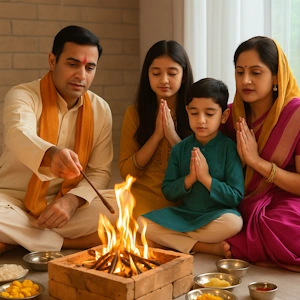
We saw how the yajamana, the performer of the fortnightly yaga called ishti, enters into a vrata on the previous day of the yajna.
We know there are three agnis in the yaga vedi: garhapatya, ahavaniya, and dakshnagni.
After these agnis are established, kindled, three samidhas each are offered in these agnis. This procedure is called anvadhanam.
Anvadhanam means placing of samidhas or firewood for keeping the agni strong and ignited.
वह्निस्थापनस्य पश्चात् आधानम्
अनु आधानम्
There are nine mantras for this.
Let's look at the meaning of these mantras.
First mantra
ममाग्ने वर्चो विहवेष्वस्तु वयं त्वेन्धानास्तनुवं पुषेम
मह्यं नमन्तां प्रदिशश्चतस्रस्त्वयाऽध्यक्षेण पृतना जयेम
We are making your body stronger, nourishing you by adding these firesticks, the fuel.
May I get the results of yajnas.
May everyone in all four directions be under my command and control, may they all be favourable to me. May I be successful over my rivals.
मम देवा विहवे सन्तु सर्व इन्द्रावन्तो मरुतो विष्णुरग्निः
ममान्तरिक्षमुरु गोपमस्तु मह्यं वातः पवतां कामे अस्मिन्
May the devas — Indra, Maruts, Vishnu, Agni — may they all be present in my yajna.
May antariksha protect my yajna.
This is because the rakshasas causing obstruction of yajna travel through antariksha, the atmosphere.
This is a prayer that antariksha should prevent them from coming here.
And Vayu Bhagawan, the wind, should blow favourably. You can imagine what will happen if Vayu Bhagawan assumes the form of a storm and blows at the time of the yajna.
मयि देवा द्रविणमा यजन्तां मय्याशीरस्तु मयि देवहूतिः
दैव्या होतारा वनिषन्त पूर्वेऽरिष्टा स्याम तनुवा सुवीराः
May these devatas who are being worshipped in the yajna give us a lot of wealth.
May they bless us with all the favourable results of the yajna.
May the devas accept my invitation and be present here.
May the priests who are participating in this yajna be able to deliver their duties perfectly.
May our health be perfect.
May our clan flourish in terms of progeny.
These three are offered in the garhapatyagni.
मह्यं यजन्तु मम यानि हव्याऽकूतिः स्त्या मनसो मे अस्तु
एनो मा निगां कतमच्चनाहं विश्वे देवासो अधि वोचता मे
May the priests offer everything I have brought to be offered to devas completely, thereby satisfying the devas.
May the desire with which I am doing this yajna be fulfilled.
May the devas say that among all the worshippers that we have seen so far, this one is the best and greatest. That kind of perfection may my yajna achieve.
देवीः षडुर्वीरुरु णः कृणोत विश्वे देवास इह वीरयध्वम्
मा हास्महि प्रजया मा तनूभिर्मा रधाम द्विषते सोम राजन्
The six devis — dyou, prithivi, apaha, oshadhyaha, oork, and soonrutaa — may they aid in the execution of this yajna step by step, so that it is full and complete.
Dyou is heaven, prithivi is earth, apaha is water, oshadhyayah is herbs, oork is energy, and soonrita is truth.
Veda considers all these as divinities, devis.
May vishwe devas remove all likely obstacles in this yajna.
May we never be devoid of progeny.
May our bodies be strong and healthy.
May our rivals not achieve success.
अग्निर्मन्युं प्रतिनुदन् पुरस्ताददब्धो गोपाः परि पाहि नस्त्वम्
प्रत्यञ्चो यन्तु निगुतः पुनस्तेऽमैषां चित्तं प्रबुधा वि नेशत्
May Agni Bhagawan walk in front of us, neutralizing the anger of our rivals, deflecting the arrows they shoot at us, protecting us.
May Agni Bhagawan also influence the minds of our rivals and destroy their ill feeling towards us.
These three are offered in the dakshinagni.
The next three are offered in the ahavaneeyagni.
धाता धातॄणां भुवनस्य यस्पतिर्देवं सवितारमभिमातिषाहम्
इमं यज्ञमश्विनोभा बृहस्पतिर्देवाः पान्तु यजमानं न्यर्थात्
Dhatrunam dhata — dhatas are prajapatis such as Daksha Prajapati — the creator of these prajapatis, creator Brahma, the Ashwini devas, Brihaspati — may they all ensure that the yajamana of this yajna gets its benefit.
And also Deva Savita, Surya Deva, defeat all evil intentions of rivals which may cause non-attainment of the benefit of this yajna.
उरुव्यचा नो महिषः शर्म यंसदस्मिन् हवे पुरुहूतः पुरुक्षु
स नः प्रजायै हर्यश्व मृडयेन्द्र मा नो रीरिषो मा परा दाः
Indra is worshipped by a lot of yajamanas.
He is very powerful. He controls everything.
He is very valorous.
His horse's name is Hari.
He is called Haryashwa.
Indra Deva has been invited to this yajna.
May he not reject us.
May he make us happy by providing results of this yajna such as abundance of children.
ये नः सपत्ना अप ते भवन्त्विन्द्राग्निभ्यामव बाधामहे तान्
वसवो रुद्रा आदित्या उपरिस्पृशं मोग्रं चेत्तारमधिराजमक्रन्
Our enemies — we are freezing all their evil intentions and evil actions against us with the blessings of Indra and Agni.
May devas — Vasus, Rudras, and Adityas — ensure me a place in heaven, give me commanding power and success over rivals.
Now with a tenth prayer, this procedure of anvadhanam is concluded.
अर्वाञ्चमिन्द्रममुतो हवामहे यो गोजिद्धनजिदश्वजिद्यः
इमं नो यज्ञं विहवे जुषस्वास्य कुर्मो हरिवो मेदिनं त्वा
Indra Deva has acquired a lot of wealth — cows and horses — by defeating rivals.
He is invited in many yajnas at the same time.
Please come here also, partake in this yajna and be friendly towards this yajamana.
A lot of people have wrong notions about the content of Vedas.
See how simple and straightforward these prayers are.
-
What is the real purpose of anvadhanam after the agnis are established?
Anvadhanam is not just feeding wood to fire. It is a declaration that the yajamana is strengthening the body of Agni just like he wants to strengthen his own subtle body. By nourishing Agni with samidhas, he is preparing the channel through which his prayers will travel to the devas. -
Why are three samidhas offered in each agni instead of one?
The number three represents completeness of body, speech and mind. Offering three sticks in garhapatya, dakshinagni and ahavaniya means the yajamana wants harmony in all layers of life — domestic, protective and divine — before the main ishti begins. -
The first mantra asks for control over all four directions. Is this ego?
No, it is about creating a favourable environment for dharma. The yajamana prays that society, nature and people around him should not obstruct the yajna. Command here means alignment, not tyranny. -
Why is antariksha specifically requested to protect the yajna?
Because obstacles are imagined to travel through the middle region, the atmosphere. Rakshasic forces symbolise disturbances like storms, diseases, negative minds. The mantra asks antariksha to block such influences so the ritual can remain pure. -
What is the meaning of asking for wealth and progeny in a spiritual act?
Vedic spirituality never rejects life. Wealth and children are supports for dharma. Without stability at home, the yajamana cannot continue yagas for decades. These prayers are for continuity of the sacred lifestyle. -
Who are the six devis mentioned and why are they invoked?
Heaven, earth, waters, herbs, energy and truth are treated as living powers. The yajna depends on all of them — space to perform, earth to stand, water for purity, herbs for offerings, energy for fire, and truth for mantras. They are invited as active participants. -
Why does the mantra ask Agni to change the minds of rivals?
The Veda does not wish destruction of people, only destruction of hostility. The prayer is that opponents should lose their anger and become peaceful, so that social harmony is restored. -
Why are different groups of devas invoked in different agnis?
Garhapatya relates to household and personal prosperity, so mantras there focus on health and family. Dakshinagni deals with protection, so mantras speak of neutralising enemies. Ahavaniya is for divine connection, so higher devas like Brahma, Savita, Ashwins are called there. -
What does the final invitation to Indra teach?
Indra is busy in countless yajnas, yet the yajamana humbly says, please come here also. It shows the personal relationship between human and deva. The Veda treats devas as approachable allies, not distant abstractions. -
What overall picture of the Vedas emerges from these prayers?
The mantras are simple, human and practical. They speak of safety, family, success, harmony and divine help. The Veda is not all mysterious jargon but the honest voice of a householder trying to live a disciplined, prosperous and upward-moving life.





English
Vedas
Click on any topic to open
7
30
Astrology
Bhagavad Gita
Bhagavatam
Bharat Matha
Devi
Devi Mahatmyam
Ganapathy
Garuda Puranam
Glory of Venkatesha
Hanuman
Kathopanishad
Mahabharatam
Mantra Shastra
Mystique
Practical Wisdom
Purana Stories
Radhe Radhe
Ramayana
Rare Topics
Rigveda Explained
Rituals
Sages and Saints
Shiva
Spiritual books
Sri Suktam
Story of Sri Yantra
Temples
Vedas
Vishnu Sahasranama
Yoga Vasishta
26
17
10
0


