Uttishthata and Jagrata - Walking the Razor's Edge of Spiritual Life
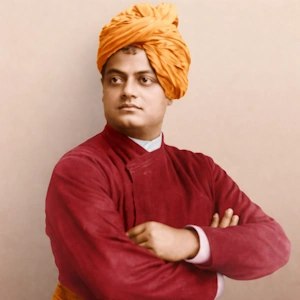
उत्तिष्ठत जाग्रत प्राप्य वरान्निबोधत ।
क्षुरस्य धारा निशिता दुरत्यया दुर्गं पथस्तत्कवयो वदन्ति ॥ १४ ॥
The call to 'Arise and Awake' is perhaps the most iconic exhortation in Indian spiritual literature. While popularized globally by Swami Vivekananda in the late 19th century, its origins lie deep within the Kathopanishad, specifically in verse 1.3.14. This verse represents the climax of the Lord of Death’s (Yama’s) teachings to the young seeker Nachiketa. It is both a clarion call for the soul to stir from its slumber and a sober warning about the rigor required for spiritual transformation.
The verse begins with two powerful commands: Uttishthata (Arise) and Jagrata (Awake). To the casual reader, these might seem redundant, but in the context of Vedanta, they address two distinct states. To 'Arise' is to move out of the inertia of procrastination and worldly attachment. It is the decision to stop drifting through life. To 'Awake' is to emerge from the 'sleep of ignorance' (Avidya).
In this state of ignorance, we mistake the temporary for the permanent and the body for the Self. We live in a dream-like state, chasing shadows of happiness in the material world. The Upanishad reminds us that as long as we remain spiritually asleep, we are subject to the endless cycle of desire and disappointment. Awakening is the realization that there is a higher reality—the Atman—that must be known.
The verse continues: Prapya varan nibodhata—'Approach the great teachers and learn.' The Upanishads emphasize that the path to self-realization is not one of 'self-help' in the modern sense. Because the ego is the very thing that needs to be transcended, it cannot easily dismantle itself. Therefore, one must seek out those who have already crossed the ocean of doubt—the Varans (the excellent ones or Gurus). A guide is essential to navigate the subtle traps of the mind and to provide the clarity needed to distinguish between the Preyas (the pleasant) and the Shreyas (the good).
The most striking imagery in this verse is the metaphor of the razor’s edge: Kshurasya dhara nishita duratyaya. The wise (Kavayo) declare that the path to the Truth is as difficult to tread as the sharpened edge of a razor.
This metaphor serves two purposes. First, it signifies precision. Just as a hair’s breadth of deviation can cause a razor to cut the one who holds it, a slight slip in awareness can lead a seeker back into the grip of ego and attachment. Second, it signifies difficulty. The path is Durgam—hard to pass. It is not an easy road of comforts; it requires the shedding of one's old identity, which can be a painful process.
The message of the Kathopanishad is not meant to discourage, but to instill a sense of spiritual urgency. It tells us that while the goal of liberation is the birthright of every human being, it is not a passive achievement. It demands the alertness of a soldier and the precision of a craftsman. By arising from our lethargy and awaking to our true nature under the guidance of wisdom, we begin the most daring journey a human can take—the walk along the razor's edge toward eternal light.
Question 1: What is the subtle distinction between the commands to Arise and to Awake in the context of Vedic wisdom?
'While they may seem similar, Arise (Uttishthata) refers to the outward movement of overcoming physical and mental inertia. It is the call to stop being a passive observer of life and to take the initial step toward self-improvement. Awake (Jagrata) is a more profound internal shift. It refers to the removal of spiritual blindness or ignorance. One can arise and begin a journey while still being spiritually asleep, acting out of habit or ego. To truly awake is to recognize that the material world we perceive is temporary and that our true identity is the eternal spirit.
Question 2: Why does the Kathopanishad describe our normal state of existence as a sleep of ignorance?
'We are considered to be in a sleep of ignorance because we mistake the reflection for the reality. Just as a person in a dream believes the dream events are real until they wake up, humans usually believe that the body, name, and worldly possessions are their permanent reality. This state is called Avidya. In this state, we chase fleeting pleasures that inevitably lead to pain. The mystery lies in the fact that we are awake to the world of objects but asleep to the truth of the Self.
Question 3: What is the secret significance of seeking the Great Ones or Gurus as mentioned in the phrase Prapya varan nibodhata?
'The secret lies in the limitation of the human ego. The ego is the very veil that hides the truth, so it cannot easily remove itself through its own efforts. A seeker needs a guide who has already crossed the ocean of worldly illusion. These great teachers act as a mirror, showing the seeker their true nature without the distortions of the mind. The journey is not one of gathering information but of transforming consciousness, which requires a living transmission of wisdom from one who is already enlightened.
Question 4: Why is the spiritual path compared specifically to the edge of a razor?
'The razor's edge metaphor highlights two vital aspects: precision and danger. First, it suggests that the path to truth requires extreme mental clarity. A slight deviation toward either extreme attachment or extreme denial can cause a seeker to fall back into ignorance. Second, it signifies that the path is sharp and uncompromising. It requires the shedding of the false self, which can feel as painful and delicate as walking on a blade. It warns that spirituality is not a comfortable hobby but a rigorous discipline of the soul.
Question 5: What is the hidden meaning behind the word Durgam or the hard to pass nature of the path?
'The path is described as hard to pass not because the goal is far away, but because the obstacles are internal. The soul is already the Atman, yet the deeply ingrained habits of the mind and the pull of the senses create a thick forest of distractions. The difficulty lies in unlearning years of conditioned behavior and identifying with something that cannot be seen with the physical eyes. It is a journey from the gross to the subtle, which is the most challenging transition for a human mind.
Question 6: How does the verse distinguish between the pleasant and the good in the journey toward the Truth?
'Although not explicitly named in this specific verse, the context of the Kathopanishad revolves around Shreyas (the good) and Preyas (the pleasant). The razor's edge requires the seeker to constantly choose Shreyas over Preyas. The pleasant provides immediate gratification but leads to bondage, while the good may seem difficult or bitter initially but leads to eternal freedom. The secret to success on this path is the development of Viveka, or the power of discrimination, to tell these two apart at every moment.
Question 7: Why is Lord Yama, the Lord of Death, the most appropriate teacher for this message?
'Death is the ultimate teacher because it strips away everything that is not permanent. By facing Death, the seeker Nachiketa proves his worthiness because he refuses worldly riches that Death eventually takes away. Lord Yama provides the secret of immortality precisely because he knows the limits of the mortal world. Only by understanding the reality of death can a person truly feel the urgency to Arise and Awake.
Question 8: What does the term Kavayo or the wise reveal about the nature of those who understand this path?
'The term Kavayo refers to those who have the vision to see beyond the surface of things. These are not merely scholars but seers who have experienced the truth. Their declaration that the path is difficult is not a discouragement but a compassionate warning. They emphasize that while the light of the Self is within everyone, the discipline to reach it is what separates the seeker from the wanderer.
Question 9: What is the mysterious relationship between spiritual urgency and the achievement of liberation?
'The mystery is that while the Self is eternal and beyond time, the realization of it requires a sense of immediate urgency. If a seeker believes they have many lifetimes to spare, they remain in the slumber of procrastination. The call to Arise and Awake implies that the opportunity of human birth is precious and fleeting. Liberation is achieved when the seeker's desire for truth becomes as intense as the need for air, making them ready to walk the razor's edge without delay.
Question 10: What is the ultimate promise given to those who successfully navigate this difficult path?
'The promise is the transition from the finite to the infinite. By following the guidance of the excellent ones and maintaining the precision of the razor's edge, the seeker transcends the cycle of birth and death. They move from the darkness of ignorance to the light of knowledge, and from the fear of death to the experience of immortality. The ultimate secret is that the difficulty of the path disappears the moment the seeker realizes that they were never the traveler, but the destination itself.





English
Kathopanishad
Click on any topic to open
7
30
Astrology
Bhagavad Gita
Bhagavatam
Bharat Matha
Devi
Devi Mahatmyam
Ganapathy
Garuda Puranam
Glory of Venkatesha
Hanuman
Kathopanishad
Mahabharatam
Mantra Shastra
Mystique
Practical Wisdom
Purana Stories
Radhe Radhe
Ramayana
Rare Topics
Rigveda Explained
Rituals
Sages and Saints
Shiva
Spiritual books
Sri Suktam
Story of Sri Yantra
Temples
Vedas
Vishnu Sahasranama
Yoga Vasishta
26
17
10
0


