Understanding Vishnu: Supreme God or One Among Trimurthis?
Today we will see whether Vishnu is the Supreme God or just one among the Trimurthis and also the meaning of the 138th Divya Nama of Vishnu Sahasranama कृताकृतः from:
लोकाध्यक्षः सुराध्यक्षो धर्माध्यक्षः कृताकृतः
In Vaishnavism, we identify the concept of Supreme God, Paramatma, with Vishnu. But in the concept of Trimurthis, we say that Vishnu is the god of protection and sustenance. Isn't this a bit confusing? Is he the Supreme God, or just one among the Trimurthis, responsible for protection?
Atharva Shikha Upanishad, Vishnu Purana, and the Tamil Saint Nammalvar offer an answer to this puzzle.
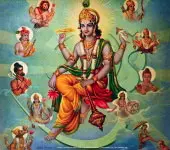
Vishnu IS the Supreme God. Vishnu among the Trimurthis is an incarnation of the Supreme God Vishnu carrying the same name. Brahma and Rudra were created by the Supreme God Vishnu to execute the functions of the creator and the annihilator. The Supreme God Vishnu himself incarnated as Vishnu the protector among the Trimurthis. So you should understand that Vishnu the protector is not different from Vishnu the Supreme God, but at the same time, Vishnu the protector is not equal to Vishnu the Supreme God. This is not some kind of inferiority. It only means that to carry out the protection of the universe, only a small percentage of the Supreme God is needed. Understanding Bhagavan's multifaceted nature can deepen your reverence and devotion. Knowing this truth, you should seek his guidance, protection, and blessings. You should do everything possible to be part of his role as the protector of divine order and divine will.
There are two kinds of dharma - Pravartaka dharma and Nivartaka dharma. Pravartaka dharma is karma that causes rebirths, both good and bad karma. Nivartaka karma ends the cycle of births. It is Bhagavan who gives the results of both these types of karma. He is कृतः when he gives the results of the Pravartaka type of karma and अकृतः when he gives results of Nivartaka karma. So Bhagavan is कृताकृतः.
-
If Vishnu is the Supreme, why talk about Trimurti roles at all?
Trimurti describes functions in the world; supremacy describes source. Vishnu as Paramatma is the source; the protector-role is one focused expression of that source. When confused, do full Vishnu Sahasranama slowly; if short on time, chant ‘Om Vishnave Namaha’ 108 times. -
Does seeing Vishnu as Supreme make other deities irrelevant?
No. It clarifies hierarchy without disrespect. Functional deities operate within Vishnu’s sovereignty, so honoring them aligns with honoring him. For clarity in devotion, chant ‘Om Narayanaya Namaha’ 108 times, or 11 times when rushed. -
How do I connect ‘Krutakritah’ to my daily actions?
‘Kruta’ points to actions that keep you in the cycle; ‘Akrita’ points to liberation-directed results. Offer every outcome to Vishnu to stop karmic stickiness. Close the day with ‘Om Krutakritaya Namaha’ 108 times; on busy days do 11. -
What should I do when guilt from past mistakes keeps nagging?
Own the error, repair what you can, then hand over the weight to Bhagavan. Guilt loses power when you stand under his grace. Recite ‘Om Achyutaya Namaha’ 108 times; once a week, do the full Sahasranama slowly. -
How does this vision of Vishnu change my health choices?
Your body is a trust for serving dharma, not a toy for impulse. Make steady, sane routines and keep the mind anchored in his names to cut stress. Morning or evening, chant ‘Om Govindaya Namaha’ 108 times; on tough days do 11. -
Family tensions flare up; where does bhakti fit in without escapism?
You do your duty calmly and speak truth without spite, while remembering the real judge is Vishnu. Bhakti steadies the tongue and cools the room. Before hard conversations, chant ‘Om Janardanaya Namaha’ 11 times; on weekends, complete the Sahasranama at a slow pace. -
Career pressure makes me transactional; how to stay clean yet effective?
See work as service under Vishnu’s supervision. Do the right thing even if it costs in the short term; he carries the long term. Begin the workday with ‘Om Vasudevaya Namaha’ 108 times; if late, do 11 with full attention. -
How do I decide between two ‘good’ options without overthinking?
Test each option for truth, fairness, and long-term dharma. Then surrender the outcome to Bhagavan and move. After choosing, chant ‘Om Madhavaya Namaha’ 108 times to settle the heart. -
I pray but still face setbacks; is my devotion weak?
Setbacks are training, not abandonment. Vishnu’s protection includes pruning what harms your future. Hold the line with ‘Om Narasimhaya Namaha’ 108 times; once a week add the full Sahasranama slowly. -
Can nama japa actually influence my habits?
Yes. Repeated remembrance rewires what you reach for under stress. Pair honest effort with his name and the loop breaks. Try ‘Om Damodaraya Namaha’ 108 times daily for a fortnight; if pressed, do 11 with full focus. -
How does ‘protection’ look in ordinary life, not miracles?
Often it is timely insight, a friend’s warning, or a door quietly closing before harm. Recognize these as Vishnu’s guard at work. As gratitude, chant ‘Om Trivikramaya Namaha’ 108 times; on lean days, 11 suffices. -
What do I teach children so they grow steady and kind?
Model truthful speech, shared chores, and a small daily time for Bhagavan’s names. Children copy what you live, not what you lecture. Do a family round of ‘Om Narayanaya Namaha’ 11 times after dinner; on weekends, read the Sahasranama slowly together. -
How do I grieve without becoming bitter?
Grief is real; bitterness is optional. Place the departed and your future in Bhagavan’s hands and keep serving life. Sit quietly and chant ‘Om Anantaya Namaha’ 108 times; once a week add the full Sahasranama at an unhurried pace. -
What is one anchor when everything feels morally gray?
Ask: does this action honor truth and reduce harm under Vishnu’s gaze. If yes, proceed; if no, stop. Seal the decision with ‘Om Harih Namaha’ 108 times; when short of time, do 11 with unwavering attention.
But isn't this just wordplay — saying Vishnu created Brahma and Rudra?
No. The scriptures explicitly say it. Vishnu Purana states: 'From Narayana was born Brahma, from Narayana Rudra.' It is not poetry. It is a statement of source.
If Vishnu himself incarnates as the protector among Trimurthis, then isn’t he only a part, not the whole?
Correct — he is a fraction manifested. Just like sunlight entering a room is still the sun’s light, not the whole sun. The Trimurti Vishnu is a localized presence of the infinite Vishnu.
How can you claim he is both Supreme and limited at the same time? Contradiction, isn’t it?
Not contradiction, but context. The ocean remains the ocean, but when a cup holds ocean water, it is still the same ocean in essence. Scale changes, essence doesn’t.
If he is giving results of karma, how is he both krtah and akrtah? Isn’t that double-speak?
Krtah means giver of results that bind you further. Akrtah means giver of results that release you. Two functions, one source. Like electricity can heat and cool, the current is one, the outcomes differ.
Why bring in karma at all? Isn’t it just cause and effect, not some Vishnu sitting and giving results?
Cause and effect needs a law-giver to hold it together. You see consistent results across time — actions producing proportional outcomes. Random chaos would not sustain order. Vishnu is that principle of order, ensuring justice, not chance.
Can’t this order exist without invoking a deity?
No, because order presumes intelligence. Blind matter doesn’t enforce law; it only follows. To have law, you need the law-holder. The universe is not a machine running itself; it is a system administered.
But Nammalvar, saints, Puranas — all are faith texts. Why should a rationalist accept them as proof?
Because they are testimonies of seers who claimed direct perception of truth. Science itself works on testimony and repeatability. When different rishis, across ages, record the same truths independently, that is evidence of consistency, not blind belief.





English
Vishnu Sahasranama
Click on any topic to open
7
30
Astrology
Bhagavad Gita
Bhagavatam
Bharat Matha
Devi
Devi Mahatmyam
Ganapathy
Garuda Puranam
Glory of Venkatesha
Hanuman
Kathopanishad
Mahabharatam
Mantra Shastra
Mystique
Practical Wisdom
Purana Stories
Radhe Radhe
Ramayana
Rare Topics
Rigveda Explained
Rituals
Sages and Saints
Shiva
Spiritual books
Sri Suktam
Story of Sri Yantra
Temples
Vedas
Vishnu Sahasranama
Yoga Vasishta
26
17
10
0


