Enhance Your Magnetism with this Simple Daily Ritual
Magnetism, or personal attractiveness, can significantly enhance your life in both personal and professional spheres. We will explore a straightforward method to improve your magnetism. Additionally, we'll delve into the meaning of the 139th divya nama of Vishnu Sahasranama - Chaturatma, and understand its significance in Vaishnavism.
Enhance Your Magnetism
The Importance of Magnetism
Increasing your magnetism or attractiveness can have various benefits, including:
- Stronger Relationships: Magnetic individuals attract people, forming positive, meaningful connections that enrich their social lives.
- Influence and Persuasion: Charismatic people can influence others more effectively, making it easier to persuade and motivate those around them.
- Boosted Confidence: Developing magnetism boosts self-esteem and confidence, positively impacting many aspects of life.
- Leadership Opportunities: Charismatic people are often seen as leaders and are more likely to be promoted or given leadership roles.
- Better Networking: Enhanced magnetism leads to better networking opportunities, connecting you with key individuals who can aid in your career growth.
- Effective Communication: Magnetic persons typically communicate more effectively, making it easier to convey ideas, inspire teams, and negotiate successfully.
- Positive Perception: Magnetic people are viewed more positively, leading to greater social acceptance and support.
- Fulfilling Relationships: Building magnetism can lead to more fulfilling relationships and interactions, enhancing overall happiness and life satisfaction.
- Reduced Social Anxiety: Being able to connect easily with others and navigate social situations smoothly can reduce stress and anxiety related to social interactions.
A Simple Method to Enhance Your Magnetism
Follow this simple morning ritual to improve your magnetism:
- Morning Ritual: After your bath and regular puja, stand facing the Sun.
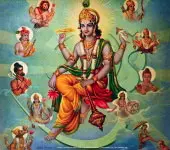
- Visualization: Visualize Lord Krishna in the Surya Mandala. You don't have to look at the Sun directly, just visualize.
- Chant the Mantra: Recite this mantra ten times with devotion to Lord Krishna:
क्लीं कामदेवाय विद्महे पुष्पबाणाय धीमहि तन्नोऽनंगः प्रचोदयात् - Closure: At the end, say क्षमस्व (Kshamasva) as a form of closure and respect.
Most people notice a marked difference within ten days, including increased attention from others, better listening, and a boost in confidence.
By incorporating this simple morning ritual into your daily routine, you can enhance your magnetism and attract positivity into your life
Understanding Chaturatma from Vishnu Sahasranama
Chaturatma - The Four Forms of Vishnu
The term 'Chaturatma' from the Vishnu Sahasranama signifies the Lord's existence in four forms simultaneously: Vasudeva, Sankarshana, Pradyumna, and Aniruddha. This concept is crucial in Vaishnavism, representing the multifaceted nature of Bhagavan.
- Vasudeva: The supreme aspect of Vishnu, associated with Krishna, symbolizing the all-pervading essence and the highest reality in Vaishnavism.
- Sankarshana: Linked to Balarama, Krishna's elder brother, representing the power of attraction and destruction. Sankarshana signifies the force that holds the universe together and the eventual dissolution of creation.
- Pradyumna: Associated with Kamadeva, representing creation and creative energy. Pradyumna emphasizes Vishnu's aspect that brings forth life and sustains the cosmos through love and procreation.
- Aniruddha: Connected to the principle of preservation and governance, Aniruddha signifies the controlling and regulating aspect of the universe, ensuring order and stability.
The Significance of Chaturatma
The Chaturatma concept highlights Bhagavan Vishnu's role in creation, preservation, and eventual destruction of the universe, showcasing his supreme power and divine functions. It reflects Vishnu's multiple aspects and how they work in harmony to maintain cosmic balance.
- Vasudeva: Supreme essence and highest reality.
- Sankarshana: Attraction, destruction, and universe's cohesion.
- Pradyumna: Creation, love, and procreation.
- Aniruddha: Preservation, governance, and stability.
Understanding Chaturatma deepens our appreciation of Vishnu's multifaceted nature and his integral role in the cosmic order. This knowledge enhances our spiritual connection and devotion.
-
Why does personal magnetism actually rise with Vishnu bhakti instead of with tricks or hacks?
Because attention follows shakti. Nama japa tunes your inner current to Bhagavan’s presence. When the mind is quieter and steadier, your voice, eyes, and timing line up. People sense that alignment and lean in. -
What should I chant if I want clean, confident presence in meetings without overtalking?
Do the full Vishnu Sahasranama once, slow and unhurried. If short on time, chant ‘Om Janardanaya Namaha’ 108 times. Keep the same pace daily. Consistency beats theatrics. -
How does the Chaturatma teaching translate into a daily chanting plan?
Match the name to the need: ‘Om Vasudevaya Namaha’ for clarity and poise, ‘Om Sankarshanaya Namaha’ for cutting inner clutter and old resentment, ‘Om Pradyumnaya Namaha’ for warm creativity and friendly charm, ‘Om Aniruddhaya Namaha’ for disciplined will and calm leadership. Choose one stream and stay with it for 21 days. -
I want more warmth at home without getting walked over. What japa helps?
Chant ‘Om Aniruddhaya Namaha’ 108 times in the evening. It stabilizes tone and boundaries, so your ‘no’ is respected and your ‘yes’ feels genuine. On weekends, add the full Sahasranama slow with family listening. -
Is the Surya-facing Krishna visualisation practical for busy mornings?
Yes. After bath and puja, face the sunlight (without staring at the Sun), visualise Krishna in the solar orb, chant the mantra given, 10 times, and close with ‘Kshamasva’. This anchors brightness in voice and posture through the day. -
I tend to freeze in first conversations. Which name unclenches that social stiffness?
‘Om Pradyumnaya Namaha’ 108 times. It melts hesitation and brings easy, appropriate words. If you have 2 minutes only, do 11 times with full attention, but do it daily. -
What is a tight routine that lifts both presence and mood in 15 minutes?
10 minutes of slow Vishnu Sahasranama (steady pace, clear pronunciation), then ‘Om Vasudevaya Namaha’ 11 times. No phone, no multitasking. The steadiness shows up in your handshake and eye contact. -
How does this touch physical health realistically, not magically?
Regular japa reduces inner noise and irritability. Sleep quality improves, appetite steadies, and you carry less tension in the shoulders and jaw. That directly shows up as a calmer face and steadier breath while speaking. -
Family conversations keep spiraling into old fights. What shifts that pattern?
Morning: ‘Om Sankarshanaya Namaha’ 108 times to cut stale mental loops. Night: 11 times ‘Om Aniruddhaya Namaha’ to set a gentle, firm close to the day. Keep it up for three weeks and speak fewer, kinder sentences at dinner. -
Can I align chanting to the workweek for tangible gains?
Yes. Mon–Tue: ‘Om Vasudevaya Namaha’ for clarity and planning. Wed–Thu: ‘Om Pradyumnaya Namaha’ for ideas and networking. Fri: ‘Om Aniruddhaya Namaha’ for decisions and closures. Weekend: full Sahasranama slow for reset. -
What do I do before a tough negotiation so I feel magnetic and not aggressive?
108 times ‘Om Janardanaya Namaha’, sit two minutes in silence, then walk in. Janardana’s name steadies intention and softens edges, so firmness does not read as threat. -
I look dull on video calls. Is there a chant that lifts liveliness without faking it?
‘Om Pradyumnaya Namaha’ 108 times in the morning. Pair it with the Surya-facing Krishna visualisation. Your micro-expressions brighten and you naturally smile with your eyes. -
How do I bring sacred focus into my team without preaching?
Start meetings after your own 11-count japa of ‘Om Aniruddhaya Namaha’. You do not announce it. Your cadence sets the room. Over a month, interruptions drop and people mirror your calm turn-taking. -
What if I want a single-pointed magnetism practice tied to the 139th name itself?
Chant ‘Om Chaturatmane Namaha’ 108 times daily. It invokes the integrated fourfold current — clarity, purification, creativity, and disciplined action — in one stream. -
How do I measure if this is working without falling into superstition?
Track three simple things weekly: number of unsolicited callbacks, length of uninterrupted speaking time in key conversations, and how many dinners at home end without raised voices. If the counts rise and tempers drop, your japa is bearing fruit. -
I backslide after a few good days. What is the repair move?
Do the full Vishnu Sahasranama slow on the very next morning, then restart your chosen single nama at 108. Do not switch names midstream. Repair is part of discipline. -
Can children or elders at home participate safely?
Yes. Let them simply listen to your slow Sahasranama. If they wish to join, 11 times of ‘Om Vasudevaya Namaha’ is gentle and welcoming. Keep the atmosphere respectful and quiet. -
Any last guardrails so this stays traditional and effective?
Fixed time, fixed count, clear pronunciation, clean space, and humility. No mixing with novelty tricks. Keep a small notebook for counts and observations. Offer the fruit of japa to Bhagavan at the end. -
If I have only 3 minutes before stepping out, what is the priority?
11 times ‘Om Vasudevaya Namaha’ with full attention, then ‘Kshamasva’. Walk out upright, speak less, listen more. The magnetism follows.
-
Isn’t ‘magnetism’ just psychology? Why bring Krishna or mantras into it? – Psychology explains behavior; mantra tunes inner state. Change the signal inside, the world mirrors it outside.
-
How can reciting a mantra make people like me more? Sounds superstitious. – Sound patterns regulate breath and nerves. Calm, steady physiology projects trust. People respond to that, not to slogans.
-
Prove that visualizing Krishna in the Sun does anything real. – Mental rehearsal alters neural activity. Stable focus lowers noise, raises presence. Presence is what others feel first.
-
Chaturatma is mythology. Where’s the evidence? – It is a model of functions, like physics uses models. Four faces: source, cohesion, creation, governance. It explains processes, not costumes.
-
Why call Vasudeva ‘supreme essence’? Pure faith. – Experience needs awareness. Strip awareness away and no fact remains observed. Vasudeva names that ground of awareness.
-
Sankarshana as destruction is just poetry. – It encodes forces of pull and release. We do not see gravity; we see effects. Same here: the language is symbolic, the effects are concrete.
-
Pradyumna equals love and creation? Human projection. – Bonds build reality: atoms bind, cells pair, minds align. Naming that binding impulse ‘love’ tracks the creative driver.
-
Aniruddha as governance? Why personify laws? – Personification makes law legible to humans. Equations give form; personification gives meaning and duty. Both assert order, not chaos.
-
If it is symbolic, why worship and not just study science? – Science answers how. Worship answers why and for whom. It turns knowledge into character and courage.
-
Placebo effect explains any ‘results’ from mantra. Agree? – Even if placebo plays a role, it still shows mind drives outcomes. Mantra is a disciplined, repeatable way to harness that driver.
-
If results appear in ten days, why doesn’t everyone become magnetic? – Inputs differ: sincerity, consistency, lifestyle noise. Same lab protocol, different initial conditions, different curves.
-
Isn’t this confirmation bias? You notice positives and ignore misses. – Track outputs: interactions, callbacks, conflict de-escalations, over a fixed window. If signals rise against baseline, bias is ruled out by data.





English
Vishnu Sahasranama
Click on any topic to open
7
30
Astrology
Bhagavad Gita
Bhagavatam
Bharat Matha
Devi
Devi Mahatmyam
Ganapathy
Garuda Puranam
Glory of Venkatesha
Hanuman
Kathopanishad
Mahabharatam
Mantra Shastra
Mystique
Practical Wisdom
Purana Stories
Radhe Radhe
Ramayana
Rare Topics
Rigveda Explained
Rituals
Sages and Saints
Shiva
Spiritual books
Sri Suktam
Story of Sri Yantra
Temples
Vedas
Vishnu Sahasranama
Yoga Vasishta
26
17
10
0


