Two Very Important Aspects of the Avataras of the Lord
We will now look at the meaning of the divya nama ahaha and also two important aspects of the Lord’s avataras.
अहः - means day, part of the day when there is light, daytime.
प्रकाशरूपत्वात् अहः - Sri Hari is light, prakasha, hence he is equated with daytime. Light which is knowledge as opposed to darkness which is ignorance.
Like how day arrives and people wake up, those who are asleep in the sleep of ignorance, he wakes them up from their slumber.
न सन्ति हीना यस्येति अहस्स परिकीर्तितः
Heena means deficient, of low quality. Nothing that belongs to him is of low quality, deficient. Heena has another meaning. If something is heena, of low quality, you throw it away, or you don’t accept it.
You go to a shop. Something that you want to buy is of low quality, vegetables, fruits. You don’t accept them. But the Lord doesn’t do like that. It is not that he will accept only the scholars, the disciplined, the best of devotees. It is not like that.
In fact, he has special consideration for papis, those who have done a lot of sins and are suffering because of that. The noble, the good, he knows they can manage on their own. That is why he is called ahaha. He doesn’t abandon anyone, no matter how bad or lowly he is. He chased Ravana, released him from his body and mind full of evil, and gave him mukti. Same with Kammsa also. He doesn’t abandon anyone.
You must have heard about the wax museum in London. There is one in Mumbai also. They have got life-size replicas in wax of celebrities, great leaders. They are so lifelike, they are so alive. Only thing, they don’t move, they don’t talk. What if they start moving and talking to you, do acts like a human does. But that is not the point.
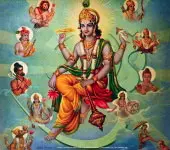
Those statues are made up of wax. There is just wax in them. No flesh, no bones, no blood. Still they look so real. We know whenever Bhagawan takes an avatara, he has a body which can be seen, touched. But his avatara bodies, even though they look like normal bodies, they are just made of bliss, ananda. Like that single substance called wax those statues are made of, Bhagawan’s body is just ananda. It is not like a normal human body or any other body. It will do everything that a normal body does, but it is pure bliss, made of pure bliss. The rest is all make-believe, which he does using his maya. That he was born, he died, or went away, all that is his make-believe.
There is another point about avataras. We say Parashurama took avatara in the 19th treta yuga of Vaivasvata manvantara. Sri Rama took avatara in the 24th treta yuga of Vaivasvata manvantara. This is yet another make-believe. He is always there, in all these forms.
Again, going back to the analogy of the wax museum, it has a timing, right, during which it is open. Let’s say from 9 am to 6 pm. At other times it is closed. Does it mean that the statues are not there inside when it is closed.
Bhagawan makes himself visible to us during the time of his particular avatara. At other times he is not visible, or he becomes visible only to them whom he chooses.
-
What does the name ‘Ahaha’ ask me to notice today?
It says: wake up. Sri Hari is the day itself — the light that cuts ignorance. Start by chanting 11 names from Vishnu Sahasranama aloud at sunrise; let sound become light inside you. -
If he is light, how does that change my first hour?
Building on that, treat dawn as appointment time with Bhagavan: water, wash, sit straight, slow nasal breaths, and chant one mala of ‘Om Namo Narayanaya’. The mind stops wandering because light gives direction. -
I am not disciplined. Will he still take me in?
Because of the above, yes. ‘Ahaha’ also means ‘nothing he touches is low’. Show up as you are. One sincere minute of nama japa beats one perfect plan that never happens. -
What if my past is full of mistakes?
Taking the next step, bring the mess to him. Do 3 rounds of ‘Keshava, Narayana, Madhava…’ with clear voice. Confession through nama melts shame faster than overthinking. -
How do I know chanting is actually doing something?
Reusing ‘clear voice’ from the last answer: watch for steadier breath, warmer palms, and gentler speech by noon. Light inside starts showing as relaxed body and fewer sharp words. -
Can this help my physical health in a realistic way?
Building on relaxed body, chant 108 names while walking slowly after meals. The rhythm aids digestion, posture improves, and the mind stops raiding the snack shelf at night. -
How do I bring my family into this without forcing them?
Taking the next step, create a 7-minute evening routine: one bell, one diya, 12 names together, then prasad. No lectures. Shared sound builds warmth faster than debates. -
I want a simple daily plan that I can stick to. What is it?
Building on the 7-minute idea: Morning — 1 mala ‘Om Namo Narayanaya’. Noon — 12 names softly before lunch. Evening — family 12-name round. Night — whisper ‘Govinda’ 21 times and sleep. -
Is an avatara just a historical event I read about?
Reusing ‘sound becomes light’: avataras are the same light wearing different clothes. When you chant, the ‘clothes’ fall away and the living Presence meets you now, not only in books. -
People say Bhagavan’s birth and departure are make-believe. How is that useful to me?
Building on ‘living Presence’, it means the access door never shuts. If you slipped today, re-enter with nama right now. No waiting for a festival, mood, or perfect you. -
What is the one guardrail I must hold on to?
Taking the next step: keep speech clean for one hour after chanting. No gossip, no harshness. Guard the new light the way you guard a healing wound. -
How can I link this to seva so it grows beyond me?
Building on ‘guard the light’, dedicate one day a week to chant the 12 names for someone who is struggling, then call and speak kindly. Light shared doubles — in them and in you.





English
Vishnu Sahasranama
Click on any topic to open
7
30
Astrology
Bhagavad Gita
Bhagavatam
Bharat Matha
Devi
Devi Mahatmyam
Ganapathy
Garuda Puranam
Glory of Venkatesha
Hanuman
Kathopanishad
Mahabharatam
Mantra Shastra
Mystique
Practical Wisdom
Purana Stories
Radhe Radhe
Ramayana
Rare Topics
Rigveda Explained
Rituals
Sages and Saints
Shiva
Spiritual books
Sri Suktam
Story of Sri Yantra
Temples
Vedas
Vishnu Sahasranama
Yoga Vasishta
26
17
10
0


