Twenty Four Types of Idols of Lord Vishnu
Today, we will be looking at the meaning of the divya nama kritih.
Kritajnaha kritiratmavana.
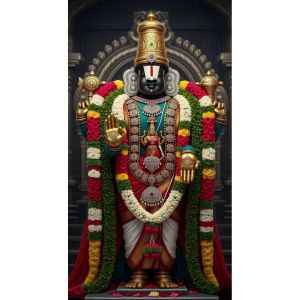
And also the 24 types of the idol of the Lord, how to recognize which form of the Lord the idol is.
कृतिः – means action, human action, action of the beings. Who makes you to act, who is behind every action, the antaryami of everyone, he who controls everyone from inside. Hence Sri Hari is called kriti itself.
It is important to do good things. But there are two things here. Bhagawan recognizes and rewards even small virtuous acts, because he is kritajna. He knows what we are doing. But who makes you perform good deeds? Who puts that idea in your mind? Who makes you feel that, that person is hungry, I should give him something? That elderly person is unable to cross the busy road, I should go hold his hand and help him to cross? Who puts that idea into your mind? There are thousands of others who just ignore. Who puts this idea into your mind? Who gives you the opportunity to do good deeds?
We at Vedadhara were trying to find a place where we can do anna daanam to the needy. Many places we realized, it will not happen the way we wanted. They wanted us to give them the money, they would do it themselves. Some of them were ready to accept materials like groceries, but then we were told that they were going back to the market. Then suddenly God sent a doctor, who organized for permission to distribute food in municipal hospitals, where the patients were really needy, hungry. And we do this with our own hands. There is no intermediary. Who made this happen? Who made that doctor to get involved in such a noble deed? That’s him, Sri Hari. He gave us the opportunity. That’s why he is kriti.
No noble deed can happen without his desire. Try going out with a food packet to give to someone. Many people have told me this. You just won’t be able to find a person. It can happen only if he desires. He wants you to do sukruta. We have heard of welfare schemes of governments. Funds lapse, they are not able to spend. The Lord only makes you do good things.
There are twenty-four types of idols of Sri Hari. The basic difference is in the placement of his four weapons – shankha, chakra, gada and padma.
Keshava – Right lower hand – Padma, Right upper hand – Shankha, Left lower hand – Chakra and Left upper hand – Gada. In the case of Keshava there is a variation also. Only two weapons will be there like Shankha and Chakra, the other two hands are empty.
Narayana – Right lower hand – Shankha, Right upper hand – Padma, Left lower hand – Gada and Left upper hand – Chakra. Looking at the ayudha vinyasa you can identify which form of the Lord it is. Here if you see, the weapons in the lower hands of Keshava are in the upper hands of Narayana, weapons in the upper hands of Keshava are in the lower hands of Narayana, on the same side.
Madhava – Right lower hand – Gada, Right upper hand – Chakra, Left lower hand – Shankha and Left upper hand – Padma.
Govinda – Right lower hand – Chakra, Right upper hand – Gada, Left lower hand – Padma and Left upper hand – Shankha.
Vishnu – Right lower hand – Gada, Right upper hand – Padma, Left lower hand – Shankha and Left upper hand – Chakra.
Madhusudana – Right lower hand – Chakra, Right upper hand – Shankha, Left lower hand – Padma and Left upper hand – Gada. In the case of Madhusudana there is a variation, one with only three weapons, in this chakra is not there.
Trivikrama – Right lower hand – Padma, Right upper hand – Gada, Left lower hand – Chakra and Left upper hand – Shankha. Trivikrama also has a variation without the Shankha.
Vamana – Right lower hand – Shankha, Right upper hand – Chakra, Left lower hand – Gada and Left upper hand – Padma.
Sridhara – Right lower hand – Padma, Right upper hand – Chakra, Left lower hand – Gada and Left upper hand – Shankha.
Hrishikesha – Right lower hand – Gada, Right upper hand – Chakra, Left lower hand – Padma and Left upper hand – Shankha.
Padmanabha – Right lower hand – Shankha, Right upper hand – Padma, Left lower hand – Chakra and Left upper hand – Gada.
Damodara – Right lower hand – Padma, Right upper hand – Shankha, Left lower hand – Gada and Left upper hand – Chakra.
Sankarshana – Right lower hand – Gada, Right upper hand – Shankha, Left lower hand – Padma and Left upper hand – Chakra.
Vasudeva – Right lower hand – Gada, Right upper hand – Shankha, Left lower hand – Chakra and Left upper hand – Padma.
Pradyumna – Right lower hand – Chakra, Right upper hand – Shankha, Left lower hand – Gada and Left upper hand – Padma.
Anirudha – Right lower hand – Chakra, Right upper hand – Gada, Left lower hand – Shankha and Left upper hand – Padma.
Purushottama – Right lower hand – Chakra, Right upper hand – Padma, Left lower hand – Shankha and Left upper hand – Gada.
Adhokshaja – Right lower hand – Padma, Right upper hand – Gada, Left lower hand – Shankha and Left upper hand – Chakra.
Narasimha – Right lower hand – Chakra, Right upper hand – Padma, Left lower hand – Gada and Left upper hand – Shankha.
Achyuta – Right lower hand – Gada, Right upper hand – Padma, Left lower hand – Chakra and Left upper hand – Shankha.
Janardana – Right lower hand – Padma, Right upper hand – Chakra, Left lower hand – Shankha and Left upper hand – Gada.
Upendra – Right lower hand – Shankha, Right upper hand – Gada, Left lower hand – Chakra and Left upper hand – Padma.
Hari – Right lower hand – Shankha, Right upper hand – Chakra, Left lower hand – Padma and Left upper hand – Gada.
Srikrishna – Right lower hand – Shankha, Right upper hand – Gada, Left lower hand – Padma and Left upper hand – Chakra.
There is another significance of the different forms of the Lord. There are some forms associated with the four varnas and even some professions in particular. If they worship the particular form connected to them, that will be all the more beneficial.
Scholars, teachers, academicians – they can worship Keshava, Narayana, Madhava and Madhusudana.
Warriors, rulers, those in defence forces and businessmen in general will benefit from worshipping Vishnu and Madhusudana. Those who serve others as employees, subordinates, they will benefit more by worshipping Sridhara.
Actors, shoemakers, those who run laundry services, they should worship Hrishikesha.
Traders, those involved in pottery, extraction and sale of oil – they should worship Padmanabha.
Worshipping Damodara is beneficial for brahmacharis and in the initial stages of sanyasi.
Hari, Narasimha, Vamana and Varaha – they are common for everyone.
-
How does Bhagavan drive my actions without taking away my freedom?
-
Do sahasranama first, then choose. Chanting clears noise so you act, not react. Freedom feels larger when guided by nama.
-
-
What is the clean way to convert a good intention into a real deed?
-
One round of names, then one small step within 24 hours. Nama sets the inner engine; action follows before excuses grow.
-
-
Why do tiny good deeds feel noticed even when no one sees them?
-
He is kritajna, the knower of motives. Do 11 names offering the deed mentally at his feet. The act becomes prayer-grade, not performance-grade.
-
-
How do I pick a deity form when idols look different everywhere?
-
Use ayudha positions as a compass, then anchor with nama. Start each darshan with 12 names of Vishnu; form recognition becomes steady, not confusing.
-
-
Can different Vishnu forms help different life roles?
-
Yes. Match role to practice:
-
Study or teaching: 8 slow names before starting work.
-
Leadership or tough calls: 27 names with longer exhales.
-
Service roles: 12 names offered for the person you serve.
-
-
-
What do I do when I feel stuck and passive?
-
Stand up, chant 21 names walking slowly. Movement plus mantra breaks inner inertia; the next task begins on its own.
-
-
How can chanting reduce conflict at home without a lecture?
-
Family pause rule: before a hot topic, 1 minute of quiet nama together. Tone drops, respect rises, discussion becomes simpler.
-
-
How do I include elders who prefer silent devotion?
-
Sit near them and chant softly for 5 minutes. Let your breath lead; their silence joins. No instructions needed.
-
-
What if I want to give but the mind second-guesses everything?
-
Fix a giving sankalpa right after sahasranama: one line, one date. When nama seals the intent, doubts do not multiply.
-
-
How do I use nama when I face moral pressure at work?
-
12 names, write the purest option in one line, then act. Nama strips fear; clarity becomes non-negotiable.
-
-
Can chanting help my body during long desk hours?
-
Every hour: 4 names with longer exhales, shoulders relaxed. Heart rate steadies, jaw unclenches, headaches reduce.
-
-
What if I keep postponing my sadhana?
-
Fix a floor and a trigger. Floor: 3 names minimum, never broken. Trigger: sit after brushing teeth. Habit locks in within a week.
-
-
How do I select a personal name of Vishnu that actually works for me?
-
Test three names for 3 breaths each. Choose the one that softens breath fastest. Stay with it for 21 days.
-
-
Is group chanting necessary if I am introverted?
-
Use a hybrid. Solo on weekdays for depth, group once a week for momentum. Two rails keep the train steady.
-
-
How can nama guide my child without forcing religion?
-
One name a day on a card, child leads the last three repetitions at night. Ownership creates joy; joy sustains practice.
-
-
What is the best way to end darshan before an idol?
-
Whisper 5 names, palms on heart, one soft thank you. Leave slowly. The mind carries the shrine back home.
-
-
How do I repair guilt after a mistake?
-
One mala offering the incident into the mantra. Then one concrete corrective action in the next 24 hours. Nama cleans, action seals.
-
-
Can nama help with fear before a medical visit?
-
27 names with long exhale while walking to the clinic. Breath becomes your anchor; the body stops bracing.
-
-
How do I keep practice from turning dry and mechanical?
-
Begin with a one-line sankalpa (who or what you place at his feet), end with 30 seconds of silence. Meaning in, stillness out.
-
-
What is a travel-safe routine that never collapses?
-
Fix a travel count of 27 names, any place, same number. Single-task only. The thread holds even on the move.
-





English
Vishnu Sahasranama
Click on any topic to open
7
30
Astrology
Bhagavad Gita
Bhagavatam
Bharat Matha
Devi
Devi Mahatmyam
Ganapathy
Garuda Puranam
Glory of Venkatesha
Hanuman
Kathopanishad
Mahabharatam
Mantra Shastra
Mystique
Practical Wisdom
Purana Stories
Radhe Radhe
Ramayana
Rare Topics
Rigveda Explained
Rituals
Sages and Saints
Shiva
Spiritual books
Sri Suktam
Story of Sri Yantra
Temples
Vedas
Vishnu Sahasranama
Yoga Vasishta
26
17
10
0


