Those Living in Kaliyuga Have Got a Special Boon
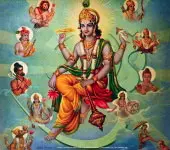
प्रतर्दनः – प्रलये भूतानि प्रतर्दयति हिनस्तीति प्रतर्दनः
During pralaya assuming the form of Rudra, he alone annihilates beings. Hence he is Pratardanaha.
यस्य ब्रह्म च क्षत्रं च ह्यॊदनं भवतः सदा ।
प्रतर्दनः स विज्ञॆयः संहर्तृत्वप्रदॊ मनुः
Whatever he creates that becomes his food at annihilation. He consumes them himself at dissolution. Hence Sri Hari is Pratardana.
Kali yuga is very challenging. If there is one thing that our sages are worried about, it is how to keep the purity of their mind during kali yuga. Kali yuga has all kinds of temptations, inducing one commit what is forbidden. Acts that can eventually lead to misery and suffering. Concept of naraka is to some extent is also symbolic. Naraka need not be a place where punishments are meted out. When mind becomes corrupt by the influence of kali, the suffering begins here itself.
For example, take greed, if you become greedy and start amassing, then fear will start gripping you. Fear will never leave you. Those who have a lot, they are the ones who fear a lot. See who has to move around with bodyguards and black cats and bulletproof vehicles and hi tech security system.
Is he enjoying life or living in fear?
Isn’t this the naraka that we are talking about. Right here, not even after death. Not as a paraloka. Right here.
In kaliyuga, the chances of performing evil acts – acts that are performed out of lust and desire, out of anger, out of greed, out of ignorance – ignorance of what is right and what is wrong, acts performed out of arrogance, performed out of a spirit of competition, all these acts – chances to perform these acts are abundant in kaliyuga. That is the very nature of kaliyuga.
This is what even the sages are worried about. We should not fall into this trap and suffer. This is an adversity. But, when adversity comes, you need not always view it as a disadvantage. When you face this adversity, resist the temptations and overcome the adversity, you emerge as a much much stronger person. You grow. You grow much faster and stronger when faced with adversities.
We have heard many stories of pareekshas being carried out on those who perform tapas and severe penances. They are not tests. They are opportunities – to face and come out stronger in a much faster pace.
This is the general case. But kali yuga has something more specific. Something which is a boon. Which is there only in kali yuga. A boon given only to those who live in kali yuga. But, you don’t recognize it unless you have Sri Hari's blessing. Unless you have his blessing you wouldn’t even know that exists. That’s what I always say, you are hearing this today itself means that you have caught his attention. His grace is on you.
And what is this boon?
कलेर्दोषनिधे राजन् अस्ति ह्येको महान् गुणः ।
कीर्तनात् एव कृष्णस्य मुक्तसङ्गः परं व्रजेत्
Getting mukti in kali yuga has become simple, the method has become simple, the path has become simple. Simply by keertana of Krishna, Sri Hari you can attain moksha, the most coveted ultimate destination. Nothing else is required, nama sankeertana, singing his praises. Nothing else is required. It is so simple.
It was not like this in the earlier yugas.
कृते यद् ध्यायतो विष्णुं त्रेतायां यजतो मखैः ।
द्वापरे परिचर्यायां कलौ तद् हरिकीर्तनात्
What people used to achieve through intense meditation in krita yuga, what people used to achieve through elaborate yajnas in treta yuga, what people used to achieve through paricharya or upasana in dwapara yuga, today we can achieve the same goal in a much much simpler and effective way, that is keertana. Praising his glory. Nama sankeertana. Praising his glory with Vishnu sahasra nama.
The laghu upaya that Yudhishthira is not only a simple way, it is also the most effective way. The Lord through his mercy has given us, us living in this kali yuga, a boon which was not available to those who lived before us. He knows that facing the challenges of kali yuga is not easy. And he gave us this boon, the simplest, fastest and most effective method which can grant the ultimate goal.
That is his mercy, that is his kindness.
-
Why should I choose Vishnu sahasranama over any other practice.
It is a complete map of Sri Hari’s qualities. Reciting it daily aligns mind, speech, and breath with protection, order, and compassion. A single habit that disciplines the whole day. -
How do I begin if the sahasranama feels long.
Split it. Morning: first 200 names. Evening: next 200, and so on. Or chant one nama like ‘Narayana’ for 108 counts, then add 50 names weekly till full. -
What is the cleanest setup for daily nama japa.
Fixed seat, straight spine, soft light, and a simple mala. One name per breath on exhale. Same time daily trains the body clock to cooperate. -
Does meaning matter if I am reading from a book.
Yes, but do not wait to master it. Recite steadily and learn 5 names’ meanings each week. Understanding grows alongside rhythm. -
How do I verify that the practice is changing me.
Track three markers for 21 days: faster calming after anger, fewer impulsive purchases, and better sleep onset time. If they improve, the name is working. -
I feel sleepy or dull during chanting; what now.
Reduce sessions to shorter, sharper rounds. Wash face, sit with a straight back, and chant slightly louder for 3 minutes, then softer for 2 minutes. -
Should I chant aloud, whisper, or mentally.
Start aloud to set rhythm, shift to whisper to conserve energy, and finish with mental japa for depth. Three gears, one road. -
How can this help my physical health without exaggeration.
Regular japa steadies breath and heart rate, lowers stress spikes, and nudges better routines: earlier dinners, cleaner food, and more consistent sleep. -
Family is busy and not interested; how do I include them gently.
Keep a tiny anchor: 90 seconds of a single nama before dinner. No speeches. End with one round of gratitude. Collective rhythm grows without friction. -
What if someone at home mocks the routine.
Lower the volume and increase consistency. Let your calmer responses, punctuality, and reliability do the talking. Quiet fruits convince. -
I travel often; how do I keep continuity.
Carry a small counter or app. Do 3 sets of 3 minutes each: wake-up, lunch, and bedtime. A light rule that survives airports and hotels. -
Can sahasranama support me during illness or caregiving.
Yes. Tie rounds to tasks: one round before medicine, one after. Pray for clarity and steady hands, not only cure. The name keeps the head cool. -
Is speed impressive or is steadiness better.
Steadiness wins. Choose a pace where each name is clear. A clean 10 minutes daily beats a rushed marathon once a week. -
How do I handle intrusive thoughts and guilt while chanting.
Park them first: write one line of regret and one line of repair. Plan one repair action. Then chant. The mind obeys when it knows a repair is scheduled. -
What if cravings or anger strike mid-chant.
Do a burst protocol: 60 seconds of a single nama slightly louder, then sit silent for 30 seconds. Redirected energy stops becoming damage. -
I cannot sit long due to pain or stiffness.
Use chair japa. Feet flat, back tall, hands steady. Short rounds with micro-breaks. Pain recedes when the body trusts you will not overstrain it. -
Can I combine sahasranama with daily work without diluting it.
Yes. Begin tasks with 8–12 names softly. Before calls, one minute of japa steadies tone. After closing a task, offer a quiet ‘Narayana’ to seal it. -
How do I avoid spiritual ego as I improve.
Credit upwards after each round: ‘By your name, not my skill.’ Keep private vows private and keep service anonymous when possible. -
What is a minimal weekly frame that actually sticks.
Daily: 5–7 minutes of nama japa morning and night. Midweek: one short sahasranama segment with family. Weekend: full sahasranama once, unhurried. -
How do I restart after missing days.
Resume next slot without penalty. Do not overcompensate. The strength of a bridge is in how quickly you step back onto it. -
Can children engage meaningfully without getting bored.
Give them a short chorus line like ‘Vasudeva’ for 60 seconds and one story of Sri Hari on weekends. Joy first; duration grows later. -
What is a good way to close each session.
Last five breaths with a single nama mentally, then one sentence of offering: ‘All results are at your feet, Sri Hari.’ Get up calm and useful.





English
Vishnu Sahasranama
Click on any topic to open
7
30
Astrology
Bhagavad Gita
Bhagavatam
Bharat Matha
Devi
Devi Mahatmyam
Ganapathy
Garuda Puranam
Glory of Venkatesha
Hanuman
Kathopanishad
Mahabharatam
Mantra Shastra
Mystique
Practical Wisdom
Purana Stories
Radhe Radhe
Ramayana
Rare Topics
Rigveda Explained
Rituals
Sages and Saints
Shiva
Spiritual books
Sri Suktam
Story of Sri Yantra
Temples
Vedas
Vishnu Sahasranama
Yoga Vasishta
26
17
10
0


