This According to Veda Is the Best Spiritual Path
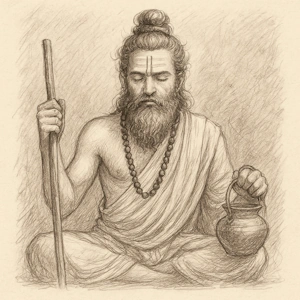
Sanyasis are respected always, everywhere.
Veda talks about eleven other paths for spiritual progress,
but then concludes that sanyasi is the greatest, foremost, and noblest.
Which are the other paths?
This is from Taittiriya Aranyaka, 10th prashna.
The anuvaka is the 62nd.
सत्यं परं परं सत्यं सत्येन न सुवर्गाल्लोकाच्च्यवते
कदाचन सतां हि सत्यं तस्मात् सत्ये रमन्ते
Some noble people stick to truthfulness, honesty.
That they observe as their path.
They never lie, they never deviate from truth.
This path is so great that the mantra itself says satyam param param satyam — twice.
The speciality of this path is that if you attain Swarga Loka through the path of satyam, then you never have to leave.
People go to Swarga by acquiring punya. They go to Swarga and when their punya is exhausted, they have to come out.
But those who go to Swarga Loka by observing truthfulness — they never have to come out of Swarga.
The second path – Tapas
What is meant by Tapas here, in this mantra, is anashana, upavasa — staying without food.
तप इति तपो न अनशनात्परं यद्धि परं तपः तत् उद्धर्षं तत् दुराधर्षं तस्मात्तपसि रमन्ते
But it is very difficult to practise.
A lot of willpower is required to practise upavasa, fasting.
People use hunger strikes as a method of protest.
It involves a lot of suffering and needs strong willpower.
The third path – Dama
दम इति नियतं ब्रह्मचारिणः तस्माद्दमे रमन्ते
What is Dama? Indriya nigraha — control of the organs.
There is a very good movie, easily accessible. It’s there on your device, playing on TV.
You know that it will entertain you.
You can enjoy.
But if you can still avoid watching it, stop yourself, keep on stopping yourself from the urge to watch it —
this is control of organs.
Your mind will keep on telling you:
'Why do you want to miss it? What are you going to gain by doing this? This is not spirituality. Doing yoga is spirituality. Doing pranayama is spirituality. You are not going to gain anything by not watching that movie. This is stupidity. You will only become frustrated after some time.'
Such thoughts will keep pushing you.
Still, if you stay away — then it is dama.
Dama is mostly practised by brahmacharis.
It is restraining the sense organs from pleasure.
The next method – Shama
शम इत्यरण्ये मुनयः तस्माच्छमे रमन्ते
Shama is controlling anger and other such negative feelings.
There are reasons to get angry.
There are irritants all around.
Still, you don’t get angry.
You observe your own anger.
You can see it welling up within you.
Still, you don’t allow it to burst out — this is shama.
Mostly practised by munis who live in the forest.
The next method – Dana
दानमिति सर्वाणि भूतानि प्रशंसन्ति
दानात् न अतिदुष्करम् तस्मात् दाने रमन्ते
Man knows to take. Likes to take.
Man doesn’t like to give.
It is very difficult to give — especially without a quid pro quo benefit.
To give without expectation of anything tangible is very, very difficult.
Giving a few coins is okay. A few hundreds or thousands is okay.
But this is not the dana we are talking about here.
To give away whatever you have, constantly — to keep on giving away whatever you earn — it is not at all easy.
This is danam.
The sixth method – Observance of Dharma
Dharma here means to act in the welfare of others.
This method is particularly suitable for rulers.
Use resources for making of wells, providing water, providing shelter.
The difference between dana and this is:
In dana, you have to see the quality of the recipient — whether the recipient is a satpatra or not.
Here, anyone can derive benefit out of it.
The giver doesn’t choose the recipient.
The seventh method – Prajanana
प्रजन इति भूयांसः तस्मात् भूयिष्ठाः प्रजायन्ते
तस्मात् भूयिष्ठाः प्रजनने रमन्ते
This is going to be very difficult to digest.
To have plenty of children is one of the methods to progress.
Quite opposite to brahmacharya.
One of the reasons is our lack of understanding about what brahmacharya really is.
We’ll get into that another time.
There is a pandemic — the whole world is trying so hard to preserve every single life.
Life is so important.
Life is so precious.
There are couples trying so hard to beget progeny.
If you see scriptures, you will see people with a hundred children, a thousand children.
King Sagara had 60,000 children.
Vamsha vriddhi is one of the primary tasks in this created world.
Today, we have restrictions — one child norm, two children.
Even laws are being thought about to restrict childbirth — or you lose your welfare benefits.
It is interesting — alongside brahmacharya, upavasa, dana —
Prajana, or giving birth to a large number of children, is also one of the methods for spiritual progress.
The eighth method – Agni rituals
अग्नय इत्याह तस्मादग्नय आधातव्याः
Performing homas with agni — household rituals.
This is another excellent method for progress.
The ninth method – Agnihotra
अग्निहोत्रमित्याह् तस्मादग्निहोत्रे रमन्ते
The tenth method – Yajnas, Shrauta Yagas
Darsha Purnamasa, Jyotishtoma, and other Vedic sacrifices:
यज्ञ इति यज्ञेन हि देवा दिवं गताः तस्मात् यज्ञे रमन्ते
Devas attained heaven by performing yajnas.
This is another very effective and noble method.
The eleventh method – Upasana with the Mind (Antaryaga)
मानसमिति विद्वांसः तस्मात् विद्वांसः एव मानसे रमन्ते
Mental worship — antaryaga.
The intellectuals and scholars follow these mental methods.
They are also very effective.
But above all these — Sanyasa.
Giving up everything — even these methods.
Giving up every form of karma.
If sanyasa is achieved 100%, then he becomes Parabrahma itself.
न्यास इति ब्रह्मा ब्रह्मा हि परः परो हि ब्रह्मा
तानि वा एताब्यवराणि तपांसि
न्यास एव अत्यरेचयत्
Sanyasa is giving up everything, including these eleven methods.
This is the best method to attain moksha.
All the other methods are great.
But sanyasi is the greatest.





English
Vedas
Click on any topic to open
7
30
Astrology
Bhagavad Gita
Bhagavatam
Bharat Matha
Devi
Devi Mahatmyam
Ganapathy
Garuda Puranam
Glory of Venkatesha
Hanuman
Kathopanishad
Mahabharatam
Mantra Shastra
Mystique
Practical Wisdom
Purana Stories
Radhe Radhe
Ramayana
Rare Topics
Rigveda Explained
Rituals
Sages and Saints
Shiva
Spiritual books
Sri Suktam
Story of Sri Yantra
Temples
Vedas
Vishnu Sahasranama
Yoga Vasishta
26
17
10
0


