There Is a Catch 22 Situation in Bhakti
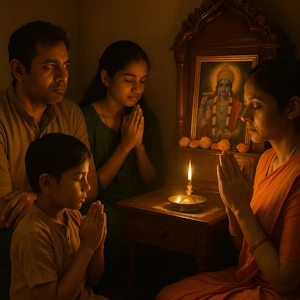
लोहिताक्षः – लोहिते अक्षिणी यस्येति लोहिताक्षः
Akshinee means eyes, his eyes are red in color, dark complexion and red eyes.
Because of his red eyes, Sri Hari is called Lohitaksha.
नानुग्रहस्त्व विना त्वयि भक्तियोगं
नानुग्रहं तव विना त्वयि भक्तियोगः
This is a conundrum, a catch 22 situation.
त्वयि भक्तियोगं विना न तव अनुग्रहः
Without faith in you your blessing will not be there.
त्वयि भक्तियोगं न तव अनुग्रहं विना
But bhakti does not come without your blessing.
This is a difficult situation.
God's blessing will not come if we do not have faith in him, but for having faith in him, he has to bless first.
This is the catch 22 I am talking about.
बीजप्ररोहवदसावनयोर्न कस्य भूत्यै परस्परनिमित्तनिमित्तिभावः
This is like the plant/seed riddle – which came first – the chicken egg story.
Which one came first.
Which one will come first – blessing or bhakti.
This one no one will be benefited.
The poet is wondering – if this is the case, who will ever benefit out of this situation.
No blessing without faith, no faith without blessing.
But the very fact that you are listening to this now means you have caught his attention.
Now do not worry, he knows what to do, he knows how to take you out of this situation.
A child is sick. To cure him medicine is to be given. But medicine is bitter, the child will not take it.
The situation is similar.
What will the doctor do? He will mix the medicine into something sweet which the child likes and give it to him.
Like the strawberry tasting pediatric cough syrup.
Lord is an excellent physician.
He knows all these techniques.
Now that you have caught his attention, he knows how to cure you. Do not worry.
You just have to become like a child, innocent. He will take care of the rest.
-
If grace is needed first, what is the point of my effort today.
Effort is how you signal readiness. Do one small act of bhakti daily: chant one name, offer one spoon of water, skip one harmful habit. Grace meets effort the way rain meets a tilled field. -
How do I start bhakti when I feel nothing inside.
Begin with the body and the clock, not with feelings. Fixed time, fixed place, short practice. Consistency invites attention; attention ripens into feeling. -
What does surrender look like in real life.
Keep duty on your shoulder and anxiety at Bhagavan’s feet. Do what is yours to do; refuse the fever of control over results. -
Is fear of punishment a valid start for devotion.
It is a start, but it must mature. Move from fear to trust by remembering his protection stories, speaking his names, and noticing daily rescues, however small. -
How do I know my prayer is being noticed.
Three early signs: restlessness drops during worship, temptations lose bite, and help arrives through people or timing you did not plan. -
What should I do when mind keeps arguing with faith.
Give the mind a clear job: breathe slowly, chant one name per breath, and keep the spine straight. A busy mind settles when it is given simple, repeatable work. -
How can bhakti help my physical health without making risky promises.
It steadies habits. Regular prayer times nudge regular sleep, cleaner food, and calmer breathing. Calm lowers stress patterns; better habits support immunity and recovery. -
What does ‘childlike’ mean for an adult with responsibilities.
It means honest asking and quick dropping of grudges. You act responsibly, yet you do not bargain with the Lord. You ask cleanly, work cleanly, and let go cleanly. -
How do I bring devotion into family tensions without preaching.
Replace arguments with shared actions: a two-minute evening chant, eating one meal together mindfully, or a weekly temple visit. Shared rhythm builds shared heart. -
What if a family member mocks my practice.
Do not debate. Make your practice smaller, quieter, and more regular. Quiet radiance outlasts loud skepticism. -
When I am ill or caring for someone ill, how does bhakti guide me.
Pray for clarity, not only cure. Clarity improves decisions: which doctor to trust, which treatment to accept, which habit to drop. Offer the care routine itself as worship. -
If results do not come, is it a sign I lack devotion.
No. Results follow their own clock. Your measure is steadiness, humility, and reduction in inner violence. Keep your side of the bridge strong; the Lord will cross in his time. -
Is anger at the Lord a failure of devotion.
Anger is still a relationship. Speak your truth respectfully, then sit. Often, beneath anger is fatigue or grief. Let the name carry what you cannot. -
How do I keep from turning rituals into empty routine.
Add one fresh element each week: a new name, a short verse, a small act of charity. Freshness prevents drift while routine builds roots. -
What is a realistic daily template for a busy person.
Morning: 5 minutes of name-chanting and gratitude. Midday: one mindful breath before eating. Evening: 7 minutes of reading or listening to his stories. Night: offer the day’s outcomes back to him.





English
Vishnu Sahasranama
Click on any topic to open
7
30
Astrology
Bhagavad Gita
Bhagavatam
Bharat Matha
Devi
Devi Mahatmyam
Ganapathy
Garuda Puranam
Glory of Venkatesha
Hanuman
Kathopanishad
Mahabharatam
Mantra Shastra
Mystique
Practical Wisdom
Purana Stories
Radhe Radhe
Ramayana
Rare Topics
Rigveda Explained
Rituals
Sages and Saints
Shiva
Spiritual books
Sri Suktam
Story of Sri Yantra
Temples
Vedas
Vishnu Sahasranama
Yoga Vasishta
26
17
10
0


