The Two Wings of Liberation – A Comprehensive Analysis
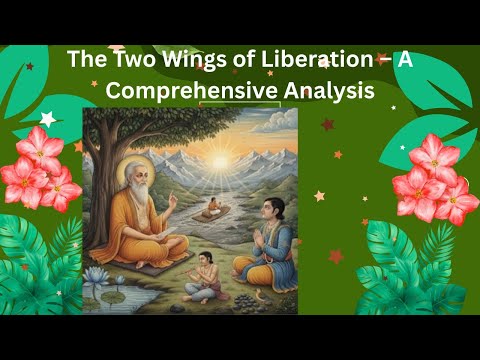
In this profound sarga, the great sage Vasistha unfolds the master plan for spiritual liberation, revealing that the journey is not walked on a single leg but flown on two perfectly balanced wings: Jnana (Wisdom) and Sadachara (Righteous Conduct). He dismantles the perennial debate of whether knowledge or action is superior by showing them to be utterly inseparable and mutually nourishing. The path begins with the deliberate sharpening of the intellect (Prajna) through the company of the wise and the study of scripture. This refined intellect is not for mere argumentation but is the tool used to cultivate the virtues of a Great Soul (Mahapurusha). Vasistha uses the beautiful analogy of a lake and the lotuses within it to show how virtue and wisdom grow together, one creating the condition for the other to blossom. Ultimately, this harmonious development leads to the supreme state where the liberated being acts in the world with perfect skill and grace, yet remains internally a 'non-doer,' free from all desire and attachment.
The Core Teachings of Sarga 20 (Mumukshu Vyavahara Prakaranam)
- The Inseparable Twins: Liberation is impossible if one pursues either Wisdom (Jnana) or Right Conduct (Sadachara) in isolation. Vasistha states unequivocally that a seeker cannot perfect even one of these if the other is neglected. They are the two essential pillars that support the mansion of freedom.
- The Upward Spiral of Growth: Wisdom and virtue exist in a symbiotic, mutually reinforcing relationship. The pursuit of knowledge gives birth to virtues like tranquility (शम), self-control, and compassion. In turn, a life grounded in these virtues creates a stable, pure, and tranquil mind—the only fertile ground in which the subtle seeds of wisdom can sprout and flourish.
- The Forge of the Intellect: The journey begins with a conscious and determined effort to refine one's intellect (Prajna). This is not a passive process. Vasistha advises one to 'forcefully' (बलात्) develop it through association with the noble and wise (आर्यसंगम) and the skillful logic of sacred teachings (युक्त्या).
- From Knowing to Being: The goal is not merely to understand the qualities of a Great Soul (Mahapurusha) but to actively embody them. The sharpened intellect is the tool used to recognize and cultivate these characteristics—such as inner peace, contentment, and equanimity—within oneself.
- The Climax of Action—The Non-Doer: The perfected being, who has fully integrated wisdom and right action, achieves the ultimate state. They act in the world with flawless precision and purpose, yet are internally free from the feeling of being the 'doer' (अकर्त्रा कर्तृरूपिणा). They are moved by a universal intelligence, desireless (निरिच्छेन), and thus their actions create no binding karma.
- Scripture as a Purifying Agent: The teachings of the scriptures, when received from a true master, act like a clarifying agent (कतक). They don't add anything new to the mind but cause the impurities of ignorance and agitation to settle, revealing the crystal-clear, self-luminous nature of consciousness that was always present.
A Verse-by-Verse Exposition
Let us now explore how Sage Vasistha builds this profound teaching, shloka by shloka.
श्रीवसिष्ठ उवाच ।
आर्यसंगमयुक्त्यादौ प्रज्ञां वृद्धिं नयेद्बलात् ।
ततो महापुरुषतां महापुरुषलक्षणैः ।। १
Vasistha speaks:
'Through association with the noble ones (Aryas) and the skillful means (of the teachings), one must first forcefully develop the intellect (Prajna). From that, one cultivates the state of a Great Soul (Mahapurusha) by embodying their very characteristics.'
Commentary: Vasistha begins with the starting point: the sharpening of the instrument of inquiry, the intellect (प्रज्ञां). He states this is not a passive process; one must pursue it बलात्—'forcefully,' with vigor and unwavering determination. The goal of this sharpened intellect is not to win debates, but to achieve महापुरुषतां—the state of a Great Soul, by observing their qualities (लक्षणैः) and actively cultivating them.
यो यो येन गुणेनेह पुरुषः प्रविराजते ।
शिष्यते तं तमेवाशु तस्माद्बुद्धिं विवर्धयेत् ।। २
'Whichever great quality a person shines with in this world, a disciple should quickly learn that very quality from them. Therefore, one must develop the intellect.'
Commentary: This verse makes the teaching intensely practical. The world becomes a school. A seeker should look for virtues everywhere. The sharpened intellect (बुद्धिं) is the tool that allows one to recognize these virtues in others and understand the method to cultivate them, turning life into a continuous process of self-refinement.
महापुरुषता ह्येषा शमादिगुणशालिनी ।
सम्यग्ज्ञानं विना राम सिद्धिमेति न कांचन ।। ३
'This state of being a Great Soul, which is adorned with virtues like tranquility (Shama), O Rama, cannot reach any perfection whatsoever without correct and complete Knowledge (Samyak Jnanam).'
Commentary: Here, Vasistha introduces the first half of the core theme. He defines the 'Great Soul' as one who possesses शमादिगुण (virtues like tranquility) but immediately warns that virtue alone is incomplete. Without the grounding of सम्यग्ज्ञानं (direct, experiential knowledge of the Self), these virtues can be fragile. True perfection (सिद्धिम्) is impossible without wisdom.
ज्ञानाच्छमादयो यान्ति वृद्धिं सत्पुरुषक्रमाः ।
श्लाघनीयाः फलेनान्तर्वृष्टेरिव नवाङ्कुराः ।। ४
'From Knowledge, the virtues like tranquility—the ways of the good people—increase and grow, praiseworthy in their inner results, just like new sprouts flourish from the rain.'
Commentary: This is the first direction of the symbiotic relationship. Knowledge (ज्ञानात्) is the rain. The virtues (शमादयो) are the tender sprouts. As the understanding of one's true nature as the silent, peaceful Self deepens, virtues grow naturally and effortlessly as the fruit (फल) of that wisdom.
शमादिभ्यो गुणेभ्यश्च वर्धते ज्ञानमुत्तमम् ।
अन्नात्मकेभ्यो यज्ञेभ्योः शालिवृष्टिरिवोत्तमा ।। ५
'And from virtues like tranquility, the highest Knowledge grows, just as a bountiful harvest of rice comes from sacrificial offerings made from grain.'
Commentary: This verse presents the other side of the cycle. A mind that is calm, disciplined, and virtuous (शमादिभ्यो गुणेभ्यः) becomes the fertile ground where the seed of knowledge can grow into a mighty tree, leading to ज्ञानमुत्तमम् (the highest knowledge).
गुणाः शमादयो ज्ञानाच्छमादिभ्यस्तथा ज्ञता ।
परस्परं विवर्धन्ते ते अब्जसरसी इव ।। ६
'The virtues like tranquility arise from Knowledge, and from those virtues, in turn, comes Knowingness. They mutually enhance each other, just like a lake and the lotuses within it.'
Commentary: This is the beautiful, summarizing verse. The relationship is परस्परं—mutual and reciprocal. Knowledge is the pure water (सरस्) that allows the lotus of virtue (अब्ज) to grow. The beautiful lotus, in turn, adorns and purifies the lake. They are two parts of a single, beautiful ecosystem.
ज्ञानं सत्पुरुषाचाराज्ज्ञानात्सत्पुरुषक्रमः ।
परस्परं गतौ वृद्धिं ज्ञानसत्पुरुषक्रमौ ।। ७
'Knowledge arises from the conduct of the good, and from Knowledge arises the conduct of the good. Knowledge and the conduct of the good mutually cause each other to grow.'
Commentary: Vasistha repeats the previous shloka's meaning to drive the point home, replacing शमादयो with सत्पुरुषाचार—the actual lived conduct of the wise. This emphasizes that virtue is not an abstract idea but a way of being in the world.
शमप्रज्ञादिनिपुणपुरुषार्थक्रमेण च ।
अभ्यसेत्पुरुषो धीमाञ्ज्ञानसत्पुरुषक्रमौ ।। ८
'A wise person should practice this twin-path of Knowledge and Right Conduct through the skillful and orderly pursuit of the human goals (Purusharthas), guided by tranquility and sharp intelligence.'
Commentary: This is the direct instruction. The धीमान् पुरुषो (wise seeker) must अभ्यसेत्—diligently practice—both paths together, skillfully guided by a calm mind (शम) and a sharp intellect (प्रज्ञा).
न यावत्सममभ्यस्तौ ज्ञानसत्पुरुषक्रमौ ।
एकोऽपि नैतयोस्तात पुरुषस्येह सिध्यति ।। ९
'O dear one (Rama), as long as these two—the path of Knowledge and the path of Right Conduct—are not practiced equally, not even one of them can be perfected by a person in this world.'
Commentary: Vasistha leaves no room for doubt. The practice must be समम्—equal and balanced. He states with absolute certainty that if a seeker focuses on one while neglecting the other, neither will be perfected (एकोऽपि न सिध्यति).
यथा कलमरक्षिण्या गीत्या वितततालया ।
खगोत्सादेन सहितं गीतानन्दः प्रसाध्यते ।। १०
ज्ञानसत्पुरुषेहाभ्यामकर्त्रा कर्तृरूपिणा ।
तथा पुंसा निरिच्छेन सममासाद्यते पदम् ।। ११
'Just as a bird-trapper, with a melodious and rhythmic song, accomplishes both the pleasure of singing and the capture of the bird; in the same way, a desireless person, who is a non-doer appearing as a doer, simultaneously attains the supreme state through the twin efforts of Knowledge and Right Conduct.'
Commentary: This brilliant analogy shows that the liberated person (पुंसा निरिच्छेन) harmonizes the inner state of wisdom (non-doership, अकर्त्रा) with the outer expression of virtuous action (कर्तृरूपिणा). By perfectly blending these two, they effortlessly attain the supreme state.
सदाचारक्रमः प्रोक्तो मयैवं रघुनन्दन ।
तथोपदिश्यते सम्यगेवं ज्ञानक्रमोऽधुना ।। १२
'Thus, O descendant of Raghu, I have explained the path of Right Conduct. Now, the path of Knowledge will be taught in the same complete manner.'
Commentary: Vasistha signals a transition. Having established the necessity of Right Conduct (सदाचारक्रमः), he now prepares Rama to receive the detailed teachings on the path of Knowledge (ज्ञानक्रमोऽधुना).
इदं यशस्यमायुष्यं पुरुषार्थफलप्रदम् ।
तज्ज्ञादाप्ताच्च सच्छास्त्रं श्रोतव्यं किल धीमता ।। १३
'This (teaching) brings renown, grants long life, and bestows the fruit of all human goals. Indeed, a wise person must listen to such a true scripture (Sacchastra) from one who knows That (Tattva) and is trustworthy.'
Commentary: Vasistha praises the teaching while stating a critical condition for its success: it must be heard (श्रोतव्यं) from a qualified Guru who is both a तज्ज्ञात् (knower of the Reality) and आप्ताच्च (established in that reality).
श्रुत्वा त्वं बुद्धिनैर्मल्याद्बलाद्यास्यसि तत्पदम् ।
यथा कतकसंश्लेषात्प्रसादं कलुषं पयः ।। १४
'Having heard it, you, due to the resulting purity of your intellect, will forcefully attain that supreme state, just as muddied water becomes clear through contact with the Kataka nut.'
Commentary: This is the famous analogy of the clarifying agent. The mind is कलुषं पयः (muddied water). The Guru's teaching is the कतक nut. When the teaching is received, it doesn't add anything new; it simply causes the impurities of ignorance to settle, revealing the बुद्धिनैर्मल्यात् (pristine clarity) that was always there, leading irresistibly to तत्पदम् (That State).
विदितवेद्यमिदं हि मनो मुने-
र्विवशमेव हि याति परं पदम् ।
यदवबुद्धमखण्डितमुत्तमं
तदवबोधवशान्न जहाति हि ।। १५
'The mind of a sage, having known that which is to be known, helplessly and spontaneously goes to the supreme state. Because, having once understood that supreme and indivisible Reality, it cannot ever abandon that understanding.'
Commentary: This final verse describes the irreversible nature of enlightenment. Once the mind has directly known (विदितवेद्यम्) the अखण्डितम् (indivisible) Reality, it merges into it विवशमेव (helplessly, without further effort). The experience is so total and self-validating that the mind न जहाति—cannot leave it. The illusion is shattered forever.
Deeper Inquiry: Questions and Answers
Why is right action so crucial if the ultimate reality is unchanging and beyond all action?
The ultimate reality, the Atman, is indeed a silent, actionless witness. However, the individual mind (Jiva) is trapped in a web of conditioning and desires (Vasanas) that create agitation and the illusion of being a 'doer.' Right Conduct (Sadachara) is the prescribed method for purifying this very mind. Virtuous actions, performed without selfish attachment, weaken the grip of the ego and exhaust past karmic tendencies. They are the essential groundwork that calms the turbulent mental space, making it possible to perceive the actionless Self. In essence, right action is the skillful means by which the illusion of being an actor is dismantled.
What is the practical difference between a person with only intellectual knowledge and one who has integrated both knowledge and virtue?
The difference is as stark as that between a map and the actual territory. A person with mere intellectual knowledge may be able to quote scriptures and win debates, but they often exhibit pride, impatience, and inner agitation. Their knowledge is a decoration for their ego. A person who has integrated both, a true Mahapurusha, embodies the teachings. Their presence is characterized by a profound and unshakable peace (शम). They are humble, compassionate, and stable in the face of praise or blame. Their wisdom is a living reality that shines through their every action and brings peace to those around them.
How does one 'forcefully' sharpen the intellect without creating more ego?
The term 'forcefully' (बलात्) here implies a relentless, one-pointed dedication, not aggression. The safeguard against ego lies in the methods Vasistha prescribes. Firstly, association with the wise provides a constant check, as their humility dissolves one's own pride. Secondly, the very purpose of the inquiry is to understand the universal, egoless Self. Therefore, this 'forceful' inquiry, when correctly applied, is a force that dismantles the ego, rather than building it.
If the scriptures can purify the mind, why do so many people read them and remain unchanged?
Vasistha's answer is in verse 13. The scripture is not merely a book to be read; it is a living truth to be transmitted. The purification happens under three conditions that are often missing:
- The Right Source: The teaching must come from a तज्ज्ञ (one who knows the Truth) and is आप्त (established in it).
- The Right Receptivity: The listener must approach with faith (श्रद्धा), humility, and a sincere desire for liberation.
- The Right Process: The knowledge must be deeply contemplated and internalized until it becomes a direct experience. Simply reading the words is like holding the clarifying nut in your hand but never putting it into the muddy water.





English
Yoga Vasishta
Click on any topic to open
7
30
Astrology
Bhagavad Gita
Bhagavatam
Bharat Matha
Devi
Devi Mahatmyam
Ganapathy
Garuda Puranam
Glory of Venkatesha
Hanuman
Kathopanishad
Mahabharatam
Mantra Shastra
Mystique
Practical Wisdom
Purana Stories
Radhe Radhe
Ramayana
Rare Topics
Rigveda Explained
Rituals
Sages and Saints
Shiva
Spiritual books
Sri Suktam
Story of Sri Yantra
Temples
Vedas
Vishnu Sahasranama
Yoga Vasishta
26
17
10
0


