The Anatomy of Bondage: Why the World Appears Real
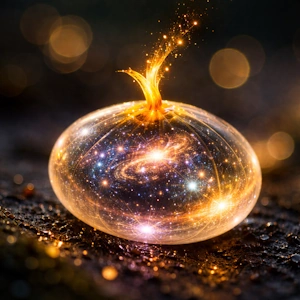
In this foundational sarga of the Utpatti Prakarana, Sage Vasistha begins his deconstruction of the universe, revealing that the creation is not a physical event in time, but a cognitive projection within Consciousness. He identifies the root cause of all human suffering as a single error: the belief in the independent reality of the Visible (Drishya). Vasistha masterfully shifts the seeker's focus from changing the world to changing the status of the world in one’s mind. Using a series of brilliant analogies—from gold being shaped into bracelets to the fragrance latent within camphor—he demonstrates that the world is an inseparable vibration of the Absolute. This sarga serves as a clinical diagnosis of the world-disease, stripping away the efficacy of superficial religious practices and pointing the way toward a liberation that is not a withdrawal from life, but a profound awakening to the wonder of one’s own Infinite Being.
The Core Teachings of Sarga 1 (Utpatti Prakarana)
The Anatomy of Bondage: Vasistha defines Bondage (Bandha) with absolute precision: it is the perceived reality of the connection between the Observer (Drashta) and the Observed (Drishya). Liberation is not the physical destruction of the world, but the dissolution of its reality in the mind. As long as the world is seen as other and real, the soul remains a prisoner of its own perception.
The Descent of Consciousness: The sarga outlines the evolution of the universe as a mental expansion. From the Stirless Brahman arises a subtle agitation, which takes the name of the individual soul (Jiva). Through the power of constant thought (Manana), this Jiva becomes the Mind (Manas), which then projects the entire magic show of the universe (Indrajala). The world is not created by the mind; it is an expansion of the mind.
The Non-Dual Essence: Using the classic analogy of gold and jewelry, Vasistha explains that the world and Brahman are one. Just as a bracelet has no existence apart from the gold, the universe has no existence apart from Consciousness. The name and form are temporary conventions of speech, while the substance—the Is-ness—remains eternally unchanged.
The Mirage of External Methods: Vasistha delivers a stinging critique of superficial spiritual efforts. He asserts that the disease of the visible cannot be cured by logical argumentation, pilgrimages, or religious rules if the mind still clings to the reality of objects. Such efforts are compared to drinking sour gruel—they provide a fleeting sense of satisfaction but fail to quench the deeper thirst for Truth.
The Seed of Latency: A central teaching is the concept of the World-Seed (Drishya-Beeja). Just as a lotus plant is latent in its seed and fragrance is latent in a flower, the world exists as a subtle tendency (Vasana) within the observer. Even in deep meditation or sleep, if this seed is not burnt by the fire of Wisdom (Jnana), the world-dream will inevitably sprout again.
The Power of Imagination: Through the analogy of a child being killed by a ghost of its own imagining, Vasistha illustrates the terrifying power of thought-constructions (Vikalpa). The world cannot harm the Self, but the belief in the world’s reality creates the ghost of birth, death, and fear, which can destroy the seeker’s peace.
The World as Wonder: In a stunning conclusion, Vasistha reveals that the world is not an error to be hated, but the Wonder (Chamatkriti) or the Brilliance of the Absolute. To the ignorant, it is a prison; to the wise, it is the natural, radiant shining of their own Self-nature (Svabhava), existing forever within the womb of Infinite Consciousness.
वाग्भाभिर्ब्रह्मविद्ब्रह्म भाति स्वप्न इवात्मनि ।
यदिदंतत्स्वशब्दोत्थैर्यो यद्वेत्ति स वेत्ति तत् ।। १
In this opening verse, Sage Vasistha establishes the identity between the realized seeker and the Absolute. He explains that a knower of Brahman essentially becomes Brahman, shining with the innate light of pure consciousness. The entire universe is described as an internal phenomenon, appearing within the Self just as a dream appears to a dreamer. Vasistha highlights the profound role of language and conceptualization in our perception of reality. The world we experience is constructed through the 'meanings of words' and the definitions we project onto the formless. Ultimately, what one perceives and understands is dictated by their own mental framework and conceptual vocabulary.
न्यायेनानेन लोकेऽस्मिन्सर्गे ब्रह्माम्बरे सति ।
किमिदं कस्य कुत्रेति चोद्यमूचे निराकृतम् ।। २
Using the logic established in the first verse, Vasistha explains that the entire world exists within the 'space of Brahman' or infinite consciousness. Because the underlying substance of everything is Brahman alone, the common worldly questions regarding the identity, ownership, or location of objects become logically invalid. From the perspective of absolute truth, asking 'What is this?', 'To whom does it belong?', or 'Where is it located?' is like asking about the location of water in a mirage. Such inquiries are dismissed by the wise because the objects themselves lack any independent, separate existence apart from the consciousness that perceives them.
अहं तावद्यथाज्ञानं यथावस्तु यथाक्रमम् ।
यथास्वभावं तत्सर्वं वच्मीदं श्रूयतां बुध ।। ३
Vasistha addresses Rama, the wise student, promising to explain the mystery of creation with absolute clarity. He commits to delivering this teaching according to the depth of true knowledge, the actual nature of the objects involved, and the logical sequence of manifestation. This verse sets the stage for a systematic deconstruction of the world-appearance. Vasistha emphasizes that his explanation will not be based on mere speculation but on the inherent 'Svabhava' or nature of reality itself. He invites Rama to listen with focused attention, signaling that the upcoming discourse is a definitive guide to understanding how the illusory world comes into being.
स्वप्नवत्पश्यति जगच्चिन्नभोदेहवित्स्वयम् ।
स्वप्नसंसारदृष्टान्त एवाहं त्वं समन्वितम् ।। ४
The sage reinforces the analogy of the dream to explain the relationship between the individual and the universe. He states that one who knows themselves as the 'body of the space of consciousness' perceives the entire world as a dream-like projection. This analogy is the most effective tool for understanding the false distinctions between 'I' (the subject) and 'You' (the object). Just as the characters in a dream appear to be separate individuals but are actually made of the single mind of the dreamer, the entire world-process is an integrated movement of one consciousness, appearing as a multitude of separate entities.
मुमुक्षुव्यवहारोक्तिमयात्प्रकरणात्परम् ।
अथोत्पत्तिप्रकरणं मयेदं परिकथ्यते ।। ५
Vasistha marks a structural transition in his teaching. Having concluded the 'Mumukshu Vyavahara Prakaranam,' which focused on the necessary conduct, virtues, and mental preparation of a seeker, he now begins the 'Utpatti Prakaranam.' This section is dedicated to the 'Origin' or 'Creation' of the universe. The shift is from 'how to live' to 'what is the nature of this world.' By placing this after the section on conduct, Vasistha implies that only a mind purified by right conduct and sharpened by virtue is capable of grasping the subtle metaphysics of how the infinite appears as the finite.
बन्धोऽयं दृश्यसद्भावाद्दृश्याभावेन बन्धनम् ।
न संभवति दृश्यं तु यथेदं तच्छ्रणु क्रमात् ।। ६
This verse provides a precise definition of spiritual bondage. Vasistha asserts that bondage is nothing more than the persistent belief in the reality of the 'visible' or the objective world. If one perceives the world as an independent, solid reality, they are bound by it. Conversely, if the 'visible' is realized to be non-existent as a separate entity, bondage becomes impossible. There can be no prisoner if there are no walls. Vasistha then invites Rama to listen to the systematic process through which this 'visible' world is conjured by the mind, leading to the illusion of entrapment.
उत्पद्यते यो जगति स एव किल वर्धते ।
स एव मोक्षमाप्नोति स्वर्गं वा नरकं च वा ।। ७
Vasistha explains the trajectory of the individual soul (Jiva) within the cycle of existence. He notes that it is only that which is 'born' or 'manifested' in the world that undergoes the process of growth, experiences the fruits of action, and eventually seeks liberation. This entity is the one that experiences the polarized states of heaven or hell based on its own conditioning. By identifying the subject of birth and death, Vasistha points toward the 'Jiva' as the locus of experience. This verse serves to ground the metaphysical discussion in the lived experience of the seeker who feels they are trapped in this cycle.
अतस्ते स्वावबोधार्थं तत्तावत्कथयाम्यहम् ।
उत्पत्तिः संसृतावेति पूर्वमेव हि यो यथा ।। ८
For the purpose of Rama's self-awakening, Vasistha proposes to explain the very origin of worldly existence. He intends to trace back how the state of being an 'individual' and the 'world' first arose. By understanding the 'how' of creation, the seeker can reverse the process and achieve dissolution of the illusion. This inquiry into the 'beginning' is not a historical investigation but a psychological and metaphysical one. It aims to uncover the primal movement of consciousness that gives rise to the sense of a world, thereby facilitating the 'Avabodha' or direct awakening to the Truth.
इदं प्रकरणार्थं त्वं संक्षेपाच्छृणु राघव ।
ततः संकथयिष्यामि विस्तरं ते यथेप्सितम् ।। ९
Vasistha adopts a pedagogical approach, offering to first provide a summary of the entire section on creation before diving into the exhaustive details. He addresses Rama as 'Raghava,' acknowledging his noble lineage. This summary serves as a conceptual map, allowing the student to hold the core truth in mind while exploring the complex elaborations that follow. By promising a detailed explanation later, Vasistha ensures that Rama’s intellectual curiosity will be fully satisfied, but he insists on establishing the fundamental principles first to ensure that the student does not get lost in the intricacies of the cosmic magic show.
यदिदं दृश्यते सर्वं जगत्स्थावरजंगमम् ।
तत्सुषुप्ताविव स्वप्नः कल्पान्ते प्रविनश्यति ।। १०
The sage describes the ultimate transience of the universe. All that is perceived—the vast world of moving creatures and unmoving objects like mountains—undergoes total dissolution at the end of a cosmic cycle (Kalpa). Vasistha likens this cosmic dissolution to the way a dream vanishes when a person enters deep, dreamless sleep. This verse emphasizes that the world has no permanent or inherent reality. Its existence is conditional and temporary. Just as the vivid landscapes of a dream leave no trace upon waking, the entire universe dissolves back into its source, revealing its nature as a fleeting mental projection.
ततः स्तिमितगम्भीरं न तेजो न तमस्ततम् ।
अनाख्यमनभिव्यक्तं सत्किंचिदवशिष्यते ।। ११
Vasistha describes the state that remains after the dissolution of the universe. It is a state of profound stillness and depth, characterized by neither light nor darkness. It is 'unnameable' and 'unmanifest,' yet it is the ultimate 'Is-ness' or 'Being' (Sat). This description points to the Absolute (Brahman) which exists beyond all dualities and conceptual categories. It is the silent, neutral background upon which the movie of the world is projected. Because it has no qualities, it cannot be described by the senses, yet it is the only thing that 'is' when everything else is gone.
ऋतमात्मा परं ब्रह्म सत्यमित्यादिका बुधैः ।
कल्पिता व्यवहारार्थं तस्य संज्ञा महात्मनः ।। १२
This verse explains that the various names used for the Divine are merely linguistic tools. Terms like 'Rta' (Cosmic Order), 'Atman' (Self), 'Para Brahman' (Supreme Reality), and 'Satyam' (Truth) have been 'imagined' or constructed by the wise solely for the sake of communication and worldly transaction (Vyavahara). These names do not define or limit the Absolute; they are pointers intended to help the seeker's mind focus on the Indescribable. Vasistha warns that one should not mistake the word for the reality, as the 'Great Soul' exists entirely beyond the reach of speech and the labels created by the human intellect.
स तथाभूत एवात्मा स्वयमन्य इवोल्लसन् ।
जीवतामुपयातीव भाविनाम्ना कदर्थिताम् ।। १३
Vasistha describes the 'descent' of the Absolute into the appearance of individuality. While remaining exactly as it is—infinite and unchanging—the Absolute Self appears to 'vibrate' or shine as if it were 'another.' It takes on the guise of a 'living being' (Jiva). This transition is described as a kind of distress or distortion ('Kadarthitam'), where the Infinite begins to identify with limited names and forms. The word 'iva' (as if) is crucial here; Vasistha maintains that the transformation is not real but apparent. The Absolute never truly becomes a Jiva, but through a mystery of perception, it seems to play that role.
ततः स जीवशब्दार्थकलनाकुलतां गतः ।
मनो भवति भूतात्मा मननान्मन्थरीभवन् ।। १४
Following the appearance of the individual soul (Jiva), the consciousness becomes agitated by the process of 'knowing' and 'defining.' This agitation and the constant act of 'thinking' or 'reflection' (Manana) causes the consciousness to densify, as it were, into the Mind (Manas). The mind is described as the 'soul of the elements' (Bhutatma) because it is the architect of the material world. Vasistha explains that the mind is essentially a movement within consciousness that has become 'dull' or 'slowed down' by its own repetitive imaginings, leading to the solidifying of the world-illusion.
मनः संपद्यते तेन महतः परमात्मनः ।
सुस्थिरादस्थिराकारस्तरङ्ग इव वारिधेः ।। १५
Vasistha uses the classic analogy of the ocean and the wave to explain the birth of the mind. From the 'Great Supreme Self,' which is perfectly stable and motionless, the Mind arises as an unstable, moving form. Just as a wave is nothing but water in motion, the mind is nothing but the Absolute in motion. The wave has no independent existence apart from the ocean, yet for a moment, it assumes a distinct shape and name. Similarly, the mind is a temporary 'agitation' on the surface of the Infinite, creating the appearance of a separate, changing entity within the Changeless.
तत्स्वयं स्वैरमेवाशु संकल्पयति नित्यशः ।
तेनेत्थमिन्द्रजालश्रीर्विततेयं वितन्यते ।। १६
The mind, once arisen, begins to function through its own power of 'Sankalpa' (imagination or volition). It constantly and rapidly projects thoughts and desires. Vasistha describes this mental activity as the creator of the 'glory of a magic show' (Indrajala-shri) which is spread out as the universe. The entire world is an expansion of the mind's own projections. Like a magician who conjures an entire city out of thin air, the mind uses its own creative energy to weave the vast tapestry of space, time, and matter, making the illusory appear strikingly real and beautiful to the perceiver.
यथा कटकशब्दार्थः पृथक्त्वार्हो न काञ्चनात् ।
न हेम कटकात्तद्वज्जगच्छस्तरूपता परे ।। १७
Using the analogy of gold and jewelry, Vasistha explains the non-dual nature of existence. The meaning of the word 'bracelet' cannot be separated from the 'gold,' nor can the gold be separated from the bracelet in that form. They are essentially one and the same substance appearing under different names. Likewise, the 'world' is not something separate from the Supreme Reality. The distinction between 'Brahman' and 'World' is a linguistic and conceptual one, not a factual one. When we see the form, we call it 'world'; when we see the substance, we realize it is 'Brahman.'
ब्रह्मण्येवास्त्यनन्तात्म यथास्थितमिदं जगत् ।
न जगच्छब्दकार्थेऽस्ति हेम्नीव कटकात्मता ।। १८
Expanding on the gold analogy, Vasistha clarifies that while the world appears to exist within Brahman, there is no actual 'world-ness' in Brahman itself. Just as there is no 'bracelet-ness' in pure gold—gold remains gold whether it is shaped into a ring or a bracelet—the Absolute remains unaffected by the forms it appears to take. The 'world' is a conceptual label we apply to the Infinite. In reality, there is only the Infinite. The idea of a 'world' as a separate, substantial entity is a mental error, much like seeing a 'bracelet' and forgetting that it is entirely gold.
सती वाप्यसती तापनद्येव लहरी चला ।
मनसेहेन्द्रजालश्रीर्जागती प्रवितन्यते ।। १९
Vasistha describes the world as a flickering, unstable wave on the 'river of a mirage' (the heat-shimmer of a desert). Whether one considers this world to be 'real' or 'unreal,' its nature is fundamentally 'Chala' (moving and ephemeral). This entire 'cosmic magic show' is expanded and sustained solely by the mind. The analogy of the mirage is particularly powerful: the 'water' in a mirage appears to exist, but it cannot quench thirst. Similarly, the world appears vivid and real to the senses, but it lacks any substantial reality and is merely a projection of mental energy.
अविद्या संसृतिर्बन्धो माया मोहो महत्तमः ।
कल्पितानीति नामानि यस्याः सकलवेदिभिः ।। २०
The sage lists the various terms used to describe the fundamental ignorance that obscures the Truth. The knowers of reality have called this phenomenon 'Avidya' (Ignorance), 'Samsara' (Worldly Existence), 'Bandha' (Bondage), 'Maya' (Illusion), 'Moha' (Delusion), and 'Mahat-tamas' (Great Darkness). These are all 'imagined' names for the same underlying principle: the failure to recognize the Self. By using different names, Vasistha shows that regardless of how one categorizes or describes the human condition, the root problem is the same illusory power that masks the Absolute and projects the fragmented world of birth and death.
बन्धस्य तावद्रूपं त्वं कथ्यमानमिदं श्रृणु ।
ततः स्वरूपं मोक्षस्य ज्ञास्यसीन्दुनिभानन ।। २१
Addressing Rama as 'one with a moon-like face,' Vasistha emphasizes that to understand liberation, one must first clearly understand the nature of bondage. He proposes to describe the characteristics of bondage in detail. This is a strategic teaching method: by identifying the specific mechanisms that keep the soul 'bound,' the path to freedom becomes obvious. Knowledge of the 'disease' is the first step toward the 'cure.' Vasistha implies that liberation (Moksha) is not a positive 'thing' to be acquired, but rather the natural state that remains when the structure of bondage is thoroughly understood and dissolved.
द्रष्टुर्दृश्यस्य सत्ताङ्ग बन्ध इत्यधीयते ।
द्रष्टा दृश्यबलाद्बद्धो दृश्याभावे विमुच्यते ।। २२
Vasistha provides a profound definition of the subject-object relationship. He states that bondage is the belief in the 'substantial reality' of the connection between the Observer (Drashta) and the Observed (Drishya). The Observer becomes 'bound' because they are dominated by the perceived power and reality of the objects they see. If the 'visible' is understood to be non-existent or a mere reflection, the Observer is immediately 'liberated.' Freedom lies in the realization that the objects of the world have no independent existence or power to affect the pure, witnessing consciousness which is the true Self.
जगत्त्वमहमित्यादिर्मिथ्यात्मा दृश्यमुच्यते ।
यावदेतत्संभवति तावन्मोक्षो न विद्यते ।। २३
The 'visible' world is defined here as the false notions of 'the universe,' 'you,' and 'I.' Vasistha calls this the 'false self' or 'Mithya-atma.' As long as these distinctions—the triad of world, other, and ego—are perceived as real and substantial, liberation remains impossible. The sense of being a separate 'I' in a world of 'others' is the very fabric of bondage. Liberation requires the total dissolution of this fragmented perception. Until the seeker sees through the falsity of these divisions and realizes the underlying unity of consciousness, they remain trapped in the cycle of dualistic experience.
नेदं नेदमिति व्यर्थप्रलापैर्नोपशाम्यति ।
संकल्पजनकैर्दृश्यव्याधिः प्रत्युत वर्धते ।। २४
Vasistha warns against superficial spiritual practice. The 'disease of the visible' cannot be cured by the mere verbal repetition of 'not this, not this' (Neti-Neti). If a person claims the world is unreal but their mind continues to generate 'Sankalpas' (desires and imaginings), the disease of worldliness actually grows stronger. True renunciation is not linguistic but psychological. Unless the mind's tendency to project and grasp at objects is stilled, intellectual denials of the world are just 'vain talk.' Real healing comes only when the root cause—the creative imagination of the mind—is neutralized by direct experience.
न च तर्कभरक्षोदैर्न तीर्थनियमादिभिः ।
सतो दृश्यस्य जगतो यस्मादेति विचारकाः ।। २५
The sage asserts that the belief in the reality of the world cannot be destroyed by the 'crushing weight of logic,' nor by visiting holy places (Tirthas), nor by following religious rules and rituals. For a deep 'inquirer' (Vicharaka), these external and intellectual methods are insufficient. While they may provide temporary peace or merit, they do not strike at the root of the illusion. The 'visible' world is a cognitive error that can only be corrected by a fundamental shift in perception. Only the light of direct Self-inquiry can dissolve the deep-seated conviction that the world of objects is an independent reality.
जगद्दृश्यं तु यद्यस्ति न शाम्यत्येव कस्यचित् ।
नासतो विद्यते भावो नाभावो विद्यते सतः ।। २६
Vasistha invokes a fundamental law of Vedantic logic: 'The unreal has no being, and the real never ceases to be.' He argues that if the visible world were truly real, it could never be destroyed or ended by any means. It would exist forever. Therefore, the fact that liberation is possible proves that the 'visible' must be unreal. If the world is perceived as 'ceasing' upon enlightenment, it must have been an illusion from the start. This verse challenges the seeker to recognize that their struggle is not with a 'real' enemy (the world), but with a 'false' perception.
अचेत्यचित्स्वरूपात्मा यत्र यत्रैव तिष्ठति ।
द्रष्टा तत्रास्य दृश्यश्रीः समुदेत्यप्यणूदरे ।। २७
The nature of Consciousness is such that wherever the 'Observer' exists, the 'glory of the visible' will spontaneously arise. Even within the infinitesimal space of an atom, the mind has the capacity to project a vast world-appearance. Vasistha explains that the world is not 'outside' in space, but is a potentiality inherent in the 'perceiving' nature of the Self. Just as a dreamer can experience a vast sky within the small space of their skull, the consciousness projects the 'visible' universe from within itself. The world is an inevitable 'shining' of the mind wherever it happens to be focused.
तस्माद्अस्ति जगद्दृश्यं तत्प्रमृष्टमिदं मया ।
त्यक्तं तपोध्यानजपैरिति काञ्जिकतृप्तिवत् ।। २८
Vasistha critiques those who believe they have 'wiped away' the world through austerities (Tapas), meditation (Dhyana), or chanting (Japa) while still believing the world was 'there' to be wiped away. He compares this to the false satisfaction one gets from drinking 'sour gruel' (Kanji)—it provides a temporary feeling of fullness but does not truly nourish or satisfy. If the seeker suppresses the world through effort but still grants it the status of 'reality,' the illusion will inevitably return. Real freedom is not 'erasing' a real world, but realizing that the world never truly existed as a separate entity.
यदि राम जगद्दृश्यमस्ति तत्प्रतिबिम्बति ।
परमाणूदरेऽप्यस्मिंश्चिदादर्शे तथैव हि ।। २९
If the visible world is assumed to have its own reality, it will continue to reflect within the 'mirror of Consciousness' (Chid-adarsha). Vasistha explains that even if one retreats into the smallest point of focus—the 'belly of an atom'—the world-idea will still reflect there if the mind considers it real. This highlights that the problem is not the size or location of the world, but its 'reflection' in the mind. As long as the 'mirror' of consciousness is oriented toward the 'objects,' the world-appearance will persist, regardless of how much one tries to shrink their field of experience.
यत्र तत्र स्थिते यद्वद्दर्पणे प्रतिबिम्बति ।
अद्यब्ध्युर्वीनदीवारि चिदादर्शे तथैव हि ।। ३०
Just as mountains, oceans, the earth, and rivers are reflected in a physical mirror regardless of where it is placed, the entire universe is reflected in the 'mirror of Consciousness.' Vasistha illustrates that consciousness is the ultimate medium of reflection. Objects do not need to be 'physically' present to be experienced; they only need to be 'conceptually' present. This confirms that our experience of the world is a mental reflection. We do not touch the mountains or the rivers; we experience their reflections within the 'Chid-adarsha.' Understanding this shifts the focus from the external 'objects' to the internal 'mirror.'
ततस्तत्र पुनर्दुःखं जरा मरणजन्मनी ।
भावाभावग्रहोत्सर्गः स्थूलसूक्ष्मचलाचलः ।। ३१
As long as the 'visible' is reflected in consciousness as a reality, the entire cycle of suffering will persist. This includes old age, death, birth, the constant flux of gain and loss, and the distinctions between the subtle and the gross, the moving and the unmoving. These are all properties of the 'reflected' world. Vasistha warns that there is no escape from sorrow as long as the reflection is taken for the reality. To be free from death and decay, one must look away from the reflection and recognize the nature of the mirror itself, which is unborn and eternal.
इदं प्रमार्जितं दृश्यं मया चात्राहमास्थितः ।
एतदेवाक्षयं बीजं समाधौ संसृतिस्मृतेः ।। ३२
Vasistha describes a common trap in meditation. A seeker might think, 'I have erased the visible world and now I am established in the Self.' However, if this thought—this 'I' who has erased the world—is still present, it acts as an 'indestructible seed' (Akshayam Beejam). Even in deep meditation (Samadhi), this subtle residue of 'world-memory' or the sense of being an 'eraser' ensures that the world of Samsara will sprout again as soon as the meditation ends. True liberation is not an 'act' performed by an 'I,' but the total dissolution of both the 'I' and the 'world-seed.'
सति त्वस्मिन्कुतो दृश्ये निर्विकल्पसमाधिता ।
समाधौ चेतनत्वं तु तुर्यं चाप्युपपद्यते ।। ३३
As long as the 'visible' (the world-idea) is still considered potentially real, true 'Nirvikalpa Samadhi' (undifferentiated absorption) is impossible. Vasistha defines true Samadhi as the state of 'pure consciousness' or the 'Fourth State' (Turiya). In this state, there is no 'other,' no 'visible,' and no 'seed' of worldliness. Most people's Samadhi is merely a temporary suppression of thoughts. Real Samadhi is the realization that the 'visible' never was. Only when the consciousness is completely free from the 'Vikalpas' (thought-constructions) of a world can it truly be said to be established in its own nature.
व्युत्थाने हि समाधानात्सुषुप्तान्त इवाखिलम् ।
जगद्दुःखमिदं भाति यथास्थितमखण्डितम् ।। ३४
Vasistha points out the limitation of temporary meditation. When a person emerges from such a Samadhi (Vyutthana), the entire world of sorrow appears again, exactly as it was before, unchanged and unbroken. He compares this to waking up from deep, dreamless sleep; the world seems to have been waiting for the person to return. This proves that the 'visible' was not destroyed, only temporarily hidden. For the illusion to be truly ended, it must be dissolved through wisdom (Jnana) during one's waking life, not just bypassed during a few hours of sitting in silence.
प्राप्तं भवति हे राम तत्किं नाम समाधिभिः ।
भूयोऽनर्थनिपाते हि क्षणसाम्ये हि किं सुखम् ।। ३५
Vasistha asks Rama a rhetorical and challenging question: What is the use of such temporary Samadhis? What real happiness can be found in a few moments of 'equanimity' (Samya) if one is destined to fall back into the 'calamity' (Anartha) of worldly existence? He suggests that a fleeting experience of peace is a poor substitute for permanent liberation. The seeker should not settle for 'meditative highs' but should strive for the permanent realization that renders the world-illusion powerless even when the eyes are open and one is engaged in the world.
यदि वापि समाधाने निर्विकल्पे स्थितिं व्रजेत् ।
तदक्षयसुषुप्ताभं तन्मन्येतामलं पदम् ।। ३६
Vasistha considers the case where one stays indefinitely in a state of 'Nirvikalpa' (without thought). He describes this as being like a state of 'perpetual deep sleep' (Akshaya-sushupti). While some might consider this the 'pure state' (Amalam Padam), Vasistha implies throughout the text that true liberation is not a state of unconsciousness or stone-like withdrawal, but a state of 'living liberation' (Jivanmukti). One should be awake and aware, seeing the world as a play of consciousness, rather than simply being 'dead' to the world in a trance.
प्राप्यते सति दृश्येऽस्मिन्न च किंनाम केनचित् ।
यत्र यत्र किलायाति चित्ततास्य जगद्भ्रमः ।। ३७
The sage reiterates that as long as the 'visible' world is perceived as real, nothing of ultimate value is truly attained. Wherever the 'Mind-ness' (Chittata) goes, the 'delusion of the world' (Jagad-bhrama) will inevitably follow it. You cannot run away from the world if the world is a projection of your own mind. Whether you are in a forest, a cave, or a palace, as long as the mind functions with the belief in objects, it will create its own Samsara. The only way out is not a change of location, but a change in the nature of the mind itself.
द्रष्टाथ यदि पाषाणरूपतां भावयन्बलात् ।
किलास्ते तत्तदन्तेऽपि भूयोऽस्योदेति दृश्यता ।। ३८
If the Observer 'forcefully' (Balaat) tries to become like a stone—suppressing all feelings, thoughts, and perceptions—they may succeed for a while. However, Vasistha warns that as soon as that effort ends, the 'visible world' will rise again with the same intensity. Forced suppression is like holding a spring down; the moment you let go, it snaps back. This 'stone-like' state is not wisdom; it is a mechanical suppression of the mind's functions. Real liberation is not the 'absence' of thought through force, but the 'transcendence' of thought through understanding.
न च पाषाणतातुल्या निर्विकल्पसमाधयः ।
केषांचित्स्थितिमायान्ति सर्वैरित्यनुभूयते ।। ३९
Vasistha observes that these 'stone-like' states of absorption do not lead to a permanent transformation for most people. While some individuals may achieve such states, it is a common experience (Anubhuuyate) that everyone eventually returns to their normal state of consciousness. The temporary cessation of the world-appearance is not the same as its permanent dissolution. The fact that practitioners 'come back' from these states shows that the underlying 'Vasanas' (latent tendencies) and the belief in the reality of the world were never fully uprooted.
न च पाषाणतातुल्या रूढिं याताः समाधयः ।
भवन्त्यग्रपदं शान्तं चिद्रूपमजमक्षयम् ।। ४०
The sage clarifies that these inert, stone-like states of Samadhi are not the 'Supreme State' (Agra-padam). The ultimate goal is a state that is peaceful (Shantam), composed of pure consciousness (Chid-rupam), unborn (Ajam), and indestructible (Akshayam). This true state is not a lack of awareness, but a fullness of awareness. It is a 'living peace' that is present regardless of whether the mind is active or quiet. Vasistha distinguishes between 'Jada Samadhi' (unconscious absorption) and 'Caitanya Samadhi' (conscious realization), steering Rama toward the latter as the only true path.
तस्माद्यदीदं सद्दृश्यं तन्न शाम्येत्कदाचन ।
शाम्येत्तपोजपध्यानैर्दृश्यमित्यज्ञकल्पना ।। ४१
Vasistha repeats his logical argument: if the visible world were truly 'real' (Sat), it would never cease to exist. Therefore, the common belief that the world can be ended through austerities, chanting, or meditation is an 'imagination of the ignorant' (Ajna-kalpana). You cannot destroy something that is real, and you don't need to destroy something that is unreal—you only need to realize its unreality. The practices are useful for purifying the mind, but the final 'ending' of the world-illusion comes only from the realization that it was never there as a separate reality to begin with.
आलीनवल्लरीरूपं यथा पद्माक्षकोटरे ।
आस्ते कमलिनीबीजं तथा द्रष्टरि दृश्यधीः ।। ४२
Using a beautiful botanical analogy, Vasistha explains how the 'idea of the visible' remains latent. Just as a lotus seed contains the potential form of the entire lotus plant as a folded, hidden tendril, the 'world-idea' (Drishya-dhi) exists latently within the Observer. Even when the world is not being perceived—such as in deep sleep or suppressed meditation—the 'seed' remains in the heart of consciousness. This is why the world keeps returning. To be truly free, one must not just cut the 'plant' of the world but 'fry' the seed of latent tendencies (Vasanas) through the fire of Knowledge.
यथा रसः पदार्थेषु यथा तैलं तिलादिषु ।
कुसुमेषु यथाऽऽमोदस्तथा द्रष्टरि दृश्यधीः ।। ४३
The sage provides more examples of latency: as sap is inherent in plants, as oil is hidden in sesame seeds, and as fragrance is contained within flowers, so the 'notion of the visible world' resides within the Observer. These analogies emphasize that the world is not an external 'add-on' to consciousness, but an inherent potential within it. The world is 'folded' into our own being. This means that liberation cannot be found by traveling anywhere; it can only be found by addressing the 'sap,' 'oil,' and 'fragrance' of worldly tendencies within our own conscious nature.
यत्र तत्र स्थितस्यापि कर्पूरादेः सुगन्धिता ।
यथोदेति तथा दृश्यं चिद्धातोरुदरे जगत् ।। ४४
Just as the fragrance of camphor arises spontaneously from the camphor regardless of where it is located, the 'visible world' arises from the 'womb' of the element of Consciousness (Chid-dhatu). This verse suggests that the world is a natural 'exhalation' or 'radiation' of consciousness. The appearance of a world is what consciousness *does*. However, the problem is not that the fragrance (world) arises, but that we mistake the fragrance for a separate, solid object. Wisdom lies in enjoying the 'fragrance' of the world while knowing it has no existence apart from the 'camphor' of Consciousness.
यथा चात्र तव स्वप्नः संकल्पश्चित्तराज्यधीः ।
स्वानुभूत्यैव दृष्टान्तस्तथा हृद्यस्ति दृश्यभूः ।। ४५
Vasistha points to Rama’s own direct experience as proof. He reminds Rama of his own dreams, his daydreams, and the 'kingdoms of the mind' (Chitta-rajya) he creates. These are all instances where a 'land of the visible' (Drishya-bhuh) is clearly seen to exist within the heart/mind, even though there is no external material. By using 'Sva-anubhutya' (one's own experience), Vasistha makes the teaching undeniable. If you can create a world in your dreams, why is it hard to believe that this 'waking' world is also a creation of the same mental faculty?
तस्माच्चित्तविकल्पस्थपिशाचो बालकं यथा ।
विनिहन्त्येवमप्येतं द्रष्टारं दृश्यरूपिका ।। ४६
The sage uses the powerful analogy of a child and a ghost. A child imagines a ghost in the darkness; even though the ghost is purely a 'thought-construction' (Vikalpa), the child’s fear is real, and that fear can even cause physical harm or death. In the same way, the 'visible world,' which is a mere mental form, 'destroys' or binds the Observer. The world cannot hurt the Self, but the *belief* in the world's reality creates the 'ghost' of birth, death, and suffering. We are not killed by the world, but by our own mental projections and the fear they generate.
यथाङ्कुरोऽन्तर्बीजस्य संस्थितो देशकालतः ।
करोति भासुरं देहं तनोत्येवं हि दृश्यधीः ।। ४७
Just as a sprout is already present within a seed and, given the right time, place, and conditions, expands into a 'shining body' (the tree), so the 'world-thought' (Drishya-dhi) expands into the vast universe. This verse emphasizes the power of expansion (*Tanoti*). A single, tiny thought of 'I' or 'mine' contains the entire forest of worldly existence. This process of expansion is governed by the laws of 'Desha-Kala' (Space and Time). Understanding this, the seeker must be extremely vigilant with their 'seeds' of thought, realizing how quickly a small mental sprout can become an all-encompassing jungle of Samsara.
द्रव्यस्य हृद्येव चमत्कृतिर्यथा
सदोदितास्त्यस्तमितोज्झितोदरे ।
द्रव्यस्य चिन्मात्रशरीरिणस्तथा
स्वभावभूतास्त्युदरे जगत्स्थितिः ।। ४८
In this concluding verse of the first sarga, Vasistha explains that the world is the 'wonder' or 'brilliance' (Chamatkriti) of the Absolute. Just as the 'essence' of any substance is always present within it, beyond the cycles of rising and setting, the 'existence of the world' is the very 'Svabhava' (nature) of the Absolute Consciousness. The world is not an 'error' that happened to Brahman; it is Brahman's own inherent 'shining.' The liberation described here is the realization that the world is the 'wonder' of our own Self. We don't 'lose' the world; we stop being afraid of it and start seeing it as our own radiant nature.
Deeper Inquiry: Questions and Answers
If the world is merely a mental projection, why does it appear so solid, consistent, and external to us?
Vasistha explains this through the analogy of the gold and the bracelet. The 'solidity' and 'externality' of the world are properties of the form, not the substance. Just as we get so caught up in the shape and utility of a bracelet that we forget it is entirely gold, our minds are captivated by the names and forms (Nama-Rupa) of the universe. The consistency we perceive is due to the 'collective dream' of the universal mind. The world is 'external' only because the mind has projected the concept of space. In reality, the mountain you see is as much 'within' your consciousness as a mountain you dream of. The sense of reality comes from the 'Chamatkriti' (wonder/brilliance) of the Absolute, which has the power to make its own vibrations appear as solid matter.
Why does Vasistha criticize temporary states of Samadhi as being 'stone-like' or 'useless'?
Vasistha is warning Rama against 'Jada Samadhi'—a state of forced mental suppression. If a seeker forcefully stills the mind without the light of inquiry, they are merely entering a state of temporary unconsciousness similar to deep sleep or a faint. The reason this fails is the 'seed' of the world (Drishya-Beeja). Like a lotus plant hidden in a seed or oil in a sesame seed, the latent tendencies (Vasanas) remain intact. When the practitioner emerges from meditation, these seeds immediately sprout into the same old world of sorrow. True Samadhi is not the absence of thought, but the presence of Wisdom—the realization that the world never existed as a separate entity. Only this 'fire of knowledge' can burn the seeds so they never sprout again.
If the relationship between the Observer (Drashta) and the Observed (Drishya) is the cause of bondage, does liberation mean we must stop seeing the world?
No. Liberation is not physical blindness or the cessation of perception; it is a change in the status of what is perceived. Bondage is the 'belief' in the substantial reality of the Observed. When you see a mirage and know it is just a play of light on sand, you still 'see' the water, but you are not 'bound' by the desire to drink it. Similarly, a liberated being sees the world, acts in it, and experiences its beauty, but knows internally that it is a 'magic show' (Indrajala) of Consciousness. The 'glue' of bondage—the belief that 'this is real and separate from me'—has been dissolved.
How can a mere 'thought-construction' (Vikalpa) cause real suffering, like the child and the ghost analogy?
This is the psychological heart of the sarga. Vasistha shows that the mind has the power to grant 'reality' to its own creations. A child who imagines a ghost in the dark is not just having an intellectual thought; their heart races, their body trembles, and they may even die of fright. The ghost is unreal, but the *effect* of believing in the ghost is devastatingly real. In the same way, the 'ghosts' of ego, 'mine-ness,' and 'the world' are projected by our own ignorance. We suffer from birth, death, and loss because we have granted these concepts the status of absolute reality. The 'visible' destroys the Observer only because the Observer has forgotten that they are the one dreaming it.
Is the 'origin' (Utpatti) of the world an event that happened in the past, or is it happening now?
In Vasistha's metaphysics, 'creation' is a continuous process of the mind. The descent from Brahman to Jiva, and Jiva to Mind, and Mind to World, happens in every moment of perception. Every time we identify with the body or grasp at an object as 'real,' we are re-enacting the Utpatti (origin) of the universe. Therefore, the 'end of the world' is also not a future cosmic event, but a present possibility. When inquiry reveals the non-existence of the 'visible' as a separate entity, the 'world' ends in that very moment, revealing the stirless, eternal Brahman that was always there.





English
Yoga Vasishta
Click on any topic to open
7
30
Astrology
Bhagavad Gita
Bhagavatam
Bharat Matha
Devi
Devi Mahatmyam
Ganapathy
Garuda Puranam
Glory of Venkatesha
Hanuman
Kathopanishad
Mahabharatam
Mantra Shastra
Mystique
Practical Wisdom
Purana Stories
Radhe Radhe
Ramayana
Rare Topics
Rigveda Explained
Rituals
Sages and Saints
Shiva
Spiritual books
Sri Suktam
Story of Sri Yantra
Temples
Vedas
Vishnu Sahasranama
Yoga Vasishta
26
17
10
0


