The Skills That Led to War
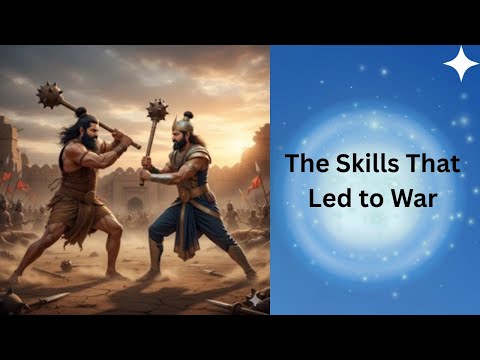
Let us explore a significant period in the great epic, the Mahabharata: the time when the Kaurava and Pandava princes received their martial training under the revered Guru Dronacharya. Understanding the distinct talents developed by these princes and the tensions that arose from them is essential to grasp the core of the Mahabharata's narrative.
Guru Dronacharya, an unparalleled master of warfare, imparted his extensive knowledge to all the royal heirs. Yet, due to individual aptitude and dedication, each prince cultivated unique skills, which played a crucial role in shaping their future roles and rivalries.
Developing Specialized Talents:
- Duryodhana and Bhima: Among Drona's students, Duryodhana and Bhima became exceptionally proficient in wielding the gada. Their immense physical strength and competitive spirits made them formidable in this form of combat. It is noteworthy that they had a constant 'enraged and competitive' nature towards each other, a clear indicator of the deep-seated rivalry that would later define their relationship.
- Ashwatthama: As Guru Drona's own son, Ashwatthama distinguished himself by mastering 'all secret knowledge and advanced arts' of warfare. This implies a profound understanding of intricate combat techniques and divine weaponry, a privilege afforded to him and developed through his intellectual prowess.
- Yudhishthira: Yudhishthira, the eldest of the Pandava princes, was recognized as an 'excellent in chariot warfare.' His knowledge in deploying and controlling the war chariots was a vital asset in ancient battle strategies.
- Nakula and Sahadeva: Valiant Warriors. The Pandava twins, Nakula and Sahadeva, are described in the Mahabharata as 'exceedingly mighty men,' indicating their general bravery and competence in martial arts.
Arjuna's Exceptional Prowess:
Despite the specialized skills of his cousins and brothers, Arjuna emerged as the preeminent warrior. His fame spread across the entire world. Arjuna's distinction stemmed from a unique combination of qualities: sharp 'intelligence, focused application, immense strength, and unwavering enthusiasm.' He achieved mastery 'in all weapons' and, most significantly, displayed unparalleled 'devotion to his guru.'
The sacred verses emphasize that even though all princes received similar training from Drona, Arjuna's superior 'skill and dexterity' made him exceptionally powerful. He was designated as an 'Atiratha' – a warrior capable of single-handedly engaging thousands of adversaries. This classification solidified his position as truly unique among all the princes.
The Inception of the Great Conflict:
This remarkable differentiation of skills, particularly Arjuna's undeniable superiority, was a significant catalyst for the ensuing conflict. The evil-minded Kauravas could not tolerate Bhima as well.
Driven by intense envy and a sense of injustice, the Kauravas could not accept the greater talents and growing fame of their Pandava cousins. This inability to acknowledge the prowess of Bhima and Arjuna transformed competitive spirit into a bitter and lasting resentment. It was this deep-seated animosity that fueled their treacherous plots, insults, and injustices, ultimately leading to the devastating Kurukshetra War, the central event of the Mahabharata.
Thus, Dronacharya's training period was not merely an education in warfare; it was a crucible where individual destinies were forged, and the crucial tensions that would define the epic's tragic course were profoundly established. The varying levels of skill and, more importantly, the disparate reactions to these skills among the royal cousins laid the groundwork for the enduring conflict.





English
Mahabharatam
Click on any topic to open
7
30
Astrology
Bhagavad Gita
Bhagavatam
Bharat Matha
Devi
Devi Mahatmyam
Ganapathy
Garuda Puranam
Glory of Venkatesha
Hanuman
Kathopanishad
Mahabharatam
Mantra Shastra
Mystique
Practical Wisdom
Purana Stories
Radhe Radhe
Ramayana
Rare Topics
Rigveda Explained
Rituals
Sages and Saints
Shiva
Spiritual books
Sri Suktam
Story of Sri Yantra
Temples
Vedas
Vishnu Sahasranama
Yoga Vasishta
26
17
10
0


