The Fatal Mistake Every Seeker Makes…

In the 18th sarga Mumukhu Vyavahara Prakarana of Yoga Vasishta, Vasishta established the sacred power of the drishtanta, the well-chosen example, explaining that in a world of illusion, only illustrations drawn from that very illusion can point beyond it. He has defended this method against the barbs of shallow logic, proving that direct experience is the final authority. In the 19th sarga, the great sage now reveals the path beyond the shadows of the mind, a path lit by the fire of Vichara.
श्रीवसिष्ठ उवाच ।
विशिष्टांशसमर्थत्वमुपमानेषु गृह्यते ।
को भेदः सर्वसादृश्ये तूपमानोपमेययोः ।। १
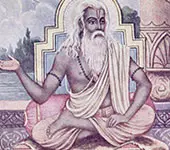
Vasistha now speaks.
An analogy, O Rama, is but a finger pointing to the moon.
It captures a single ray of shared light, not the entire sun.
It is a bridge of understanding, built on a sliver of similarity.
If the symbol and the signified were identical in every way...
Where then would be the distinction?
The teaching tool would itself become the Tattva, and the sacred journey would end before it had even begun.
दृष्टान्तबुद्धावेकात्मज्ञानशास्त्रार्थवेदनात् ।
महावाक्यार्थसंसिद्धा शान्तिनिर्वाणमुच्यते ।। २
The purpose of these examples is not for the mind’s clever games.
It is to awaken the Buddhi to the singular Reality of the Atman.
When the profound essence of the Shastras is felt in the heart…
When the living truth of the Mahavakya explodes within…
A great stillness descends, a peace that consumes all strife and sorrow.
This, O seeker of liberation, is the profound Shanti of Nirvana. This is the goal of all sacred words.
तस्माद्दृष्टान्तदार्ष्टान्तविकल्पोल्लसितैरलम् ।
यया कयाचिद्युक्त्या तु महावाक्यार्थमाश्रयेत् ।। ३
Therefore, cease this endless dance of analogies and their subjects.
Enough of the mind's glittering constructions and subtle distinctions.
This is no time for intellectual decoration.
By any means, through any skillful path that presents itself…
Take refuge in the one, unshakable meaning of the Mahavakya.
Let all roads, all words, all thoughts lead to that singular, silent summit of Truth.
शान्तिः श्रेयः परं विद्धि तत्प्राप्तौ यत्नवान्भव ।
भोक्तव्यमोदनं प्राप्तं किं तत्सिद्धौ विकल्पितैः ।। ४
Know this with every fibre of your being: Supreme Peace is the ultimate good.
It is the final and only true goal. Strive for its attainment!
When a bowl of nourishing rice is placed before a starving man…
Does he debate the method of its cooking or the species of its grain?
He simply eats and is satisfied.
So too, attain the Shanti that nourishes the soul. Do not merely analyze its properties.
अकारणैः कारणिभिर्बोधार्थमुपमीयते ।
उपमानैस्तूपमेयैः सदृशैरेकदेशतः ।। ५
For the sake of awakening, the Guru draws comparisons.
Sometimes from the causeless Brahman to the caused world.
Sometimes from worldly effects back to the uncaused Source.
These sacred analogies serve their purpose because they share a partial quality.
They are bridges, not destinations. They are rafts, not the other shore.
Use them with gratitude to cross the river of ignorance, then leave them behind.
स्थातव्यं नेह भोगेषु विवेकरहितात्मना ।
उपलोदरसंजातपरिपीनान्धभेकवत् ।। ६
Do not linger here in the swamp of sensory pleasures, O Rama!
To live without Viveka, the sword of sacred discrimination, is to be a soul asleep.
It is to be like a blind frog, born and trapped within a hollow stone.
It grows fat and content in its dark, narrow, and damp prison.
It knows nothing of the vast sky, the shining sun, or the endless ocean of Chaitanya.
Break the stone of ignorance!
दृष्टान्तैर्यत्नमाश्रित्य जेतव्यं परमे पदम् ।
विचारणवता भाव्यं शान्तिशास्त्रार्थशालिना ।। ७
With the help of these guiding examples, exert your divine will!
Conquer that supreme state, the ultimate abode of timeless peace.
One must become a being of profound Vichara, of relentless self-inquiry.
You must be adorned with the tranquil wisdom drawn from the heart of the Shastras.
This is the sacred armor of the spiritual warrior on the battlefield of the mind.
Wear it and be victorious.
शास्त्रोपदेशसौजन्यप्रज्ञातज्ज्ञसमागमैः ।
अन्तरान्तरसंपन्नधर्मार्थोपार्जनक्रियः ।। ८
Through the gentle grace, the anugraha, of scriptural teachings…
Through the inner light of one's own awakened Prajna, or insight…
And through sacred communion with the knowers of that Tattva…
One continuously refines the inner practice of knowing.
True Dharma and Artha are not earned in the world outside.
They are harvested within the soul as virtues of peace and understanding.
तावद्विचारयेत्प्राज्ञो यावद्विश्रान्तिमात्मनि ।
संप्रयात्यपुनर्नाशां शान्तिं तुर्यपदाभिधाम् ।। ९
Let the wise one continue this sacred inquiry, this Vichara.
Persist with the tenacity of a river flowing to the sea.
Continue until the final resting place, the Vishranti, is found in the Atman.
Attain that indestructible peace from which there is no return to sorrow.
That imperishable Shanti is known as the Turiya state, the fourth dimension of Being.
It is the sleepless sleep, the wakeful dream, the Self beyond all conditions.
तुर्यविश्रान्तियुक्तस्य प्रतीपस्य भवार्णवात् ।
जीवतोऽजीवतश्चैव गृहस्थस्य तथा यतेः ।। १०
For one who has found this profound rest in the Turiya state…
Who has turned his back completely on the turbulent ocean of Samsara…
Whether he appears to be living or has shed the mortal coil…
Whether he is a householder fulfilling worldly duties or a renunciate in the forest…
His state remains eternally unchanged, untouched, and unblemished.
He is freedom itself, clothed in a form or freed from it.
न कृतेनाकृतेनार्थो न श्रुतिस्मृतिविभ्रमैः ।
निर्मन्दर इवाम्भोधिः स तिष्ठति यथास्थितम् ।। ११
For such a liberated being, there is no gain from actions done.
There is no loss from actions left undone.
He is no longer bewildered by the conflicting interpretations of Shruti and Smriti.
He stands as the great ocean after the cosmic churning, when the mountain Mandara is withdrawn.
He is calm, profound, vast, and established in his own essential nature.
He simply IS, in serene and silent mahima.
एकांशेनोपमानानामुपमेयसधर्मता ।
बोद्धव्यं बोध्यबोधाय न स्थेयं बोधचञ्चुना ।। १२
Remember this always: the similarity between an analogy and its object is but partial.
The purpose is solely to awaken understanding of the Truth that is to be known.
Do not become a 'Bodha-chanchu' — one who merely pecks at knowledge with his beak.
Do not be the bird who collects shiny pebbles of concepts and scriptural quotes…
But never unfolds its wings to fly into the vast sky of direct experience.
यया कयाचिद्युक्त्या तु बोद्धव्यं बोध्यमेव ते ।
युक्तायुक्तं न पश्यन्ति व्याकुला बोधचञ्चवः ।। १३
By whatever skillful means, your singular purpose is to know what is to be known.
The 'Bodha-chanchavah', those who merely peck at words, are ever agitated.
They endlessly debate what is proper and what is improper logic.
Lost in the grammar of the path, they never take the first step upon it.
They are like scholars of a royal menu, who argue about the recipes while dying of spiritual starvation.
हृदये संविदाकाशे विश्रान्तेऽनुभवात्मनि ।
वस्तुन्यनर्थं यः प्राह बोधचञ्चुः स उच्यते ।। १४
When the heart finally rests in the infinite space of pure consciousness, the Samvid-akasha…
When the Atman is known directly through Anubhava, self-validating experience…
To then speak of this supreme Reality as being meaningless or flawed…
This is the unmistakable mark of the Bodha-chanchu, the intellectual pretender.
He who has never tasted the divine honey of Satya dares to argue about its sweetness.
अभिमानविकल्पांशैरज्ञो ज्ञप्तिं विकल्पयेत् ।
बोधं मलिनयत्यन्तः स्वं खमब्द इवामलम् ।। १५
The ignorant one, driven by the sharp winds of Abhimana, the ego…
And the endless chatter of Vikalpa, mental division…
Imposes his own constructs upon pure, unblemished consciousness.
He pollutes the sacred inner space of his own awareness.
He does this just as a passing cloud momentarily stains the purity of the infinite, untainted sky.
The sky remains ever pure; it is only the perception that is tragically obscured.
सर्वप्रमाणसत्तानां पदमब्धिरपामिव ।
प्रमाणमेकमेवेह प्रत्यक्षं तदतः शृणु ।। १६
All other means of knowing — inference, testimony, logic itself…
Find their source and their final end in one mighty, singular ocean.
That ocean is Pratyaksha: direct, immediate, self-validating perception.
It is the one, the ultimate, the undeniable Pramana, the root of all proof.
Listen now, for I speak of this supreme witness of Reality, which is your very own Self.
सर्वाक्षसारमध्यक्षं वेदनं विदुरुत्तमाः ।
नूनं तत्प्रतिपत्सिद्धं तत्प्रत्यक्षमुदाहृतम् ।। १७
The wise declare that this direct seeing, this Vedanam, is the very essence of all senses.
It is the knowing that precedes the organs of knowing.
It is established by its own self-luminous awareness, its svayam-prakasha.
This immediate, unmediated knowing is what is truly meant by 'Pratyaksha'.
It is not the act of sight, but the eternal light of Seeing itself.
It is the consciousness in which all perception occurs.
अनुभूतेर्वेदनस्य प्रतिपत्तेर्यथाभिधम् ।
प्रत्यक्षमिति नामेह कृतं जीवः स एव नः ।। १८
This direct experience, this knowing, this immediate apprehension of being…
Is given the name 'Pratyaksha' in this world of words.
And what is this knowing principle? It is nothing other than the Jiva.
The 'I' that knows, is the knowing itself.
You are not a limited knower of experience; you are the boundless field of Experience itself.
The seer and the seeing are one and the same power of Chaitanya.
स एव संवित्स पुमानहंताप्रत्ययात्मकः ।
स ययोदेति संवित्त्या सा पदार्थ इति स्मृता ।। १९
This very Jiva is pure consciousness, Samvit. It is the indwelling Purusha.
It is the very heart of the 'I'-feeling, the sense of selfhood, the Aham-pratyaya.
The specific mode of consciousness through which it appears to arise…
That very vibration of knowing, that specific thought-form that it takes…
Is what becomes known to itself as a 'padartha', an object in its world.
The Self creates the object by the way it looks.
ससंकल्पविकल्पाद्यैः कृतनानाक्रमभ्रमैः ।
जगत्तया स्फुरत्यम्बु तरङ्गादितया यथा ।। २०
This same, singular consciousness, through its own divine Shakti…
Stirs with Sankalpa and Vikalpa, intention and differentiation.
This creative stirring generates the illusion of sequence, space, and multiplicity.
The one Reality flashes forth as the manifold world, the Jagat.
This happens just as the one, formless ocean appears as countless waves, ripples, foam, and spray.
All are nothing but water in motion. All is nothing but Brahman in play.
प्रागकारणमेवाशु सर्गादौ सर्गलीलया ।
स्फुरित्वा कारणं भूतं प्रत्यक्षं स्वयमात्मनि ।। २१
Before the dawn of creation, this Reality was utterly causeless, pure Being alone.
Then, at the start of a cosmic cycle, as a divine Leela, a spontaneous sport…
It flashed forth as the first stir of perception within its own boundless Self.
This primary, self-aware perception became the root cause of all that followed.
The Knower Itself, by knowing, became the first object to be known.
The one light split itself into seer and seen.
कारणं त्वविचारोत्थजीवस्यासदपि स्थितम् ।
सदिवास्यां जगद्रूपं प्रकृतौ व्यक्तिमागतम् ।। २२
For the Jiva born of Avichara, of non-inquiry, of primal ignorance…
This chain of cause and effect, though ultimately unreal, appears absolutely solid.
The world-form, though a mere appearance on the screen of consciousness…
Manifests itself as if it were an independent and substantial reality.
The dream feels entirely real to the dreamer who is lost within it.
Only the light of Vichara can break this powerful spell.
स्वयमेव विचारस्तु स्वत उत्थं स्वकं वपुः ।
नाशयित्वा करोत्याशु प्रत्यक्षं परमं महत् ।। २३
But then arises Vichara, the sacred fire of self-inquiry, from within.
It turns its piercing gaze upon its own source, this perceived, limited self.
With the power of Satya, it swiftly dissolves this self-created form, this mistaken identity.
And in its place, it reveals the supreme and vast Pratyaksha.
It reveals the direct, unmediated, and glorious perception of the Absolute.
The false 'I' is consumed, and the true 'I' is revealed.
विचारवान्विचारोऽपि आत्मानमवगच्छति ।
यदा तदा निरुल्लेखं परमेवावशिष्यते ।। २४
When this sacred inquiry, and the one who so diligently inquires…
Both come to realize their true, shared nature as the one Atman…
When the seeker discovers with a shock of joy that he is the sought…
Then all distinctions cease. All labels and concepts fall away into silence.
Only the Supreme, the Nirullekham, the indescribable Parabrahman, remains.
The path, the traveler, and the destination merge into one stateless state.
मनस्यनीहिते शानते स्वबुद्धीन्द्रियकर्मभिः ।
नहि कश्चित्कृतैरर्थो नाकृतैरप्यभावनात् ।। २५
When the mind becomes utterly still, free from all striving and desire…
When it is submerged in the profound ocean of Shanti…
The actions performed by the intellect and the senses hold no meaning for it.
There is no purpose found in what is done, nor in what is left undone.
For the very root of action — the feeling of being a separate 'doer' — has been consumed.
The fire of Jnana has burnt the seeds of Karma.
मनस्यनीहिते शान्ते न प्रवर्तन्त एव ते ।
कर्मेन्द्रियाणि कर्मादावसंचारितयन्त्रवत् ।। २६
Indeed, when the mind is quiescent and free of all will…
The organs of action simply do not engage in their usual functions.
The hands, the feet, and the tongue become profoundly still.
They are like the intricate parts of a machine whose operator has walked away.
Without the animating impulse of Mana-shakti, the divine energy of mind…
The body remains a silent and peaceful instrument, at rest in the Self.
मनोयन्त्रस्य चलने कारणं वेदनं विदुः ।
प्रणालीदारुमेषस्य रज्जुरन्तर्गता यथा ।। २७
And what is the mysterious cause that moves this subtle machine of the mind?
The wise say it is Vedanam, the subtle impulse of consciousness, of knowing.
It is the unseen force that animates the entire mechanism of thought and action.
It is just like a hidden rope, pulled from within by an unseen hand…
That makes a wooden puppet dance and appear to have a life of its own.
This subtle knowing is the string-puller of the entire psycho-physical drama.
रूपालोकमनस्कारपदार्थव्याकुलं जगत् ।
विद्यते वेदनस्यान्तर्वातान्तः स्पन्दनं यथा ।। २८
This entire agitated world of forms, light, thoughts, and objects…
All this cosmic commotion and endless activity…
Exists only within this vast field of Vedanam, this one consciousness.
It is like the restless movement of the wind, which has no existence apart from still space.
The entire universe, with all its galaxies and sorrows, is but a vibration…
A subtle Spandana in the silent, unshakable heart of pure Chaitanya.
सर्वात्मवेदनं शुद्धं यथोदेति तदात्मकम् ।
भाति प्रसृतदिक्कालबाह्यान्तारूपदेहकम् ।। २९
As this pure, all-encompassing consciousness arises from within itself…
It assumes the very nature of that which it perceives.
It shines forth as the vast and seamless expanse of space and time.
It becomes the without and the within, the subtle form and the gross body.
The Knower, the act of Knowing, and the object Known…
Are revealed to be one single, seamless, and self-luminous effulgence.
दृष्ट्वैव दृश्यताभासं स्वरूपं धारयन्स्थितः ।
स्वं यथा यत्र यद्रूपं प्रतिभाति तथैव तत् ।। ३०
Merely by seeing the appearance of a 'seen' object…
The one Consciousness takes on that very form and stands as such.
Wherever, whenever, and in whatever form the Self appears to Itself…
It becomes precisely that, in that very moment, without any separation.
The entire cosmos is nothing but the supreme Self…
Beholding the infinite reflections of Itself in the mirror of its own consciousness.
स सर्वात्मा यथा यत्र समुल्लासमुपागतः ।
तिष्ठत्याशु तथा तत्र तद्रूप इव राजते ।। ३१
That Atman, which is the innermost Self of all beings and all things…
Wherever and however it chooses to joyfully express and manifest itself…
It instantly appears in that place and shines forth as that very form.
The unmoving mountain is Brahman exulting in profound stillness.
The flowing river is Brahman delighting in eternal movement.
Every form is a mask of the Formless, a costume worn in a divine play.
सर्वात्मकतया द्रष्टुर्दृश्यत्वमिव युज्यते ।
दृश्यत्वं द्रष्टृसद्भावे दृश्यतापि न वास्तवी ।। ३२
Because the Seer is the Self of all, it appears to take on the quality of being 'seen'.
But this quality of 'seen-ness' depends entirely upon the existence of a 'seer'.
Therefore, this objective reality, this perceived world, is not ultimately real in itself.
It is a relationship within consciousness, not an independent substance.
The act of seeing creates the object that is seen.
Without the seer, the panorama of the world vanishes.
अकारणकमेवातो ब्रह्म सिद्धमिदं स्थितम् ।
प्रत्यक्षमेव निर्मातृ तस्यांशास्त्वनुमादयः ।। ३३
Thus it is established beyond all doubt that this Brahman is eternally causeless.
It is self-existent, the uncreated ground of all creation.
This Pratyaksha, this direct immediate awareness, is the sole creator, the Nirmatru.
All other modes of knowledge, like inference, logic, and testimony…
Are but fragments and feeble reflections of this one primary and foundational light.
They are but servants to the one king: your own direct, luminous experience.
स्वयत्नमात्रे यदुपासको य-
स्तद्दैवशब्दार्थमपास्य दूरे ।
शूरेण साधो पदमुत्तमं तत्
स्वपौरुषेणैव हि लभ्यतेऽन्तः ।। ३४
O noble warrior on this inner battlefield of Dharma!
The true devotee worships at the sacred altar of Svayatna — one's own heroic effort.
He casts far away the hollow word 'daiva', the impotent whisper of fate or destiny.
This supreme state, this ultimate victory of the spirit…
Is seized only by the brave, the spiritual hero, the Shura.
It is won through the sheer, unyielding force of one's own Paurusha, one's spiritual virility.
विचारयाचार्यपरम्पराणां
मतेन सत्येन सितेन तावत् ।
यावद्विशुद्धं स्वयमेव बुद्ध्या
ह्यनन्तरूपं परमभ्युपैषि ।। ३५
Therefore, continue this sacred Vichara, this profound inquiry.
Follow the pure, true, and luminous path shown by the lineage of great Acharyas.
Walk in the footsteps of the masters, but do not stop there.
Persist until, with your own Buddhi, washed pure and sharp as a diamond…
You directly and immediately realize for yourself that supreme, infinite Reality.
Tradition provides the lamp, but you must open your own eyes to see the light.
- Analogies and examples are indispensable tools for pointing toward a reality that lies beyond words, but they must not be mistaken for the reality itself.
- The singular goal of all spiritual teaching is the attainment of supreme peace, or Nirvana—a state of profound inner stillness that ends all suffering.
- This ultimate state is reached not through intellectual debate but through relentless self-inquiry, known as Vichara.
- One must avoid becoming a mere "knowledge-pecker," an intellectual who collects concepts but never achieves direct, heartfelt experience of the truth.
- The final and only undeniable authority in the quest for truth is Pratyaksha: direct, immediate, self-validating experience, which is the very nature of consciousness itself.
- Consciousness is the sole, ultimate reality; it projects the entire universe of time, space, and objects through its own power of thought and perception, just as a single ocean manifests as countless waves.
- The distinction between the seer and the seen is an illusion within consciousness; the act of perception creates the object being perceived.
- A liberated being is one who rests in this understanding, remaining internally unmoved by actions done or undone, like a vast ocean that is calm after its churning.
- Ultimate freedom is not a matter of fate or destiny but is won through heroic self-effort and spiritual virility, using scriptural wisdom as a guide to one's own direct realization.
- What is the proper use of spiritual analogies and examples?
- Spiritual analogies are to be used as directional pointers, not as perfect representations of the truth. They build a conceptual bridge from the familiar world of illusion to the unfamiliar reality of the Self by highlighting a single, shared quality. The purpose is to guide the intellect toward a specific insight. Once that insight dawns, the analogy, like a raft used to cross a river, should be left behind.
- If they are just pointers, why are they so essential in spiritual texts?
- The ultimate reality is beyond the grasp of the mind and senses, making it impossible to describe directly. Analogies are a skillful means to communicate an echo of that reality using the very elements of the illusory world the mind understands. They provide a foothold for the intellect, allowing it to take the first step toward comprehending a truth that it cannot initially perceive. Without them, the journey from concept to experience would be almost impossible to begin.
- Isn't relying on analogies a form of imprecise, unscientific thinking that can lead to misinterpretation?
- This view mistakes the tool for the objective. The purpose is not to create a scientifically precise model but to trigger an intuitive awakening. Even in science, models and analogies are used to explain complex phenomena, with the understanding that they are not the phenomena themselves. The final proof in this path is not the logic of the analogy but the direct, repeatable experience it leads to, which is the most fundamental form of evidence there is.
- What defines a "knowledge-pecker" and why is it a spiritual dead end?
- A "knowledge-pecker" is an intellectual who accumulates spiritual concepts, scriptural quotes, and logical arguments without ever having a direct, transformative experience of the truth. They use knowledge to decorate their ego, engaging in endless debates about the proper methods and interpretations. This is a dead end because the goal is not to win an argument or build a flawless conceptual system, but to dissolve the ego in the peace of direct realization.
- How can I know if my studies are turning me into a knowledge-pecker instead of a genuine seeker?
- The primary indicator is the internal result of your learning. If your study and inquiry lead to greater inner peace, humility, and stillness, you are on the right path. If they lead to increased agitation, intellectual pride, a desire to debate and correct others, and a focus on subtle distinctions, you are merely pecking at words. The fruit of true knowledge is Shanti (peace), not intellectual restlessness.
- But isn't rigorous analysis essential to avoid falling for superstition and false teachings?
- Absolutely. Rigorous intellectual analysis, or Vichara, is the sword that cuts through superstition and clarifies the path. However, its purpose is to clear away ignorance, not to build a new prison of concepts. The knowledge-pecker stops at the analysis, becoming obsessed with the tool itself. The true seeker uses analysis to dismantle false ideas and then lets go of the analysis itself to experience the silent truth that is revealed.
- What does Vasistha mean when he says "direct perception" is the ultimate proof?
- He is referring to the immediate, self-aware knowing that is consciousness itself, which is prior to and the source of all other forms of knowledge. Before you can see, hear, or even think, you must first be conscious. This fundamental awareness is the ultimate, undeniable evidence of reality, an ocean in which all other proofs—like logic, inference, and sensory data—appear as mere waves.
- So, is this "direct perception" different from what I see with my eyes?
- Yes, it is profoundly different. Seeing with your eyes is a sensory event that occurs within consciousness. The "direct perception" spoken of here is the consciousness itself—the silent, ever-present light of awareness that makes sight, sound, and thought possible. It is the unshakeable inner knowing of your own existence, the "I Am" that precedes "I am seeing" or "I am thinking."
- If personal experience is the final authority, doesn't that lead to pure subjectivism where anyone can claim anything is true?
- This teaching distinguishes between subjective personal experiences (like emotions or opinions) and the universal, objective Experience of pure consciousness. The former varies from person to person, but the latter is the singular, unchanging screen on which all personal experiences appear. The goal is to realize this universal ground of awareness, which is the one objective truth that validates all other relative truths. It is not about validating personal delusions, but about discovering the one reality that is true for all.
- How can the entire complex world arise from a single, formless consciousness?
- Consciousness, through its own innate and mysterious power, stirs with intention (Sankalpa) and differentiation (Vikalpa). This subtle vibration within the one reality projects the appearance of a manifold universe with space, time, and objects. It is exactly like a single, formless ocean manifesting as countless distinct waves, ripples, and foam—all are nothing but water, appearing temporarily as different forms due to motion.
- Does this mean the world I see is just an illusion and has no value?
- The world is not non-existent, but its reality is dependent, not absolute. It is a real appearance, like a reflection in a mirror is a real reflection, but it has no substance apart from the mirror itself. The goal is not to devalue or reject the world, but to understand its true nature as a manifestation of consciousness. This understanding allows one to engage with the world fully, without being bound by it.
- This sounds like solipsism. How can you prove the world isn't an independent, material reality that my mind merely perceives?
- Every piece of evidence you have for an independent material world—scientific instruments, sensory data, the testimony of others—is ultimately delivered to and interpreted by your consciousness. You have never, and can never, experience anything outside of awareness. Therefore, the claim of a mind-independent reality is an unprovable inference. The only undeniable, direct fact of your existence is consciousness itself; everything else is a concept appearing within it.
- Why is heroic self-effort emphasized over trusting in fate or destiny?
- Liberation is the realization of your true nature, which is already present but obscured by ignorance. This ignorance is an active, deeply ingrained habit of the mind that will not vanish on its own. Relying on "fate" is a form of passivity that allows this habit to persist. Heroic self-effort (Paurusha) is the active, determined application of inquiry (Vichara) needed to dismantle this conditioning and claim the freedom that is your birthright.
- If the ultimate state is one of stillness and effortlessness, why does the path require so much effort?
- The effort is not to create peace, but to remove the obstacles of the agitated mind that conceal the peace which is already your fundamental nature. It is like the strenuous effort of digging to unblock a natural spring. The digging is hard work, but its purpose is only to remove the dirt and rocks. Once they are cleared, the water of peace flows effortlessly on its own accord.
- But if the Self is already free and perfect, isn't the very act of striving a contradiction?
- The striving belongs to the ego, the mistaken identity that believes itself to be bound and imperfect. The practice of self-inquiry is a unique kind of effort where the ego uses its own power to investigate its own source. This investigation ultimately reveals the ego's non-existence, at which point all effort ceases. It is the final, heroic act of the illusory self to bring about its own dissolution into the reality of the true Self.





English
Yoga Vasishta
Click on any topic to open
7
30
Astrology
Bhagavad Gita
Bhagavatam
Bharat Matha
Devi
Devi Mahatmyam
Ganapathy
Garuda Puranam
Glory of Venkatesha
Hanuman
Kathopanishad
Mahabharatam
Mantra Shastra
Mystique
Practical Wisdom
Purana Stories
Radhe Radhe
Ramayana
Rare Topics
Rigveda Explained
Rituals
Sages and Saints
Shiva
Spiritual books
Sri Suktam
Story of Sri Yantra
Temples
Vedas
Vishnu Sahasranama
Yoga Vasishta
26
17
10
0


