The Day the Flag Would Not Fall — The Story of Matangini Hazra
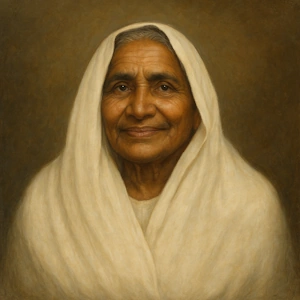
It was September 1942. Bengal’s skies hung heavy with monsoon clouds, but something far more powerful was building in the hearts of its people — rebellion. The British flag still fluttered over government offices, and the people of Tamluk, a small coastal town, had had enough. They planned to march to the administrative building, seize it, and declare it theirs.
Among them was a frail old woman in a plain white sari. Her hair was silver, her eyes sunken, but there was a strange, steady fire in them. Her name was Matangini Hazra.
She had no weapons, no protection — only the tricolour flag clutched close to her chest. People called her Gandhi buri — “the old lady Gandhi” — because she lived by non-violence but carried courage like a sword.
When the march began, chants of ‘Quit India!’ and ‘Vande Mataram!’ filled the air. The British police lined the road, rifles ready. Matangini walked in front, leading hundreds of men and women, her bare feet sinking into the wet mud.
At the barricade, the officer shouted, ‘Stop! Go back!’
The crowd hesitated. But Matangini kept walking, the flag held high.
A shot cracked through the air. The bullet struck her arm, but she didn’t stop. She shifted the flag to her other hand and took another step. Another bullet tore through her shoulder. She swayed but kept walking.
Then the third shot — straight through her forehead.
She fell. But here’s the thing — she fell facing forward. Even in that final moment, her fingers gripped the flagpole so tight that the flag never touched the ground.
Witnesses say her lips were still moving when she hit the earth — whispering the words ‘Vande Mataram.’
The crowd, stunned for a moment, erupted. People surged forward. The police line broke. The building was taken over, and for the first time, the tricolour flew over Tamluk.
That day, a seventy-three-year-old woman’s blood watered the soil of Bengal — and in that soil, a seed of freedom took root.
Years later, when independence finally came, the people built her statue in front of the West Bengal Legislative Assembly — not as a token of pity, but as a reminder.
Because in the story of India’s freedom, not every hero carried a sword.
Some carried a flag — and refused to let it fall.





English
Bharat Matha
Click on any topic to open
7
30
Astrology
Bhagavad Gita
Bhagavatam
Bharat Matha
Devi
Devi Mahatmyam
Ganapathy
Garuda Puranam
Glory of Venkatesha
Hanuman
Kathopanishad
Mahabharatam
Mantra Shastra
Mystique
Practical Wisdom
Purana Stories
Radhe Radhe
Ramayana
Rare Topics
Rigveda Explained
Rituals
Sages and Saints
Shiva
Spiritual books
Sri Suktam
Story of Sri Yantra
Temples
Vedas
Vishnu Sahasranama
Yoga Vasishta
26
17
10
0


