India’s Five Sacred Brahmin Lineages
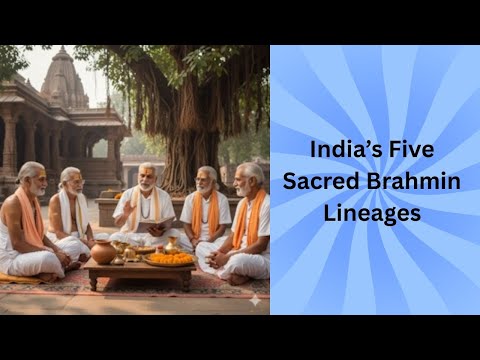
When we speak of India’s sacred traditions, we often imagine sages walking along quiet riverbanks, chanting timeless mantras carried by the wind. The story of the Pancha Gauda Brahmins is woven into this very landscape. These are the northern Brahmin lineages — five ancient streams of knowledge that rose from different regions of Bharat, yet flowed from the same Vedic source. Their journey is not just a matter of geography; it is a tale of devotion, scholarship, ritual power, and the way dharma shaped entire regions.
Where It All Begins: The Northern Lineages
Legend paints a vivid picture of sages settling across the great plains of North India. As the Vindhyas stood like a silent boundary between north and south, Brahmin communities on either side developed their own flavors of tradition while staying rooted in the Vedic fire.
The Pancha Gauda Brahmins — the Sarasvata, Kanyakubja, Gauda, Maithila, and Utkala — became the torchbearers of Vedic wisdom across the north. Each group grew around a sacred landscape, forming a bridge between spiritual learning and local culture.
Sarasvata: Children of the Vanished River
The Sarasvat Brahmins trace their memory to the mythical Sarasvati river. They are the keepers of an ancient past — the river that once nourished Vedic civilization. Even after the river disappeared from the earth, its people carried the spirit of Sarasvati in their scholarship. Whether in Kashmir’s cool valleys or Punjab’s hardy plains, their devotion to learning remained unbroken.
Kanyakubja: The Scholars of Kannauj
Kannauj was once the beating heart of North Indian learning. Kanyakubja Brahmins became renowned as priests, teachers, and advisors to kings. When kingdoms in the east sought to strengthen their learning, they called upon these scholars — a gesture that shows their spiritual stature even beyond their homeland.
Gauda: The Brahmins of Bengal and Bihar
From the fertile lands of ancient Gauda desha came the Gaur Brahmins. They nurtured the intellectual soul of Bengal and Bihar. Their traditions blended the solemnity of Vedic rituals with the rich cultural life of eastern India. Some embraced Shakta traditions, some maintained strict Vedic orthodoxy — but all carried an unmistakable sense of heritage.
Maithila: The Keepers of Dharma in Mithila
In the land where Sita Devi was born, the Maithila Brahmins built a legacy of law, logic, and scriptural clarity. They advised kings, guided families, and preserved age-old customs that survive even today. Their ritual discipline is famous; their lineages trace back to great jurists and philosophers.
Utkala: The Priests of Odisha’s Sacred Soil
Odisha’s temple culture has always been distinctive, and at its heart stand the Utkala Brahmins. Deeply connected to the worship of Lord Jagannath, they carry ritual roles that span centuries. Their customs reflect the blend of Vedic purity and regional devotion that defines Odisha’s spiritual landscape.
Their Role in Shaping Northern India
Wherever the Pancha Gauda Brahmins lived, they became the spiritual backbone of society. Villages looked to them for rituals, kings depended on them for counsel, and temples relied on them for sacred rites. Their responsibilities ranged from daily agnihotra to complex royal ceremonies.
But their influence extended beyond rituals. They were:
• teachers who preserved Sanskrit
• philosophers who wrote commentaries
• administrators who managed temple and court affairs
• cultural guides shaping festivals, customs, and community ethics
In many regions, they became the bridge between the sacred and the practical — guardians of the scriptures and advisers for worldly duties.
Gauda and Dravida: Two Petals of the Same Lotus
The division between Pancha Gauda (north) and Pancha Dravida (south) is not a matter of superiority. It is more like two petals of the same lotus — each with its own colour, fragrance, and history, but nourished by the same root.
The north developed its Vedic accents, ritual styles, and food habits. The south cultivated its own recitation tones, recensions of the Vedas, and strict dietary rules. Yet both walked the same path of dharma.
Everywhere in India, the Brahmin identity was tied not to power but to responsibility — the sacred duty of upholding the Vedas.
A Living Tradition in the Modern World
Even today, these ancient lineages influence how Brahmin communities see themselves. A Maithil in Bihar, a Gaur in Rajasthan, a Saraswat in Punjab — all recognize the shared northern heritage, while also cherishing their unique customs.
Urban life may blur boundaries, but rituals, festivals, marriage traditions, and recitation styles still carry the fragrance of the old classification. Cultural associations continue to preserve local memories and connect modern life with ancestral wisdom.
Why This Journey Matters
Pancha Gauda is not just a label from history. It is a reminder of how dharma adapts to different soils without losing its essence. When we listen to a Maithil priest chanting, or watch an Utkala Brahmin at the Jagannath temple, or hear stories of Kashmiri Pandits preserving learning against all odds — we are witnessing the living legacy of these five ancient lineages.
They show us that Bharat’s cultural strength comes from unity in diversity — one Veda, many traditions; one spiritual fire, many flames.





English
Bharat Matha
Click on any topic to open
7
30
Astrology
Bhagavad Gita
Bhagavatam
Bharat Matha
Devi
Devi Mahatmyam
Ganapathy
Garuda Puranam
Glory of Venkatesha
Hanuman
Kathopanishad
Mahabharatam
Mantra Shastra
Mystique
Practical Wisdom
Purana Stories
Radhe Radhe
Ramayana
Rare Topics
Rigveda Explained
Rituals
Sages and Saints
Shiva
Spiritual books
Sri Suktam
Story of Sri Yantra
Temples
Vedas
Vishnu Sahasranama
Yoga Vasishta
26
17
10
0


