The Cosmic Verdict Against Daksha’s Yajna
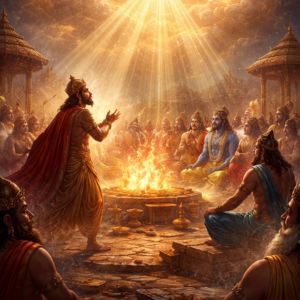
Daksha’s great yajna was meant to be a landmark event. The gods, rishis, and celestial beings had gathered in full strength. The sacrificial fires blazed, mantras resounded, and the atmosphere looked visibly divine. But beneath all of this splendor sat a rotting core — pride.
Daksha had invited every major deity except Shiva, his own son-in-law, whom he despised. When Sati arrived uninvited, expecting at least a father’s affection, Daksha humiliated her by refusing even basic acknowledgment. Dadhichi, unable to tolerate the adharmic behavior, condemned Daksha and left the sacrifice after cursing him. Yet Daksha continued as if nothing had happened — convinced that his social authority could override cosmic principles.
It was at that exact moment, when arrogance had reached its peak and righteousness had been silenced, that the heavens intervened. A celestial voice echoed through the yajna hall. None could see the speaker; everyone heard the words. What followed was not just a rebuke — it was a cosmic verdict.
Shloka:
ब्रह्मोवाच ।।
एतस्मिन्नन्तरे तत्र नभोवाणी मुनीश्वर ।।
अवोचच्छृण्वतां दक्षसुरादीनां यथार्थतः ।। १ ।।
Explanation:
Brahma narrates: At that moment, a celestial voice (sky-voice) was heard. This voice was heard clearly by Daksha, the gods, and all present, and it spoke the truth directly.
Shloka:
व्योमवाण्युवाच ।।
रे रे दक्ष दुराचार दंभाचारपरायण ।।
किं कृतं ते महामूढ कर्म चानर्थकारकम् ।।२।।
Explanation:
The sky-voice said: 'Daksha! You wicked and arrogant man! You are full of hypocrisy. What have you done, you fool? Your action is disastrous and harmful.'
Shloka:
न कृतं शैवराजस्य दधीचेर्वचनस्य हि ।।
प्रमाणं तत्कृते मूढ सर्वानन्दकरं शुभम् ।। ३ ।।
Explanation:
The voice says: You did not accept the advice of Dadhichi regarding Shiva. His advice was valid, beneficial, and would have brought auspiciousness and happiness. But you ignored it like an idiot.
Shloka:
निर्गतस्ते मखाद्विप्रः शापं दत्त्वा सुदुस्सहम् ।।
ततोपि बुद्धं किञ्चिन्नो त्वया मूढेन चेतसि ।।४।।
Explanation:
Dadhichi left the yajna after giving you a harsh curse. Even after that, no sense entered your mind. You remained ignorant and stubborn.
Shloka:
ततः कृतः कथं नो वै स्वपुत्र्यास्त्वादरः परः ।।
समागतायास्सत्याश्च मङ्गलाया गृहं स्वतः ।।५।।
Explanation:
How could you not honor your own daughter, Sati, when she came to your home? Basic respect and affection were expected, yet you denied her both.
Shloka:
सतीभवौ नार्चितौ हि किमिदं ज्ञानदुर्बल ।।
ब्रह्मपुत्र इति वृथा गर्वितोसि विमोहितः।। ।। ६ ।।
Explanation:
You did not honor Sati and her husband Shiva. Why? Because your judgement is weak. You are deluded by your pride of being a 'Prajapati' (son of Brahma) and have become arrogant without reason.
Shloka:
सा सत्येव सदाराध्या सर्वा पापफलप्रदा ।।
त्रिलोकमाता कल्याणी शंकरार्द्धांगभागिनी ।। ७ ।।
Explanation:
Sati must always be worshiped. She gives the fruits of all actions, removes sins, is the mother of the three worlds, auspicious, and the half-body of Shiva.
Shloka:
सा सत्येवार्चिता नित्यं सर्वसौभाग्यदायिनी ।।
माहेश्वरी स्वभक्तानां सर्वमङ्गलदायिनी ।।८।।
Explanation:
When worshipped, Sati grants prosperity, good fortune, and all auspicious things to her devotees. She is Maheshvari, beloved of Shiva.
Shloka:
सा सत्येवार्चिता नित्यं संसारभयनाशिनी।।
मनोभीष्टप्रदा दैवी सर्वोपद्रवहारिणी ।। ९ ।।
Explanation:
She destroys the fear of worldly existence, fulfills desires of the heart, and removes all troubles. This is the greatness of Sati.
Shloka:
सा सत्येवार्चिता नित्यं कीर्तिसंपत्प्रदायिनी ।।
परमा परमेशानी भुक्तिमुक्तिप्रदायिनी ।। १० ।।
Explanation:
Worship of Sati grants fame, wealth, enjoyment, and liberation. She is supreme among goddesses and the consort of the Supreme Lord.
Shloka:
सा सत्येव जगद्धात्री जगद्रक्षणकारिणी ।।
अनादिशक्तिः कल्पान्ते जगत्संहारकारिणी ।। ११ ।।
Explanation:
Sati is the sustainer of the universe, its protector, and at the end of creation she becomes the destroyer. She is eternal and beginningless power.
Shloka:
सा सत्येव जगन्माता विष्णु माताविलासिनी ।।
ब्रह्मेन्द्रचन्द्रवह्न्यर्कदेवादिजननी स्मृता ।।१२।।
Explanation:
Sati is the mother of the universe, and even Vishnu plays as her child. She is said to be the mother of Brahma, Indra, Chandra, Agni, Surya, and other gods.
Shloka:
सा सत्येव तपोधर्मदातादिफलदायिनी ।।
शंभुशक्तिर्महादेवी दुष्टहन्त्री परात्परा ।।१३।।
Explanation:
She grants the fruits of austerity and dharma. She is the power of Shiva, the great Goddess, destroyer of evil, and supreme beyond the supreme.
Shloka:
ईदृग्विधा सती देवी यस्य पत्नी सदा प्रिया ।।
तस्यै भागो न दत्तस्ते मूढेन कुविचारिणा ।।१४।।
Explanation:
This is Sati — such a divine and beloved wife of Shiva. Yet you did not give her a share in the sacrifice. You deluded fool!
Shloka:
शम्भुर्हि परमेशानस्सर्वस्वामी परात्परः।।
विष्णुब्रह्मादिसंसेव्यः सर्वकल्याणकारकः ।।१५।
Explanation:
Shiva is the Supreme Lord, the master of all, superior to all. Even Vishnu, Brahma and others serve him. He is the source of all auspiciousness.
Shloka:
तप्यते हि तपः सिद्धैरेतद्दर्शनकांक्षिभिः ।।
युज्यते योगिभिर्योगैरेतद्दर्शनकांक्षिभिः ।।१६।।
Explanation:
Siddhas perform austerities and yogis practice yoga only to get the vision of Shiva. His darshan is their ultimate goal.
Shloka:
अनन्तधनधान्यानां यागादीनां तथैव च ।।
दर्शनं शंकरस्यैव महत्फलमुदाहृतम् ।।१७।।
Explanation:
The fruit of many yajnas, wealth, and merits is ultimately achieved only by getting Shiva's darshan. That is considered the highest reward.
Shloka:
शिव एव जगद्धाता सर्वविद्यापतिः प्रभुः ।।
आदिविद्यावरस्वामी सर्वमङ्गलमङ्गलः ।। १८ ।।
Explanation:
Shiva is the sustainer of the world, lord of all knowledge, master of arts and sciences. He is the source of all auspiciousness.
Shloka:
तच्छक्तेर्न कृतो यस्मात्सत्करोद्य त्वया खल ।।
अतएवाऽध्वरस्यास्य विनाशो हि भविष्यति ।।१९।।
Explanation:
You did not honor his divine power Sati. Because of this insult, this yajna will be destroyed.
Shloka:
अमङ्गलं भवत्येव पूजार्हाणामपूजया ।।
पूज्यमाना च नासौ हि यतः पूज्यतमा शिवा ।।२०।।
Explanation:
Not worshiping those who deserve worship brings misfortune. And among those worthy of worship, Shiva is the most worthy. Insulting him brings ruin.21.
Shloka:
सहस्रेणापि शिरसां शेषो यत्पादजं रजः ।।
वहत्यहरहः प्रीत्या तस्य शक्तिः शिवा सती ।।२१।।
Explanation:
Even Ananta Shesha, who possesses a thousand heads, joyfully carries the dust from Shiva's feet every day. That Shiva's divine power and consort is Sati.
Shloka:
यत्पादपद्ममनिशं ध्यात्वा संपूज्य सादरम् ।।
विष्णुविष्णुत्वमापन्नस्तस्य शंभोः प्रिया सती ।।२२।।
Explanation:
By constantly meditating upon and worshiping the lotus feet of Shiva with devotion, Vishnu attained the status and glory of 'Vishnu' (the Preserver). Such is the greatness of Shiva's beloved Sati.
Shloka:
यत्पादपद्ममनिशं ध्यात्वा संपूज्य सादरम् ।।
ब्रह्मा ब्रह्मत्वमापन्नस्तस्य शंभोः प्रिया सती ।।२३।।
Explanation:
By meditating upon and worshiping the lotus feet of Shiva daily with respect, Brahma attained the status of 'Brahma' (the Creator). Such is the beloved Sati of Shiva.
Shloka:
यत्पादपद्ममनिशं ध्यात्वा संपूज्य सादरम् ।।
इन्द्रादयो लोकपालाः प्रापुस्स्वं स्वं परं पदम् ।।२४।।
Explanation:
By constantly worshiping and meditating on Shiva’s lotus feet, Indra and the other Lokapalas (guardians of the worlds) attained their own supreme positions.
Shloka:
जगत्पिता शिवश्शक्तिर्जगन्माता च सा सती ।।
सत्कृतौ न त्वया मूढ कथं श्रेयो भविष्यति ।। २५ ।।
Explanation:
Shiva is the father of the universe and Sati is its mother. Yet you did not honor them. You fool, how will anything good happen to you now?
Shloka:
दौर्भाग्यं त्वयि सङ्क्रान्तं सङ्क्रान्तास्त्वयि चापदः ।।
यौ चानाराधितौ भक्त्या भवानीशंकरौ च तौ ।। २६ ।।
Explanation:
Misfortune has fallen upon you, and calamities have entered your life because you did not worship Bhavani (Sati) and Shankara with devotion.
Shloka:
अनभ्यर्च्य शिवं शंभुं कल्याणं प्राप्नुयामिति ।।
किमस्ति गर्वो दुर्वारस्स गर्वोद्य विनश्यति ।। २७ ।।
Explanation:
Without worshiping Shiva, how will anyone get good fortune? What is this uncontrollable pride in you? It will destroy you.
Shloka:
सर्वेशविमुखो भूत्वा देवेष्वेतेषु कस्तव ।।
करिष्यति सहायं तं न ते पश्यामि सर्वथा ।। २८ ।।
Explanation:
The sky-voice says: You have turned yourself against the Lord of all (Shiva). Among the gods present here, who do you think will help you now? I do not see anyone who can support you.
Shloka:
यदि देवाः करिष्यंति साहाय्यमधुना तव ।।
तदा नाशं समाप्स्यंति शलभा इव वह्निना ।। २९ ।।
Explanation:
If any gods try to help you now, they will be destroyed like moths falling into fire.
Shloka:
ज्वलत्वद्य मुखं ते वै यज्ञध्वंसो भवत्वति ।।
सहायास्तव यावंतस्ते ज्वलंत्वद्य सत्वरम् ।। ३० ।।
Explanation:
Let your yajna face destruction today. And let all your supporters be destroyed quickly along with it.
Shloka:
अमराणां च सर्वेषां शपथोऽमङ्गलाय ते ।।
करिष्यन्त्यद्य साहाय्यं यदेतस्य दुरात्मनः ।। ३१ ।।
Explanation:
Any immortal (deva) who helps this wicked Daksha today will incur misfortune upon himself.
Shloka:
निर्गच्छन्त्वमरास्स्वोकमेतदध्वरमण्डपात् ।।
अन्यथा भवतो नाशो भविष्यत्यद्य सर्वथा ।। ३२ ।।
Explanation:
Let the gods leave this yajna hall and return to their own abodes. Otherwise, they will certainly be destroyed today.
Shloka:
निर्गच्छन्त्वपरे सर्वे मुनिनागादयो मखात् ।।
अन्यथा भवतां नाशो भविष्यत्यद्य सर्वथा।।३३।।
Explanation:
Let all others also leave — sages, Nagas, and everyone else attending this sacrifice. Otherwise they too will be destroyed.
Shloka:
निर्गच्छ त्वं हरे शीघ्रमेतदध्वरमंडपात् ।।
अन्यथा भवतो नाशो भविष्यत्यद्य सर्वथा ।। ३४ ।।
Explanation:
You too, Hari (Vishnu), leave this yajna hall at once. Otherwise, you also will be destroyed today.
Shloka:
निर्गच्छ त्वं विधे शीघ्रमेतदध्वरमंडपात् ।।
अन्यथा भवतो नाशो भविष्यत्यद्य सर्वथा ।।३५।।
Explanation:
And you too, Vidhī (Brahma), leave this yajna hall immediately. Otherwise, you too will be destroyed today.
Shloka:
ब्रह्मोवाच ।।
इत्युक्त्वाध्वरशालायामखिलायां सुसंस्थितान् ।।
व्यरमत्सा नभोवाणी सर्वकल्याणकारिणी ।।३६।।
Explanation:
Brahma says: After declaring all of this to everyone present in the entire sacrificial pavilion, the celestial voice (vyoma-vani) fell silent. That voice was truly a giver of auspiciousness and ultimate welfare.
Shloka:
तच्छ्रुत्वा व्योमवचनं सर्वे हर्यादयस्सुराः ।।
अकार्षुर्विस्मयं तात मुनयश्च तथा परे ।। ३७ ।।
Explanation:
Hearing that celestial message, all the gods beginning with Hari (Vishnu), as well as the sages and other beings present, were filled with great astonishment.
Why did the celestial voice call Daksha ‘durachari’ and ‘dambhikari’?
Because Daksha behaved with arrogance and hypocrisy. He publicly insulted Shiva, ignored Dadhichi’s righteous advice, denied his daughter Sati basic respect, and continued the yajna only for ego and social display — not devotion. All of this matches ‘durachar’ (bad conduct) and ‘dambha’ (fake righteousness).
Why did the celestial voice declare that Daksha had no supporter among the gods?
Because Daksha alienated himself from Shiva, who is the cosmic authority. Once someone opposes the Supreme, no deva — including Vishnu, Brahma, Indra — can protect them without falling into adharma. A yajna without dharma and humility becomes spiritually dead, so no god would stand with Daksha.
Why did the celestial voice warn that gods who help Daksha would be destroyed like moths in fire?
Because supporting adharma against Bhagavan Shiva leads to downfall. The moth-fire analogy shows that even great celestial beings become powerless in front of cosmic justice. The destruction is not personal revenge — it is the natural consequence of siding against dharma.
Why did the voice specifically instruct Vishnu and Brahma to leave?
Because their presence validates the yajna. If they leave, the yajna becomes empty of divine sanction. From that moment, the ritual is just a noisy social event — not a sacrifice. Naming them proves Shiva’s supremacy and removes all authority from Daksha’s side.
Why was denying Sati a ‘yajna bhaga’ considered such a grave insult?
Because yajna-bhaga is not food distribution — it symbolizes divine recognition. Denying Sati her share meant:
refusing to acknowledge her divinity, disrespecting the consort of Shiva, rejecting dharma of hospitality to a daughter, insulting the universal mother.
This breaks both social and cosmic law.
Why does the celestial voice keep emphasizing Sati rather than just Shiva?
Because Daksha’s insult was directly against Sati, who is cosmic Shakti. Shiva is not worshiped without Shakti. By dishonoring Shakti, Daksha attacked the source of all auspiciousness, prosperity, protection, and liberation. The shlokas repeatedly list Sati’s powers to show what Daksha rejected.
What is the theological point behind stating that Vishnu became Vishnu and Brahma became Brahma by worshiping Shiva’s feet?
To show hierarchical order in the cosmos. It is not rivalry — it is structure:
Shiva = source of authority.
Shakti (Sati) = source of power.
Vishnu/Brahma = custodians of cosmic roles.
Insulting the source invalidates the role of the custodians, hence they must withdraw.
Why is a yajna without Shiva’s name considered doomed in this context?
Because yajna is not a social show; it is a dialogue with the divine. Without humility, without surrender, without acceptance of cosmic order, yajna becomes ego. Daksha removed Shiva’s share out of pride, turning worship into ego-showpiece. That automatically kills the spiritual value of the ritual.
What does this episode teach about eligibility?
Position (Prajapati) does not grant adhikar. Dharma grants adhikar. Daksha had the seat and the title, but not the humility or devotion needed for sacrifice. Therefore, the sky-voice stripped him of legitimacy, exposing that adhikar depends on inner alignment, not external status.
What ultimately sealed the fate of Daksha’s yajna according to these verses?
Not Shiva’s wrath — but Daksha’s ego. The celestial voice declares:
the yajna is spiritually bankrupt, divine beings are withdrawing, misfortune has entered Daksha, support for him is now adharma.
By the time Veerabhadra arrives later, the yajna has already collapsed in principle.





English
Shiva
Click on any topic to open
7
30
Astrology
Bhagavad Gita
Bhagavatam
Bharat Matha
Devi
Devi Mahatmyam
Ganapathy
Garuda Puranam
Glory of Venkatesha
Hanuman
Kathopanishad
Mahabharatam
Mantra Shastra
Mystique
Practical Wisdom
Purana Stories
Radhe Radhe
Ramayana
Rare Topics
Rigveda Explained
Rituals
Sages and Saints
Shiva
Spiritual books
Sri Suktam
Story of Sri Yantra
Temples
Vedas
Vishnu Sahasranama
Yoga Vasishta
26
17
10
0


