Story of Priyavrata
Scriptures often put the position of the family man above all others
One of the views is that a family man who has opted to be in the middle of worldly problems, He only supports even those who have opted to stay away from the world
Staying away from the world or relinquishing the world is a mental act, not a physical act, because physically you cannot relinquish the world till the end
Even someone who has moved to the forest and survives only on fruits and water, he is also dependent on those resources, right? Even if you do not eat or drink for years, like how Tapasvis do, still you have to breathe
You need air
Where does that come from? Forget everything else, at least you need ground to stand upon
As long as body is there, there is going to be interaction with the world
But in communities, we have people who have chosen the path of lifelong Brahmacharya, but their bodies also need food
Where does that come from? From the family man
This is the greatness of the family man
They have such liberty of not having to fend for themselves because the family man provides for them out of reverence because the family man understands the importance of such people, importance of the selfless sacrifice of such people
In today's scenario, we see ashramas and muts headed by sanyasis doing a lot of good work in terms of charity
But strictly speaking, a sanyasi cannot accept more than what is needed for him for a day
This is called Bhiksha
A Sanyasi is never given a Daanam or a Dakshina
It is always Bhiksha which we do with a lot of reverence
There are some Arsha Vakyas which say that you should never offer to a Sanyasi more than what he needs for a single time, otherwise it becomes a sin
Offering tambulam to a brahmachari is a sin
Tambulam is only for married people
It is strictly forbidden for brahmacharis because then you are distracting them from their path
But our maths and ashramas are created to safeguard dharma
They show the light, they show the path
For this, a lot of interaction with common man is needed
So our madhadishas are primarily spiritual guides for the whole world
And celibacy and sanyasa are auxiliaries to their pursuit
You should not look at them strictly in terms of sanyasa and ask questions like how can a sanyasi accept donations, how can sanyasi travel by flight
They are there to protect and promote Dharma
They have to function efficiently
Sanyasa adds to their selflessness
Sanyasa adds to their nobility
But even in case of such mutts and ashramas, if you see, the provider is the common man, the family man
The mutts and ashramas collect from the common man, the family man, and make proper use of it
For promotion and preservation of Dharma
Right now we are in a Manvantara called Vaivasvata Manvantara, which is the seventh Manvantara
The very first Manvantara was Swayambhuva Manvantara
We are talking about roughly 200 crores of years before
The head of that Manvantara was Swayambhuva
He was the first man of that Manvantara
The entire mankind of that Manvantara originated from Swayambhuva
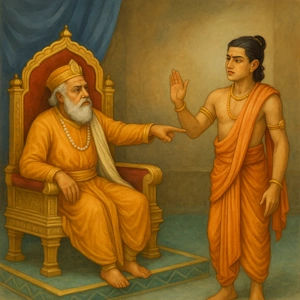
Priyavrata was Swayambhuva's son
When Swayambhuva Manu asked Priyavrata to take over the rulership from him, Priyavrata refused
Priyavrata was a bhakta
He was only interested in listening to and singing the glories of the Lord, not in becoming a king and enjoying all the royal comforts
He used to hear the leelas of the Lord from Arada Maharshi
See this, we think Lord Krishna was there 5000 years before
Towards the end of Dwapara Yuga, Rama was there during Treta Yuga, but see here, Narada Maharshi is telling glories of Bhagavan to Priyavrata 200 crores of years before
So don't fall for such stupid theories, dating of Ramayana, dating of Mahabharata, when battle of Kurukshetra happened
When was the bridge to Lanka built? Geographical proof, astronomical proof, scientific proof
We don't need all this to prove the glories of the Lord
They were sung even 200 crores of years before
When Priyavrata refused, creator Brahma came to him
Sage Narada also was there and told Priyavrata
You have no right to say no
This is a lot to play
He is the director
You are an actor in this drama, he is the director
He decides what role you play, what role is suitable for you
You don't decide that
If you do that, then you're disobeying
You're violating his divine intention and will
You're moving away from him, not getting closer to him
And Brahma said, don't think relinquishing the world is the solution
You can relinquish the world when you are mature enough
Then you don't even have to do it consciously yourself, it will happen on its own
You will not even notice
Ultimately you have six enemies: desire, anger, greed, ignorance, arrogance, and sense of competition, kama, krodha, lobha, moha, mada, and matsarya
These are the six enemies you have to conquer
This is the one and only task in spiritual life
Every spiritual practice is only a method for doing this
These are most easily conquered when you are in family life because that is where you encounter them most
If you go into solitude, Then you're carrying them all within you and you're deprived of opportunities to face them
Unless you face the enemy, how will you conquer him? Running away from the enemy is not the solution
Facing and conquering the enemy is what you have to do
If you relinquish everything and sit alone, Then how will you even know whether you have conquered Kama or Krodha? Only when Menaka came before Vishwamitra, did he realize that no, I have not conquered Kama
I have to work more
Only when you are irritated by people around you, then only you will know how to deal with anger
When there is no one around you, no one to irritate you, you will never be able to face anger and conquer it
Same with greed, ignorance
If there is no one to challenge, how will you know whether your perspective is correct or not? And one great thing about family life is that while facing these enemies, you have a lot of support systems around you so that you don't crumble and collapse
This you will not get if you're alone
Family life protects you like a fort from all around
In family life, you have teachers, guides, you can experiment and fail, you can learn from mistakes, improve yourself
Unless there is a husband who irritates you, unless there is a wife who nags you, how will you ever learn how to control and conquer anger? This is what happens to people who relinquish prematurely
We know about some sanyasis who are famous for their short temper
People fear them, people respect them out of fear
After you conquer everything, you become a Sanyasi
When you are in family life, it is like you are inside your house and there are lions and tigers roaming around outside
If you relinquish, then it is like walking out into the open, straight to those animals
They will consume you
Priyavrata followed Brahmaji's advice and took over from his father
Hari Om
- Why is the family man (Grihastha) considered the pillar that supports all other stages of life, including those who have renounced the world?
The family man is the primary provider and protector. While Brahmacharis (students) and Sanyasis (renunciates) dedicate their lives to study and selflessness, they still possess physical bodies that require sustenance. The Grihastha fends for the world, generating resources through honest labor and offering Bhiksha (alms) out of reverence. Without the family man’s material support and adherence to dharma, the other ashramas would have no foundation to stand upon. - What is the fundamental flaw in the idea that one can physically relinquish the world?
Physical relinquishment is an illusion as long as the body exists. Every living being is constantly interacting with the world—breathing the air, standing on the ground, and consuming water or food. Even a silent Tapasvi in a cave is dependent on the elements provided by the universe. Therefore, true renunciation (Sanyasa) is a mental act of detachment, not a physical departure from the material realm. - How does the story of Priyavrata challenge modern attempts to date the scriptures using only scientific or astronomical tools?
The story of Priyavrata takes place during the Swayambhuva Manvantara, roughly 200 crore (2 billion) years ago. During this time, Sage Narada was already singing the glories of the Lord. This teaches us that the divine leelas are eternal and timeless, existing long before the specific historical dates humans try to assign to the Ramayana or Mahabharata. The spiritual truth of the scriptures is independent of carbon dating or geographical proofs. - According to Brahmaji’s advice to Priyavrata, who is the true director of a person’s life path?
The Lord is the director, and we are merely actors in His divine drama. When a person refuses a duty assigned to them by divine will—such as Priyavrata refusing the throne—they are not becoming more spiritual; they are actually disobeying the Director. True spiritual progress lies in playing the role assigned to us with total devotion, rather than trying to dictate which role we think is "holier." - Why is family life compared to a fort (Durga) in the battle against the six inner enemies?
Family life acts as a protective environment where one can face the six enemies (Kama, Krodha, Lobha, Moha, Mada, and Matsarya) without crumbling. In a family, you have support systems, guides, and loved ones who help you recover when you fail. It allows you to experiment with self-control in a controlled setting, whereas a solitary life leaves you exposed to these "predatory" emotions without any buffer. - How does being around "irritating" people actually serve a seeker's spiritual growth?
Growth requires a challenge. If you are alone, you might falsely believe you have conquered anger because there is no one to provoke you. It is only when a spouse nags or a situation irritates you that your true level of patience is tested. These interactions act as a mirror, showing you exactly where your weaknesses lie so that you can work on them and achieve genuine victory over the ego. - What is the specific spiritual danger of "premature renunciation"?
Premature renunciation is like walking out of a house into a jungle filled with tigers and lions while you are still unarmed. Without conquering the inner enemies first, a person carries their anger and greed into the forest. This is why some sanyasis remain famous for their short tempers; they ran away from the world before they had mastered their own minds, leaving them vulnerable to the very shadows they tried to escape. - Why is there a strict prohibition against offering "Tambulam" or excess donations to Brahmacharis and Sanyasis?
These rules exist to safeguard the path of the renunciate. Tambulam (betel leaves/nuts) is associated with worldly enjoyment and is meant for married people; offering it to a Brahmachari is a sin because it serves as a distraction from their path of restraint. Similarly, a Sanyasi should only accept Bhiksha—enough for one day—because accumulating wealth or comforts shifts their focus back to the material world, defeating the purpose of their sacrifice. - In the context of modern Mutts and Ashramas, how should we view heads of institutions who use modern technology or travel by flight?
We should view them as spiritual guides whose primary mission is the protection and promotion of Dharma. While they observe Sanyasa for selflessness and nobility, they must function efficiently to reach the common man. Their use of modern tools is not for personal luxury but to serve as a lighthouse for the world. They act as intermediaries who collect the family man’s contributions and redirect them toward the preservation of sacred traditions. - What is the "one and only task" in spiritual life according to this discourse?
The singular task is the conquest of the six inner enemies: desire, anger, greed, ignorance, arrogance, and competition. Every ritual, prayer, and lifestyle choice—whether as a king like Priyavrata or a monk in a cave—is merely a method to achieve this internal mastery. Once these are conquered, renunciation happens naturally and effortlessly, without one even noticing.






English
Rare Topics
Click on any topic to open
7
30
Astrology
Bhagavad Gita
Bhagavatam
Bharat Matha
Devi
Devi Mahatmyam
Ganapathy
Garuda Puranam
Glory of Venkatesha
Hanuman
Kathopanishad
Mahabharatam
Mantra Shastra
Mystique
Practical Wisdom
Purana Stories
Radhe Radhe
Ramayana
Rare Topics
Rigveda Explained
Rituals
Sages and Saints
Shiva
Spiritual books
Sri Suktam
Story of Sri Yantra
Temples
Vedas
Vishnu Sahasranama
Yoga Vasishta
26
17
10
0


