Sri Hari Also Has a Name: Shiva

शिवः –
निस्त्रैगुण्यतया शुद्धत्वात् शिवः
Only when the three gunas — satva, raja, tamo gunas — are present, there is impurity.
When gunas — the rajo guna, satva guna, and the tamo guna — are not there, that state is pure.
Now the question comes up, what is wrong with satva guna?
At times we say Narayana is satva swaroopi. Why do we then say that even satva guna is undesirable?
Satva guna is like a bridge. It is a bridge from an island filled with rajoguna of action and tamoguna of annihilation. It is a bridge using which you can get out of that island. Still, it is part of that island. Once you are on the other shore, you don’t even need that bridge anymore. That bridge can only then be used to go back to the same island. That is why satva is classified along with the other gunas — rajoguna and tamoguna.
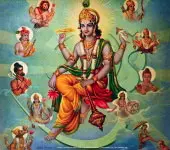
Sri Hari delegates the task of creation to Brahma, dissolution to Rudra, and keeps sustenance with Himself.
Sustenance is connected to satva guna. That is why Sri Hari is also connected to satva guna.
But a mumukshu, one desirous of moksha, has nothing to do with sustenance. He doesn’t bother whether the created universe sustains or perishes. He realizes that all this is leela, play of Sri Hari, and goes beyond that.
So when we say Bhagawan’s guna is satva, it has a very limited sense.
And in reality, because of nistraigunyata — lack of the three gunas — He is Shiva.
स ब्रह्म स शिवः स हरिः सेन्द्रः सोऽक्षरः परमः स्वराट
They are all the same — Brahma, Hari, Shiva, Indra — says Narayanopanishad.
Hence, He is also Shiva.
After removing ashubha as Sharva, He accords auspiciousness to them. Hence, He is Shiva.
स्थाणुः – स्थिरत्वात् स्थाणुः –
Because He is permanent (sthira).
Even after all the pralayas — the yuganta pralaya, kalpanta pralaya, mahakalpanta pralaya — He is there, still lying on top of Adi Sesha in the ocean. He doesn’t go anywhere. So, He is Sthanu.
Commonly, Sthanu is Shiva. But He is not different from Shiva. Shiva is not different from Vishnu. Hence, He is Sthanu.
शिवाय विष्णुरूपाय शिवरूपाय विष्णवे ।
शिवस्य हृदयं विष्णुः विष्णोश्च हृदयं शिवः ॥
स्वयं न विश्राम्यति यः सः स्थाणुः परिकीर्तितः
He doesn’t take rest. He is always in action. Hence, He is called Sthanu.
- If Sri Hari is linked with satva, why aim beyond satva? — Satva steadies the mind, but it still binds. Bhakti turns the heart to Bhagavan, and grace lifts you beyond all three gunas. Peace remains even when life swings.
- What does being beyond the gunas look like in a tense office meeting? — You do your duty with clarity, no panic, no laziness. Results come or do not come, and you stay steady without inner noise.
- How does Lakshmi’s grace actually show up in a family’s month end? — Fewer impulsive buys, timely payments, unexpected help, and a calm kitchen. Harmony saves more money than any discount.
- Is devotion to Shiva at odds with devotion to Vishnu? — No. One truth, different doors. Honor both without insecurity. Rivalry lives in the mind, not in the devas.
- How can daily puja cut rajas and tamas before work? — Short sankalpa, 5 minutes of deepa, 108 nama japa, and a moment of silence. This resets the mind faster than scrolling a phone.
- What stops satva from turning into spiritual pride at home? — Keep credit with Bhagavan, not yourself. Serve quietly, thank often, and let others take the spotlight.
- How does bhakti help the body under chronic stress? — Soft chanting slows breath, loosens the jaw and shoulders, improves sleep, and nudges you toward kinder food choices. The nervous system settles when the heart feels held.
- What if my family is not aligned with my practice? — Do not preach. Cook, help, listen, and keep your japa gentle. Sweetness convinces better than speeches.
- Can I chase career goals and still move toward nistraigunya? — Yes. Offer your work as seva, follow dharma in decisions, and drop the craving for applause. Keep a small japa break between tasks.
- What should I do after losing my temper or sinking into lethargy? — Apologize fast, do one helpful act, and return to nama. Do not dramatize the fall. Re-enter grace.
- How to pray when I feel nothing? — Show up anyway. Sit, breathe, chant. Bhakti is a fire you keep feeding; warmth returns without warning.
- What weekend rhythm honors sustenance without clinging to it? — Family deepa in the evening, simple meals, a small dana act, and one hour of silent reading or nama together.
- How do I balance japa and family time without conflict? — Anchor two short, non-negotiable japa slots, then be fully present with family. Add micro-japa while cooking, walking, or commuting.
- What unmistakable inner shift shows the heart is resting in Sri Hari? — Blame drops, gratitude rises, and help flows from you even when no one is watching.
- How does the idea of leela change the way I handle grief or loss? — You still feel the pain, but you stop fighting reality. You place the event in Bhagavan’s hands and choose a compassionate response over bitterness.
- What simple food habits support satva without fuss? — Warm, fresh, moderate meals; early dinner; water before caffeine; and no mindless snacking while angry or sad.
- How can kids catch bhakti naturally at home? — Keep a visible puja room, sing one nama together daily, celebrate small kindnesses, and let them offer a flower themselves. Curiosity grows where joy is felt.
- What do I do in illness to align with healing and bhakti? — Take medical care seriously, rest without guilt, chant softly, and accept help. Let the body mend while the heart stays connected.
- How does one keep satva firm in noisy city life? — Fixed wake time, a clean corner for puja, focused work blocks, evening wind-down without screens, and nama on the tongue while moving through crowds.





English
Vishnu Sahasranama
Click on any topic to open
7
30
Astrology
Bhagavad Gita
Bhagavatam
Bharat Matha
Devi
Devi Mahatmyam
Ganapathy
Garuda Puranam
Glory of Venkatesha
Hanuman
Kathopanishad
Mahabharatam
Mantra Shastra
Mystique
Practical Wisdom
Purana Stories
Radhe Radhe
Ramayana
Rare Topics
Rigveda Explained
Rituals
Sages and Saints
Shiva
Spiritual books
Sri Suktam
Story of Sri Yantra
Temples
Vedas
Vishnu Sahasranama
Yoga Vasishta
26
17
10
0


