Beauty of Sri Hari Is So Captivating

भूतादिः – भूतानां आदिकारणत्वात् –
The entire creation is called bhutas – He is the original cause, He is the starting point of creation, hence Bhutadi.
One point to be understood here. Bhuta is very commonly used in most of the languages to denote demon or evil spirit.
When bhuta is used in neuter gender as भूतम्, as in panchabhutam, panchabhutani is the plural of this, most of the times – I will not say all the times, but ninety-nine out of hundred times – it denotes the elements of material world such as earth, water, fire.
When you use it in the masculine gender as भूतः, it means demon or evil spirit.
स्पृहणीयतमत्वात् भूतैरादीयते इति भूतादिः –
Because He is the most longed for among gods.
It is a fact.
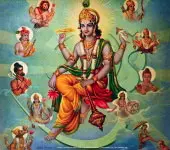
Bhagawan’s beauty is so captivating, so enchanting, so charming, so enticing, so fascinating that the gopikas say:
दृशिषु पक्ष्मकृतं शपन्ति
जड उदीक्षतां पक्ष्मकृत् दृशाम्
While they are looking at Sri Hari and their eyelids close, they say the Creator is dumb, the Creator who has made the eyelids to close intermittently is a fool, He is jada.
They can’t even tolerate that split second when Sri Hari’s view is interrupted by the eyelids that close again and again.
That is the roopa madhuri of Bhagawan.
Then His venu madhuri.
Gopika are telling the flute:
दृशामि सदाशिषस्ते – I am blessing you.
Why? Because –
यद्वासरे मुरलिके करुणां करोषि – because you are kind enough to remain silent during the forenoon, daytime, so that I can complete my household duties.
They also tell Sri Hari straight:
मुरहर रन्धनसमये मा कुरु मुरलीरवं मधुरम् – when we are at the kitchen, don’t play the flute.
And for doing this favour she is blessing the venu with:
निश्छिद्रमस्तु हृदयं परिपूर्णमस्तु मौखर्यमस्तु त्वमितमस्तु गुरुत्वमस्तु
This is a fake ashirwada.
निश्छिद्रमस्तु – this is an ashirwada given at the conclusion of yajnas, meaning may it be unbroken. May these series of yajnas be unbroken. May your vamsha be unbroken. Chhidra means break, or hole.
Here the gopi is saying this to the flute. She is jealous of the flute, that in the guise of giving this ashirwada, she is saying – may there be no holes in you so that you don’t play anymore, you don’t get to the lips of Sri Hari anymore.
She says: हृदयं परिपूर्णमस्तु – may your heart be filled. See the jealousy and the cunningness. May your heart be filled – when the hollow of the flute is filled, it won’t be able to play anymore.
She says:
अमितमस्तु गुरुत्वमस्तु
Amitatva is abundance, gurutva is greatness – also means heaviness.
She wants the flute to become – she is blessing the flute to become – so immensely heavy that Sri Hari is not able to lift it and take it to His lips.
See the jealousy. See the envy.
The flute should become thousand times heavier than Govardhana, that Sri Hari is not able to lift it to His lips.
निश्छिद्रमस्तु हृदयं परिपूर्णमस्तु मौखर्यमस्तु त्वमितमस्तु गुरुत्वमस्तु
कृष्णप्रिया सखि दिशामि सदाशिषस्ते यद्वासरे मुरलिके करोषि
Rasaleela is a very important aspect of devotion. We will slowly try to understand this in depth.
As I had told earlier, we will not be limiting this discourse to the thousand divya names. We will explore all aspects, as much as Sri Hari permits us.
-
Why do eyelids feel like an obstacle during remembrance of Krishna?
Because attention locks onto His form with total intensity. Any sensory blink breaks a continuous stream of joy. Train steadiness: soft gazing during japa, slower breathing, and brief eye-rests between rounds. This protects eye health while deepening focus. -
Is jealousy in devotion acceptable when others seem closer to Him?
Yes, when it springs from longing rather than harm. Convert that heat into sadhana: more nama, kinder speech, and quiet service. In family life, celebrate each person’s progress; shared sankirtan turns private rivalry into collective strength. -
How can divine beauty be a cause, not just a feature?
His beauty initiates movement in the heart. It dismantles pride, awakens surrender, and redirects choices. Philosophically, a true cause generates effects; here the effect is bhakti that reshapes habits, health routines, and priorities. -
Can sound act as a spiritual catalyst like a flute-call?
Yes. Certain sounds align mind and breath, pulling attention upward. Use short kirtan bursts between tasks. For physical balance, pair chanting with relaxed diaphragmatic breathing to lower pulse and reduce stress hormones. -
Is it wrong to ask the Enchanter to pause His charm during duties?
Not wrong. It is honest relationship. Set time-boxed windows: undistracted seva at home, undistracted japa at chosen hours. Clarity keeps the house peaceful and the heart single-pointed. -
Where is the line between devotion and unhealthy obsession?
Devotion nourishes duty, health, and kindness. Obsession erodes them. Quick checks help: sleep is steady, meals are regular, speech is gentle, responsibilities are met. If any collapses, rebalance with disciplined routine. -
Why do small interruptions feel unbearable in deep love for Him?
Because the mind tastes higher rasa and rejects everything lower. Learn to re-enter quickly: a micro-pause, one slow breath, one naam, then resume darshan within. This trains resilience rather than irritation. -
What does it mean to call Him the origin of elements?
It means earth, water, fire, air, and space have their source in Him. Practical takeaway: treat the body (made of these) as a loan from the Source. Eat clean, move daily, rest well, and keep speech pure; that is elemental worship. -
How do I keep family harmony when my longing pulls me away mid-task?
Agree simple rules: finish critical chores before long japa; announce prayer slots; use soft alarms. Offer prasada, share short bhajans together, and keep communication warm. Devotion should reduce friction, not raise it. -
Can playful speech with the Divine, even teasing, be part of bhakti?
Yes. It shows intimacy. Speak from love, never contempt. This emotional honesty prevents bottled frustration and keeps the heart open, which also lowers blood pressure and improves sleep quality. -
Why bless an object that seems to compete for His attention?
The heart negotiates its longing through symbols. Use that energy wisely: bless instruments that aid remembrance (japa mala, bell, lamp), and set boundaries with distractions (phone-free prayer times). -
How does beauty translate into daily discipline?
Attraction becomes practice when you give it a schedule. Fix a morning darshan habit, a brief noon remembrance, and an evening gratitude minute. Small, repeatable acts shape the nervous system toward peace. -
What is a healthy way to carry intense remembrance into work hours?
Use anchor cues: one naam before calls, a silent mantra during walks, and a gentle smile as a signature. These micro-practices keep attention bright without draining cognitive bandwidth. -
How do parents guide children who feel an overpowering pull toward devotion?
Channel, don’t choke. Short kirtans, age-appropriate stories, and shared service like helping at home. Keep study time intact; teach that disciplined learning is also seva to Him. -
What sign shows devotion is maturing rather than just thrilling?
Stable kindness under pressure. You recover from irritation faster, keep promises, eat and rest on time, and your family feels safer around you. Joy becomes reliable, not erratic.





English
Vishnu Sahasranama
Click on any topic to open
7
30
Astrology
Bhagavad Gita
Bhagavatam
Bharat Matha
Devi
Devi Mahatmyam
Ganapathy
Garuda Puranam
Glory of Venkatesha
Hanuman
Kathopanishad
Mahabharatam
Mantra Shastra
Mystique
Practical Wisdom
Purana Stories
Radhe Radhe
Ramayana
Rare Topics
Rigveda Explained
Rituals
Sages and Saints
Shiva
Spiritual books
Sri Suktam
Story of Sri Yantra
Temples
Vedas
Vishnu Sahasranama
Yoga Vasishta
26
17
10
0


