Some Points Purohits Have to Be Careful About
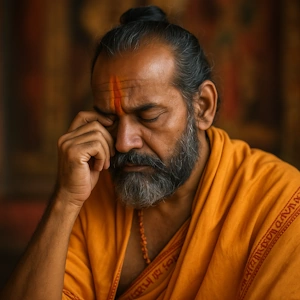
What is the role of a priest in rituals?
The purohita plays many important roles. He is your well-wisher and adviser in spiritual matters. He is your spiritual guide. In most cases, he is your only spiritual guide.
He performs pujas and rituals for you which you are not trained or equipped to do by yourself. The Vedic system is designed in such a way that even if you yourself are a priest, know all the mantras and procedures, still you have to involve other priests if you want to do something for yourself.
Vedic system of worship is a group effort. A give-and-take is built into it.
Bhagavad Gita says that after Brahma created the world, he put the system of yajna so that there can be give-and-take between men and Devas. Men give offerings to gods and they give blessings in return.
This give-and-take is built into our rituals. Anna danam, dakshina, you have to procure materials for rituals — in this, the livelihood of many people, the shopkeepers — their livelihood is based on this. You need milk, ghee — cows are taken care of for this. It is a complete system, you see.
Your purohita can bless you with mantras. He has the authority and knowledge to do that.
There are some people who think they get all the privileges. They have not understood this correctly. Priests are paid respect during our rituals.
When you see it from the surface, it will look like they are privileged. They are offered food, gifts — apparently showing that they are a privileged class. This is what you tend to believe when you see this happening.
When you see this, all kinds of thoughts come to your mind — why should this be like this? What is so special about them?
There are two aspects about this. One of them I have explained so many times before.
A priest is mostly a Brahmin.
Brahmin here is not only by caste, it is by merit. Brahmins qualify to be respected in rituals if they have Veda inside them, mantras inside them, knowledge inside them — not otherwise.
Most of our priests are Vedic scholars. They have learned Vedas by spending years in a gurukula, following the ashrama of brahmacharya, and learning the Veda under a knowledgeable guru.
So they have Veda inside them. As part of their memory, Veda resides inside them.
Don’t look at the person — his name, his fame, his height, his weight, the dress he wears — they are all immaterial.
If you are seeing all these while respecting a Brahmin during a ritual, then it is a waste. It is only Veda, mantra, knowledge that you should see.
His body is only a bottle that carries the honey. His name and fame are only a label on that bottle. What you should see is the honey inside — but make sure that there is honey inside.
This is from the point of view of the performer of the ritual.
Now from the point of view of the priest who is being respected, offered gifts — for him, as far as his individual spirituality is concerned, it is not a great thing that he is going through.
Scriptures clearly say that run away from someone who is trying to respect you. It is harmful for you. It is going to boost your ego. It is going to pull you down in your spiritual path.
Priests are likely to get into all kinds of wrong ideas and notions.
When they listen to terms like bhusura — that Brahmins are gods on earth — they get all kinds of wrong ideas. Ego is boosted.
A wise person would understand that these terms are not meant for you. They are meant to be understood by the other side — to give the other side, the giver, the person who is respecting you, the right perspective.
We all work on images and concepts. That’s how the human mind works. That’s how the human mind is supposed to work.
Unless a judge sits on the other side of the table and wears his particular attire, you are not going to respect his judgment.
You can’t deliver a judgment and have it respected sitting in a coffee house with litigants, their lawyers, and the judge sitting round a table. The ambience matters a lot.
So, for the performer of the ritual, the Brahmin or the priest is a god on earth — that’s how he should see him.
He is a god because he has Veda inside him, he has jnana inside him — only to that extent.
But if the priest starts believing that I am God on earth, then personally, spiritually, he is finished.
Scriptures go to the extent that a Brahmin should welcome insults, not shy away from insults — because that would help him grow spiritually.
Every insult or criticism, no matter how biased or unjustifiable it is, will have a little bit of truth in it. If you are able to spot that, look at that criticism with equanimity, then even that shortfall in you — you can correct.
This is how insults and criticism help.
Understand this — this we are talking about the personal spiritual side of the priest, not his functional role in a ritual.
Functionally, he cannot say — don’t respect me, insult me — because then it doesn’t serve the interest of the other side.
And he is there because the other side, the performer of the ritual, the giver — should get benefitted, not for his personal gain.
For him, the respect he is receiving, the money he is receiving, the gift he is receiving — is a burden.
Because, when you get something from someone, then the bad karma of the other person also comes along.
This is very clear in the scriptures. Even if you have food given by someone once, you have to share his papa or sin — the ill effects of his papa.
All the more here — because the ritual is in the realm of what is called adrishta — the invisible. Its benefits are not immediately visible — they come later.
Karma, principles of karma, play a very important role in rituals.
When doing a ritual, you are dealing directly with karma. The priest is directly in touch with the karma of the other person.
People in fire service — they have to face the maximum risk from fire. In the same way, the priest faces maximum risk from karma — because he is dealing directly with another person’s karma.
So, if you are receiving something from someone, and you are not giving anything tangible in return, be sure that what you are receiving is part of the other person’s bad karma.
When you work for someone and get wages or salary — it is different. The giving of effort and getting of wages will cancel out each other. There is no karma involved here.
But if you receive something from someone for free, then his or her bad karma is what is coming to you.
This applies to all situations — not just Brahmins and rituals.
This is yet another difference between a ritual and a dana.
So, suppose a priest is doing a puja or homa for you — you are giving him a dakshina — for him it is far more better, because manual effort is involved. The karma that gets transferred will be far less.
But if you are calling a Brahmin, washing his feet, and giving him gifts — then this is very dangerous for him.
It’s good for the giver, but very bad for the recipient.
This is why penances are prescribed for the Brahmins whenever they receive something — in proportion to the value of what they receive.
A Brahmin who takes food in another’s house as part of, let’s say, a pitru karya like shraddha — has to do 10,000 avrittis of Gayatri just to burn away the papa that comes to him on account of that.
So if you want to compare in a modern scenario — a Brahmin’s role is that of an incinerator — where bad karma of others gets dumped and he burns them with his spiritual effort such as Gayatri chanting.
Do you see it?
So if a priest does a puja at your home lasting, let’s say, two hours, and he is offered a dakshina of X amount — which is, let’s say, reasonable for the time and effort he has put in — then nothing is so bad.
It almost works like the employer–employee situation that we saw before.
Don’t think that I am trying to belittle the role of the priest. What I am saying is well in line with the principles of Mimamsa.
Mimamsa is the governing darshana (philosophy) of rituals.
Mimamsa says: Acharyasya yajamanena dakshinaaya kreetatvat — the relationship between the acharya and the yajamana is that of buying or hiring — leaving the respect and other things aside — essentially it is a buy or hire of his time and services.
This is what Mimamsa says the relationship is.
So here, instead of X, if he is getting paid 5X — that means sins or papas or troubles of the giver equivalent to that 4X are also being handed over to him.
He should be rather concerned. He should do penances or they will start affecting him.
That’s why scriptures have put curbs on how much a Brahmin can receive — only that much as will enable him to take care of his needs as a householder.
Or else, it will start affecting him spiritually — as the amount of papa handed over to him by others builds up, it will affect his health, the health of his family, all kinds of problems crop up in his day-to-day life, and whatever spiritual charge that he had acquired — that also, having depleted, he will end up being just like any other ordinary person.
Books giving ritualistic procedure also mention the dakshina to be offered, or the quantity of dana in every case — so that it is beneficial for the performer and also not harmful for the priest.
But you can’t just take it and use it now. The economy today is different.
It may say 10 grams of gold for this — that was a time when gold was not valuable. Today 10 grams of gold means 40,000 rupees.
It may say ten cows — that would mean 3 or 5 lakhs. You can’t do that.
So we have to arrive at what is reasonable today.
Also, the priests of those times — they were more committed towards the penances they had to perform. So even if they received a little more, they knew how to handle it.
But then why should he take so much risk?
That is his role in the society.
Doctors work in the most dangerous environment. Every patient is capable of passing on a harmful virus or bacteria.
But don’t they do it?
Policemen — don’t they work in the most dangerous situations?
Our defence personnel — what sacrifice they do for the society, for the nation.
That is their contribution to society. That is their role in society.
This is what priests also do in rituals. They take a part of your bad karma with them elsewhere and burn it away with their effort.
This is what is great about them. This is their contribution to society.
So both the giver and the recipient should understand this and act responsibly.
This I am saying strictly from the point of view of ritual — where there is a give-and-take between the yajamana and the priest — and only about priests who are involved in this.
The priests should understand the importance of their role in society — and also the personal risk that it carries with it.
This has nothing to do with Brahmins as a community or a caste.





English
Rituals
Click on any topic to open
7
30
Astrology
Bhagavad Gita
Bhagavatam
Bharat Matha
Devi
Devi Mahatmyam
Ganapathy
Garuda Puranam
Glory of Venkatesha
Hanuman
Kathopanishad
Mahabharatam
Mantra Shastra
Mystique
Practical Wisdom
Purana Stories
Radhe Radhe
Ramayana
Rare Topics
Rigveda Explained
Rituals
Sages and Saints
Shiva
Spiritual books
Sri Suktam
Story of Sri Yantra
Temples
Vedas
Vishnu Sahasranama
Yoga Vasishta
26
17
10
0


