Shrimad Bhagavatam – Canto 10, Chapter 6 - Putana Moksha
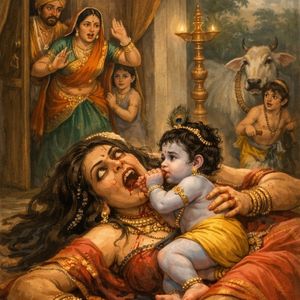
श्रीशुक उवाच ।
नन्दः पथि वचः शौरेर्न मृषेति विचिन्तयन् ।
हरिं जगाम शरणमुत्पातागमशङ्कितः ॥ १॥
Sri Shuka Goswami said: While traveling, Nanda Maharaja reflected that Vasudeva’s words could never be false. Fearing evil omens, he took shelter of Lord Hari.
कंसेन प्रहिता घोरा पूतना बालघातिनी ।
शिशूंश्चचार निघ्नन्ती पुरग्रामव्रजादिषु ॥ २॥
Sent by King Kamsa, the dreadful demoness Putana, killer of infants, roamed through cities, villages, and cowherd settlements killing babies.
न यत्र श्रवणादीनि रक्षोघ्नानि स्वकर्मसु ।
कुर्वन्ति सात्वतां भर्तुर्यातुधान्यश्च तत्र हि ॥ ३॥
Where people do not engage in hearing and other devotional acts glorifying the Supreme Lord, demons gain the power to harm living beings.
सा खेचर्येकदोपेत्य पूतना नन्दगोकुलम् ।
योषित्वा माययाऽऽत्मानं प्राविशत्कामचारिणी ॥ ४॥
Flying through the sky, Putana entered Nanda’s Gokula, disguising herself as a beautiful woman through her mystic powers.
तां केशबन्धव्यतिषक्तमल्लिकां
बृहन्नितम्बस्तनकृच्छ्रमध्यमाम् ।
सुवाससं कम्पितकर्णभूषण-
त्विषोल्लसत्कुन्तलमण्डिताननाम् ॥ ५॥
She appeared charming—flowers in her hair, broad hips, full breasts, a slender waist, fine garments, glittering earrings, and a radiant face adorned with flowing hair.
वल्गुस्मितापाङ्गविसर्गवीक्षितै-
र्मनो हरन्तीं वनितां व्रजौकसाम् ।
अमंसताम्भोजकरेण रूपिणीं
गोप्यः श्रियं द्रष्टुमिवागतां पतिम् ॥ ६॥
With sweet smiles and sidelong glances, she captivated the minds of the Vraja women, who thought she resembled the goddess of fortune herself.
बालग्रहस्तत्र विचिन्वती शिशून्
यदृच्छया नन्दगृहेऽसदन्तकम् ।
बालं प्रतिच्छन्ननिजोरुतेजसं
ददर्श तल्पेऽग्निमिवाहितं भसि ॥ ७॥
While searching for infants to kill, she entered Nanda’s house and saw baby Krishna, whose divine power was hidden—like fire covered by ashes.
विबुध्य तां बालकमारिकाग्रहं
चराचरात्मा स निमीलितेक्षणः ।
अनन्तमारोपयदङ्कमन्तकं
यथोरगं सुप्तमबुद्धिरज्जुधीः ॥ ८॥
Understanding her intention, the all-pervading Lord closed His eyes and allowed her to lift Him, just as a foolish person lifts a sleeping snake thinking it harmless.
तां तीक्ष्णचित्तामतिवामचेष्टितां
वीक्ष्यान्तरा कोशपरिच्छदासिवत् ।
वरस्त्रियं तत्प्रभया च धर्षिते
निरीक्षमाणे जननी ह्यतिष्ठताम् ॥ ९॥
Though Putana’s nature was cruel like a sword hidden in a sheath, her beauty overwhelmed Yaśodā and others, who did not stop her.
तस्मिन् स्तनं दुर्जरवीर्यमुल्बणं
घोराङ्कमादाय शिशोर्ददावथ ।
गाढं कराभ्यां भगवान् प्रपीड्य तत्
प्राणैः समं रोषसमन्वितोऽपिबत् ॥ १०॥
She placed her poison-filled breast into Krishna’s mouth. The Lord tightly grasped it and sucked not only the milk but also her very life force.
सा मुञ्च मुञ्चालमिति प्रभाषिणी
निष्पीड्यमानाखिलजीवमर्मणि ।
विवृत्य नेत्रे चरणौ भुजौ मुहुः
प्रस्विन्नगात्रा क्षिपती रुरोद ह ॥ ११॥
Screaming 'Leave me', Putana thrashed wildly, her limbs flailing and body drenched in sweat as her life was drained.
तस्याः स्वनेनातिगभीररंहसा
साद्रिर्मही द्यौश्च चचाल सग्रहा ।
रसा दिशश्च प्रतिनेदिरे जनाः
पेतुः क्षितौ वज्रनिपातशङ्कया ॥ १२॥
Her terrifying cries shook mountains, earth, sky, and directions. People fell to the ground fearing thunderbolts.
निशाचरीत्थं व्यथितस्तना व्यसु-
र्व्यादाय केशांश्चरणौ भुजावपि ।
प्रसार्य गोष्ठे निजरूपमास्थिता
वज्राहतो वृत्र इवापतन्नृप ॥ १३॥
The demoness fell dead in her original gigantic form, like the demon Vṛtra struck down by Indra.
पतमानोऽपि तद्देहस्त्रिगव्यूत्यन्तरद्रुमान् ।
चूर्णयामास राजेन्द्र महदासीत्तदद्भुतम् ॥ १४॥
Even while falling, her massive body crushed trees across several miles—an astonishing sight.
ईषामात्रोग्रदंष्ट्रास्यं गिरिकन्दरनासिकम् ।
गण्डशैलस्तनं रौद्रं प्रकीर्णारुणमूर्धजम् ॥ १५॥
Her fearful form had huge teeth, cave-like nostrils, rock-like breasts, and scattered red hair.
अन्धकूपगभीराक्षं पुलिनारोहभीषणम् ।
बद्धसेतुभुजोर्वङ्घ्रिशून्यतोयह्रदोदरम् ॥ १६॥
Her eyes were deep like wells, limbs like bridges, and her belly like a dry lake—terrifying in appearance.
सन्तत्रसुः स्म तद्वीक्ष्य गोपा गोप्यः कलेवरम् ।
पूर्वं तु तन्निःस्वनितभिन्नहृत्कर्णमस्तकाः ॥ १७॥
The cowherds and women were terrified seeing her body; earlier, her screams had already shaken their hearts.
बालं च तस्या उरसि क्रीडन्तमकुतोभयम् ।
गोप्यस्तूर्णं समभ्येत्य जगृहुर्जातसम्भ्रमाः ॥ १८॥
Seeing baby Krishna fearlessly playing on her chest, the gopīs rushed forward and picked Him up in panic.
यशोदारोहिणीभ्यां ताः समं बालस्य सर्वतः ।
रक्षां विदधिरे सम्यग्गोपुच्छभ्रमणादिभिः ॥ १९॥
Led by Yaśodā and Rohiṇi, they performed protective rituals around the child.
गोमूत्रेण स्नापयित्वा पुनर्गोरजसार्भकम् ।
रक्षां चक्रुश्च शकृता द्वादशाङ्गेषु नामभिः ॥ २०॥
They bathed Krishna with cow urine, applied cow dust, and protected Him by chanting the Lord’s names on twelve body parts.
गोप्यः संस्पृष्टसलिला अङ्गेषु करयोः पृथक् ।
न्यस्यात्मन्यथ बालस्य बीजन्यासमकुर्वत ॥ २१॥
After purifying themselves by touching water, the gopīs placed their hands on different parts of their own bodies and then on the child, performing 'Beeja Nyasa' ritual placement of divine protective energies—on baby Krishna.
अव्यादजोऽङ्घ्रिमणिमांस्तव जान्वथोरू
यज्ञोऽच्युतः कटितटं जठरं हयास्यः ।
हृत्केशवस्त्वदुर ईश इनस्तु कण्ठं
विष्णुर्भुजं मुखमुरुक्रम ईश्वरः कम् ॥ २२॥
They prayed for different names of Vishnu to protect specific parts of Krishna’s body:
Aja protect His feet. Maniaan His ankles. Yajna His knees. Acyuta His thighs. Hayasya His waist and stomach. Keshava His heart. Isha His chest. Ina His throat. Viṣhṇu His arms. Urukrama His face. Ishvara His head. This shows the Lord protects Himself through His own divine forms.
चक्र्यग्रतः सहगदो हरिरस्तु पश्चात्
त्वत्पार्श्वयोर्धनुरसी मधुहाजनश्च ।
कोणेषु शङ्ख उरुगाय उपर्युपेन्द्र-
स्तार्क्ष्यः क्षितौ हलधरः पुरुषः समन्तात् ॥ २३॥
Protection is invoked in all directions: Hari with discus in front. Gada-bearing Lord behind. Bow-bearing Madhusūdana at the sides. Shankha-bearing Urugāya in the corners. Upendra above. Garuda in the sky. Baladeva on the ground. Supreme Purusha everywhere. This forms a complete divine protective shield.
इन्द्रियाणि हृषीकेशः प्राणान् नारायणोऽवतु ।
श्वेतद्वीपपतिश्चित्तं मनो योगेश्वरोऽवतु ॥ २४॥
Hrishikesha protects the senses. Narayana protects the life-airs. Lord of Shwetadveepa protects the mind. Yogeshvara protects consciousness. Thus, inner and outer life are safeguarded.
पृश्निगर्भस्तु ते बुद्धिमात्मानं भगवान् परः ।
क्रीडन्तं पातु गोविन्दः शयानं पातु माधवः ॥ २५॥
Prishnigarbha protects intelligence. Supreme Lord protects the soul. Govinda protects Krishna while playing. Madhava protects Him while sleeping. The Lord guards every state of being.
व्रजन्तमव्याद्वैकुण्ठ आसीनं त्वां श्रियःपतिः ।
भुञ्जानं यज्ञभुक्पातु सर्वग्रहभयङ्करः ॥ २६॥
Vaikuntha protects Him while walking. Lord of Lakṣmī protects Him while sitting. Yajnabhuk protects Him while eating. He removes fear from all planetary influences. Daily actions are sanctified and secured.
डाकिन्यो यातुधान्यश्च कूष्माण्डा येऽर्भकग्रहाः ।
भूतप्रेतपिशाचाश्च यक्षरक्षोविनायकाः ॥ २७॥
They pray for protection from: witches, demonesses, child-afflicting spirits, ghosts, goblins, yakshas, rakshasas and Vināyaka disturbances - All unseen negative forces.
कोटरा रेवती ज्येष्ठा पूतना मातृकादयः ।
उन्मादा ये ह्यपस्मारा देहप्राणेन्द्रियद्रुहः ॥ २८॥
They include:
Kotara, Revati, Jyeshtha, Putana - Mother-spirits causing illness, madness, epilepsy - Forces harming body, life, and senses. All destructive influences are named.
स्वप्नदृष्टा महोत्पाता वृद्धबालग्रहाश्च ये ।
सर्वे नश्यन्तु ते विष्णोर्नामग्रहणभीरवः ॥ २९॥
All evil dreams, great omens, afflictions of young and old—
may they all be destroyed by fear of the name of Lord Vishnu. This concludes the rakṣā-mantra section, declaring: The Name of Vishnu is the supreme protector.
श्रीशुक उवाच ।
इति प्रणयबद्धाभिर्गोपीभिः कृतरक्षणम् ।
पाययित्वा स्तनं माता सन्न्यवेशयदात्मजम् ॥ ३०॥
After performing these loving protections, Yashoda fed Krishna and laid Him to rest.
तावन्नन्दादयो गोपा मथुराया व्रजं गताः ।
विलोक्य पूतनादेहं बभूवुरतिविस्मिताः ॥ ३१॥
When Nanda and others returned from Mathura, they were astonished to see Putana’s body.
नूनं बतर्षिः सञ्जातो योगेशो वा समास सः ।
स एव दृष्टो ह्युत्पातो यदाहानकदुन्दुभिः ॥ ३२॥
They concluded Vasudeva must be a great sage or yogī, since his warning had proven true.
कलेवरं परशुभिश्छित्त्वा तत्ते व्रजौकसः ।
दूरे क्षिप्त्वावयवशो न्यदहन् काष्ठधिष्टितम् ॥ ३३॥
They cut Putana’s body into pieces and burned it.
दह्यमानस्य देहस्य धूमश्चागुरुसौरभः ।
उत्थितः कृष्णनिर्भुक्तसपद्याहतपाप्मनः ॥ ३४॥
A fragrant aroma arose from her burning body because Krishna had purified her by suckling her breast.
पूतना लोकबालघ्नी राक्षसी रुधिराशना ।
जिघांसयापि हरये स्तनं दत्त्वाऽऽप सद्गतिम् ॥ ३५॥
Though Putana was a child-killing demoness, she attained liberation simply by offering her breast to Krishna, even with evil intent.
किं पुनः श्रद्धया भक्त्या कृष्णाय परमात्मने ।
यच्छन् प्रियतमं किं नु रक्तास्तन्मातरो यथा ॥ ३६॥
What then can be said of those who lovingly offer their best to Krishna with devotion?
पद्भ्यां भक्तहृदिस्थाभ्यां वन्द्याभ्यां लोकवन्दितैः ।
अङ्गं यस्याः समाक्रम्य भगवानपिबत्स्तनम् ॥ ३७॥
The Lord, worshipped by all worlds, drank her milk while standing on her body—yet still granted her salvation.
यातुधान्यपि सा स्वर्गमवाप जननीगतिम् ।
कृष्णभुक्तस्तनक्षीराः किमु गावो नु मातरः ॥ ३८॥
If Putana attained a mother’s position, what to speak of the cows and mothers who lovingly fed Krishna?
पयांसि यासामपिबत्पुत्रस्नेहस्नुतान्यलम् ।
भगवान् देवकीपुत्रः कैवल्याद्यखिलप्रदः ॥ ३९॥
Krishna drank milk filled with motherly love and grants liberation and all blessings.
तासामविरतं कृष्णे कुर्वतीनां सुतेक्षणम् ।
न पुनः कल्पते राजन् संसारोऽज्ञानसम्भवः ॥ ४०॥
For those constantly absorbed in Krishna, material bondage born of ignorance never returns.
कटधूमस्य सौरभ्यमवघ्राय व्रजौकसः ।
किमिदं कुत एवेति वदन्तो व्रजमाययुः ॥ ४१॥
Smelling the fragrance of the smoke, people wondered and returned to Vraja.
ते तत्र वर्णितं गोपैः पूतनाऽऽगमनादिकम् ।
श्रुत्वा तन्निधनं स्वस्ति शिशोश्चासन् सुविस्मिताः ॥ ४२॥
Hearing the full story, they were amazed that the child survived unharmed.
नन्दः स्वपुत्रमादाय प्रेत्यागतमुदारधीः ।
मूर्ध्न्युपाघ्राय परमां मुदं लेभे कुरूद्वह ॥ ४३॥
Nanda embraced and smelled his son’s head, overwhelmed with joy.
य एतत्पूतनामोक्षं कृष्णस्यार्भकमद्भुतम् ।
शृणुयाच्छ्रद्धया मर्त्यो गोविन्दे लभते रतिम् ॥ ४४॥
Anyone who hears this wonderful pastime of Krishna with faith attains deep devotion to Govinda.
Key Learnings from this Chapter -
? 1. Even Unintentional Service to God Grants Liberation
Putana approached Krishna with the intent to kill, yet because she acted as a mother (offering her breast), Krishna granted her moksha.
Learning:
The Lord responds to the act, not merely the intention.
Even accidental or hostile contact with God can purify the soul.
? 2. God Accepts the Smallest Gesture of Bhaava (Role)
Though poisoned, Putana’s breast symbolized motherhood.
Krishna accepted that role and rewarded her accordingly.
Learning:
The Lord honors relationships more than qualifications.
? 3. The Supreme Lord Is the Ultimate Protector
Despite demons, poison, omens, and fear, baby Krishna remains unharmed.
Learning:
When God protects, no ritual, weapon, or demon can harm.
? 4. Evil Appears Attractive but Is Inherently Destructive
Putana came disguised as a beautiful woman, deceiving everyone.
Learning:
Evil often comes masked as charm and comfort—discernment is essential.
? 5. Motherly Devotion Is Supreme in Bhakti
The gopis’ love, fear, and protection reflect pure vatsalya-bhakti.
Learning:
God allows Himself to be protected by His devotees’ love.
? 6. Divine Grace Is Boundless and Unconditional
Putana, a child-killer, receives the status of a mother.
Learning:
God’s mercy exceeds human logic and moral calculation.
? 7. Krishna Is Both Infant and Supreme Absolute
This chapter repeatedly shows:
He is a helpless baby.
He is the destroyer of cosmic evil.
Learning:
God chooses intimacy over majesty for the sake of love.
? 8. Parental Love Attracts the Supreme Lord
Yashoda, Rohiṇi, and the gopis show instinctive love, not philosophical awareness.
Learning:
Love binds God more strongly than knowledge or power.
? Core Message of this Chapter
'God is conquered by love, purified by touch, revealed through devotion, and attained through remembrance.'





English
Bhagavatam
Click on any topic to open
7
30
Astrology
Bhagavad Gita
Bhagavatam
Bharat Matha
Devi
Devi Mahatmyam
Ganapathy
Garuda Puranam
Glory of Venkatesha
Hanuman
Kathopanishad
Mahabharatam
Mantra Shastra
Mystique
Practical Wisdom
Purana Stories
Radhe Radhe
Ramayana
Rare Topics
Rigveda Explained
Rituals
Sages and Saints
Shiva
Spiritual books
Sri Suktam
Story of Sri Yantra
Temples
Vedas
Vishnu Sahasranama
Yoga Vasishta
26
17
10
0


