Seeds of Mahabharata
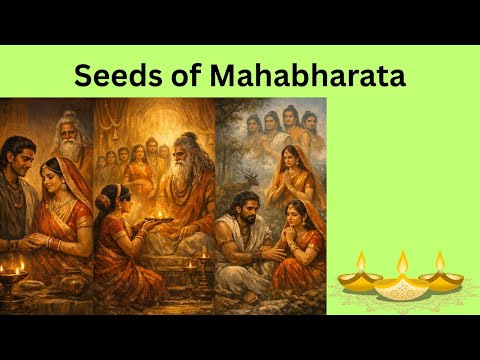
The Mahabharata does not begin with war. It begins with homes, hopes and prayers for children. Long before the clash of armies, the destiny of the Kuru house was shaped in quiet chambers of Hastinapura. This chapter tells how Vidura found his life partner, how Gandhari received the blessing of a hundred sons, and how Pandu, burdened by a curse, sought a righteous path for the birth of the Pandavas. The story breathes devotion, duty and the mysterious working of divine will. Let's look at chapter 126 of Adi Parva.
Vidura and the Grace of Family Life
Sage Vyasa once heard of a noble princess, the daughter of King Devaka. She was known for modesty, gentle speech and inner discipline. Seeing her as a worthy companion for Vidura, Vyasa arranged the marriage with honour. Vidura, the voice of conscience in the Kuru palace, entered household life without pride or ambition.
From this sacred union were born sons who carried their father’s qualities. They were humble, truthful and learned. The epic quietly reminds us that greatness does not always sit on the throne. Sometimes it lives in the hearts of those who guard righteousness without seeking fame. Vidura’s family became a lamp of moral strength within a palace already trembling with future storms.
Gandhari’s Service and Vyasa’s Boon
One day Vyasa arrived in Hastinapura after a long journey. Gandhari, the devoted wife of Dhritarashtra, served the tired sage with pure heart. Her hospitality was not ritual alone; it flowed from reverence for wisdom. Pleased, Vyasa granted her a boon.
Gandhari asked for a hundred sons equal to her husband. The sage blessed her, and in due time she conceived. The palace rejoiced, believing that the Kuru lineage would now shine with countless heirs. Yet beneath that joy lay the unseen design of Bhagavan, who often weaves happiness and challenge together for a higher purpose.
Pandu’s Sorrow and the Four Debts
While Gandhari awaited motherhood, Pandu carried a heavy wound. Because of a curse received in the forest, he could not approach his wives. Seeing his brother’s house filled with hope, he felt deep anguish. A king without children was, in those days, considered unable to fulfil his sacred duty to ancestors.
Pandu spoke to Kunti with honesty. He reminded her that every human is born with four debts: to ancestors, to sages, to devas and to society. These are repaid through righteous conduct, learning, worship and, above all, through worthy children who continue dharma. Without offspring, he feared he would fail in this sacred responsibility.
His words were not born of ego. They arose from devotion to lineage and reverence for the order established by the scriptures.
The Path Shown by Dharma
Pandu then spoke of an ancient provision used only in exceptional times. With the consent of the husband, a woman could receive children from a noble being so that the family line would not perish. The intention was purity of purpose, not personal desire. He requested Kunti to consider this path for the welfare of the dynasty.
Kunti remembered a secret mantra given to her in youth by Sage Durvasa, a mantra capable of invoking devas for the sake of righteous progeny. After prayer and reflection, she agreed, placing dharma above personal hesitation. Her decision was an act of surrender to divine will.
The Divine Birth of the Pandavas
Through that sacred resolve were born five radiant sons. From Dharma came Yudhishthira, embodiment of truth. From Vayu came mighty Bhima. From Indra was born Arjuna, peerless archer. Through Madri, the Ashvin twins granted Nakula and Sahadeva, symbols of beauty and wisdom.
Thus three streams arose in one generation: Vidura’s sons carrying conscience, Gandhari’s sons representing power, and Pandu’s sons born of divine grace. The future of Bharatavarsha quietly took form, guided by forces greater than human planning.
Inner Meaning of the Episode
This story is not merely about unusual customs. It reveals how deeply our ancestors viewed family life as a spiritual yagna. Hospitality to a sage brought Gandhari a blessing. Pandu’s frank acceptance of his limitation showed humility. Kunti’s courage reflected unwavering faith. Every action was measured against dharma and compassion.
The epic teaches that children are not possessions but trusts given by Bhagavan. Through them ancestors are honoured, society is served and the divine order continues.
Lessons for Today
-
Service invites grace. Gandhari’s simple care for Vyasa opened the door of blessing.
-
Truthful acceptance heals. Pandu admitted his weakness instead of hiding it.
-
Faith guides difficult choices. Kunti placed dharma above fear.
-
Wisdom stabilises power. Vidura shows that righteousness, not authority, protects a family.
A Prayerful Thought
Before the roar of Kurukshetra, there were mothers praying for children and fathers trembling for the future. The Mahabharata begins in devotion, not in battle. May we remember this while reading the epic. Every home, like Hastinapura, stands between desire and duty. When choices are offered at the feet of Bhagavan, even complex paths lead toward light.
Q: Why did Gandhari receive the boon of a hundred sons simply through serving Vyasa?
A: The verses show that devotion expressed through humble service is more powerful than elaborate rituals. Gandhari did not ask with greed. She cared for a tired sage with sincerity. In our tradition, a pure heart becomes the real altar. Blessings flow where ego is absent. The epic teaches that divine grace often enters through ordinary acts done with reverence.
Q: Why does the narration speak of Vidura’s marriage before the births of kings?
A: The order is deliberate. Vidura represents conscience, and conscience must be born before power. Dhritarashtra held authority and Pandu held strength, yet the epic first establishes the household of Vidura to show that a dynasty survives by ethics, not by armies. Wisdom is the foundation on which thrones must stand.
Q: What truly troubled Pandu, the curse or the fear of dying without children?
A: His deeper pain was spiritual. He feared failing the debt to his ancestors. The verses reveal a king more concerned about duty than comfort. Pandu’s sorrow teaches that a mature person measures life by responsibilities fulfilled, not by pleasures enjoyed. His anguish was born from devotion to dharma.
Q: What are the four debts Pandu describes and why are they central to life?
A: Debt to devas through worship, to rishis through learning, to ancestors through children, and to society through compassion. These show that human life is not isolated. We are born into relationships already sacred. Freedom grows only when these invisible bonds are honoured with gratitude.
Q: Why did Pandu speak openly to Kunti about his limitation instead of hiding it?
A: The epic presents honesty as the first step of dharma. Pandu refused to live behind shame. By confessing his situation, he invited a higher solution guided by scripture. Spiritual courage often begins with truthful speech within the family. Silence born of fear would have destroyed the lineage.
Q: What does the ancient practice of niyoga signify beyond its outer form?
A: Its essence is purity of intention. The aim was preservation of family and social balance, not personal desire. The Mahabharata asks the reader to judge actions by motive, consent and responsibility. Dharma is subtle. It looks at the heart more than the external rule.
Q: Why are the Pandavas said to be born from Devas?
A: Leadership in a difficult age required qualities higher than ordinary nature. Yudhishthira needed the firmness of Dharma, Bhima the force of Vayu, Arjuna the brilliance of Indra, Nakula and Sahadeva the grace of the Ashvins. The verses declare that when society faces crisis, Bhagavan sends divine strengths through human birth.
Q: What inner strength did Kunti display in accepting Pandu’s request?
A: She placed duty above personal hesitation. Her decision was not ambition but surrender to a sacred responsibility. Kunti shows that true devotion sometimes demands difficult choices. Faith is not comfort. It is the courage to walk a path shown by dharma even when the world may not understand.
Q: Why are Vidura’s sons praised though they never ruled a kingdom?
A: The text honours character over power. Vidura’s children inherited humility, discipline and justice. The epic quietly teaches that the real wealth of a family is virtue. Thrones rise and fall, but moral lineage protects society longer than any crown.
Q: What is the deepest message of this whole episode?
A: Before wars are fought outside, battles occur inside hearts. The births in Hastinapura were shaped by service, honesty, anxiety and prayer. The chapter tells us that history is born within homes. When families choose dharma over ego, even complex paths lead toward divine purpose.
The story of Vidura, Gandhari and Pandu is not only ancient history. It is a mirror to our own family lives. After reading this episode, pause for a few minutes and sit with these thoughts.
1. Service and Blessing
Gandhari’s fortune began with a simple act of caring for a tired sage. In our homes too, small gestures often shape big outcomes. Think of a time when respect to an elder or guest brought unexpected goodwill. Do we still treat hospitality as a sacred duty or only as a social formality?
2. Honesty Inside the Family
Pandu spoke openly about his weakness instead of hiding it. Many families suffer because members fear truthful conversation. What issues in our own homes need gentle, honest dialogue rather than silence?
3. Duty Above Comfort
Kunti accepted a difficult responsibility for the sake of dharma. Modern life constantly asks us to choose between convenience and responsibility. Where do we stand when such choices appear?
4. Value of Conscience
Vidura had no throne, yet he was the moral pillar of Hastinapura. Every family needs one person who speaks calmly and rightly. Who plays that role in your circle, and how can we nurture more such voices?
5. Children as Trust
The epic views children as a sacred trust, not personal possessions. How can we raise the next generation with values rather than only ambitions?
For Personal Journaling
-
Which character in this story do you relate to the most and why?
-
Have you ever taken a hard decision guided by duty instead of emotion?
-
What daily practice can make your home a place of dharma like Vidura’s household?
1
वैशंपायन उवाच।
अथ पारसवीं कन्यां देवकस्य महीपतेः।
रूपयौवनसंपन्नां स सुश्रावापगासुतः।।
Vaishampayana begins the narration by describing how Bhishma, the illustrious son of the river-goddess Ganga, heard about a maiden of exceptional beauty and youth. She was the daughter of King Devaka, born from a Shudra mother, making her a 'Parasavi' woman. This verse introduces the expansion of the Kuru household, showing that Bhishma remained vigilant in seeking suitable matches for all family members, ensuring the continuity and social integration of everyone within the royal Kuru administration.
2
ततस्तु वरयित्वा तामानीय भरतर्षभः।
विवाहं कारयामास विदुरस्य महामतेः।।
Having heard of the maiden's virtues, Bhishma, the foremost among the Bharatas, formally selected her and brought her to the capital. He then arranged for her to be married to the highly intelligent Vidura. This marriage was significant because Vidura, being the son of a maidservant, required a spouse of compatible birth status. Bhishma’s care in arranging this union demonstrates his deep sense of responsibility toward Vidura, treating him with the respect due to a prince.
3
तस्यां चोत्पादयामास विदुरः कुरुनन्दन।
पुत्रान्विनयसंपन्नानात्मनः सदृशान्गुणैः।।
Through this union, Vidura, the delight of the Kuru dynasty, fathered sons who were the very embodiment of humility and discipline. These children were described as being exactly like their father in terms of their noble qualities, wisdom, and virtuous character. The verse emphasizes that although Vidura was born of a humble mother, his offspring carried forward his legendary intellect and moral excellence, contributing to the strength and the ethical foundation of the Kuru family lineage.
4
ततः पुत्रशतं जज्ञे गान्धार्या जनमेजय।
धृतराष्ट्रस्य वैश्यायामेकश्चापि शतात्परः।।
Vaishampayana explains to King Janamejaya that Gandhari gave birth to one hundred sons for King Dhritarashtra. Additionally, the King had one more son, Yuyutsu, through a woman belonging to the Vaishya community. This total of one hundred and one sons marks the vast expansion of the Kaurava line. The verse highlights the unusual nature of this family’s growth and sets the stage for the complex dynamics between the numerous brothers and their half-brother during the epic's progression.
5
पाण्डोः कृन्त्यां च माद्र्यां च पुत्राः पञ्च महारथाः।
देवेभ्यः समपद्यन्त सन्तानाय कुलस्य वै।।
To King Pandu, through his two wives Kunti and Madri, five sons were born. These sons were not ordinary; they were sired by powerful deities to ensure the continuation of the royal lineage, as Pandu himself was under a curse that prevented him from fathering children. Known as the Pandavas, these five 'Maharathas' (great chariot-warriors) were born specifically to uphold the Kuru name and perform the religious duties necessary for the welfare of the ancestors.
6
जनमेजय उवाच।
कथं पुत्रशतं जज्ञे गान्धार्या द्विजसत्तम।
कियता चैव कालेन तेषामायुश्च किं परम्।।
King Janamejaya, intrigued by the miraculous events, asks the best of Brahmins, Vaishampayana, to explain the details. He wonders how it was physically possible for Gandhari to produce one hundred sons. He asks about the duration of the pregnancies and the lifespan of these children. This inquiry reflects the listener's amazement at the supernatural aspects of the Kuru history, prompting Vaishampayana to provide a deeper, more detailed explanation of the divine intervention involved.
7
कथं चैकः स वैश्यायां धृतराष्ट्रसुतोऽभवत्।
कथं च सदृशीं भार्यां गान्धारीं धर्मचारिणीम्।।
Janamejaya continues his questions, focusing on the birth of the son from the Vaishya woman. He is puzzled as to why King Dhritarashtra sought a child through another woman when he was married to Gandhari, who was not only his equal in status but also a woman of great righteousness and virtue. This question touches upon the moral and social protocols of the time, seeking to understand the motivations behind Dhritarashtra's actions outside his primary marriage.
8
आनुकूल्ये वर्तमानां धृतराष्ट्रोऽत्यवर्तत।
कथं च शप्तस्य सतः पाण्डोस्तेन महात्मना।।
The King asks why Dhritarashtra strayed from Gandhari, who was always devoted and favorable to him. Furthermore, he shifts the focus to Pandu, asking how the high-souled King Pandu managed to obtain five sons despite being under a powerful curse. Janamejaya is eager to learn the mechanics of how destiny and divine intervention worked together to bypass Pandu's physical limitations, highlighting the central theme of spiritual laws overriding physical or biological constraints in the epic.
9
समुत्पन्ना दैवतेभ्यः पुत्राः पञ्च महारथाः।
एतद्विद्वन्यथान्यायं विस्तरेण तपोधन।।
Janamejaya requests the ascetic Vaishampayana to explain in great detail how the five great chariot-warriors were produced by the gods for Pandu. He asks for the narrative to be told according to the proper tradition and logic. By addressing Vaishampayana as 'Tapodhana' (one whose wealth is penance), Janamejaya acknowledges the sage's spiritual authority. He seeks a comprehensive understanding of these divine births, which are crucial to the identity and destiny of the Pandava brothers.
10
कथयस्व न मे तृप्तिः कथ्यमानेषु बन्धुषु।
वैशंपायन उवाच।
ऋषिं बुभुक्षितं श्रान्तं द्वैपायनमुपस्थितम्।।
Janamejaya declares that he can never be fully satisfied hearing the stories of his illustrious ancestors and relatives. In response, Vaishampayana begins the explanation. He recounts how the great sage Vyasa (Dwaipayana) once arrived at the palace, feeling extremely hungry and exhausted. This verse introduces the catalyst for the birth of the Kauravas—the arrival of a powerful sage whose needs would provide an opportunity for Gandhari to earn a divine blessing through her service.
11
तोषयामास गान्धारी व्यासस्तस्यै वरं ददौ।
सा वव्रे सदृशं भर्तुः पुत्राणां शतमात्मनः।।
Gandhari served Sage Vyasa with such devotion that she completely satisfied him. Pleased with her hospitality, Vyasa offered her a boon. Gandhari, wishing for a large family that would equal the power and status of her husband, asked for one hundred sons. This verse explains the supernatural origin of the hundred Kauravas, showing that their birth was not a biological accident but a result of a sage's spiritual power granted to a virtuous and dutiful queen.
12
ततः कालेन सा गर्भमगृह्णाज्ज्ञानचक्षुषः।।
गान्धार्यामाहिते गर्भे पाण्डुरम्बालिकासुतः।
अगच्छत्परमं दुःखमपत्यार्थमरिन्दम।।
In due time, Gandhari conceived through the power of the sage's word. However, as the pregnancy progressed for an unusually long time, King Pandu, the son of Ambalika, became deeply distressed. Knowing that he could not have children of his own due to a curse, and seeing the Kuru lineage potentially being dominated by Dhritarashtra’s heirs, Pandu suffered great mental agony. His sorrow stemmed from the fear of being childless and failing his ancestral duties.
13
गर्भिण्यामथ गान्धार्यां पाण्डुः परमदुःखितः।
मृगाभिशापादात्मानं शोचन्नुपरतक्रियः।।
While Gandhari was pregnant, Pandu remained in a state of deep sorrow. He constantly lamented the curse placed upon him by the deer-sage Kindama, which prohibited him from intimate relations under the penalty of death. Because of this, Pandu had effectively retired from his royal duties and lived in the forest. His grief was compounded by the realization that he was physically unable to contribute to the family’s future, leading him to a state of spiritual reflection.
14
स गत्वा तपसा सिद्धिं विश्वामित्रो यथा भुवि।
देहान्यासे कृतमना इदं वचनमब्रवीत्।।
Having sought spiritual perfection through intense penance, much like the sage Vishwamitra did on earth, Pandu eventually made up his mind to renounce his physical life or find a spiritual solution. Before making a final decision regarding his existence, he addressed his wives with significant words. This verse shows Pandu's transition from a despondent king to a determined seeker of truth, looking for a way to resolve his karmic debts before his time on earth ended.
15
पाण्डुरुवाच।
चतुर्भिर्ऋणवानित्थं जायते मनुजो भुवि।
पितृदेवमनुष्याणामृषीणामथ भामिनि।।
Pandu speaks to his wife, explaining a fundamental Vedic concept: every human being is born on this earth with four specific debts (Rinas). These debts are owed to the ancestors (Pitrus), the gods (Devas), other human beings (Manushyas), and the ancient sages (Rishis). He explains that these obligations are intrinsic to human life and must be settled. This teaching forms the basis of Pandu's subsequent argument for why he desperately needs to find a way to produce heirs.
16
एतेभ्यस्तु यथाकालं यो न मुच्येत धर्मवित्।
न तस्य लोकाः सन्तीति तता लोकविदो विदुः।।
Pandu continues by stating that those who know the Dharma recognize that if a person does not free themselves from these debts at the appropriate time, they cannot attain higher spiritual worlds after death. This belief emphasizes the importance of fulfilling social and spiritual duties. For Pandu, the inability to produce a son meant he could not pay the debt to his ancestors, which in turn threatened his soul’s progress and the peace of his forefathers.
17
यज्ञेन देवान्प्रीणाति स्वाध्यायात्तपसा ऋषीन्।
पुत्रैः श्राद्धैरपि पितॄनानृशंस्येन मानवान्।।
Pandu elaborates on how these debts are repaid: the debt to the gods is satisfied through sacrifices (Yajnas); the debt to the sages is repaid through the study of scriptures and penance; the debt to the ancestors is cleared by producing sons and performing Shraddha ceremonies; and the debt to humanity is fulfilled through kindness and non-violence. This verse outlines the holistic lifestyle expected of a noble person, highlighting that procreation is a sacred duty rather than a mere desire.
18
ऋषिदेवमनुष्याणामृणान्मुक्तोऽस्मि धर्मतः।
पितॄणां तु न मुक्तोऽस्मि तच्च तेभ्यो विशिष्यते।।
Pandu admits that through his life of penance and virtue, he has successfully freed himself from the debts owed to the sages, the gods, and other humans. However, he remains burdened by the debt to his ancestors because he has no children. He considers this specific debt to be the most critical of all. Without a son to offer oblations, Pandu feels his entire spiritual journey is incomplete and that he is failing those who came before him.
19
देहनाशे भवेन्नाशः पितॄणामेष निश्चयः।
इतरेषां त्रयाणां तु नाशे ह्यात्मा विनश्यति।।
Pandu expresses a grim realization: if his body perishes without him having a son, his entire ancestral line effectively 'perishes' or loses its spiritual support. While failing the other three debts might harm his own soul, failing the debt to the ancestors has a collective impact on his lineage. This conviction drives his desperation. He views the continuation of the bloodline as a mandatory spiritual rescue mission for his forefathers, making procreation his highest priority.
20
इह तस्मात्प्रजालाभे प्रयतन्ते द्विजोत्तमाः।
यथैवाहं पितुः क्षेत्रे सृष्टस्तेन महात्मना।।
Because of the spiritual necessity of sons, Pandu explains that even the best of the twice-born (Brahmins) strive hard for offspring. He reminds his wives that he himself was born in the 'field' (wife) of his father through the intervention of a high-souled person (Vyasa). This is a direct reference to the practice of Niyoga, where Pandu’s own birth was facilitated by a sage because his biological father had died childless, providing a precedent for his request.
21
तथैवास्मिन्मम क्षेत्रे कथं सृज्येत वै प्रजा।
वैशंपायन उवाच।
स समानीय कुन्तीं च माद्रीं च भरतर्षभः।।
Pandu asks how progeny can similarly be created in his own 'field' (referring to his wives, Kunti and Madri). Vaishampayana then narrates how the best of the Bharatas gathered both his wives to discuss this matter. Having established the religious and personal necessity for children, Pandu prepares to propose a difficult but traditionally sanctioned path to ensure the Kuru lineage does not end with him, seeking their cooperation in this sacred and vital task.
22
आचष्ट पुत्रलाभस्य व्युष्टिं सर्वक्रियाधिकाम्।
उत्तमादवराः पुंसः काङ्क्षन्तो पुत्रमापदि।।
Pandu explains to his wives that the merit of having a son exceeds the merit of all other religious acts combined. He notes that in times of distress or 'apada,' it is acceptable for women to seek sons from men who are superior to their husbands in virtue or status. This principle allows for the continuation of a family line when the husband is incapable. Pandu is framing his request within the established legal and moral codes of the era.
23
अपत्यं धर्मफलदं श्रेष्ठादिच्छन्ति साधवः।
अनुनीय तु ते सम्यङ्महाब्राह्मणसंसदि।
ब्राह्मणं गुणवन्तं हि चिन्तयामास धर्मवित्।।
Pandu asserts that righteous people desire offspring because children provide the fruits of Dharma. After persuading his wives, the righteous King began to think of a virtuous and qualified Brahmin who could help them. He consulted the traditions of the great assemblies. His goal was to find someone of high spiritual standing to father children through his wives, ensuring that the offspring would possess noble qualities and be fit to rule the Kuru kingdom in the future.
24
सोऽब्रवीद्विजने कुन्तीं धर्मपत्नीं यशस्विनीम्।
अपत्योत्पादने यत्नमापदि त्वं समर्थय।।
In a private moment, Pandu spoke to his illustrious and lawful wife, Kunti. He asked her to support the effort to produce offspring, given their distressed circumstances. He emphasized that her cooperation was essential for the welfare of the family. This verse shows Pandu's vulnerability and his reliance on Kunti's strength and understanding. He appeals to her sense of duty as a queen and a wife to help overcome the obstacle placed upon them by the curse.
25
अपत्यं नाम लोकेषु प्रतिष्ठा धर्मसंहिता।
इति कुन्ति विदुर्धीराः शाश्वतं धर्मवादिनः।।
Pandu tells Kunti that the wise and those who speak of eternal Dharma know that offspring are the foundation of one's reputation and religious standing in the world. Progeny is seen as a person’s lasting legacy and a means to uphold the natural order. By invoking the authority of the 'wise' (Dhiras), Pandu is reinforcing that his request is not based on personal lust but on a deep, timeless understanding of social and spiritual preservation.
26
इष्टं दत्तं तपस्तप्तं नियमश्च स्वनुष्ठितः।
सर्वमेवानपत्यस्य न पावनमिहोच्यते।।
Pandu explains a harsh spiritual truth: sacrifices performed, charities given, penances endured, and vows strictly observed—all of these are said to be non-purifying and ineffective for a man who has no children. In the Vedic worldview he describes, a son acts as a bridge that validates all other spiritual efforts. Without an heir, a man's spiritual accomplishments are considered incomplete, as he has failed to return the gift of life that he received from his ancestors.
27
सोऽहमेवं विदित्वैतत्प्रपश्यामि शुचिस्मिते।
अनपत्यः शुभाँल्लोकान्नप्राप्स्यामीति चिन्तयन्।।
Addressing Kunti as 'the one with the pure smile,' Pandu confesses his deep anxiety. He says that knowing these spiritual laws, he is constantly worried that as a childless man, he will never reach the auspicious heavenly worlds. His fear of a spiritual 'dead end' is the driving force behind his plea. This verse highlights the psychological burden of the curse, where Pandu feels his virtues are being negated by his inability to father a son.
28
अनपत्यो हि मरणं कामये नैव जीवितम्।
मृगाभिशापं जानासि विजने मम केवलम्।
नृशंसकर्मणा कृत्स्नं यथा ह्युपहतं तथा।।
Pandu admits that being childless makes him prefer death over life. He reminds Kunti of the curse he received in the lonely forest from the deer (the sage Kindama). He laments how his own cruel act of shooting the mating deer has completely destroyed his capacity for procreation. He acknowledges his mistake and the heavy price he is paying, expressing total despair over the fact that his own actions led to the potential end of his lineage.
29
इमे वै बन्धुदायादाः षट् पुत्रा धर्मदर्शने।
षडेवाबन्धुदायादाः पुत्रास्ताञ्छृणु मे पृथे।।
Pandu begins to explain the various types of sons recognized by the scriptures (Dharma Shastras). He mentions that there are twelve types of sons in total: six who are considered kinsmen and heirs, and six who are not considered direct heirs but are still recognized as sons. He asks Kunti (Pritha) to listen carefully as he categorizes them. This classification is his way of justifying the legal status of the children they might obtain through alternative means like Niyoga.
30
स्वयंजातः प्रणीतश्च परिक्रीतश्च यः सुतः।
पौनर्भवश्च कानीनः स्वैरिण्यां यश्च जायते।।
Pandu lists the first six types of sons: the one born of oneself (biological), the one obtained through a surrogate/helper (Pranita), the one who is purchased, the son of a remarried woman, the son born to an unmarried girl, and the son born of an unfaithful wife. According to the traditional legal codes Pandu is citing, these categories allowed for the inclusion of children into a family lineage under various specific and often difficult social or biological circumstances.
31
दत्तः क्रीतः कृत्रिमश्च उपगच्छेत्स्वयं च यः।
सहोढो ज्ञातिरेताश्च हीनयोनिधृतश्च यः।।
He continues listing other types of sons: the adopted son (Datta), the one purchased (Krita), the son made/adopted through artifice (Kritrima), the one who gives himself to a father, the son of a woman pregnant at the time of marriage (Sahodha), and the son born of a lower-caste woman. This exhaustive list demonstrates the flexibility of ancient laws to ensure that a man did not remain 'sonless,' providing various legal frameworks for the continuation of the family.
32
पूर्वपूर्वतमाभावं मत्त्वा लिप्सेत वै सुतम्।
उत्तमाद्देवरात्पुंसः काङ्क्षन्ते पुत्रमापदि।।
Pandu explains that when a son of the first category (biological) is not possible, one should seek a son from the subsequent categories. He reiterates that in times of distress, women may desire children from a 'Devara' (husband's brother) or a superior man. By citing these rules, Pandu is preparing Kunti to accept the practice of Niyoga. He argues that seeking a child from a superior person is a valid and legal way to overcome his own incapacity.
33
अपत्यं धर्मफलदं श्रेष्ठं विन्दन्ति मानवाः।
आत्मशुक्रादपि पृथे मनुः स्वायंभुवोऽब्रवीत्।।
Pandu tells Kunti (Pritha) that humans obtain the best fruits of Dharma through offspring. He cites the authority of Manu, the son of the Self-born (Brahma), who stated that a son obtained through such means is equal to a son born of one’s own seed. By invoking the highest legal authority in Hindu tradition, Pandu aims to remove any stigma or hesitation Kunti might have, assuring her that the act is religiously sanctioned and spiritually valid.
34
तस्मात्प्रहेष्याम्यद्य त्वां हीनः प्रजननात्स्वयम्।।
सदृशाच्छ्रेयसो वा त्वं विद्ध्यपत्यं यशस्विनि।
शृणु कुन्ति कथामेतां शारदण्डायिनीं प्रति।।
Therefore, Pandu says, since he is incapable of procreation himself, he intends to send Kunti to a man who is either his equal or his superior to obtain an offspring. He addresses her as 'illustrious one' and asks her to listen to the ancient story of a woman named Sharadandayani. Pandu uses this historical precedent to illustrate that noble queens in the past had followed this path for the sake of the kingdom and the lineage.
35
या हि ते भगिनी साध्वी श्रुतसेना यशस्विनी।
अवाह तां तु कैकेयः शारदाण्डायनिर्महान्।।
Pandu mentions a virtuous and famous woman named Shrutasena, who was like a sister to Kunti. She was married to the great King Sharadandayani of the Kaikeya kingdom. This verse begins the 'case study' Pandu is presenting to Kunti. By using a familiar or related figure, he hopes to make the concept of Niyoga more acceptable and less daunting, showing that it was a practice known and utilized within their own social circles and royal families.
36
सा वीरपत्नी गुरुणा नियुक्ता पुत्रजन्मनि।
पुष्पेण प्रयता स्नाता निशि कुन्ति चतुष्पथे।।
This heroic wife, Sharadandayani, was commanded by her elders (or husband acting as a preceptor) to produce a son through another. After her menstrual bath, signifying she was ready to conceive, she went to a crossroads at night. This describes the ritualistic and serious nature of the act. It wasn't about personal pleasure but a disciplined, sanctioned ritual performed under the guidance of elders to ensure the birth of a successor for the royal throne.
37
वरयित्वा द्विजं सिद्धं हुत्वा पुंसवनेऽनलम्।
कर्मण्यवसिते तस्मिन्सा तेनैव सहावसत्।।
She chose a perfected Brahmin, performed the necessary 'Pumsavana' sacrifice (a ritual for obtaining a male child) into the sacred fire, and after the religious rites were completed, she lived with him for the purpose of conception. This verse emphasizes that the process was governed by strict religious protocols. It was a formal arrangement intended to bring a high-quality soul into the family, treated with the same sanctity as any other major Vedic sacrifice or duty.
38
तत्र त्रीञ्जनयामास दुर्जयादीन्महारथान्।
तथा त्वमपि कल्याणि ब्राह्मणात्तपसाधिकात्।
मन्नियोगाद्यत क्षिप्रमपत्योत्पादनं प्रति।।
Through that union, she gave birth to three great chariot-warriors, including Durjaya. Pandu then tells Kunti that she, too, should quickly exert herself to produce offspring from a Brahmin who is superior in penance, acting upon his command. He calls her 'Kalyani' (blessed one), urging her to follow this precedent. This concludes Pandu's plea, as he formally asks his wife to perform Niyoga to save their family line and ensure the spiritual welfare of their ancestors.





English
Mahabharatam
Click on any topic to open
7
30
Astrology
Bhagavad Gita
Bhagavatam
Bharat Matha
Devi
Devi Mahatmyam
Ganapathy
Garuda Puranam
Glory of Venkatesha
Hanuman
Kathopanishad
Mahabharatam
Mantra Shastra
Mystique
Practical Wisdom
Purana Stories
Radhe Radhe
Ramayana
Rare Topics
Rigveda Explained
Rituals
Sages and Saints
Shiva
Spiritual books
Sri Suktam
Story of Sri Yantra
Temples
Vedas
Vishnu Sahasranama
Yoga Vasishta
26
17
10
0


