Pratyahara, Dharana, Dhyana, and Samadhi Explained
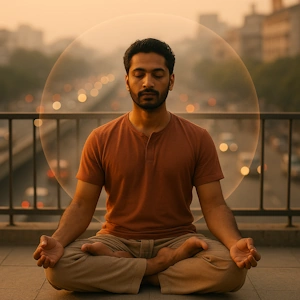
If one begins to practice pranayama in hemanta, sisira, greeshma and varsha ritus, diseases will be the only result.
There are elaborate instructions as to what to eat, what not to eat, and how much to eat. Many common things like ghee, butter, sugar, milk, bananas cannot be eaten by the yogi. Violating these rules and practising yoga can only lead to diseases or aggravation of diseases.
ततः क्षीयते प्रकाशावरणम्
What is the benefit of pranayama – it reduces the thickness of the veil around the inner light.
धारणासु च योग्यता मनसः
Mind becomes fit for dharana, concentration.
इन्द्रियाणां विचरतां विषयेषु स्वभावतः ।
निग्रहः प्रोच्यते यस्तु प्रत्याहारः स उच्यते ॥
Withdrawal of senses from the sensory objects is called pratyahara. Our senses always lead us away from ourselves. See a delicious sweet – your mind swings into a whole lot of thoughts. I want to have that. Your mouth starts watering. How to make sure that I get it every day. Will it be bad for my health? All complex thoughts. You hear a song – the same thing happens. Can I sing like that? This singer is better than that singer.
What is required is to withdraw the senses so that you see no more, you hear no more, you smell no more. Even when you do all that, your mind is not perturbed by a thought chain. There will still be sound reaching your ears, smell reaching your nose, but they will not trigger a thought chain. The senses have a tendency to roam around in search of stimulations. They are like antennae waiting to catch signals. Holding them back from getting attached to these sensory stimulations is called pratyahara.
देशबन्धः चित्तस्य धारणा
Concentrating the mind at one point or a single object is called dharana. Dharana comes after perfecting yama, niyama, asana, pranayama and pratyahara. Dharana or concentration can come only after these five are perfected.
तत्र प्रत्ययैकतानता ध्यानम्
That uninterrupted concentration leads to dhyanam – meditation – and eventually to the final goal, samadhi.
तदेवर्थमात्रनिर्भासं स्वरूपशून्यमिव समाधिः
The deep absorption when even the form of that object disappears and only its essence shines forth is called samadhi.
This is yoga. Bhagawan is in this state of yoga.
ज्ञानेन्द्रियाणि सर्वाणि निगृह्य मनसा सह
एकत्वभावना योगः क्षेत्रज्ञपरमात्नोः
The state in which the yogi attains unity with Paramatma by absolute control over the mind and senses is called yoga. Bhagawan is in that state. He has become identical with that state, hence he is himself called yogaha.
Why do seasons matter for pranayama?
-
Body heat, humidity, and air density change across seasons.
-
Wrong timing stresses the lungs, nerves, and digestion.
-
Right timing keeps breath work safe and steady.
Why are some common foods discouraged for a yogi?
-
Heavy, sticky, or mucus-forming foods blunt sensitivity.
-
They cloud breath rhythm and dull attention.
-
Light, clean food keeps nerves calm and mind clear.
What does withdrawing the senses look like in daily life?
-
You notice sights and sounds but do not chase them.
-
A smell or tune appears; thinking does not spiral.
-
Attention stays with your chosen point, not with passing stimuli.
How is pratyahara different from suppression?
-
Suppression fights sensations and creates rebound.
-
Pratyahara allows sensations without chaining thoughts.
-
The leash is on attention, not on the world.
How does pratyahara lead to concentration?
-
Fewer distractions free up mental bandwidth.
-
Attention stops leaking into random cues.
-
The mind can stay on one point without strain.
What exactly is dharana and how do I recognise it?
-
Single, steady attention on one object or idea.
-
Thoughts that arise are noticed and dropped quickly.
-
Time feels simple; effort is present but controlled.
When does dharana turn into dhyana?
-
Effort reduces and continuity increases.
-
Attention flows on its own, like oil pouring.
-
The watcher and the watched feel closer.
How is dhyana different from zoning out?
-
Dhyana is clear and bright, not foggy.
-
You remain aware, stable, and purposeful.
-
Afterward you recall the session with coherence.
What is samadhi in practical terms?
-
The split between knower, knowing, and known dissolves.
-
Only the essence of the object shines in awareness.
-
After-effects are clarity, quiet strength, and ethical steadiness.
Do external sounds and smells have to stop?
-
No. They can continue without pulling thought chains.
-
The trigger breaks when attention stops attaching.
-
The world plays; the mind stays.
Can I skip steps and jump to meditation?
-
Skipping weakens stability and invites strain.
-
Ethics, posture, breath, and sense-discipline build the base.
-
With the base firm, attention holds without damage.
What is the ‘veil over inner light’ and how is it thinned?
-
It is the opacity created by agitation and habit.
-
Calm breath, clean food, and steady attention thin it.
-
As the veil thins, insight becomes direct and simple.
How do I know if practice is harming my health?
-
Signs include irritability, insomnia, chest tightness, and poor digestion.
-
If these appear, reduce intensity and review food and timing.
-
Right practice produces calm energy and stable appetite.
Why say Bhagavan is in yoga?
-
Because perfect, unbroken awareness is the natural summit.
-
Unity of knower and Supreme is the definition of completion.
-
The ideal anchors the practitioner’s direction.
What role do yama and niyama play in concentration?
-
They reduce guilt, turmoil, and inner conflict.
-
A clean life stops mental noise at its source.
-
Then attention can sit without wrestling itself.





English
Vishnu Sahasranama
Click on any topic to open
7
30
Astrology
Bhagavad Gita
Bhagavatam
Bharat Matha
Devi
Devi Mahatmyam
Ganapathy
Garuda Puranam
Glory of Venkatesha
Hanuman
Kathopanishad
Mahabharatam
Mantra Shastra
Mystique
Practical Wisdom
Purana Stories
Radhe Radhe
Ramayana
Rare Topics
Rigveda Explained
Rituals
Sages and Saints
Shiva
Spiritual books
Sri Suktam
Story of Sri Yantra
Temples
Vedas
Vishnu Sahasranama
Yoga Vasishta
26
17
10
0


