Meaning of the Term Panktipavana
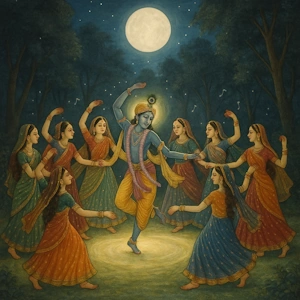
संसारसर्पसन्दष्टनष्टचेष्टैकभेषजम्
कृष्णेति वैष्णवं मन्त्रं श्रुत्वा मुक्तो भवेन्नरः
The world, samsara, is like a poisonous snake. Once you are engrossed in it, it is as if you are bitten by a snake. You lose consciousness. You lose the awareness of reality. You lose awareness of the true self. For this, there is only one remedy — the mantra called Krishna, Krishna. Merely hearing this mantra is sufficient for relief from this malady.
अतिपातकयुक्तोऽपि ध्यायन्निमिषमच्युतम्
भूयस्तपस्वी भवति पङ्क्तिपावनपावनः
Atipatakas are a special group of sins — very grave sins as denoted by the prefix ati. For men, it is engaging in physical relationship with mother, daughter, or daughter-in-law. For women, it is engaging in physical relationship with father, son, or father-in-law. The prescribed prayaschitta for this is entering fire and burning oneself to death.
This shloka says even an atipataki, if he meditates upon Achyuta for a moment, becomes a tapasvi. That much is the purificatory power of Achyuta. He becomes the most pure among those who are called panktipavana. Panktipavana means one who purifies pankti. When you offer food to noble Brahmins, when they sit in a line, it is called a pankti. When a formal bhojanam is offered, the purity is very important — right from purity of the materials used in cooking, to the purity of the people cooking, and the people who serve. Then only it serves the desired purpose. Offering such formal bhojanam to noble Brahmins is like offering to gods.
There is a term called viprochchista. Ucchishta, or the remains of someone’s food, is normally considered to be impure. But viprochchista, the remains of the food offered to a noble Brahmin in the formal way, itself is considered to be highly purifying.
In many parts of the country, during gruha pravesha, after Brahmins are fed, the leaves which are used as plates along with the remains are buried in the same compound, never thrown out. This is because it will purify the land.
According to Agama tradition, when temples are affected by impurity — that sometimes happens when someone dies inside a temple or some impure material is found inside the temple — in such cases, purificatory rites are performed, like abhisheka with 108 kalashas, 1008 kalashas, Pavamana Homa.
When the impurity is severe, brahmana bhojanam is offered and the remains are buried inside the temple itself.
In some very extreme cases, like in olden days where there were invasions, temples were destroyed, idols were smeared with faecal matter and urine to destroy the chaitanya in them — in such cases, the remedy, the highest of remedies, used to be doing a brahmana bhojana and smearing the idol with viprochchista — the remains from the bhojana. That absolutely removes all impurities.
So, in a pankti where noble Brahmins are fed, comes panktipavana — a Brahmin who, by his mere presence, purifies the entire pankti. He is panktipavana. He is well-versed in Vedas and Shastras in the formal way, absolutely self-disciplined and living the life of a Brahmin to the core — honest, respectful to his parents, tolerant, indriya-nigrahi (he is not carried away by the lure of his senses), observer of vratas, tapas, and daily routines befitting a Brahmin. Such a person is called panktipavana.
The greatest in a group of panktipavanas is called panktipavanapavana.
The atipataki (sinner), by remembering Achyuta for a moment, will become equivalent to panktipavanapavana.
It is not that easy. His karma will not allow him to remember Sri Hari even for a moment. The purpose here is to tell how purifying Sri Hari is — not that you commit any atrocity and merely by remembering him for a moment you become clean.





English
Vishnu Sahasranama
Click on any topic to open
7
30
Astrology
Bhagavad Gita
Bhagavatam
Bharat Matha
Devi
Devi Mahatmyam
Ganapathy
Garuda Puranam
Glory of Venkatesha
Hanuman
Kathopanishad
Mahabharatam
Mantra Shastra
Mystique
Practical Wisdom
Purana Stories
Radhe Radhe
Ramayana
Rare Topics
Rigveda Explained
Rituals
Sages and Saints
Shiva
Spiritual books
Sri Suktam
Story of Sri Yantra
Temples
Vedas
Vishnu Sahasranama
Yoga Vasishta
26
17
10
0


